

In humanoid robots, every movement of a leg or fingertip depends on a hidden hero: the precision lead screw. Until recently, these screws—responsible for linear motion in actuators and dexterous hands—were expensive, fragile, and short-lived. But now, a breakthrough from Hangzhou may change the economics of humanoid robotics.
A Zhejiang-based manufacturer has successfully applied cold forging (also known as cold precision forming) to produce micro planetary roller screws with unprecedented durability and efficiency. The result: a component that could finally make humanoid robots both affordable and industrially viable.
Why It Matters
Traditional micro ball screws for robotic hands are ground on precision grinders—machines that can take tens of minutes per part and demand near-perfect tolerances. Even the best products often wear out after just 200,000 cycles—roughly one month of operation in a factory robot performing 10 pick-and-place motions per minute. Planetary roller screws, which can bear higher loads and maintain precision longer, have been difficult to manufacture economically—until now.
The Cold Forging Approach
On September 24, New Coordinate Co., Ltd., a precision-forging specialist based in Hangzhou’s Yuhang district, unveiled a cold-forged micro planetary roller screw achieving C3 accuracy and IT4-grade tooth precision, with a forming cycle of only five minutes per unit—five to ten times faster than conventional machining. The company is now scaling from micro screws for dexterous hands to larger, reverse-type roller screws for humanoid legs, targeting 0.5 mm and 7.5 mm lead pitches and static loads of 500 N and 20,000 N.
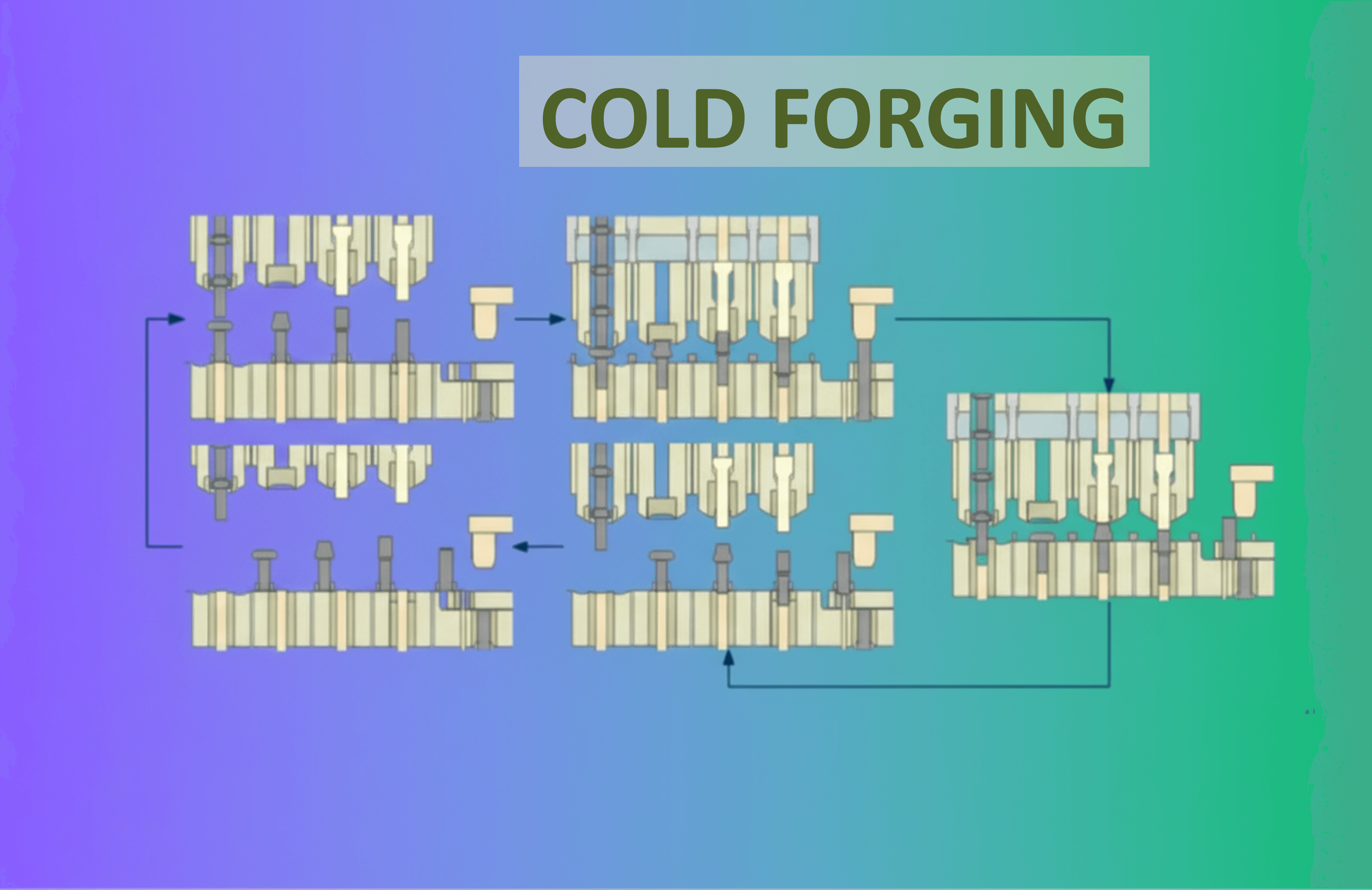
Cold forging reshapes metal under immense pressure without heating, forming threads and nuts in multiple die stations. This multi-station process allows for high material utilization, minimal waste, and superior surface finish compared with cutting or grinding. It also eliminates heat-induced distortion, enabling precision control of geometry and dimensions.
In the automotive world, cold forging has long been a high-barrier process integrating materials science, tooling design, and specialized equipment. Its adaptation to robot actuation marks a significant leap forward. Cold-forged lead screws promise higher productivity, lower material loss, and greener manufacturing, positioning the technology as a key path to cost reduction in humanoid robotics.
A Manufacturing Powerhouse
Listed on the Shanghai Stock Exchange since 2017, New Coordinate built its reputation supplying precision cold-forged parts for automotive gearboxes, solenoids, motor shafts, and battery casings. Now, it’s pivoting toward robotics.
The company has developed its own internal thread rolling machines and thermal forming systems, complemented by imported multi-station cold-forging presses. With its proprietary “flat-plate rolling” process, New Coordinate achieves 91% material utilization—far above the industry average of 65%—and cuts production costs by 42%. Internal threads can reach C3 precision within three to five minutes, using equipment costing only tens of thousands of yuan.
Already, the firm’s cold-forged components are used in Sanhua Intelligent Controls’ automotive thermal-management systems. With current monthly output at 20,000 sets, capacity is expected to reach 30,000 by March 2026 and 40,000 by year-end, with expansion cycles as short as three months.
Building the Second Growth Curve
Beyond automotive applications, New Coordinate is venturing deeper into parking brake and robot-grade lead screw manufacturing, forming a joint venture—Hangzhou September 8 Precision Transmission—with Zhejiang Toman Intelligent, a leader in high-end grinding and smart manufacturing. Holding a 77% stake, New Coordinate is positioning itself as a global supplier of high-precision roller screws and ball screws.
With new production bases in the Czech Republic and Mexico, the company’s overseas revenue rose 47% year-on-year in 2024, lifting its international sales share from 17% in 2020 to 43% in 2024. Anchored by clients like Volkswagen and General Motors, New Coordinate is translating two decades of cold-forging expertise into a new era of robotic precision mechanics.
If successful, this cold-forging revolution could do for humanoid robotics what the die-casting revolution did for electric vehicles—cut costs, extend durability, and accelerate industrial adoption worldwide.









Leave a comment