

The Rise of an Unlikely Star
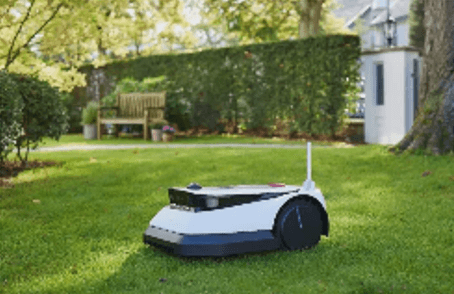
Few expected the humble lawn mower to become China’s next global success story. Yet data from China’s Customs Administration show exports of lawn-mowing equipment (HS Code 84331100) reached ¥14.5 billion in 2024—a compound annual growth rate of 17.4 percent since 2018, far outpacing the 2 percent global average. In the first seven months of 2025 alone, exports surged 56.6 percent year-on-year to ¥13.2 billion. Across backyards, golf courses, and public parks from California to Copenhagen, the whir of self-navigating Chinese lawn robots is replacing the growl of manual machines. It’s a quiet revolution—one that is reshaping a century-old industry worth US $10 billion.
Breaking the Boundary Wire
For nearly three decades, the lawn-robot market stagnated behind an awkward design flaw: users had to bury boundary wires around their lawns to define cutting zones. The setup was tedious, maintenance-heavy, and inefficient for large or complex yards. By 2020, these “wired” models still held more than 90 percent of the market.
The turning point came in 2021, when Ninebot (Segway-Ninebot) integrated RTK satellite differential positioning—known as EFLS—into its Navimow H series. Suddenly, robots could map lawns with centimeter-level precision without wires. Navigation became as simple as launching a drone.
Competitors followed. By 2024, Ecovacs, Mammotion, and others deployed hybrid “RTK + Vision” and “Lidar + AI” systems that enabled obstacle avoidance and adaptive coverage across larger terrains. Ecovacs’s GOAT G1 could mow 3,000 square meters a day —five times earlier models. By mid-2025, MOVA and lidar specialist Hesai Technology had pushed the envelope further with a 16-line 3D lidar solution requiring no satellite receiver and offering 1000 m² mapping in under four minutes. These advances sparked explosive demand. In 2024, “wire-free” robots made up only 35 percent of sales; by mid-2025, they accounted for 65 percent, with Chinese brands shipping over 1.52 million units.
Why the World’s Lawns Are Going Chinese
Lawn care is a surprisingly lucrative problem. The U.S. alone has 100 million private gardens, and Europe another 80 million. Lawn height rules in cities like Los Angeles, New York, and Toronto make maintenance mandatory—and labor costs are steep. A single mowing can cost US $50 or more.
Enter Chinese automation. Ninebot’s wire-free robot retails at €2,499 (≈ US $2,700), half the price of Sweden’s Husqvarna RTK models. Ecovacs has driven RTK + vision robots below €1,000, bringing high-end tech to mass-market homes. On Amazon’s U.S. and German sites, Chinese brands dominate the top sales charts with average ratings above 4.0 —outscoring legacy brands that once defined the category.
Behind these wins lies a formidable supply chain. Tool giants like Chervon Holdings and Globe Group repurpose their motor and battery expertise for robotic platforms, while precision manufacturers Tenyjia Precision and Daye Co. optimize production costs for tiered product lines. Daye’s robot segment alone grew 115 percent year-on-year to ¥2.25 billion in the first half of 2025.
The Market Outlook: From Cutting Grass to Cultivating Fields
Despite rapid growth, robotic mowers still represent just 6 percent of global lawn-mower sales. IDC projects that share to quadruple to 25 percent in 2025, with “boundary-free” models hitting 16 percent. Brokerages such as Guosen Securities forecast annual sales of 6 million units within five years—a fivefold increase. Grand View Research expects a 12 to 20 percent CAGR through 2030 as penetration rises from 0.1 to 17 percent.
Two groups are best positioned to capitalize. First, the technology first-movers—Ninebot, Ecovacs, Stone Technology, and MOVA—whose rapid AI iterations differentiate mid-to-high-end products. Second, the supply-chain veterans like Chervon and Globe, leveraging scale and cost leadership to expand mainstream segments.
Next-gen models are also moving beyond mowing. MOVA’s NexLawn brand recently unveiled Master X, a garden-care robot equipped with a retractable mechanical arm (44.5–77 cm) and multifunction gripper for branch clearing, watering, and fruit picking. It’s a glimpse into how AI robotics could extend from lawns to full-scale landscaping and agriculture.
Risks and Realities
Trade policy remains a wild card. Most robotic mowers and pool-cleaning robots depend on exports to Europe and North America. New tariffs or trade barriers could raise costs and disrupt foreign-exchange flows, pressuring Chinese exporters’ margins. Yet the industry’s R&D momentum shows no sign of slowing—suggesting that innovation, not policy, will ultimately shape the winners.
From Made in China to Intelligent in China
The lawn-robot boom echoes the rise of robotic vacuums a decade ago. Once dominated by iRobot, that market is now half Chinese. A similar script is playing out on the grass: legacy leaders hold first-mover advantage, but China’s AI and supply-chain prowess are rewriting the rules.
As RTK, lidar, and AI vision mature, mowers will evolve from backyard gadgets into versatile outdoor robots serving parks, golf courses, orchards, and urban green spaces. For Western consumers, lawn care is getting easier. For Chinese robotics companies, it’s another proof point that “Made in China” has become “Engineered by China.”
The next global hit from China’s AI factories might not be a smartphone or EV — but the robot quietly mowing a suburban lawn half a world away.







Leave a comment