


Yunji Technology’s story is a condensed history of China’s service-robotics sector: a sudden demand window, intense capital inflow, rapid scale-up, and years of pressure from shrinking margins and scenario limits. Even with tens of thousands of units deployed across China’s hotel chains and billions of services delivered, Yunji still accumulated nearly ¥1 billion in losses over just three years—yet survived long enough to go public. In an industry defined by harsh economics, Yunji is one of the rare companies that can truly be called “lucky.”
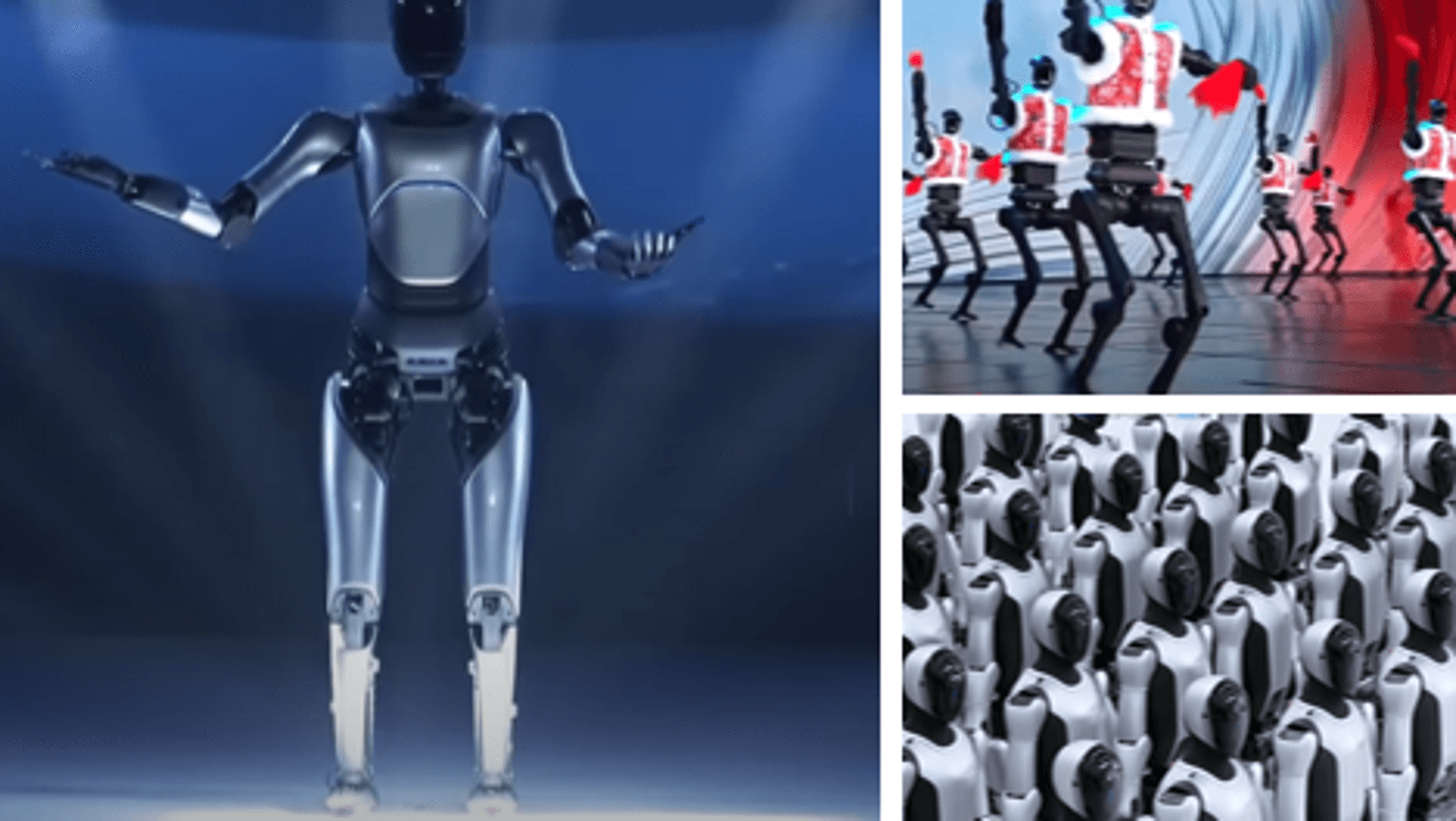
Today, global experts increasingly worry that China’s humanoid-robotics boom is setting up for the same cycle—only faster, larger, and riskier. With more than 300 humanoid robot companies now active, many backed by ambitious provincial initiatives, the central question becomes unavoidable: how many of them can withstand the losses, delays, and failures long enough to reach a Yunji-style outcome?
A Perfect Storm That Won’t Repeat: Why Yunji’s Success Was an Exception
The hotel-robot boom benefited from an abnormal, pandemic-driven spike in “contactless service,” giving robots a temporary yet massive boost in demand. Hotel chains standardized robot deployment not because of pure economics, but because public-health conditions forced rapid adoption. When the window closed, procurement cooled instantly, exposing the structural fragility of an industry dependent on a single scenario. Yunji at one point relied on hotels for 95% of its revenue, and any industry slowdown immediately translated into financial strain.
Global experts emphasize that humanoid robots do not enjoy even this temporary structural advantage. As one senior European robotics professor noted:
“Hotel robots had a real market that appeared suddenly. Humanoids do not have such a market yet, and no one knows when they will.”
The hotel-robot boom rode a wave of emergency-driven necessity. Humanoid robots are riding a wave of expectation, which is far more fragile.
A Market Without a Market: Humanoids Are Being Built Ahead of Demand
The most common worry among international analysts is deceptively simple: the humanoid market does not yet exist.
Pilot deployments, demo videos, and trade-show hype are not the same as sustainable commercial orders. While companies speak of factories, warehouses, and logistics as “near-term” scenarios, global experts consistently point out that the gap between a live demonstration and a scalable deployment is vast.
A robotics strategist at a North American consulting firm summarized the issue:
“Hundreds of humanoid companies are chasing a market that hasn’t formed. When reality hits, the industry will suddenly realize how small the real demand is.”
This mismatch—oversupply before true demand—is exactly what destabilized hotel robotics, but humanoids face a more extreme version of the same dynamic.
Copy-Paste Engineering: Homogeneous Robots, Homogeneous Risks
One of the most striking concerns among suppliers is the remarkable homogeneity of humanoid robots in China.
A senior executive at a global actuator and gearbox manufacturer, who supplies dozens of Chinese humanoid startups, told RobotToday that many companies share:
- nearly identical joint modules
- similar motion-control architectures
- similar perception pipelines
- similar industrial design concepts
He put it bluntly:
“Eighty percent of these humanoid robots feel like slightly modified clones.”
This sets the stage for the same destructive cycle hotel robots faced:
commoditization → price war → collapse.
When the hotel-robot price dropped from ¥136,000 to ¥13,000, most companies never recovered. Experts expect humanoids to face similar pressure, except far faster and at much larger financial scale.
Scaling Losses, Not Profits: Why Hardware Economics Don’t Improve With Volume
One of the clearest lessons from Yunji is that scaling hardware does not automatically improve profitability. In fact, mass deployment often amplifies losses:
- after-sales and maintenance costs surge
- reliability incidents multiply
- certification costs rise
- BOM cost reductions lag behind price cuts
- R&D amortization grows with product iterations
A Silicon Valley embodied-AI investor told RobotToday:
“If humanoid companies priced in the real cost of reliability, their robots would cost ¥300,000 more per unit.”
This means that the common belief—volume will fix the unit economics—is a dangerous illusion.
In reality, volume accelerates collapse for companies without deep engineering foundations.
The Mirage of the Second Curve: Why Humanoids Can’t Easily Replicate Yunji’s Software Play
Yunji ultimately survived by building a strong software and SaaS layer. Its HDOS intelligent-service platform created a sticky, hotel-native ecosystem that allowed the company to lift software margins above 60 percent—a dramatic contrast to the hardware margins squeezed relentlessly by price wars. Yet global experts consistently warn that humanoid-robot companies cannot assume the same path is available to them. Unlike hotel robots, humanoids do not operate in stable or repeatable workflows; they lack high-frequency deployment in controlled environments, lack well-defined and limited task boundaries, and lack the rich motion-library data that comes only from years of real-world operation. The environments humanoids face—factories, warehouses, retail floors, mixed public spaces—are far more unpredictable, messy, and variable. Most humanoid startups simply do not have the operational lifespan, the deployment density, or the data accumulation cycles needed to build a high-margin software business. For the majority of companies in this emerging sector, a Yunji-style “second curve” remains out of reach.
The 2026 H1 Risk Window: When Prototype Dreams Meet Production Reality
Across the U.S., Europe, and Asia, experts have begun converging on an uncomfortable prediction: 2026 H1 is the likely correction point for China’s humanoid-robotics boom. By that time, hundreds of companies will be forced to confront the hard transition from prototype to production. Many robots that perform impressively in controlled demo environments will struggle to scale into real-world products. Reliability failures will surface once robots leave the lab and enter chaotic, industrial settings. Overseas certification, long treated as a distant checklist item, will suddenly become a serious bottleneck for companies hoping to expand abroad. Domestic pilot budgets—currently a major source of early demand—will tighten as local governments shift priorities. Capital, which has been driven by enthusiasm and fear of missing out, will pivot toward caution and selectivity. Meanwhile, after-sales burdens, field failures, and the cost of maintaining deployed robots will begin to overwhelm companies with thin engineering depth. A senior robotics strategist described this moment bluntly as “the first real stress test of China’s humanoid-robot economy.” Most of the 300-plus companies active today are unlikely to survive it.
The Hard Question: How Many Startups Can Survive Long Enough to Lose ¥1B and Still IPO?
Yunji’s path—absorbing nearly ¥1 billion in cumulative losses and still achieving a successful IPO—is often seen as proof that robotics can scale through adversity. But experts caution that Yunji’s trajectory is not a realistic template for humanoids. Yunji benefited from a rare convergence of factors: pandemic-driven demand that created an abnormally strong adoption window, a favorable policy environment, enthusiastic capital, a highly sticky hotel scenario, and a mature software layer that eventually delivered high margins. Humanoid robots enjoy none of these structural advantages. According to multiple global analysts, among the more than 300 humanoid-robot startups operating in China today, perhaps five to eight will manage to secure meaningful late-stage funding, and even fewer will come close to IPO readiness. The majority will not survive the 2026 correction cycle. This leads to the core, unavoidable question: How many humanoid-robot companies can survive long enough to even attempt losing ¥1 billion the way Yunji did—let alone list on a public exchange afterward? The emerging global consensus is stark. Almost none. And by early 2026, the industry will likely see the first clear separation between the few survivors and the many casualties.










Leave a comment