

By Galleon Aviation News | November 3, 2025 | Shanghai
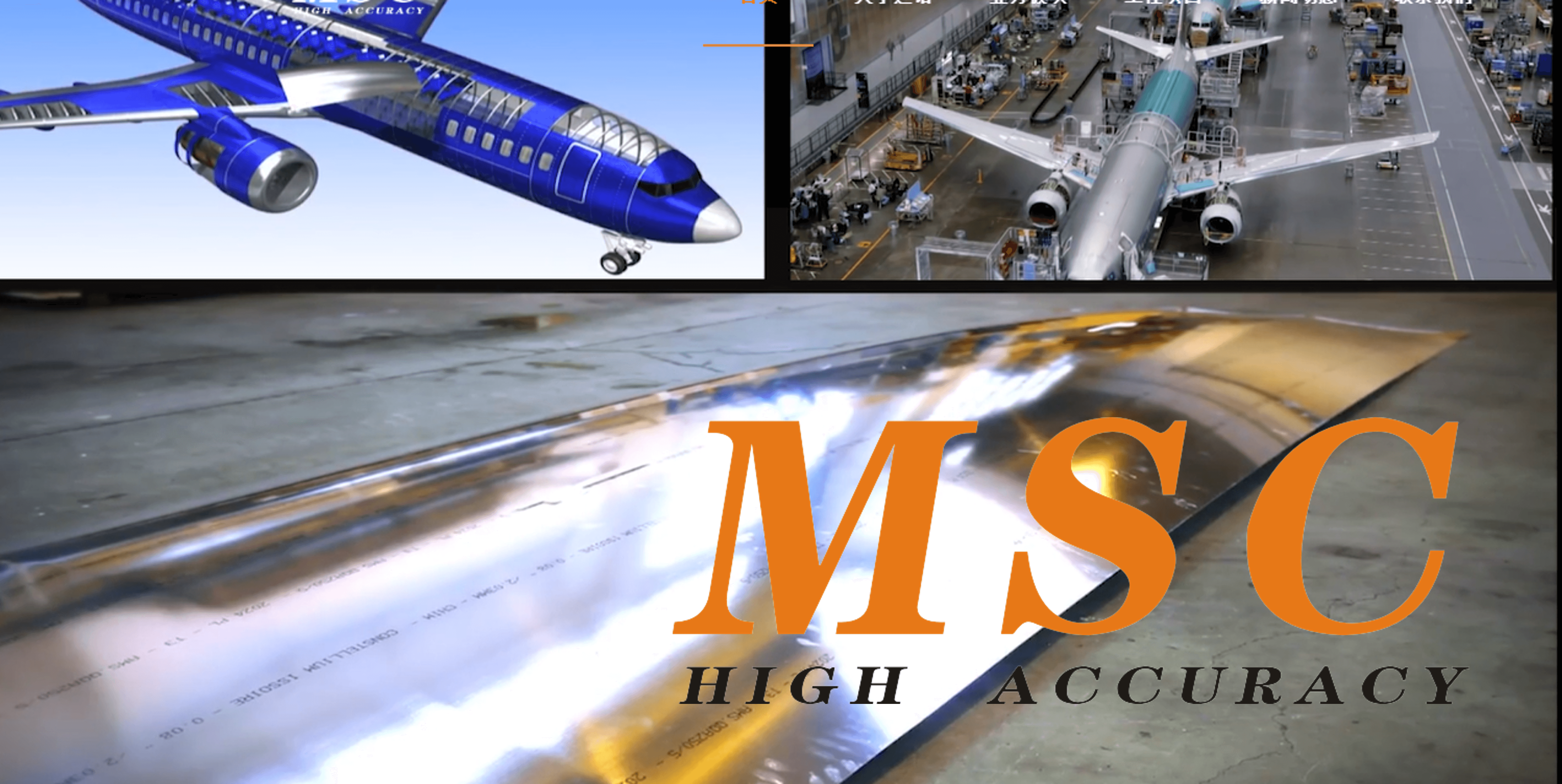
China’s industrial technology ecosystem has taken a leap forward with a breakthrough that bridges aerospace precision and robotic manufacturing. Guangdong Mainor Industrial Technology Co., together with the China Heavy Machinery Research Institute and Jilin University, has developed the world’s largest 1,230-ton aircraft skin stretching machine — a digitally controlled, high-precision metal forming system that recently passed final acceptance testing after three years of research and engineering.
This machine fills a critical gap in large-scale precision forming equipment, offering sub-0.1 mm forming accuracy and fully digital control of force distribution. Its debut marks a major step not just for aircraft production, but for robotics, advanced materials processing, and intelligent manufacturing systems.
Aerospace Precision Meets Robotics Engineering
Traditionally, stretch forming is used to shape aircraft fuselage panels and curved aluminum components by applying uniform tensile forces over a die. With the new 1,230-ton system, this process is now digitally modeled, simulated, and executed in real time, creating parts that were previously impossible to produce at such precision and scale.
For the robotics industry, this capability is transformative. Robots — especially humanoids, mobile manipulators, and service robots — require lightweight yet rigid body structures that can balance strength, energy efficiency, and appearance. The same double-curved forming techniques used for aircraft skins can be directly applied to:
Robot outer shells and exoskeletons, enabling seamless and aerodynamic designs
Lightweight structural frames, reducing mass and improving motion performance
Protective enclosures for autonomous systems, combining strength with compactness
By leveraging this aerospace-grade precision, robot manufacturers can now produce monocoque aluminum or titanium components without multi-part welding or complex machining, lowering both weight and cost.
Digital Twin Manufacturing: From Forming to Robotics Assembly
The 1,230-ton stretch-forming system integrates digital twin modeling, adaptive control, and one-click forming, transforming a once labor-intensive process into a fully automated production flow. This mirrors the direction of AI-driven robotic manufacturing cells, where forming, machining, and assembly are connected through real-time feedback loops.
Just as the new machine adjusts forming pressure based on deformation predictions, advanced robots are learning to self-calibrate through sensor feedback. Both technologies represent the same intelligent manufacturing paradigm — merging mechanical precision with computational adaptability.
Multi-Point Forming Inspires Soft Robotics and Adaptive Structures
A companion system developed alongside the main machine — a multi-point digital forming platform — allows for local force adjustments at hundreds of points across a metal sheet. This granular control is functionally similar to soft robotic actuators, where distributed forces shape flexible materials dynamically.
Such principles could inspire new robotic morphing surfaces, adaptive grippers, or wearable robotic structures that can alter shape or stiffness on demand — essentially translating large-scale forming mechanics into micro-scale robotic actuation.
Beyond Aerospace: The Rise of Cross-Disciplinary Manufacturing
The introduction of this equipment extends beyond aviation. By bringing aerospace forming techniques into architecture, automotive, and robotics, it creates a foundation for cross-domain intelligent fabrication. For example, a museum dome that once required 18 months of fabrication can now be completed in two, with costs reduced by 35%. This same digital forming framework could enable rapid, automated production of robotic housings, autonomous vehicle panels, or precision hardware enclosures with architectural-grade quality.
According to Zhang Kangwu, Deputy Chief Engineer at the China Heavy Machinery Research Institute, the technology will not only enhance aircraft programs such as the C919, CR929, and Y-20, but also set a new benchmark for precision manufacturing platforms used across industrial robotics and high-performance engineering.
Jilin University’s Professor Liu Chunguo added that both the 1,230-ton stretcher and the multi-point forming system have achieved global leadership in size and digital control, overcoming long-standing limitations in metal skin forming and establishing new possibilities for intelligent robotic fabrication.
A Convergence of Aerospace and Robotics
At its core, this development reflects the broader convergence of aerospace manufacturing, robotics, and digital engineering. The precision, control, and digital integration behind the 1,230-ton stretch-forming machine illustrate the same technological foundations driving modern robotics:
Lightweight materials and high-strength structures
Digital twin process optimization
AI-enabled adaptive control
Automated, sensor-driven production
As robotics enters the era of large-scale manufacturing, breakthroughs like this will define how intelligent machines are both built and designed — bridging the gap between aerospace-grade precision and next-generation robotic production.







Leave a comment