


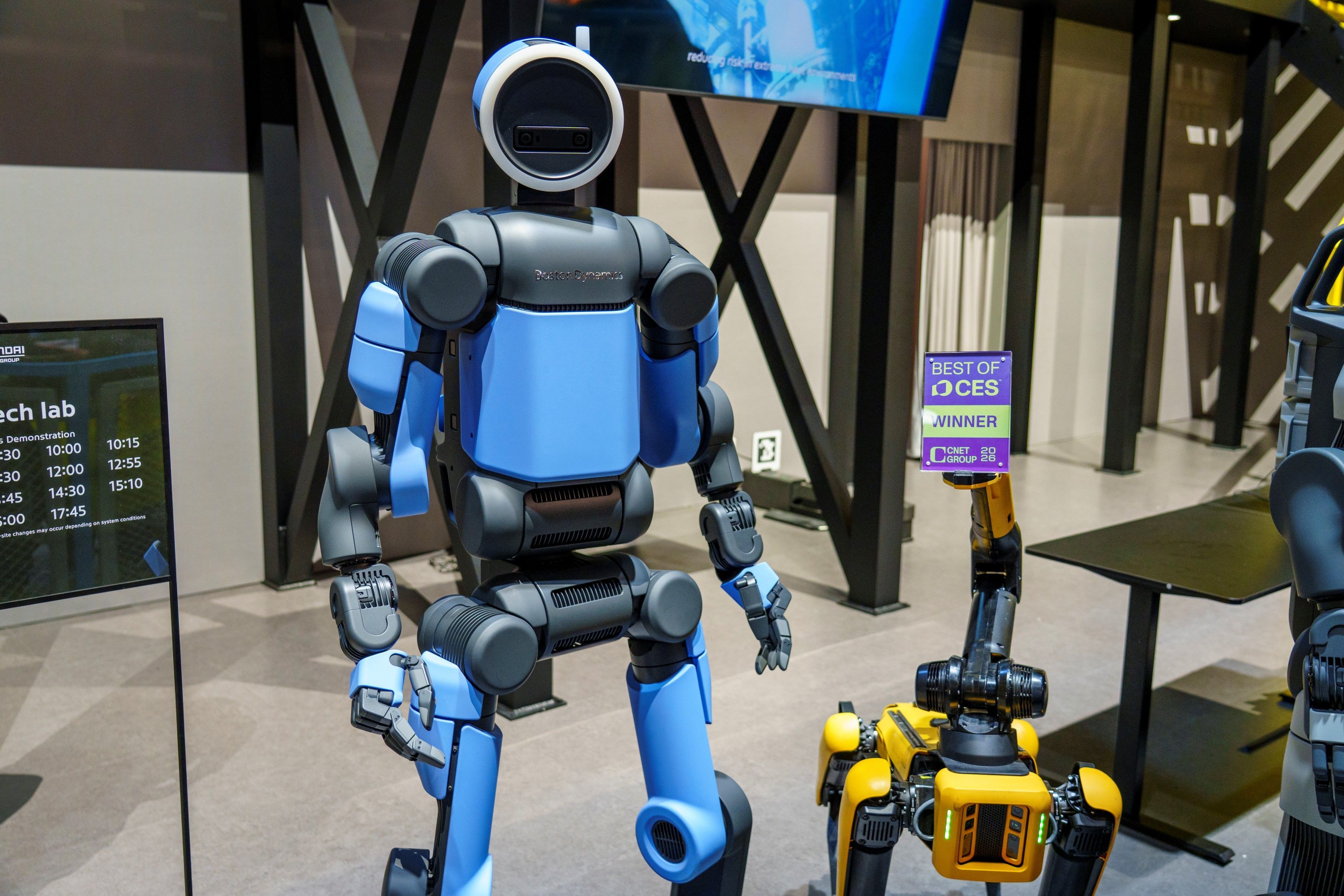
Boston Dynamics and the $100 Billion Question: What a Potential IPO Means for Humanoid Robotics
A valuation surge from $1.1B to a potential IPO target exceeding $85B signals a structural inflection in the robotics industry — but the numbers require careful reading.
From Research Icon to IPO Candidate
Boston Dynamics is undergoing one of the most significant valuation re-ratings in robotics history. Acquired by Hyundai Motor Group in June 2021 at a company valuation of $1.1 billion, the company is now implicitly valued at $21–28 billion by Korean securities firms following its CES 2025 Atlas demonstration — with IPO projections from bullish analysts reaching ₩128–150 trillion ($88–103 billion) in an optimistic scenario.
This surge is not purely speculative. It reflects a structural shift: humanoid robotics is transitioning from demonstration to deployment, and Boston Dynamics is among the few players with both the technological pedigree and a credible path to industrial scale. The question for RobotToday readers is not whether Boston Dynamics will list — it almost certainly will — but what that listing will tell us about how markets price physical AI.
"Boston Dynamics may become the market's first clean valuation benchmark for humanoid robotics — the reference multiple against which every competitor will be measured."
IPO Preparation: The Catalyst Is the Put Option
There is no formal S-1 filing and Hyundai's CFO has publicly stated that no plans have been confirmed. However, the IPO trajectory is driven by a contractual mechanism, not just market enthusiasm.
At the time of Hyundai's 2021 acquisition, the group committed to taking Boston Dynamics public within four years. That deadline lapsed in June 2025. Under the original agreement, SoftBank — which retains a 9.5% stake following three subsequent capital raises that diluted its position from 20% — now holds a put option exercisable until June 2026. That put option is the primary IPO catalyst: a listing would resolve the put, satisfy governance pressure, and provide Chairman Chung Euisun — who holds a 22.6% personal stake — with a mechanism to address Hyundai Group's long-scrutinised circular ownership structure.
The most likely listing venue is Nasdaq, with an earliest realistic window of 2027. Hyundai has invested approximately ₩3.28 trillion ($2.25 billion) in cumulative capital injections since acquisition, against cumulative revenues of ₩390.7 billion and losses of ₩1.38 trillion through Q3 2025. A successful IPO would shift the funding model from internal equity to public capital markets — essential if Boston Dynamics is to reach its 30,000-unit annual production target by 2028.
Why the Valuation Has Re-Rated
Three structural drivers explain the 20x+ increase from the 2021 acquisition price:
1. Atlas Is Now a Product Candidate
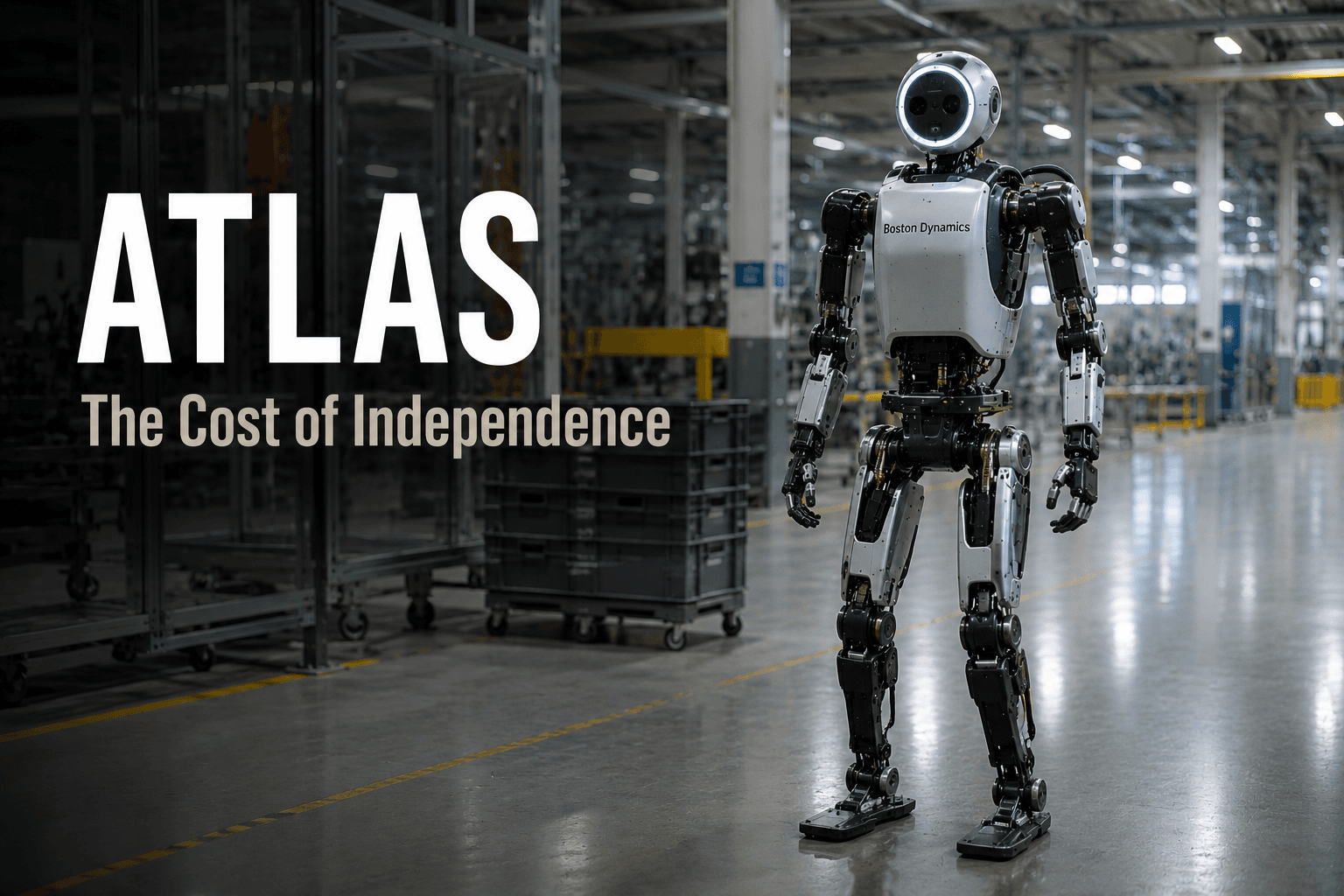
The transition to a fully electric Atlas platform — publicly showcased at CES 2025 and at CES 2026 where it was widely regarded as the most advanced humanoid demonstration at the show — transforms it from a research platform into a manufacturable system. All 2026 Atlas units are already committed: they are shipping to Hyundai's Robotics Metaplant Application Center (RMAC) and Google DeepMind, with additional commercial customers planned from 2027. High-precision sequencing operations are targeted for 2028; complex assembly workflows for 2030.
2. The 'Physical AI' Reframing
Robotics is increasingly being positioned as an AI infrastructure play rather than a hardware play. Boston Dynamics formalised this pivot through a strategic partnership with Google DeepMind (announced CES 2026), whose Gemini Robotics models will underpin Atlas's AI capabilities. A concurrent partnership with Toyota Research Institute further strengthens the AI narrative. This alignment with embodied AI investment flows is a meaningful multiple driver.
3. Hyundai's Industrial Anchor
Unlike pure-play startups, Boston Dynamics inherits the structural advantages of an automotive OEM parent: automotive-grade supply chains, actuator and component integration via Hyundai Mobis, and a built-in enterprise customer in Hyundai Motor Group itself. The planned Georgia plant deployment creates what is effectively a closed-loop commercialisation model — deploy, collect data, improve, scale — that most competitors cannot replicate without a similarly committed anchor customer.
Humanoid Robotics: Valuation Benchmarking Table
All valuations as of March 2026. Korean won figures converted at approximately ₩1,450/USD. Sources: company announcements, iM Securities, KB Securities, Hanwha Investment, Sacra, Bloomberg, TechCrunch, CNBC.
| Company | Latest Valuation | Stage / Key Facts | Key Edge vs. Boston Dynamics |
|---|---|---|---|
| Boston Dynamics | ~$21–28B (implied, Jan 2026); analyst IPO targets: ₩40–150T (~$27–103B) | Pre-IPO; Hyundai-owned; Atlas pilots at Hyundai RMAC 2026; 30,000-unit production target 2028 | Deepest hardware track record; OEM manufacturing scale; closed-loop internal deployment |
| Figure AI | $39B (Sep 2025 Series C, >$1B raised) | General-purpose humanoid (home & commercial); BMW 11-month pilot; BotQ factory scaling | Higher valuation on AI-generality narrative; in-house Helix AI; no OEM-scale manufacturing anchor |
| Apptronik | ~$5–5.5B (Feb 2026 Series A-X, $935M total) | Apollo humanoid; Google DeepMind / Mercedes-Benz / GXO deployments; new robot due 2026 | Strong enterprise partnerships; earlier commercialisation stage than BD; no internal deployment anchor |
| Agility Robotics | ~$2.1B (Series C, March 2025) | Digit deployed in warehouses (Amazon, GXO, Mercado Libre); earliest real revenue traction | Most commercially proven humanoid in the field; narrower logistics focus; smaller scale |
| 1X Technologies | ~$9–11B (est.) | NEO robot; home and industrial focus; Norway-based | High narrative premium; limited industrial-scale deployments to date |
| Sanctuary AI | ~$400M | General-purpose humanoid (Phoenix); Canada-based | Early-stage; significantly lower capitalisation than peers |
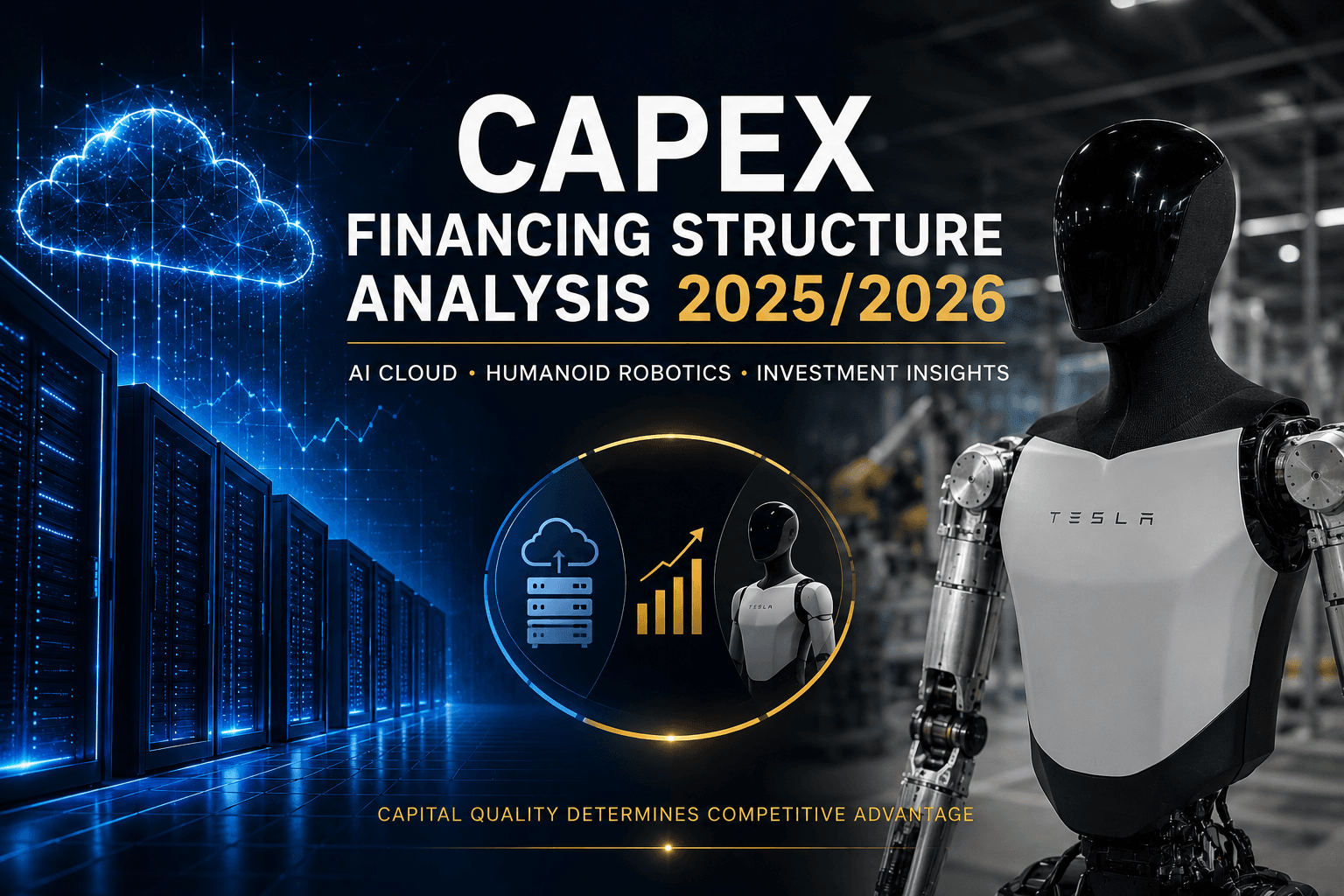
| Tesla Optimus | No standalone valuation; Tesla market cap ~$800B–$1T+ | Gen 3 in factory learning phase (2026); mass production target late 2026–2027; $20B 2026 capex | Vertically integrated AI + data advantage; no pure-play valuation; EV business headwinds complicate read-through |
* Boston Dynamics' IPO-scenario valuations (₩40T–₩150T) reflect a wide range across Korean brokerage projections and should not be interpreted as current market consensus. The $21–28B figure represents the more grounded implied valuation based on recent capital raise discussions.
** Tesla Optimus units are confirmed to be in a factory-learning phase only as of Q4 2025 earnings. Musk acknowledged robots are 'not doing useful work.' Consumer sales are targeted for late 2027.
Tesla Optimus vs. Boston Dynamics: A Structural Comparison
Tesla represents the most important strategic comparator — and the most analytically complex. The table below distils the key structural differences that RobotToday readers should weigh when assessing relative positioning.
| Dimension | Boston Dynamics | Tesla Optimus |
|---|---|---|
| Structure | Pure-play (post-IPO) | Embedded within Tesla Inc. |
| Commercial products | Spot (deployed), Stretch (logistics), Atlas (pilot 2026) | Gen 3 in R&D / factory learning phase; no external sales |
| Manufacturing base | Hyundai automotive supply chain; Hyundai Mobis components; 30,000-unit target by 2028 | Fremont & Giga Texas; converting Model S/X lines; 1M-unit/yr long-term target |
| AI strategy | Partner-driven: Google DeepMind (Gemini Robotics), Toyota Research Institute | Vertically integrated: xAI, FSD data flywheel, in-house training |
| Valuation clarity | Emerging pure-play benchmark; Korean brokerages: ₩40–150T range (~$27B–$103B) | Implicit / speculative; bundled into Tesla's $800B–$1T+ market cap |
| Revenue track record | Spot & Stretch generating commercial revenue; Atlas pre-commercial | No Optimus revenue yet; EV revenue declining in 2025 |
| Deployment timeline | Hyundai Georgia plant testing 2026; high-precision ops 2028; assembly 2030 | Internal learning phase only (Q4 2025 earnings: 'not doing useful work') |
The core investment distinction is as follows: a Boston Dynamics IPO would offer the market its first pure-play valuation multiple for humanoid robotics — a 'clean' benchmark against which all peers can be measured. Tesla, by contrast, remains a long-duration physical AI option embedded within a company whose near-term financials are dominated by a declining EV business. Musk's ambitious Optimus production targets — 1 million units per year within five years — are aspirational; as of Q1 2026, the programme is confirmed to still be in an R&D and learning phase, with no robots performing productive tasks in Tesla factories.
The more immediate competitive risk to Boston Dynamics may come not from Tesla but from better-capitalised pure-play startups. Figure AI's $39 billion Series C valuation — at a company with only a few hundred commercial units deployed — illustrates the extent to which investor appetite for the humanoid narrative has outpaced commercial reality across the sector.
Market Context and Investment Flows
Global robotics investment surpassed $10 billion in 2025, with capital concentrating increasingly at the late-stage humanoid layer. Figure AI raised over $1 billion at $39 billion. Apptronik closed a $935 million Series A at $5–5.5 billion. Agility Robotics raised $400 million at $2.1 billion. Skild AI raised $1.4 billion for robotics AI software. These are not small bets.
Market projections for humanoid robots vary widely by source and methodology:
MarketsandMarkets projects the humanoid robot market at $18 billion by 2030 (from $2 billion in 2024) — a 39%+ CAGR.
Goldman Sachs has projected $38 billion by 2035 for industrial applications.
Long-horizon projections (2050) exceed $5 trillion, though these depend on assumptions about AI capability, safety standards, and cost reduction that remain deeply uncertain.
Readers should treat all long-horizon robotics projections with appropriate scepticism. The gap between current commercial deployment reality — Agility Robotics leads with the most commercially proven units, Apptronik and Figure AI have pilot deployments, and Boston Dynamics Atlas is pre-commercial — and the valuations being assigned is substantial. Sentiment is positive; proof points remain limited.
Key Risks: What Could Derail the IPO Story
Overvaluation ahead of adoption: The sector's most funded company (Figure AI, $39B) has minimal revenue. A correction in private valuations could reset IPO expectations.
Scaling reliability and safety: Industrial deployment of humanoid robots at scale introduces safety, liability, and integration complexity that lab demonstrations do not capture.
SoftBank put option pressure: If Hyundai cannot deliver a satisfactory valuation through an IPO, SoftBank may exercise its put option, creating a forced transaction that could set a lower valuation benchmark than the market expects.
Competitive crowding: The simultaneous capital concentration in Figure AI, Apptronik, and Tesla Optimus means Boston Dynamics' competitive moat — its hardware track record — is under pressure as AI capabilities improve across all platforms.
Tesla's market distortion potential: If Tesla succeeds in ramping Optimus at automotive scale and sub-$30,000 price points, it could compress the addressable market and pricing power for premium humanoid platforms.
The Bellwether Moment
Boston Dynamics is no longer simply a robotics pioneer — it is becoming a capital markets test case for the physical AI thesis. Its IPO, when it comes, will establish the sector's first widely traded pure-play benchmark.
If the listing succeeds at the high valuations Korean brokerages have projected, humanoid robotics will emerge as a major public asset class and capital inflows will accelerate further. If it disappoints, the sector faces its first meaningful valuation correction. Either outcome will set the terms for how the industry is priced for the next decade.
For industry participants — whether manufacturers, investors, or enterprise buyers — the more operationally significant data points are not the IPO multiple itself, but what Boston Dynamics' internal Hyundai deployments reveal: unit economics, task reliability, and workforce integration outcomes at an automotive OEM. Those proof points will matter far more than the opening stock price.
"The IPO multiple will be set by sentiment. The real data — unit economics, task reliability, deployment outcomes — will be set on the Hyundai factory floor."


Leave a comment