


wheel.me
"The world's first autonomous wheel, transforms any object into a mobile robot"
Norwegian startup making Genius 2 autonomous wheels, converting existing carts into self-driving robots for indoor material handling.


Company Facts
Founded
2013
Primary Role
Manufacturer
Company Size
-
Primary Region
Europe
Annual Sales
-
Funding Stage
-
Funding Total
-

Manufacturers Anticipate Price Increases Amid Sourcing Challenges and Tariff Changes
A significant 94 percent of manufacturers are planning to increase prices in 2027, with two-thirds indicating that forecasting pricing has become more challenging compared to the previous year. Factors such as raw materials, labor, and fluctuating tariffs are contributing to this uncertainty, pushing procurement teams to rethink their sourcing strategies. The ongoing tariff debate often centers on the location of part production, yet the real bottleneck lies in the assembly and testing processes that follow manufacturing. With approximately 44 percent of small manufacturers operating below 70 percent capacity, there is an opportunity to enhance domestic production capabilities, particularly in robotics, where demand is surging. Looking ahead, the focus should shift towards financing small and midsize manufacturers to develop subassembly and testing capabilities. This would ensure that domestic parts can be transformed into fully operational machines, rather than merely reshoring components without addressing the underlying bottlenecks. No further timeline was disclosed at the time of publication.
Business Intelligence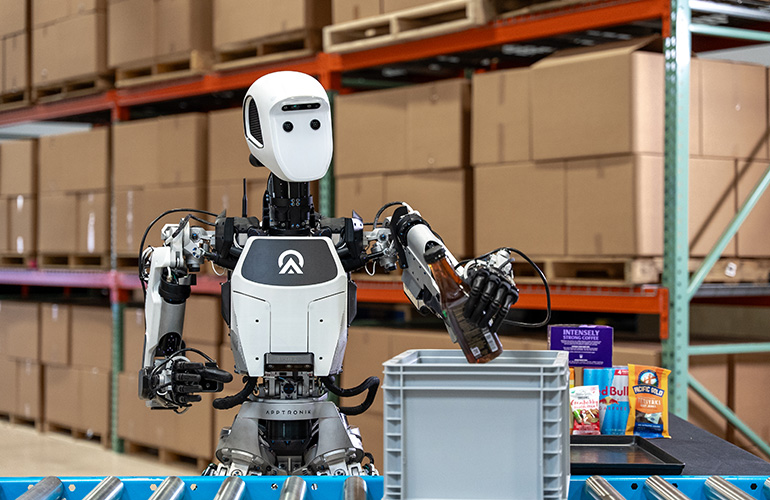
Jabil Explores Humanoid Robot Development and Production Trends
Jabil Inc. has shared insights on the evolution of humanoid robots from prototypes to mass production. The company, based in St. Petersburg, Florida, collaborates with various robotics developers, including Apptronik, to facilitate the transition of products like the Apollo humanoid into active manufacturing environments. As demand for humanoid robots grows, Jabil highlights the shift from low-volume production to the need for scalable manufacturing processes. Senior Director Thomas Brown emphasizes the importance of cost structure and quality improvements, noting that as robots become more expensive, the necessity for customer use-case validation increases. Looking ahead, the integration of advanced computing capabilities is crucial for enhancing the functionality of humanoid robots. Jabil identifies the NVIDIA Jetson series as a key technology for developers, while also addressing the challenges of pricing and the need for more edge computing capacity. No further timeline was disclosed at the time of publication.
Artificial Intelligence Artificial Intelligence / Cognition Humanoids Logistics Manufacturing Microprocessors / SoCs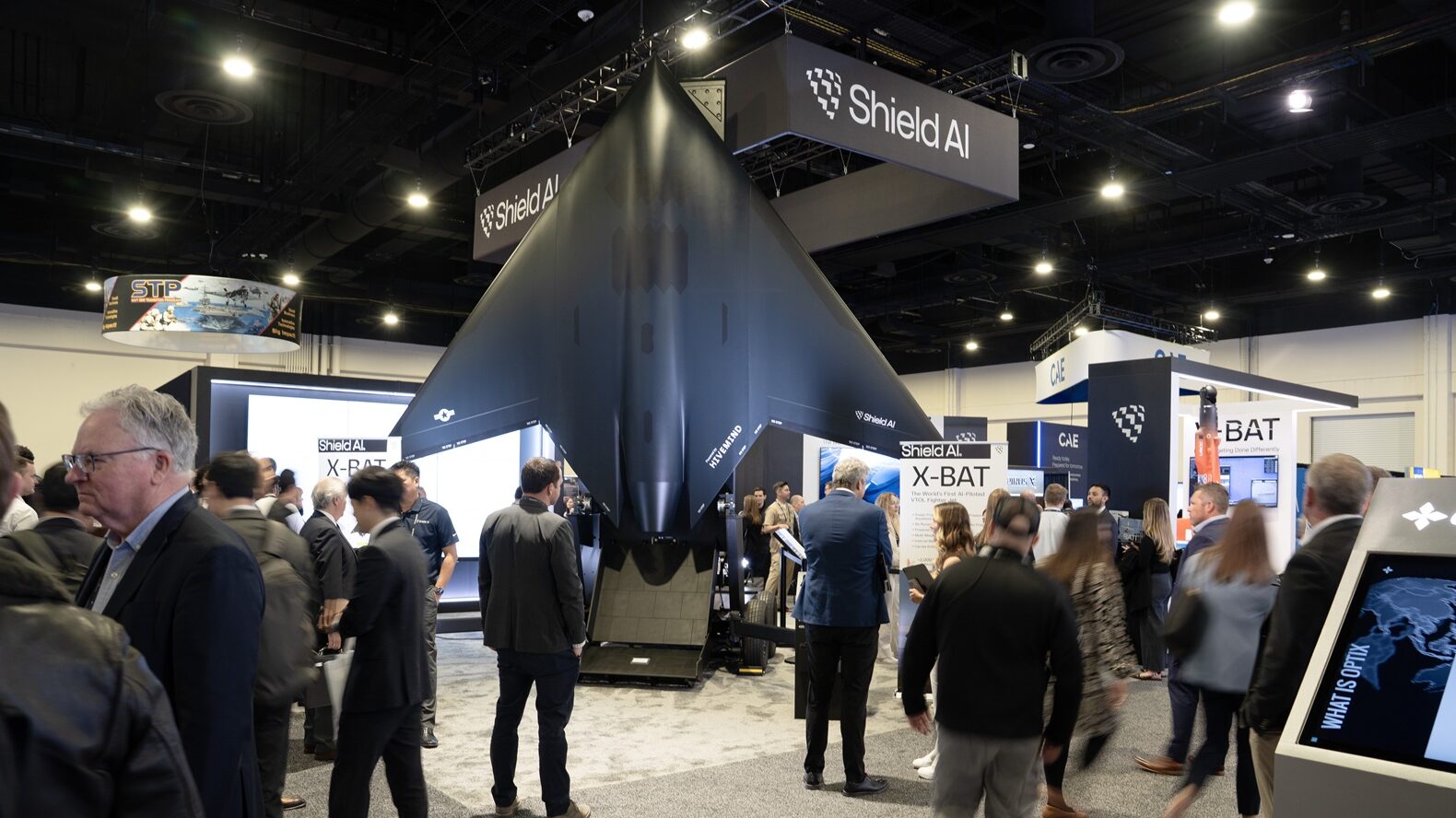
Navy and Shield AI Invest $300 Million in X-BAT Drone Development
The Navy and Shield AI have announced a joint investment of $300 million into the development of the X-BAT vertical takeoff and landing (VTOL) drone. This funding includes a $150 million modification to an existing agreement under the Pentagon’s Defense Exportability Features program, matched by Shield AI's own capital. This investment builds on an earlier $100 million in funding, which includes $50 million awarded by the Navy’s Rapid Capability Cell and the Defense Innovation Unit for the X-BAT program. The combined investment of $400 million aims to create a drone capable of long-range strikes with minimal infrastructure, addressing the Navy's need for unmanned aerial systems that can launch from smaller vessels. Flight testing for the X-BAT is scheduled for later this year, with production set to take place in the Seattle area and testing at Newton City-County Airport in Kansas. Shield AI has employed 500 engineers to support the project, which features a range of over 2,000 nautical miles and is marketed as the world’s first AI-piloted VTOL fighter jet.
Air Warfare Naval Warfare Air Force Defense Innovation Unit DIU Drones Navy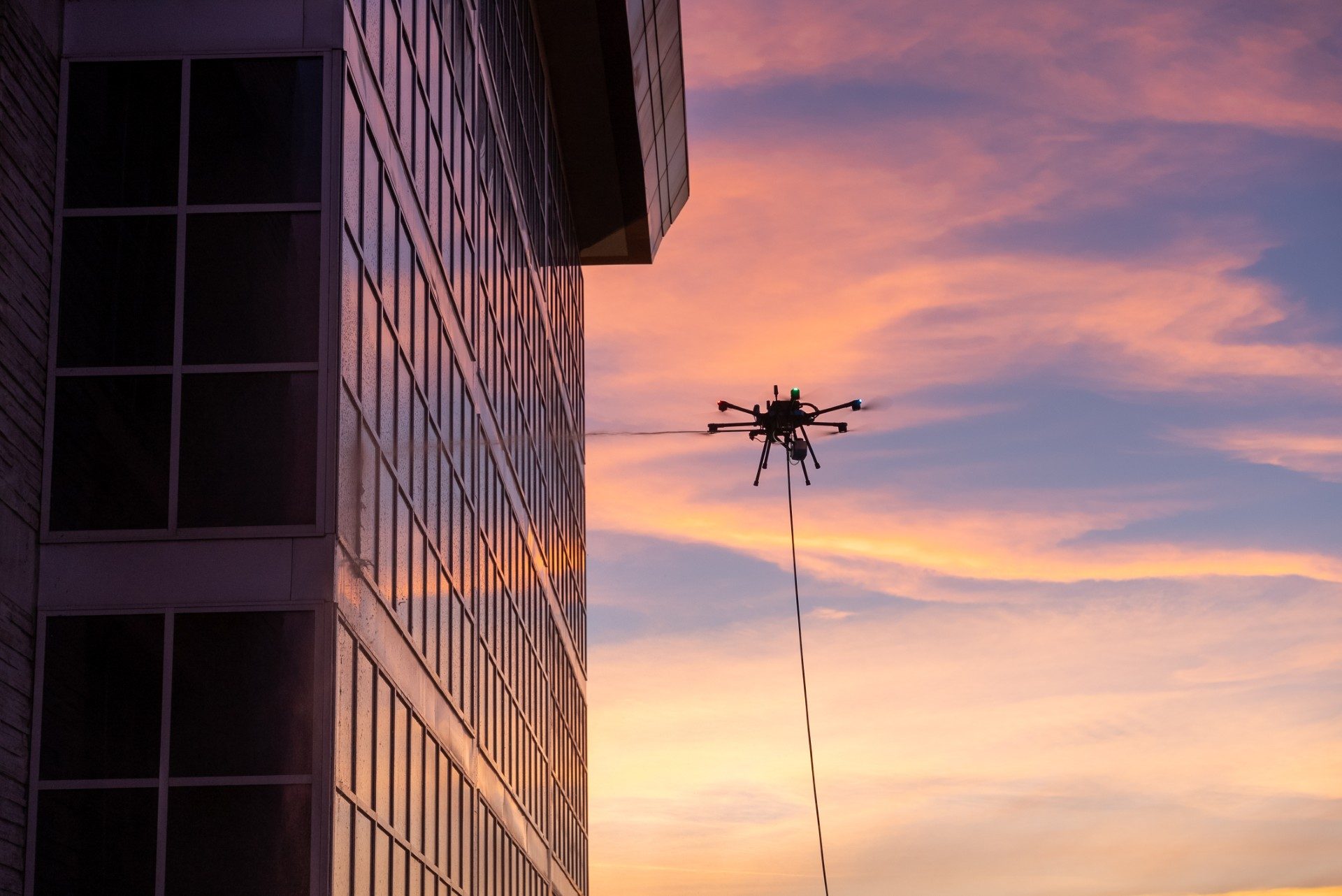
Lucid Bots Expands Drone Platform with New Power Tether and Enhanced Capabilities
Lucid Bots, led by CEO Andrew Ashur, is expanding its drone platform to include the Power Tether, which provides continuous electricity to UAVs. Founded in 2018, the Charlotte-based company has grown rapidly, employing around 80 people and serving over 400 customers across more than 40 states and three continents. The expansion into manufacturing the Power Tether is significant as it enhances the operational capabilities of Lucid Bots' drones, which are designed to replace hazardous human labor in exterior cleaning. Ashur's vision was inspired by the dangers faced by window washers, highlighting the need for safer alternatives in the cleaning industry. Looking ahead, Lucid Bots plans to ramp up production to manufacture 25 spraying drones and an equal number of Power Tethers each month. The company's innovative approach positions it to meet the growing global demand for efficient and safe exterior cleaning solutions, ensuring the maintenance of valuable real estate assets.
Drone News Drone News Feeds News Products aerial robotics American Made Drones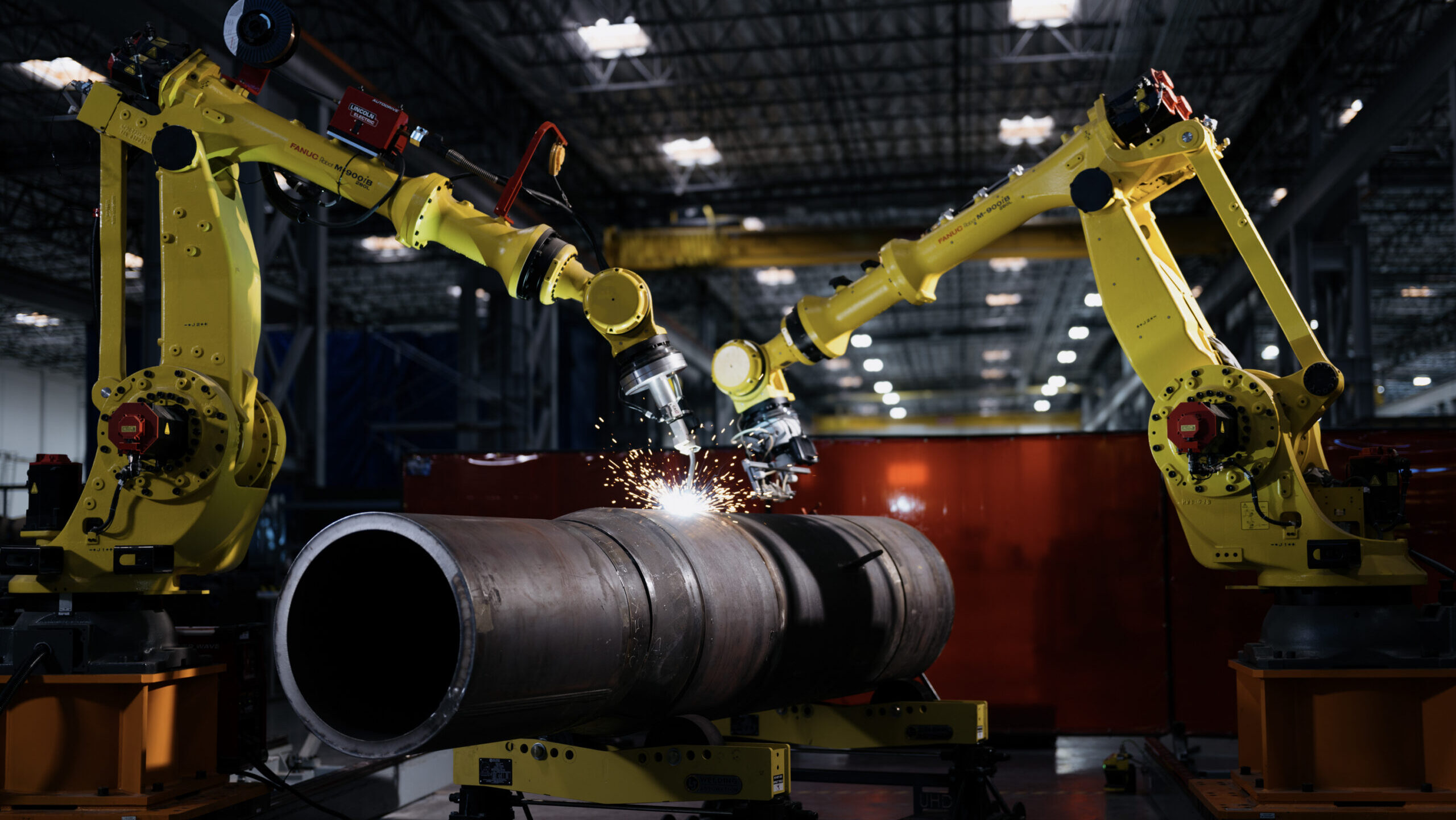
Gecko Robotics Partners with Anduril for New Arsenal-2 Shipyard in Baltimore County
Gecko Robotics has announced its collaboration with Anduril to deploy robotics and AI software at the new Arsenal-2 shipyard in Baltimore County, Maryland. This facility will focus on manufacturing submarine parts, utilizing Gecko's inspection technology for non-destructive testing (NDT) of components, and creating a digital thread for maintenance planning. The partnership is significant as it aligns with Anduril's $6.6 billion investment to enhance submarine production capabilities, including parts for Virginia-class submarines. The integration of Gecko's technology is expected to streamline inspection processes and improve quality control from the outset of operations at the new shipyard. Looking ahead, Anduril plans to commence construction of the Arsenal-2 shipyard after receiving necessary approvals, with initial operations targeted for 2030. The collaboration with Gecko Robotics is also set to extend to a new facility in Orange County, California, indicating a broader strategy to enhance submarine manufacturing efficiency and meet Navy production goals.
Naval Warfare Anduril artificial intelligence AI Gecko Robotics Navy submarine
AWS Unveils Open-Source Physical AI Toolchain for Robotics Development
Amazon Web Services (AWS) has launched an open-source Physical AI Toolchain aimed at assisting roboticists in transitioning from data collection to the deployment of AI models on robots. This toolchain integrates AWS services with NVIDIA’s Physical AI software, addressing the challenge of connecting various components necessary for effective AI-powered robotics. The significance of this launch lies in its potential to streamline the development process for AI models, allowing companies to focus on solving specific problems rather than managing infrastructure. AWS's Sri Elaprolu emphasized the importance of generating synthetic data and utilizing simulation to enhance model training and deployment, particularly in environments with variable conditions. Looking ahead, the toolchain is designed to support continuous improvement through a feedback loop, where data from deployed robots is used to refine models. While no further timeline was disclosed at the time of publication, AWS's toolchain draws on insights from Amazon's extensive robotics operations, which include over 1 million robots, and aims to adapt to diverse operational environments such as convenience stores.
Artificial Intelligence Artificial Intelligence / Cognition Design / Development News Amazon amazon robotics
AWS Introduces Open-Source Physical AI Toolchain to Enhance Robotics Development
Amazon Web Services (AWS) has launched an open-source Physical AI Toolchain aimed at assisting robotics developers in training, simulating, deploying, and enhancing physical AI systems using AWS cloud services and Nvidia’s software stack. This toolchain encompasses synthetic data generation, model training, simulation, edge deployment, and continuous improvement, enabling users to manage fleets of machines effectively. The significance of this launch lies in its potential to streamline the engineering efforts of manufacturers and robotics developers, allowing them to focus more on innovation rather than infrastructure. With one in seven startups engaged in physical AI and 72% of them deeming cloud computing essential, the toolchain is positioned to support a wide range of applications, from industrial automation to humanoid robotics. Looking ahead, AWS's Physical AI Toolchain is expected to play a crucial role in the evolution of physical AI across various industries. As companies increasingly adopt this technology, the toolchain's capabilities for fleet management and operational data integration will be vital for improving performance and scalability in real-world applications. No further timeline was disclosed at the time of publication.
AI Physical AI Technology & Infrastructure AI infrastructure platform Amazon Amazon Web Services
AWS Startups Report Reveals Rapid Growth of Physical AI Amid Market Readiness Challenges
A report from AWS Startups in collaboration with Strand Partners indicates that 15% of startups across 20 markets are developing physical AI technologies. However, only 26% of these startups believe their local markets are ready for deployment, with 70% citing slow adoption as a significant barrier to growth. The report highlights the critical role of cloud infrastructure, with 72% of builders deeming it essential for development. Additionally, 62% of respondents indicated they could not have initiated their projects without cloud computing, while 56% noted that limited computing power hampers progress. Manufacturing and automotive sectors lead in commercial deployment at 51%, followed closely by logistics and retail at 47%. Looking ahead, 76% of builders anticipate that physical AI will become mainstream in their industries within five years, with 36% expecting this transition within two years. However, the report emphasizes that increased customer awareness, technical skills, funding, and clearer regulations are necessary for broader adoption.
Business & Markets Startups Technology & Infrastructure AI Amazon Asia
Tesla Unveils Patent for Flexible Touch Sensors in Robotic Hands
Tesla has published a patent application detailing flexible touch sensors designed for robotic fingers and palms, potentially linked to its Optimus project. The U.S. application, US20260310299A1, was made public on October 8, 2025, and highlights earlier engineering efforts rather than a new product launch. The significance of this development lies in Tesla's exploration of integrating touch sensing technology into the contours of robotic hands, which could enhance the functionality of humanoid robots. The sensors feature multiple independently readable regions to detect physical contact, suggesting a sophisticated approach to tactile feedback in robotics. Looking ahead, the application raises questions about the manufacturing techniques Tesla may employ and whether these sensors will effectively address existing challenges in the production of Optimus. No further timeline was disclosed at the time of publication.
Tesla US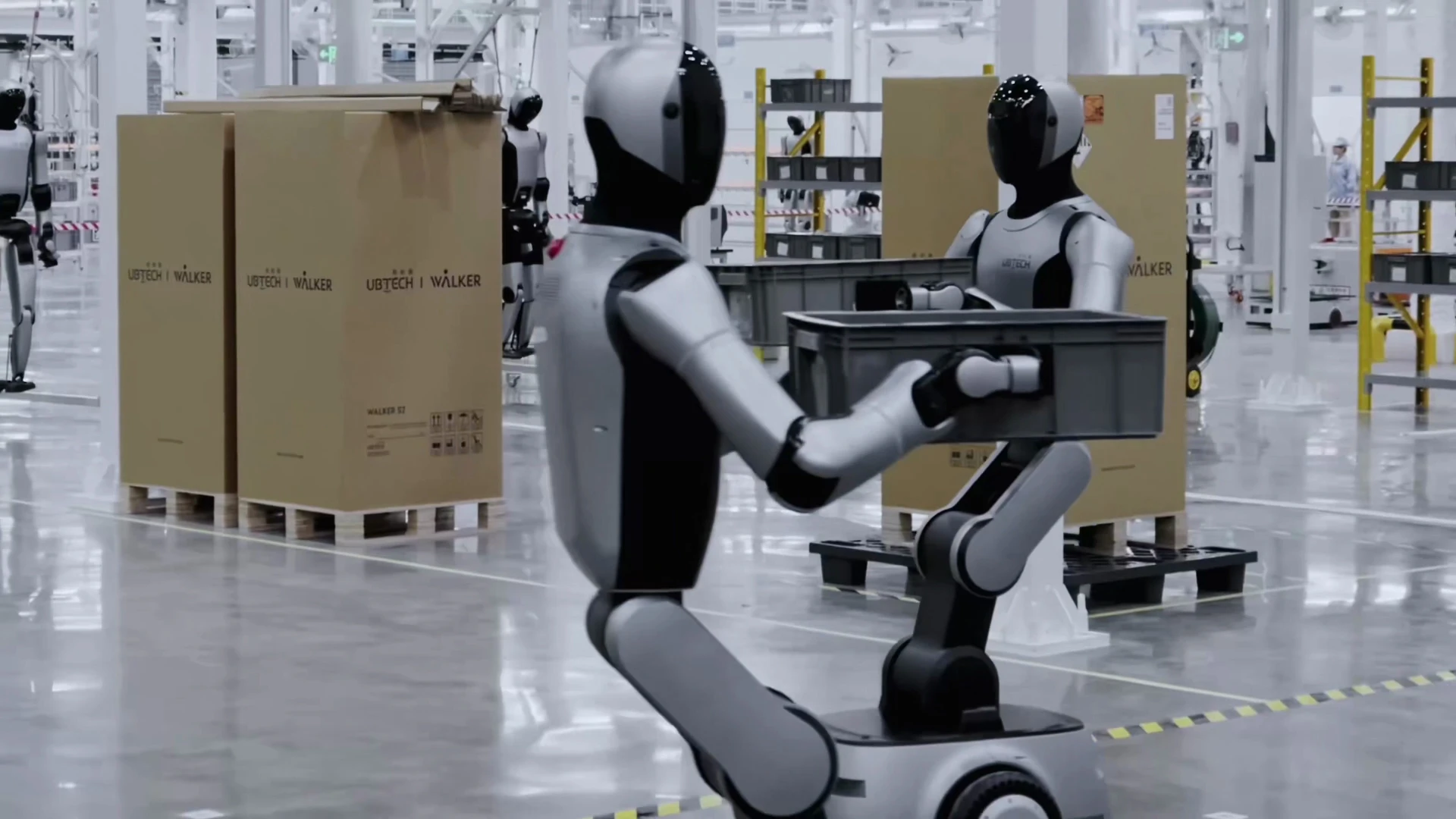
UBTECH and FAW-Volkswagen Enhance Partnership to Develop Humanoid Robots for Logistics
UBTECH and FAW-Volkswagen have announced a partnership to develop and test humanoid robot applications for logistics, building on their existing collaboration in manufacturing. This strategic cooperation, revealed on October 8, aims to create demonstration applications that promote humanoid solutions for smart manufacturing, addressing the increasing demand for personalized vehicles. The significance of this partnership lies in its potential to enhance flexibility in manufacturing processes. As automakers like FAW-Volkswagen adapt to changing consumer preferences, the integration of humanoid robots could streamline logistics operations, thereby improving efficiency and productivity on the factory floor. UBTECH's previous work with FAW-Volkswagen at the Qingdao plant, where the Walker S Lite was used for quality inspections, showcases the practical applications of their technology. Looking ahead, the partnership raises questions about the specific logistics tasks that humanoid robots will be able to perform reliably. While the agreement focuses on joint development and testing, it does not disclose details about the robot models or the facilities involved. No further timeline was disclosed at the time of publication.
China UBTECH Robotics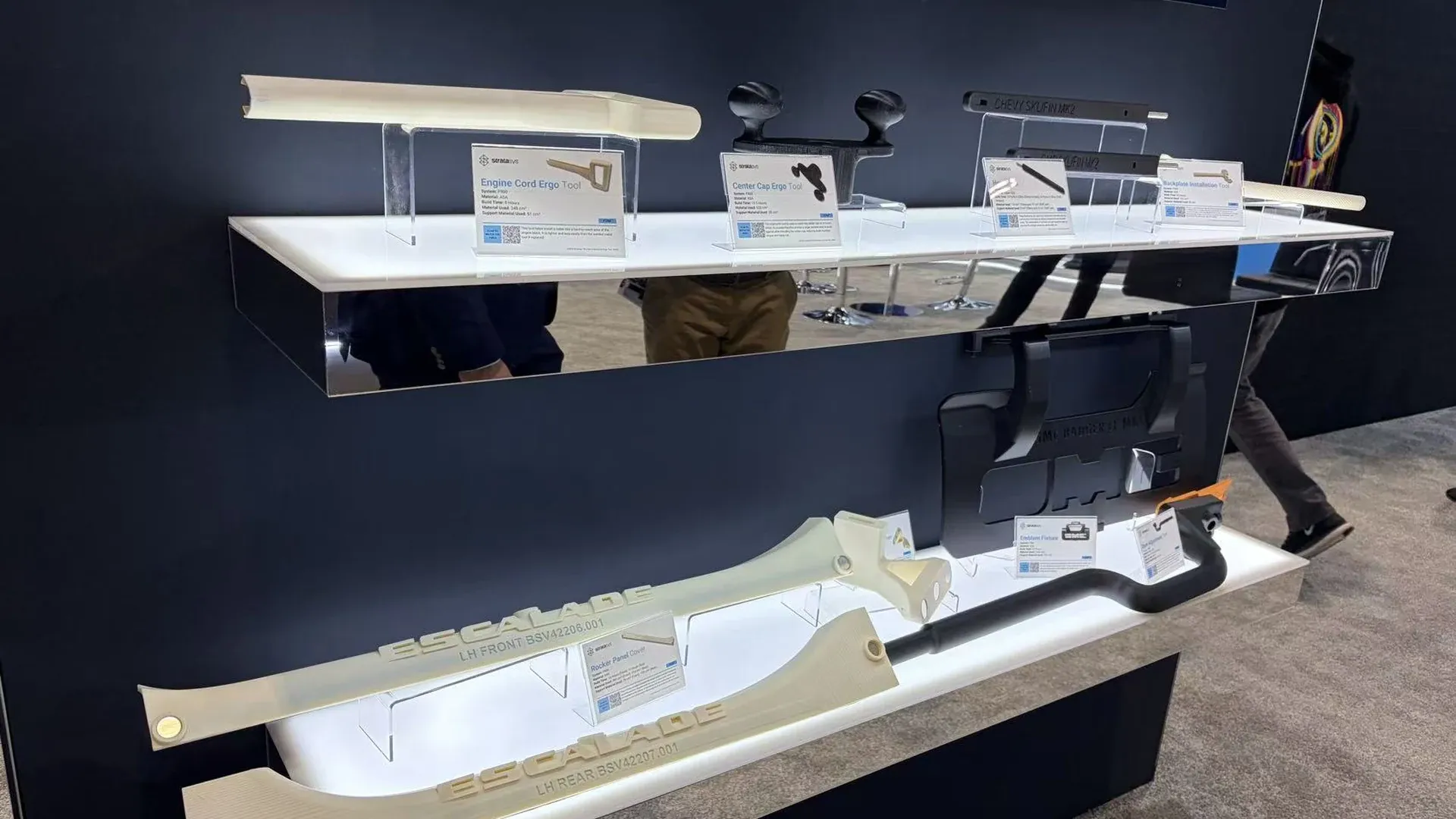
Stratasys at IMTS 2026: GM Scales Additive to 20+ Plants
Stratasys is rolling additive out across 20+ GM plants while Toyota prints robot grippers. Booth build data, the F870, and where the cost case breaks.
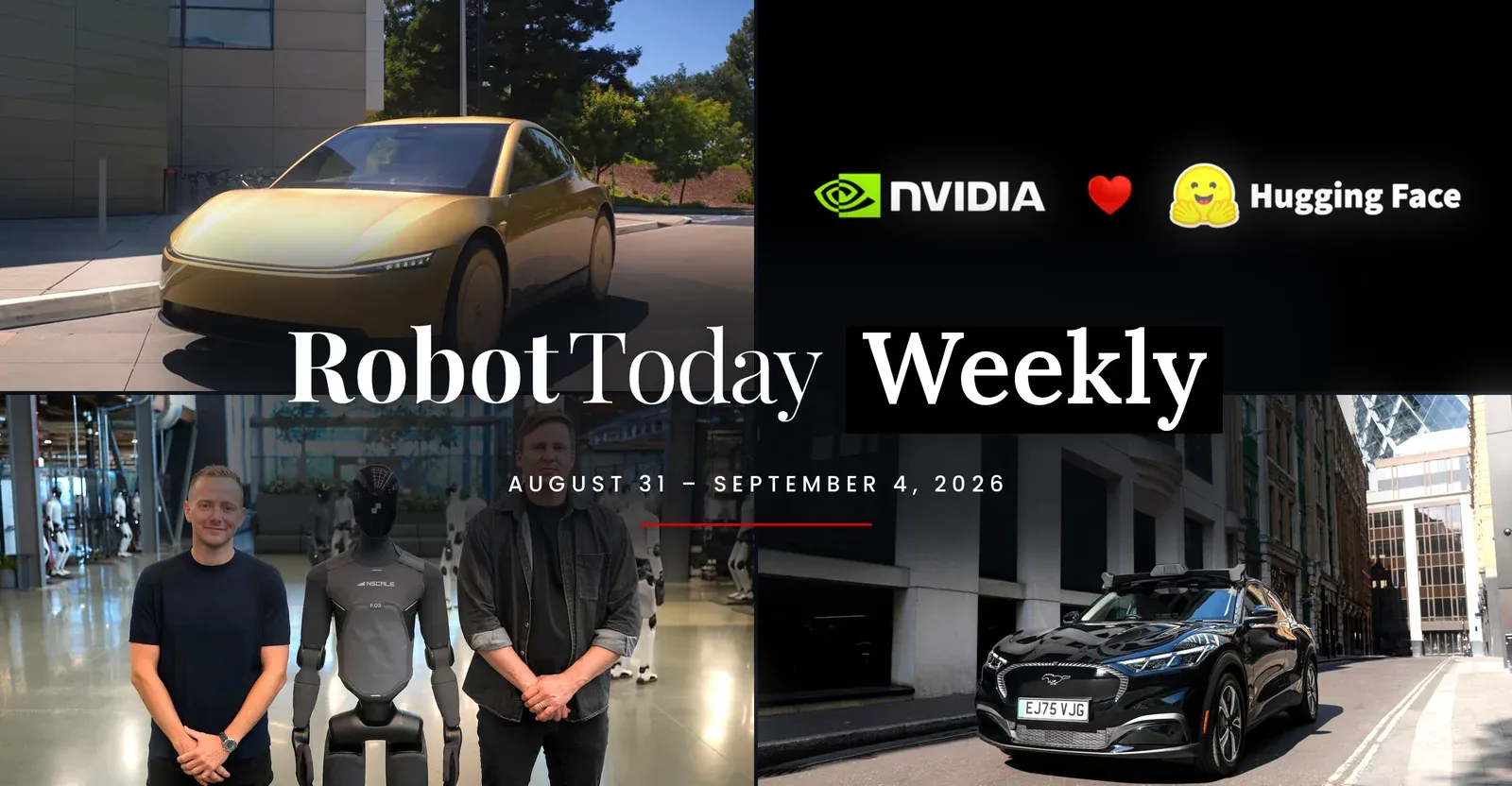
RobotToday Weekly Briefing August 31 – September 4, 2026
This week in robotics: NVIDIA agrees to buy Hugging Face for $12.93 billion, Figure signs a $3.5 billion compute deal with Nscale for up to 100,000 GPUs, Tesla launches steering-wheel-free Cybercabs in Austin under NHTSA scrutiny, and Uber and Wayve bring the UK its first autonomous rides. August 31 – September 4, 2026.

ROBOTTODAY WEEKLY August 17 – 21, 2026
This week in robotics: Unitree surges 629% in its Shanghai STAR Market debut at a $66 billion valuation, Nevada approves 7,000 robotaxis, Amazon Prime Air expands to nearly 500 US cities, and Beijing's World Robot Conference marks the industry's pivot from spectacle to scale. August 17–21, 2026.

Inside Saga Robotics: UVC Light vs. Crop Disease
Saga Robotics CPO Damian Flynn on the Thorvald platform's UVC treatment system, its jump from UK strawberries to California wine grapes, and why he's “incredibly bullish” on applying automation and robotics into industries “most chaotic environment.”

ROBOTTODAY Weekly July 27 – 31, 2026
Your weekly robotics briefing: the US bans imports of Chinese humanoid robots, Google DeepMind unveils Gemini Robotics 2, Unitree pushes toward its Shanghai IPO, and Amazon's Zoox wins approval for paid robotaxi rides.
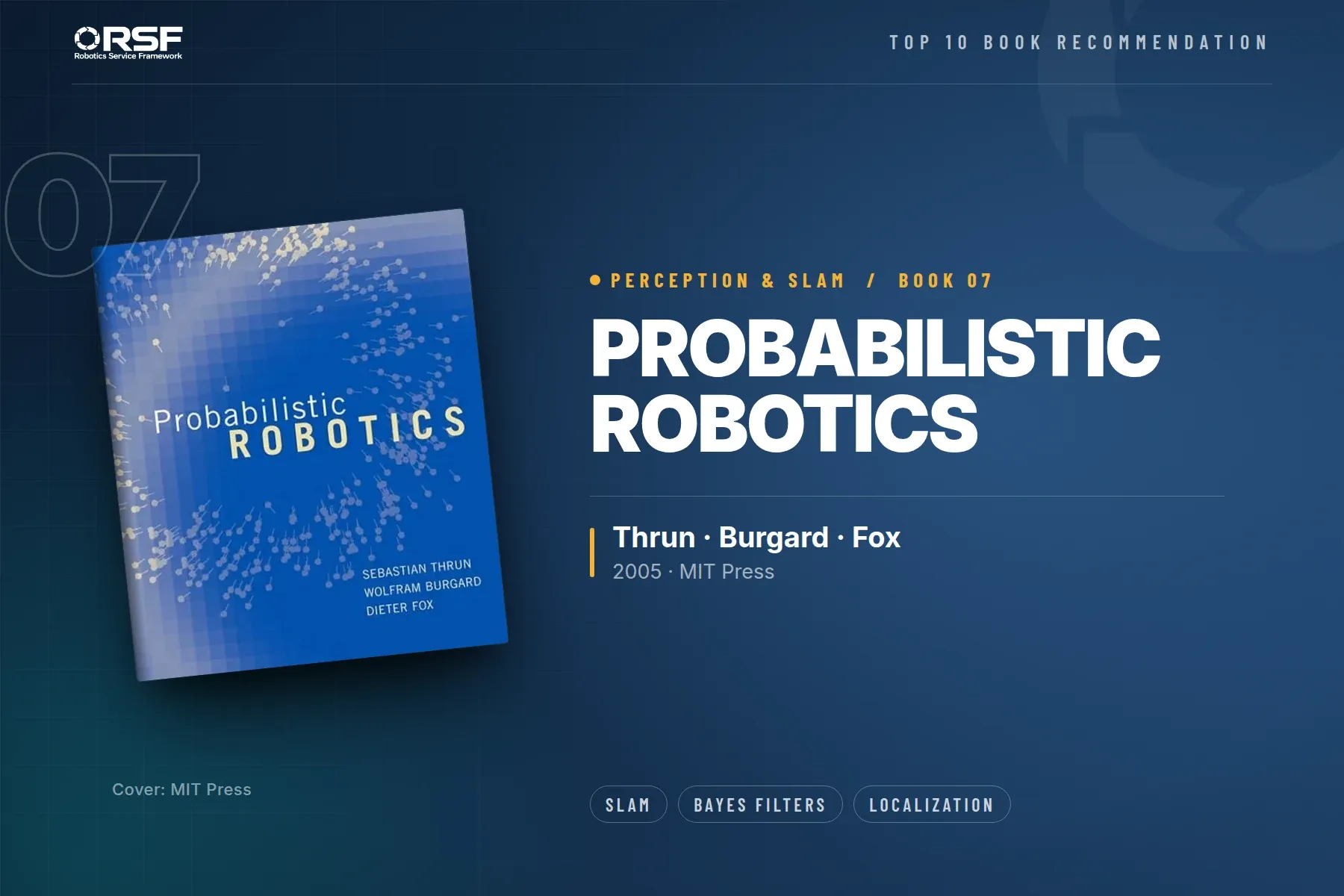
Probabilistic Robotics Thrun, Burgard & Fox — RSF Top 10 Robot Education Textbooks · No. 7
An AMR that lost localization broke nothing you can touch. Thrun explains Layer 4 faults: belief, Bayes filters, SLAM. Budget 12-15 hours.

Autonomous Mobile Robots Siegwart, Nourbakhsh & Scaramuzza — RSF Top 10 Robot Education Textbooks · No. 3
AMR and AGV fleets are the biggest robot service market. Siegwart decodes the vendor manual: odometry, localization, cost maps.
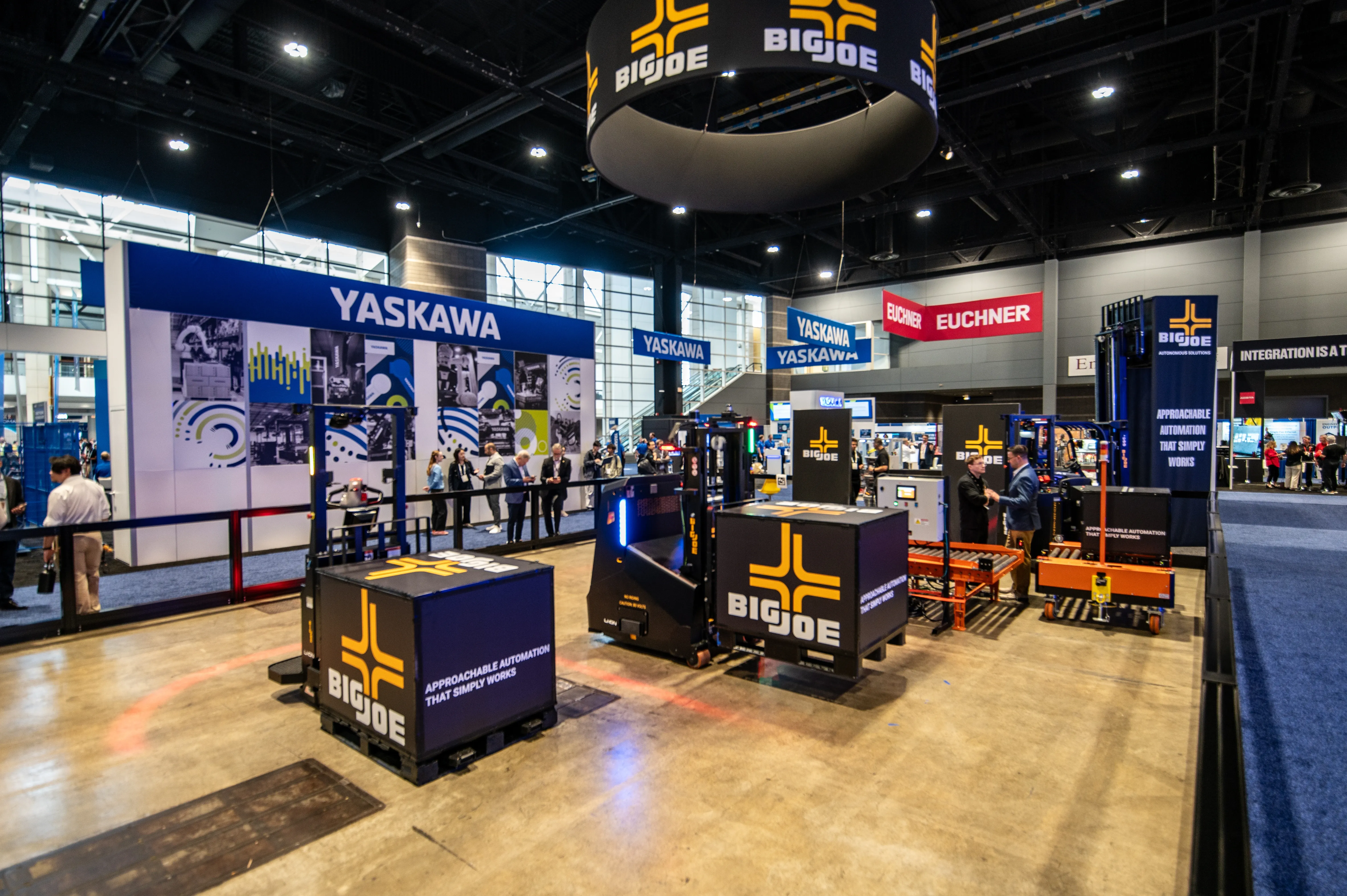
Big Joe's Four-Product AMR Push at Automate 2026: What It Reveals About the North American Warehouse Automation Market
RobotToday analyzes Big Joe's four new autonomous vehicles launched at Automate 2026 — AP44, ASC40, ATC100, ACV40 — in the context of North America's warehouse labor shortage and AMR market growth.
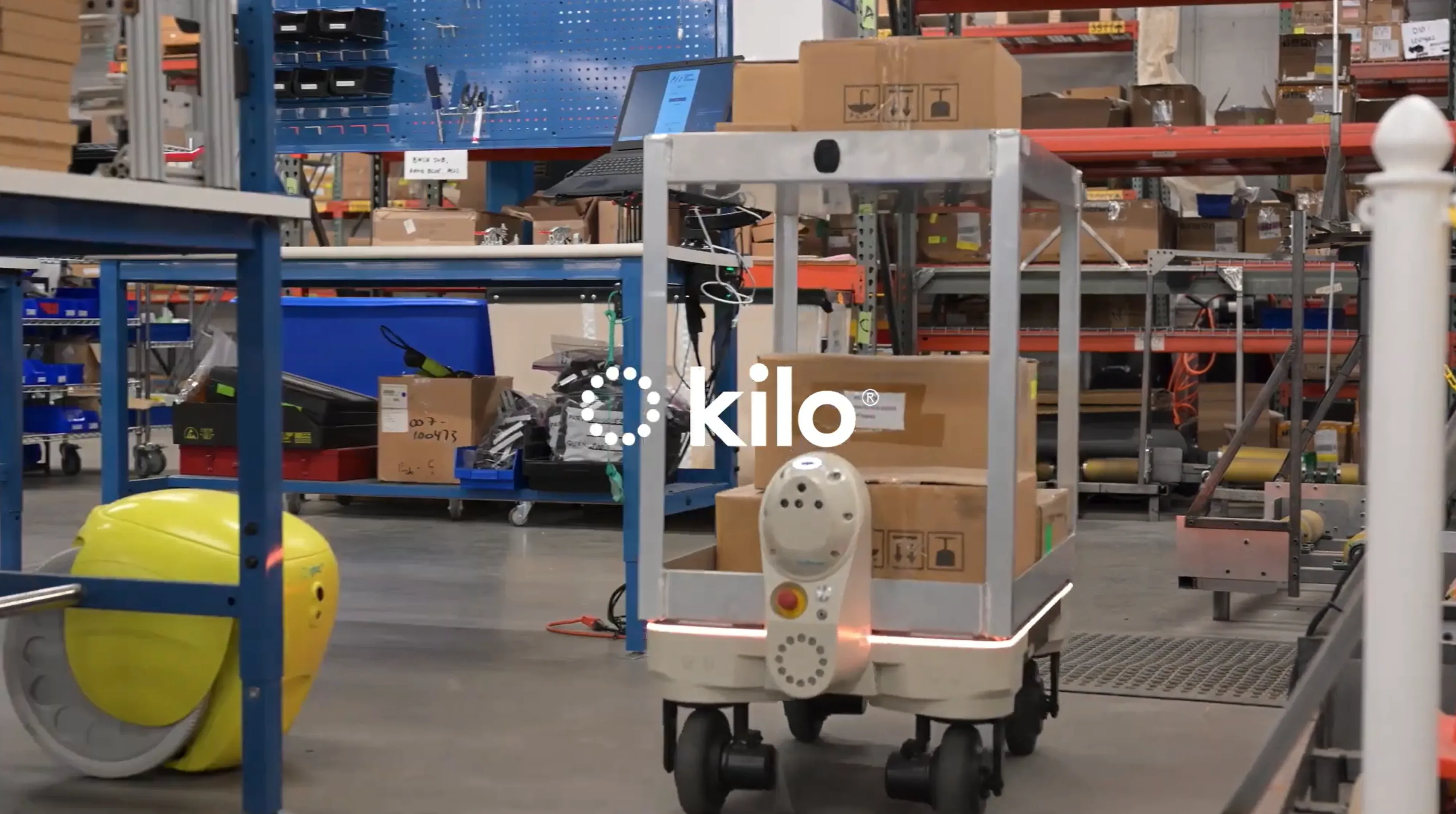
Piaggio Fast Forward Brings kilo® Autonomous Mobile Robot to Automate 2026
Piaggio Fast Forward showcases kilo®, an infrastructure-free collaborative AMR (300 lb payload, 360° LiDAR), at Automate 2026 booth #17054.
When a Materials Giant Meets Robotics: Covestro at Automate 2026
At Automate 2026, Covestro brought Makrolon, Bayblend, Baysafe BEF and Vulkollan to robotics — tackling weight, heat, sensing and sustainability for humanoids and AGV/AMRs.


