

Tsubame Lab
"BeyondAutomation"
Tsubame Lab, a 2025 Tokyo startup from Science Tokyo researchers, automates R&D labs using robotic arms and AMRs run on its open-source Tsubame Studio platform.
Contact Tsubame Lab
WEBSITE
https://www.tsubamelab.com/enHEADQUARTERS
Japan

Company Facts
Founded
2025
Primary Role
System Integrator
Company Size
-
Primary Region
Asia-Pacific
Annual Sales
-
Funding Stage
-
Funding Total
-
Teradyne Robotics and Elite Robots Resolve Legal Dispute Over Collaborative Robots
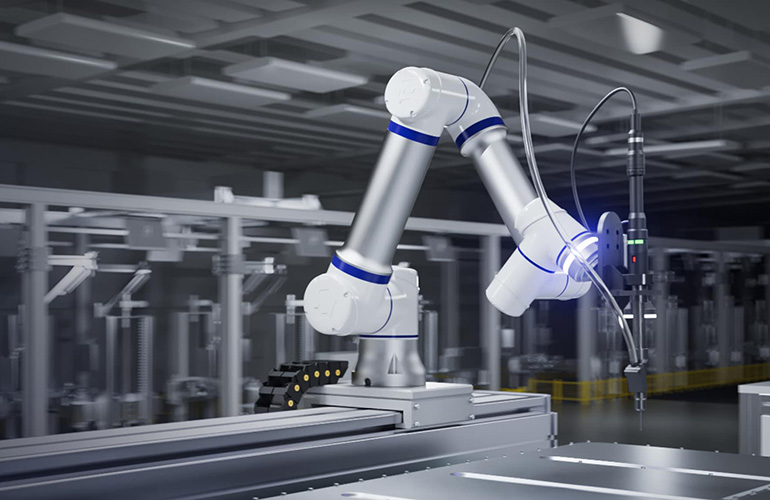
Teradyne Robotics and Elite Robots have mutually agreed to settle a legal dispute concerning the similarities between their collaborative robots and software. The settlement, announced on October 1, aims to conclude the ongoing legal proceedings without disclosing specific terms. Teradyne, a leader in collaborative robot arms, has sold over 100,000 units since its inception in 2005. This resolution is significant as it reflects both companies' desire to avoid the costs and time associated with continued litigation. Teradyne had previously filed a lawsuit against Elite Robots Deutschland GmbH, alleging copyright infringement related to Universal Robots software. The case included a preliminary injunction from the Regional Court of Hamburg, which restricted Elite Robots' use of the disputed software in Germany. Looking ahead, the lack of disclosed terms leaves uncertainty regarding any potential financial payments or changes to Elite Robots' offerings. The settlement follows Universal Robots' recent launch of its seventh-generation platform, which may influence future developments in the collaborative robotics sector. No further timeline was disclosed at the time of publication.
China Cobot Arms Collaborative Robots News Regulatory & Compliance Software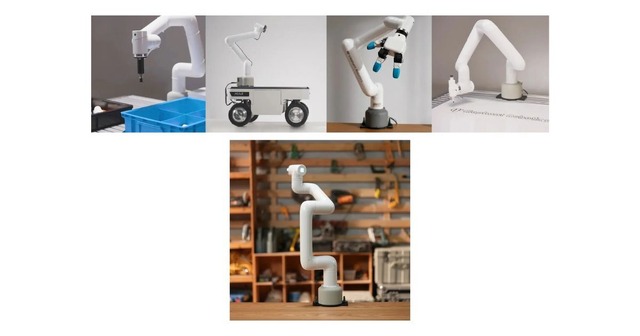
Asmech Launches Elephant Robotics' New Collaborative Robot Arm myCobot Pro 630
Asmech Corporation announced on October 7, 2026, the launch of the myCobot Pro 630, a new collaborative robot arm from Elephant Robotics based in Shenzhen, China. This model is the latest in the myCobot series, designed to meet the automation needs of actual production environments, extending beyond research and education applications. The myCobot Pro 630 features a maximum payload of 2,000g and a working radius of 630mm, making it suitable for a wide range of industrial applications such as parts picking, transportation, and simple assembly. With a repeatability of ±0.1mm, it is capable of precise positioning tasks, addressing the growing demand for user-friendly and scalable solutions in industrial automation. Asmech has established a comprehensive support system, including engineers for product selection and post-installation technical support. The anticipated applications of the myCobot Pro 630 include automation in manufacturing lines, research and development in educational institutions, and practical robotics education in vocational training schools, marking a significant step towards automation for small and medium-sized factories. No further timeline was disclosed at the time of publication.
TD SYNNEX Partners with KUKA Group to Enhance Robotics Distribution in Europe
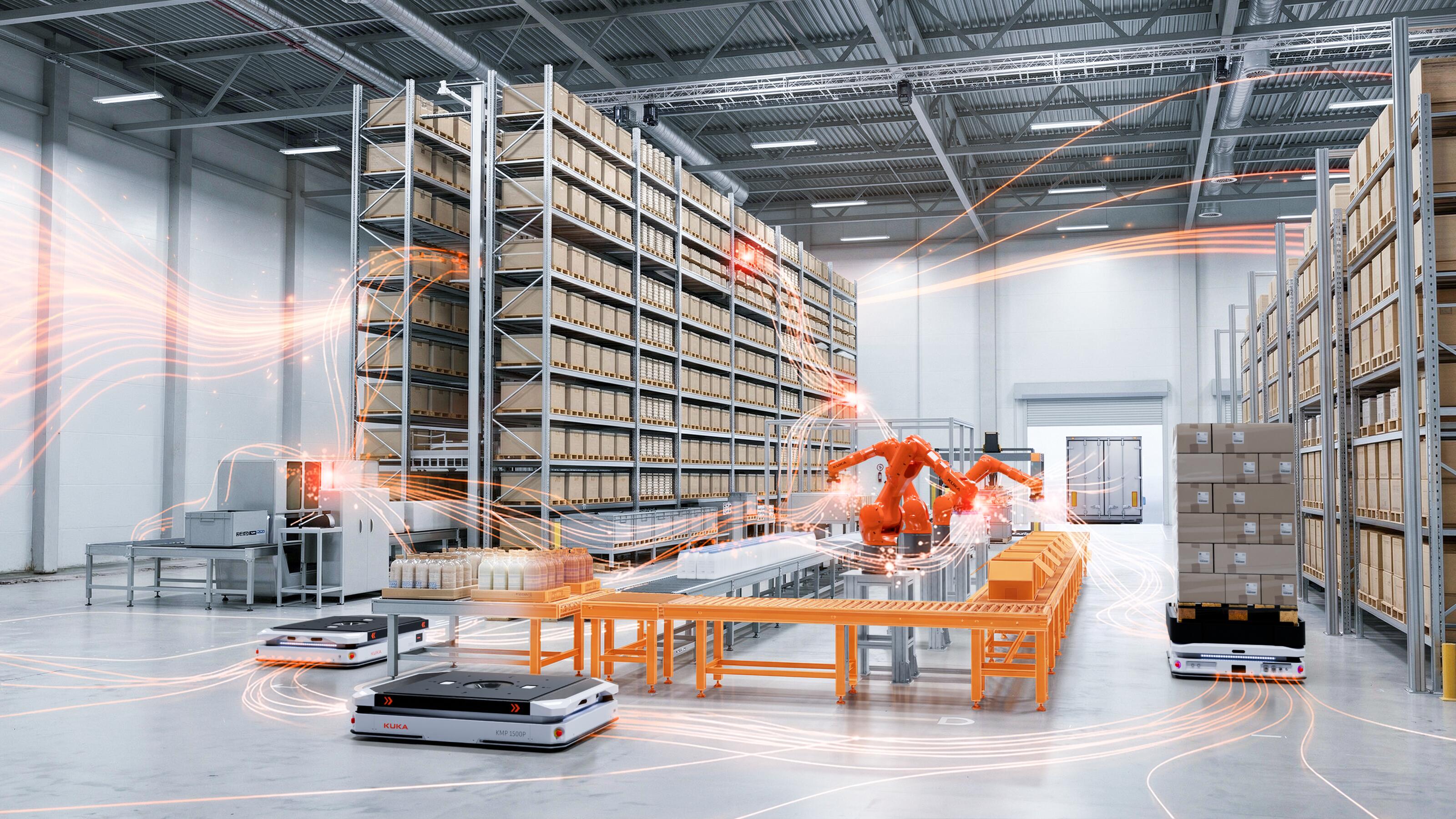
TD SYNNEX has announced a distribution agreement with KUKA Group, granting access to KUKA's autonomous mobile robot portfolio for partners across Europe. This initiative, which begins in the UK, France, Spain, and Benelux, aims to support partners with enablement, training, and demand generation to foster growth in robotics and automation practices. The partnership is significant as it bridges the gap between operational technology and information technology, facilitating the adoption of Physical AI. By combining robotics with AI, cloud, and data infrastructure, TD SYNNEX and KUKA Group aim to provide scalable intelligent automation solutions, addressing the growing demand in various sectors such as manufacturing, logistics, and healthcare. Looking ahead, the focus will initially be on KUKA's autonomous mobile robots, with plans to introduce collaborative robots and industrial software as the partnership evolves. No further timeline was disclosed at the time of publication.
Doosan Robotics Secures W98.9b for AI Manufacturing Platform Development
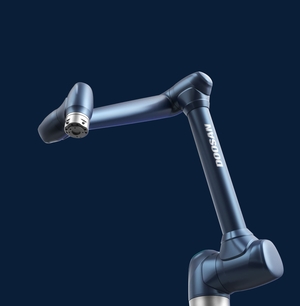
Doosan Robotics announced it has obtained two significant R&D contracts from the Korean government to create South Korea's first physical AI manufacturing platform. The initiative will integrate domestic semiconductors into collaborative robots, with a total funding of 98.9 billion won ($50.7 million) from government subsidies and additional investment from Doosan. This development is crucial as it aims to enhance manufacturing efficiency and security by processing multimodal data directly within the robots, thereby reducing reliance on external systems. The projects will focus on creating advanced cobot models and an industrial humanoid, targeting sectors such as defense, nuclear energy, and biopharmaceuticals, with commercialization expected by 2031. Looking ahead, the second project will leverage AI and digital twin technology for high-precision welding in nuclear energy components, aiming for a significant reduction in production time. Field trials will be conducted at Doosan Enerbility’s facilities, with plans to extend this technology into shipbuilding and defense industries. No further timeline was disclosed at the time of publication.
All News
Doosan Robotics to Lead Two Major South Korean Physical AI Projects with $74 Million Budget
Doosan Robotics has been selected to spearhead two government-backed physical AI projects in South Korea, with a total R&D budget of approximately $74 million. The projects will focus on developing on-device AI collaborative robots and intelligent welding systems, with about $51 million funded by the government. The first project aims to create collaborative robots that utilize locally processed sensor data for perception, decision-making, and control, while the second project will enhance welding processes for complex tasks, including those in nuclear power equipment. Doosan Robotics plans to integrate technologies from both projects into a comprehensive physical AI system. Looking ahead, Doosan Robotics targets commercialization of its collaborative robots by 2031, with ongoing demonstrations and safety certifications planned. The intelligent welding project will also extend its applications into shipbuilding and defense after initial testing in nuclear power manufacturing. No further timeline was disclosed at the time of publication.
AI Funding & Investment Business & Markets Physical AI Aidin Robotics collaborative robots Doosan Robotics
Epson Showcases Color Labeling and Robotic Automation at PACK EXPO 2026
Epson has announced its participation in PACK EXPO International, scheduled from October 18 to 21, 2026, where it will demonstrate its ColorWorks® on-demand color label printers, collaborative robots, and vision technology. These innovations aim to enhance the efficiency of packaging and fulfillment operations. The introduction of ColorWorks printers allows manufacturers to produce high-quality, customized color labels on demand, addressing the growing need for flexibility in labeling processes. Coupled with robotic automation, these solutions are designed to streamline various tasks, including handling, inspection, and packaging, thereby improving overall productivity. As the event approaches, industry professionals should watch for how Epson's integrated solutions can transform labeling and packaging workflows. No further timeline was disclosed at the time of publication.

FANUC America Showcases Advanced Automation Technologies for Welding and Painting at FABTECH 2026
FANUC America, a leader in industrial automation, will present its cutting-edge automation solutions at FABTECH 2026. The showcased technologies will include advanced welding automation, collaborative robotics, laser processing, and paint automation, highlighting FANUC's commitment to innovation in the fabrication industry. This demonstration is significant as it underscores the growing importance of automation in enhancing efficiency and precision within the fabrication sector. By integrating advanced technologies, FANUC America aims to address the evolving needs of manufacturers seeking to optimize their production processes and improve overall operational performance. Industry professionals should watch for FANUC's latest advancements in automation, particularly in welding and painting applications. These innovations could set new standards in the industry, driving further adoption of automated solutions in manufacturing environments. No further timeline was disclosed at the time of publication.

Techman Robot Achieves IEC 62443-4-2 SL2 Certification for TM AI Cobot S Series
Techman Robot has become the first manufacturer of built-in vision AI collaborative robots to receive the IEC 62443-4-2 Security Level 2 (SL2) certification for its TM AI Cobot S Series. This certification was awarded following an independent evaluation by DEKRA. The achievement is significant as it enhances the cybersecurity framework necessary for the deployment of collaborative robots in interconnected manufacturing settings. This certification ensures that Techman Robot's products meet stringent security requirements, which is crucial for maintaining trust in automated systems. Looking ahead, the focus will be on how this certification impacts the adoption of collaborative robots in various industries. No further timeline was disclosed at the time of publication.

Epson to Showcase ColorWorks Labeling and Robotics at PACK EXPO 2026
Epson has announced its participation in PACK EXPO International, taking place from October 18 to 21, 2026, where it will demonstrate the integration of its ColorWorks on-demand color label printers with collaborative robots and vision technology. This combination aims to enhance packaging and fulfillment operations by providing high-quality, customized labels and streamlining tasks such as handling and inspection. The significance of Epson's showcase lies in its focus on flexibility within the packaging process, which is increasingly important for meeting personalized customer demands. Andrew Kim, product manager at Epson America, emphasized that the ColorWorks solutions empower businesses to take greater control over their labeling and packaging processes, ultimately improving productivity and managing costs. Looking ahead, Epson's display will highlight how its PrecisionCore technology in ColorWorks printers can deliver dynamic labels efficiently. No further timeline was disclosed at the time of publication.
Label Printing Robotics Packaging Automation Industrial Automation Retail Automation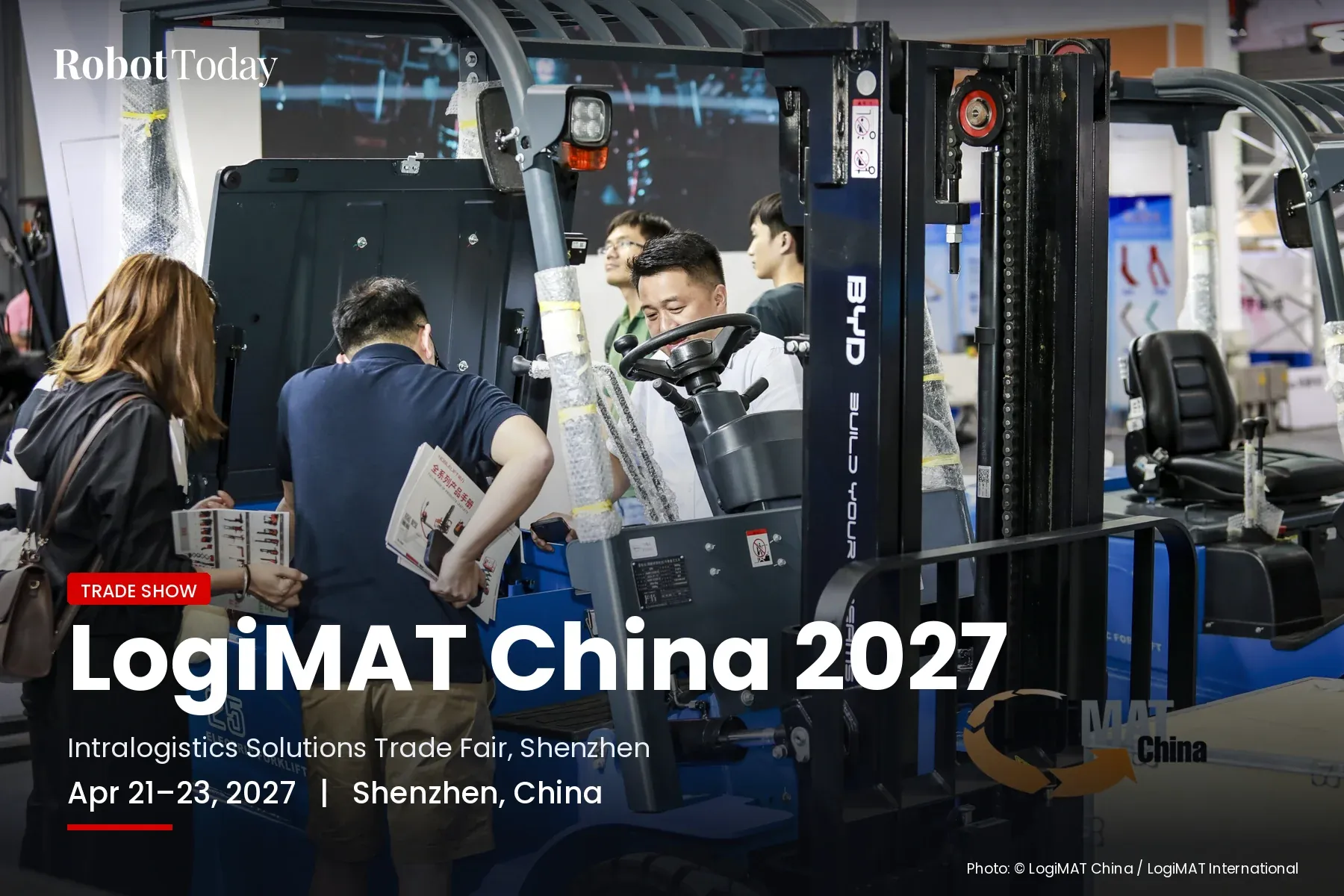
LogiMAT China 2027: April 21–23, Shenzhen
LogiMAT China 2027 runs April 21–23 in Shenzhen, featuring AMRs, smart sorting, 3D-vision picking and AI logistics from the Greater Bay Area robotics base.
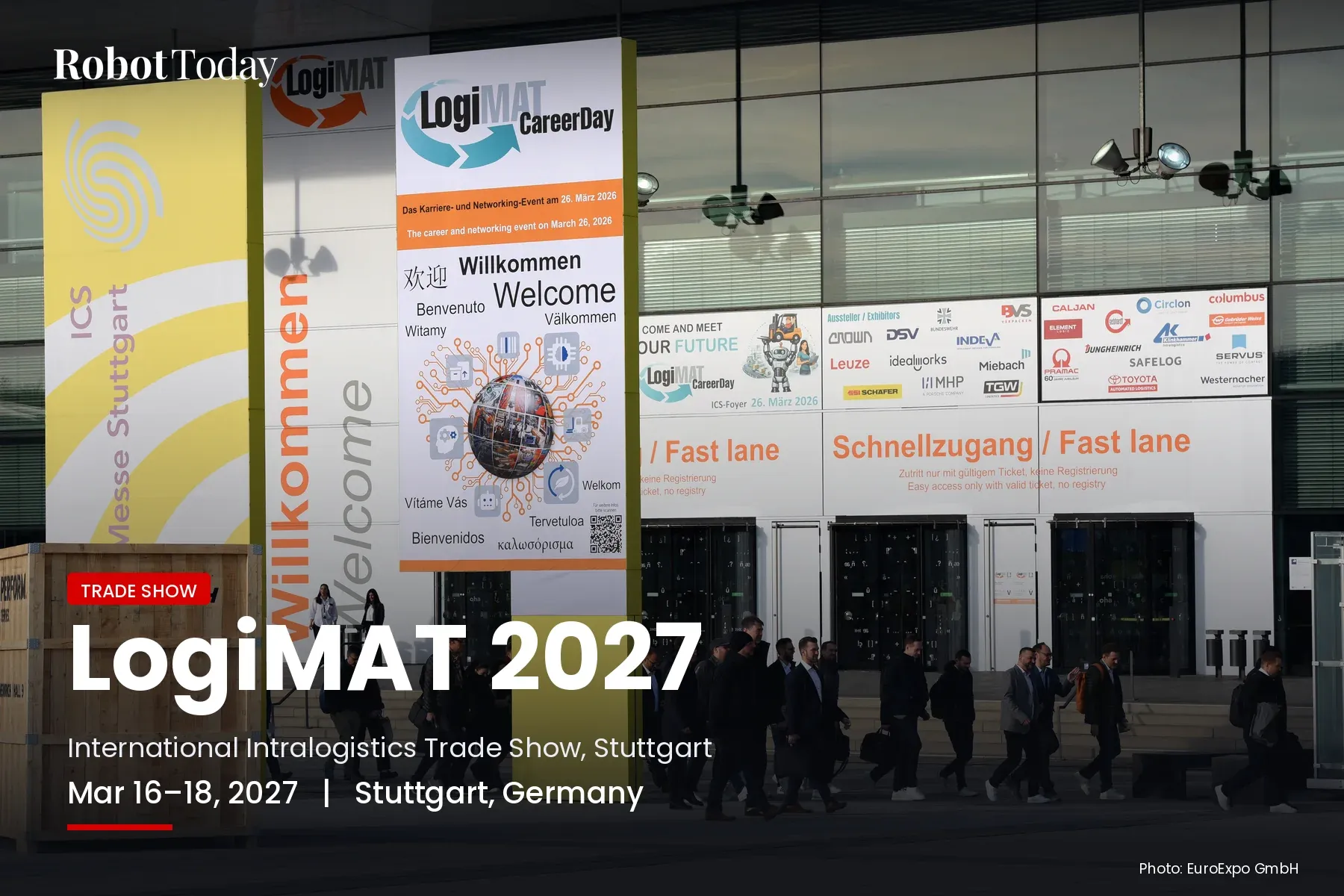
LogiMAT 2027: March 16–18, Messe Stuttgart
Meta description LogiMAT 2027 runs March 16–18 at Messe Stuttgart under the theme "MIND MEETS MACHINE", with AI, AMRs and humanoid robots in focus for intralogistics.
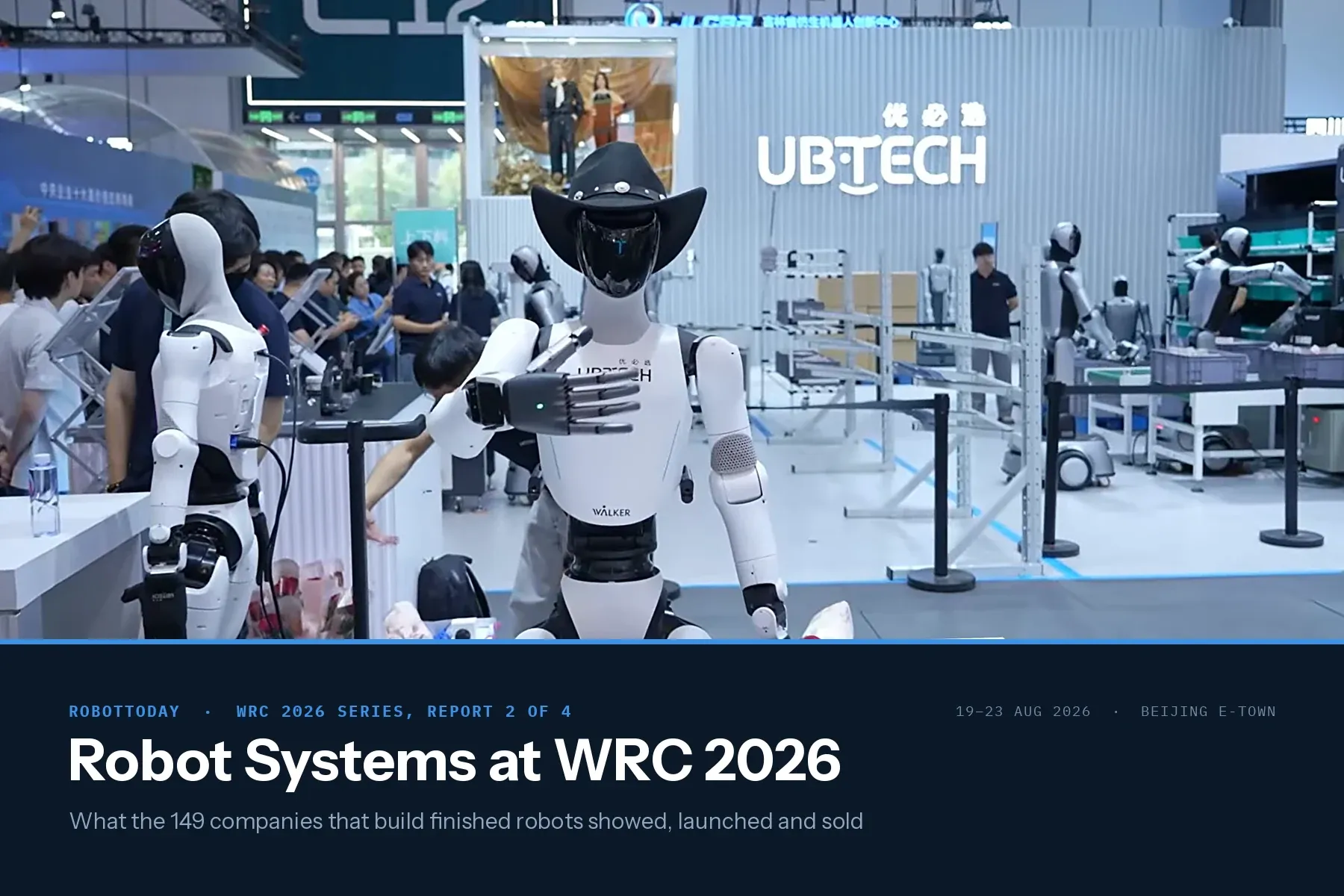
WRC 2026 Robot Systems: 149 Companies That Build Robots
149 of the 248 classified WRC 2026 exhibitors build finished robots. 93 build humanoid or legged machines. The audited humanoid sales number is one unit.
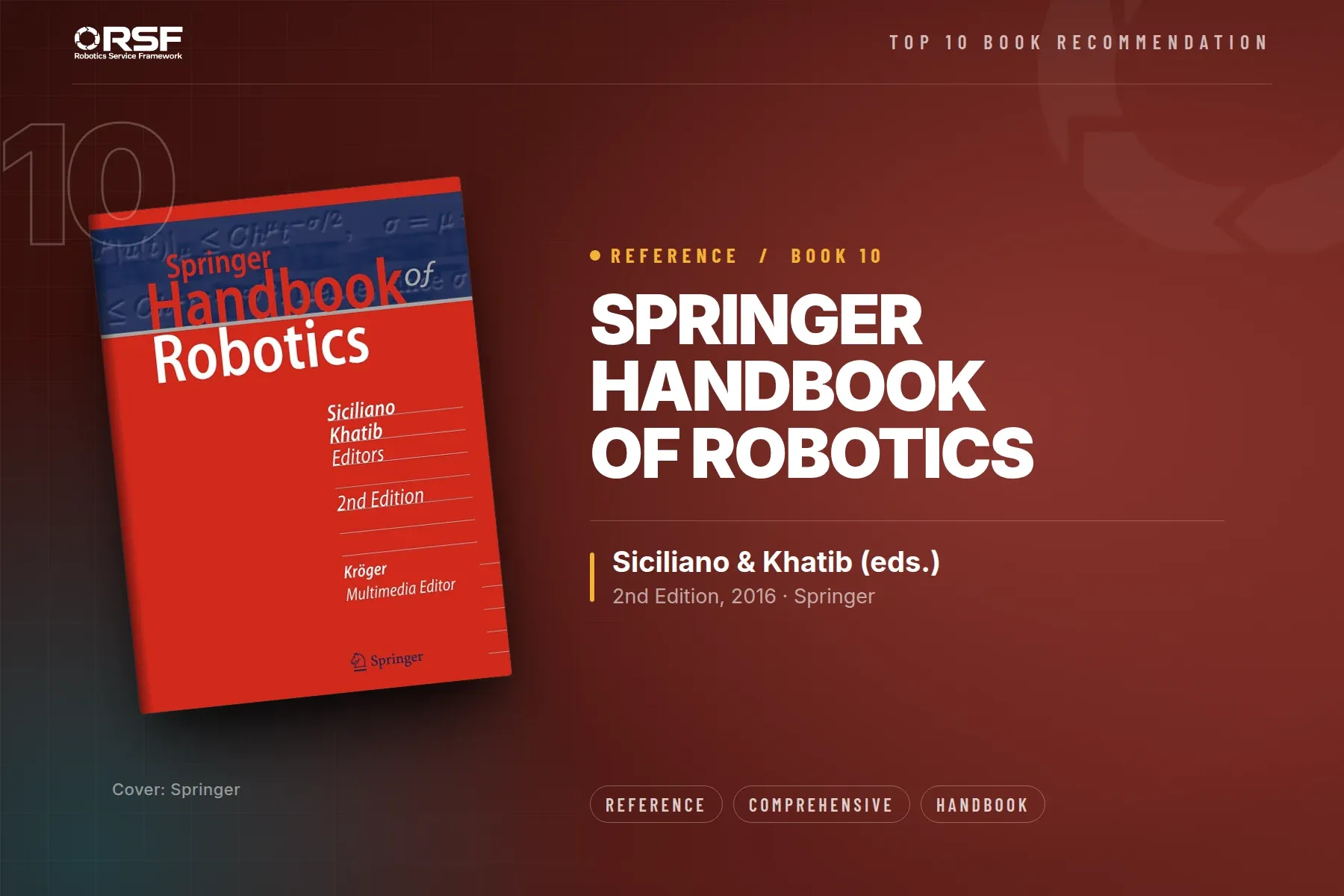
Springer Handbook of Robotics B. Siciliano & O. Khatib (eds.) — RSF Top 10 Robot Education Textbooks · No. 10
Eighty-plus chapters, 2,300 pages, nobody reads it cover to cover. It ranks for one reason: when a fault crosses domains, this is the reference of record.

Autonomous Mobile Robots Siegwart, Nourbakhsh & Scaramuzza — RSF Top 10 Robot Education Textbooks · No. 3
AMR and AGV fleets are the biggest robot service market. Siegwart decodes the vendor manual: odometry, localization, cost maps.

Robotics, Vision and Control Peter Corke — RSF Top 10 Robot Education Textbooks · No. 5
Most books you read; Corke's you run. Every concept ships as executable Python via the open Robotics Toolbox. The code softens the maths.
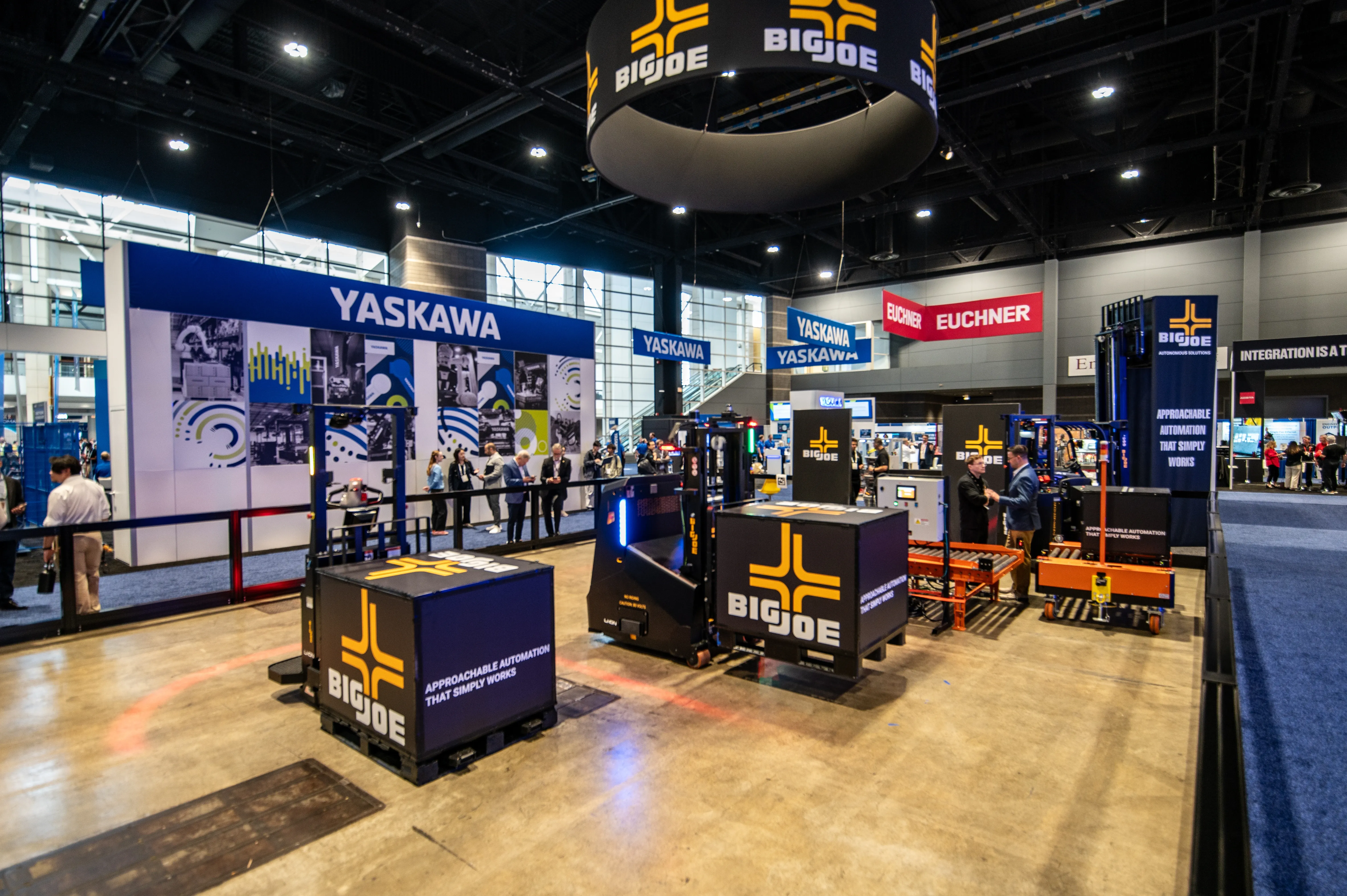
Big Joe's Four-Product AMR Push at Automate 2026: What It Reveals About the North American Warehouse Automation Market
RobotToday analyzes Big Joe's four new autonomous vehicles launched at Automate 2026 — AP44, ASC40, ATC100, ACV40 — in the context of North America's warehouse labor shortage and AMR market growth.
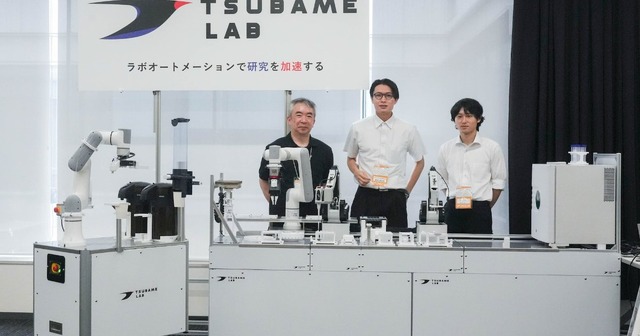
Tsubame Lab Showcases Automation Solutions at LADEC2026 with Robotic Arms and AMRs
Tsubame Lab Inc. participated in the Laboratory Automation Developers Conference 2026 (LADEC2026) held on July 2-3, 2026, at the Miraikan in Japan. The company demonstrated automation solutions for pre-processing tasks using robotic arms and introduced the concept of 'room-level automation' by integrating autonomous mobile robots (AMRs) for sample transportation. This participation is significant as it highlights Tsubame Lab's ongoing efforts to create a 'Cloud Lab' that allows researchers to execute experiments remotely via APIs and MCPs. The conference featured over 40 speakers and approximately 60 sponsoring companies, emphasizing the importance of automating repetitive tasks in research environments, which are still largely performed manually by researchers and staff. Looking ahead, Tsubame Lab plans to expand automation elements for pre-processing tasks, enhance the application range of room-level automation through AMR integration, and continue collaborating with the research automation community. No further timeline was disclosed at the time of publication.
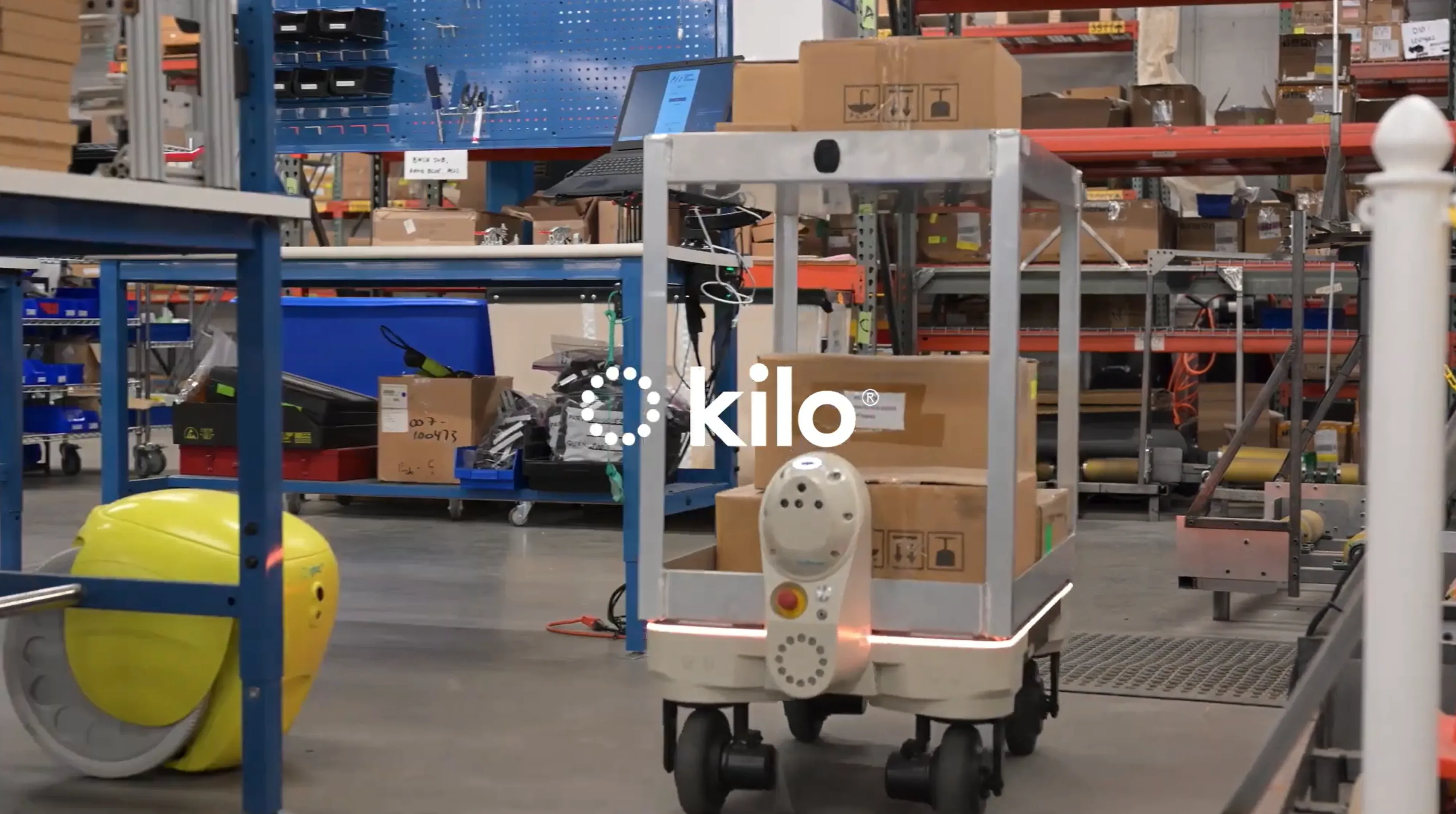
Piaggio Fast Forward Brings kilo® Autonomous Mobile Robot to Automate 2026
Piaggio Fast Forward showcases kilo®, an infrastructure-free collaborative AMR (300 lb payload, 360° LiDAR), at Automate 2026 booth #17054.
When a Materials Giant Meets Robotics: Covestro at Automate 2026
At Automate 2026, Covestro brought Makrolon, Bayblend, Baysafe BEF and Vulkollan to robotics — tackling weight, heat, sensing and sustainability for humanoids and AGV/AMRs.
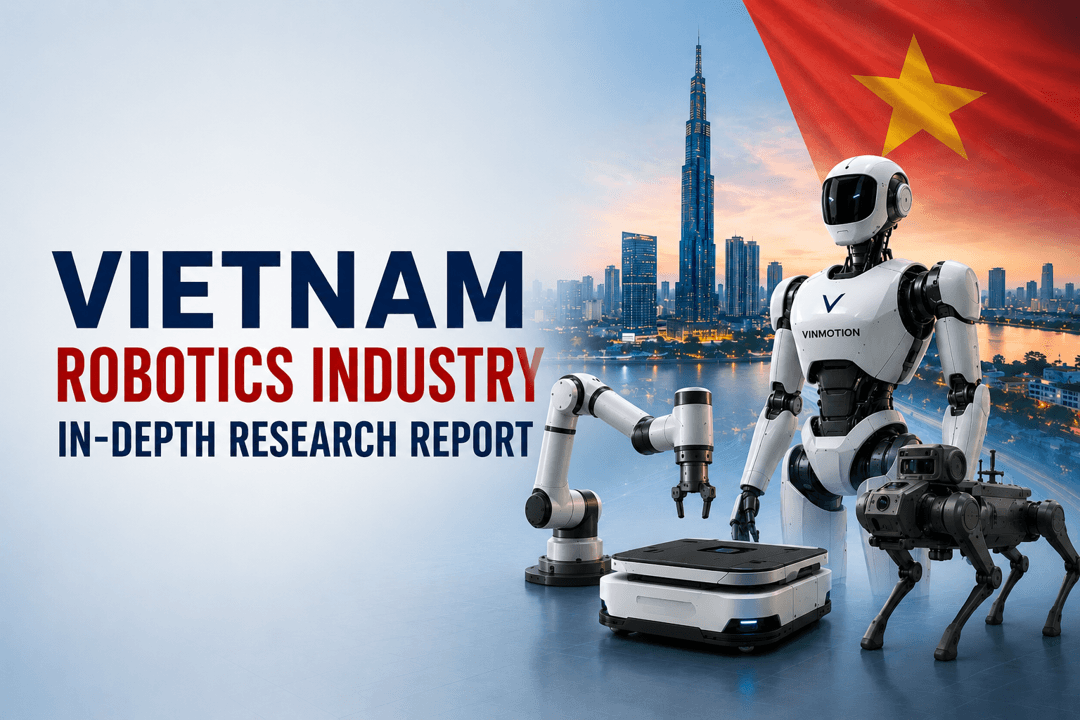
Vietnam Robotics Industry Report 2026
Comprehensive analysis of Vietnam's robotics industry: market size, industrial policy, key companies (Vingroup, Apicoo, Phenikaa-X), geopolitical dynamics, and 2030 growth opportunities.


