


RoboScience 机器科学
Beijing-founded (Dec 2024) embodied-AI company operating in Shenzhen, Suzhou, and Hangzhou; develops the Visics manipulation model and RoboMirage simulator.
Contact RoboScience
WEBSITE
https://www.roboscience.coPHONE
+86 400 500 8888HEADQUARTERS
China

Company Facts
Founded
2024
Primary Role
Software/Algorithm
Company Size
-
Primary Region
Asia-Pacific
Annual Sales
-
Funding Stage
-
Funding Total
-
U.S. Nuclear Power Plants Embrace AI Integration for Operational Efficiency
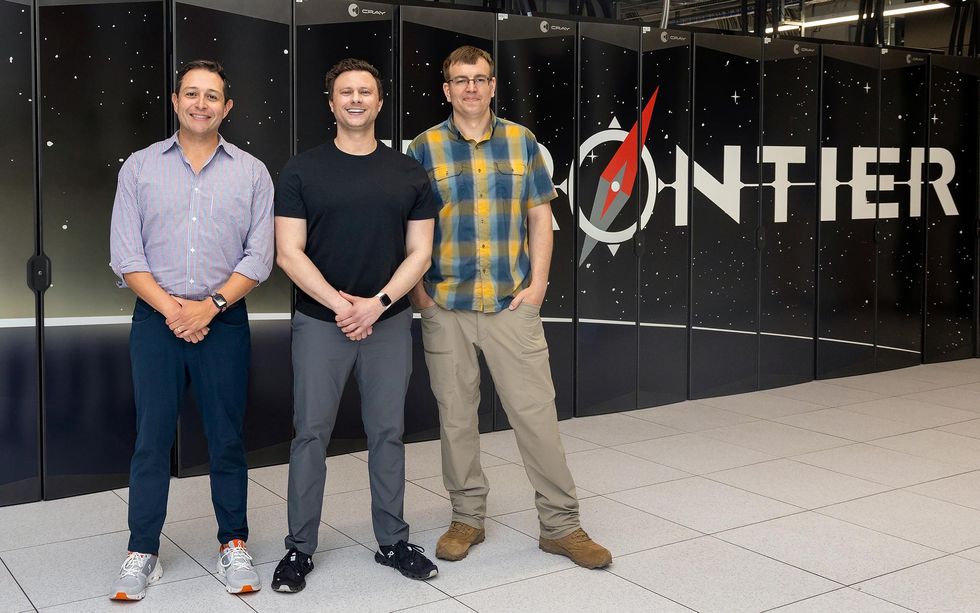
The U.S. nuclear power sector is increasingly adopting AI technologies to enhance operational efficiency. Nearly all of the 94 nuclear reactors in the U.S. have been offered AI integration, with many accepting the opportunity. Atomic Canyon's NIVA, a virtual assistant for the nuclear industry, is now available across the fleet, while Nuclearn's products are utilized by over 65 partners, addressing workforce challenges and regulatory complexities. The integration of AI is crucial for the nuclear industry, which faces an aging workforce and hardware. According to Nuclearn CFO Jerrold Vincent, AI can help manage intricate regulations and streamline documentation processes, essential for regulatory compliance. The collaboration between technology firms and the nuclear sector aims to revitalize nuclear power, which is seen as vital for meeting the growing electricity demands of data centers. Looking ahead, the nuclear industry must navigate public perception challenges while leveraging AI to enhance operational capabilities. As the demand for advanced reactors increases, the successful integration of AI will be pivotal for the industry's future. No further timeline was disclosed at the time of publication.
Nuclear-power Artificial-intelligence Epri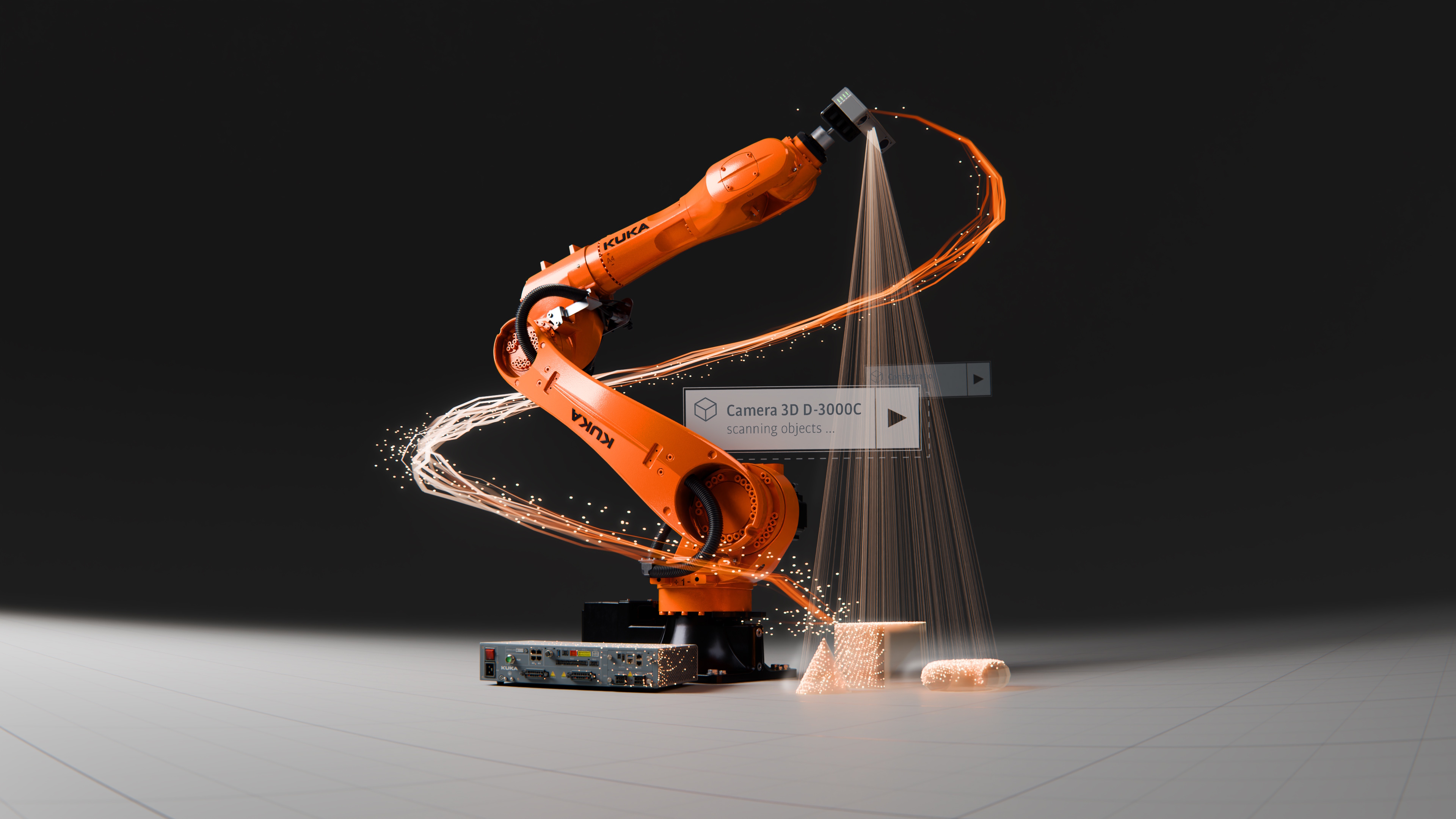
iiQKA.AI Vision Enhances Industrial Image Processing with User-Friendly Interface
iiQKA.AI Vision has introduced a standalone vision application within iiQWorks, designed to simplify industrial image processing. This application features a graphical user interface that allows users to implement vision applications efficiently, utilizing drag-and-drop functionality, pre-built templates, and guided workflows from setup to commissioning. The significance of this development lies in its ability to ensure process reliability through robust image processing capabilities, including precise 2D and 3D object recognition, automatic position determination, and gripper point calculation. The system is designed to perform reliably under varying component conditions and changing lighting, making it suitable for diverse industrial applications. Looking ahead, the seamless integration of iiQKA.AI Vision with iiQWorks and the robot controller facilitates a unified system from engineering to operation. This integration supports a consistent workflow from configuration to deployment, along with centralized management and monitoring via a web interface. No further timeline was disclosed at the time of publication.
IROS 2026 Best Paper Finalists: South Korea Leads
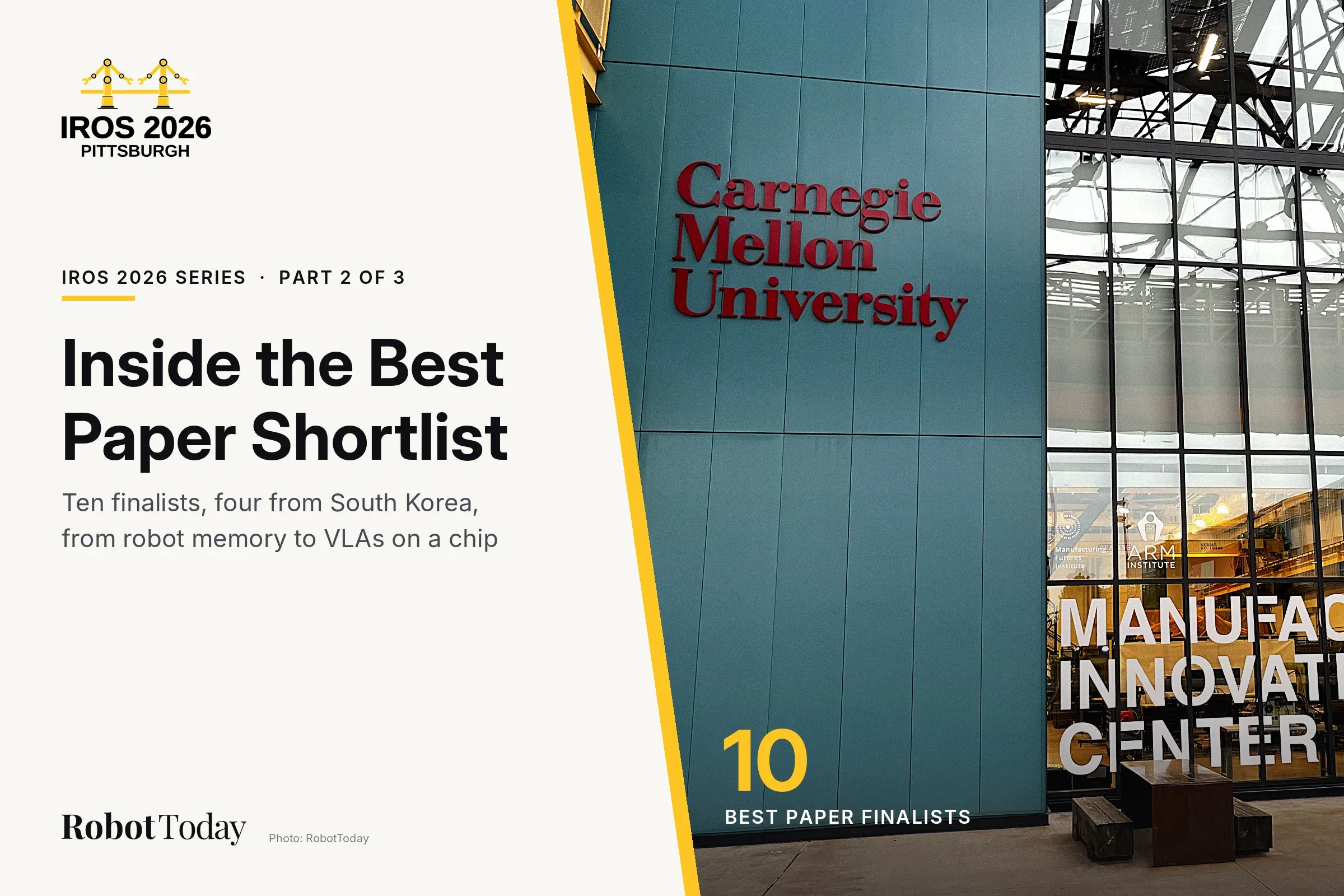
Ten papers made the IROS 2026 Best Paper and Best Student Paper shortlist, four from South Korea. What each one does and what it means for industry.

IEEE CASE 2027 Linz: Aug 23–27 | Automation Science
IEEE CASE 2027, the 23rd Conference on Automation Science and Engineering, runs Aug 23–27, 2027 in Linz, Austria. Chairs, deadline and scope.
ROSCon Korea 2027: Feb 17–19 at DGIST, Daegu
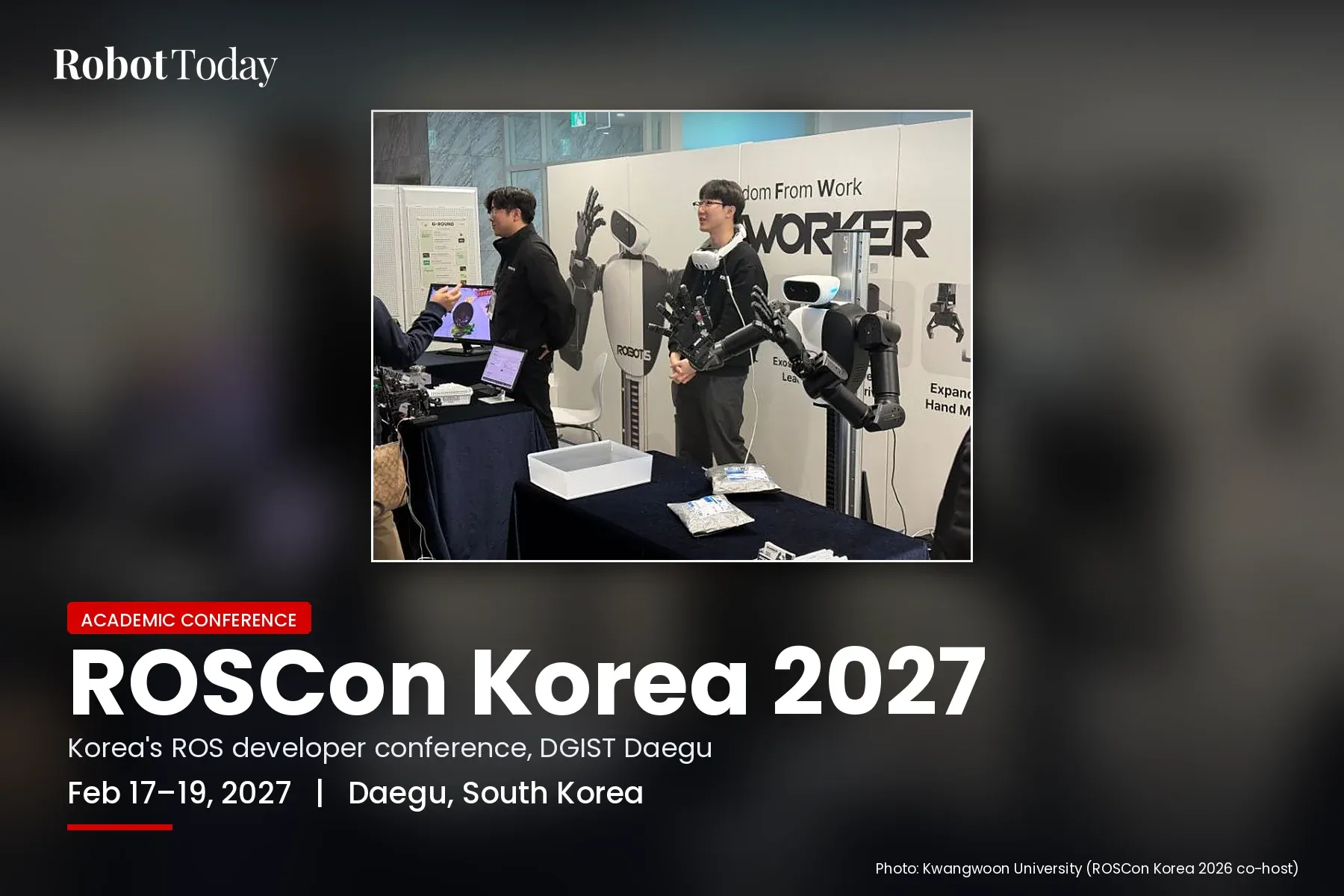
ROSCon Korea 2027, Korea's official ROS developer conference, runs Feb 17–19, 2027 at DGIST in Daegu, after a sold-out 2026 debut.

Tuning the Brain Like a Radio: Synapse Symphony’s Plan to Treat Chronic Pain at Home
COO Vishal Jain on Synapse Symphony's DARPA-rooted wearable brain-stimulation headset for chronic pain, its FDA plans, and a second use: motor-health checks.

RobotToday Weekly September 21 – 25, 2026
Cognex buys RealSense, Qualcomm acquires PickNik, the IFR counts 5 million factory robots, AGIBOT deploys 300 robots at Chimelong, and Tekever raises $580 million.

Glacian: Physics Model Vets AI Data Center Cooling
Glacian Technologies pairs AI with a physics-based digital twin that rejects unsafe commands. CEO Jie Zhao on cutting data center cooling energy 15-30%.

Siemens on Robots, Agentic AI and the "Last 3%" Problem
Siemens tells RobotToday at IMTS 2026 why AI robot demos are only the tip of the iceberg, and why agentic AI depends on PLM data and business context.

Innovation Works Venture Expo 2026: 58 Pittsburgh Startups Pitch to Investors
58 health, deep tech and robotics startups pitched at Innovation Works Venture Expo 2026 in Pittsburgh. Full company list, program and 2025 funding data.

SimScale Engineering AI Moves Physics Simulation to the Exact Moment a Design Decision Gets Made, Inside Onshape
SimScale’s Engineering AI Agent runs CFD, thermal, EMag and FEA from one prompt inside PTC’s Onshape, starting from CAD that isn’t simulation-ready.
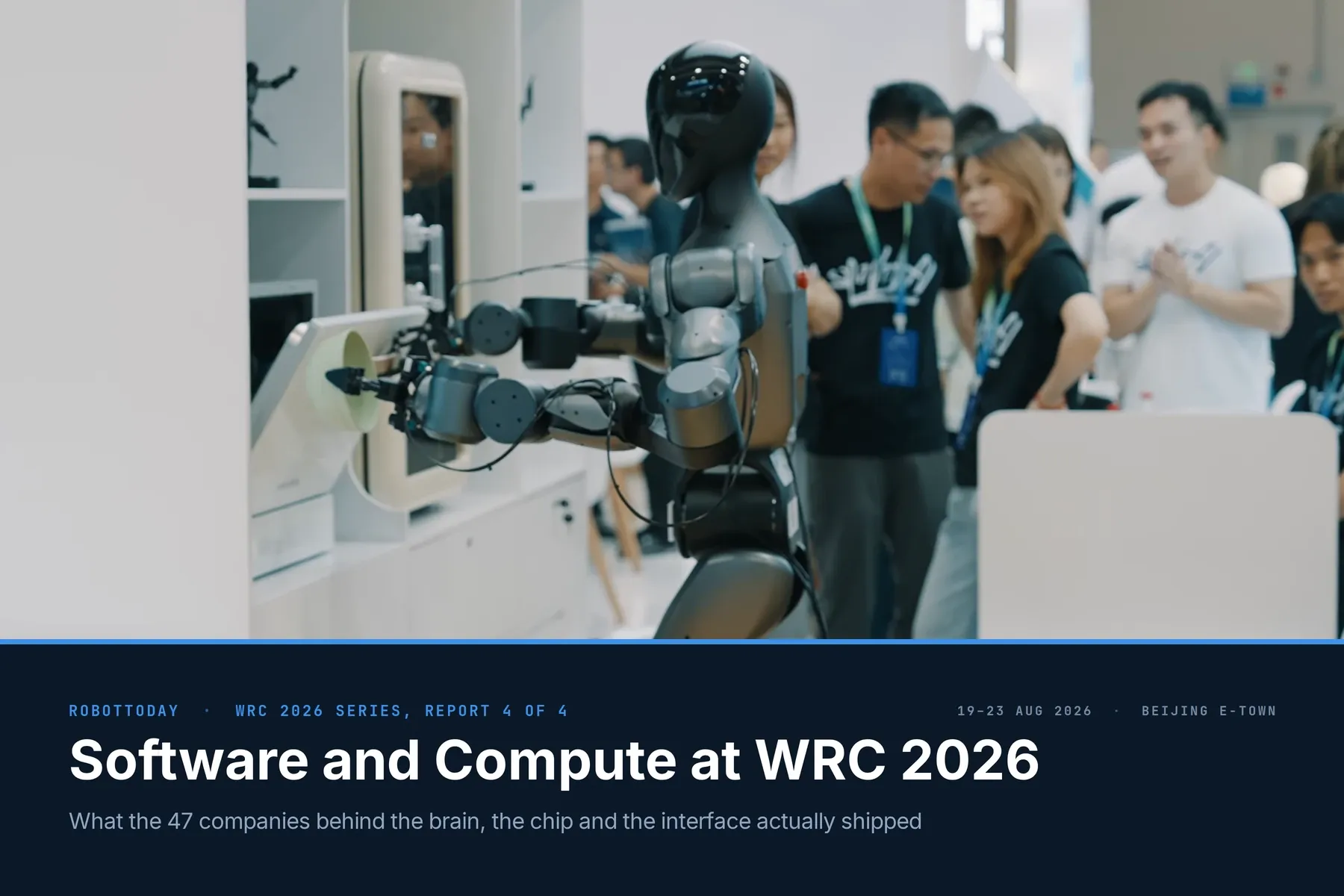
Software, Compute and Interaction at WRC 2026
47 WRC 2026 exhibitors supply robot software, compute or interaction — but only 19 call themselves software companies. Five open artefacts, licence-checked.
RoboScience Launches REX G1 Humanoid Robot with 22 Degrees of Freedom and Quick Battery Swap
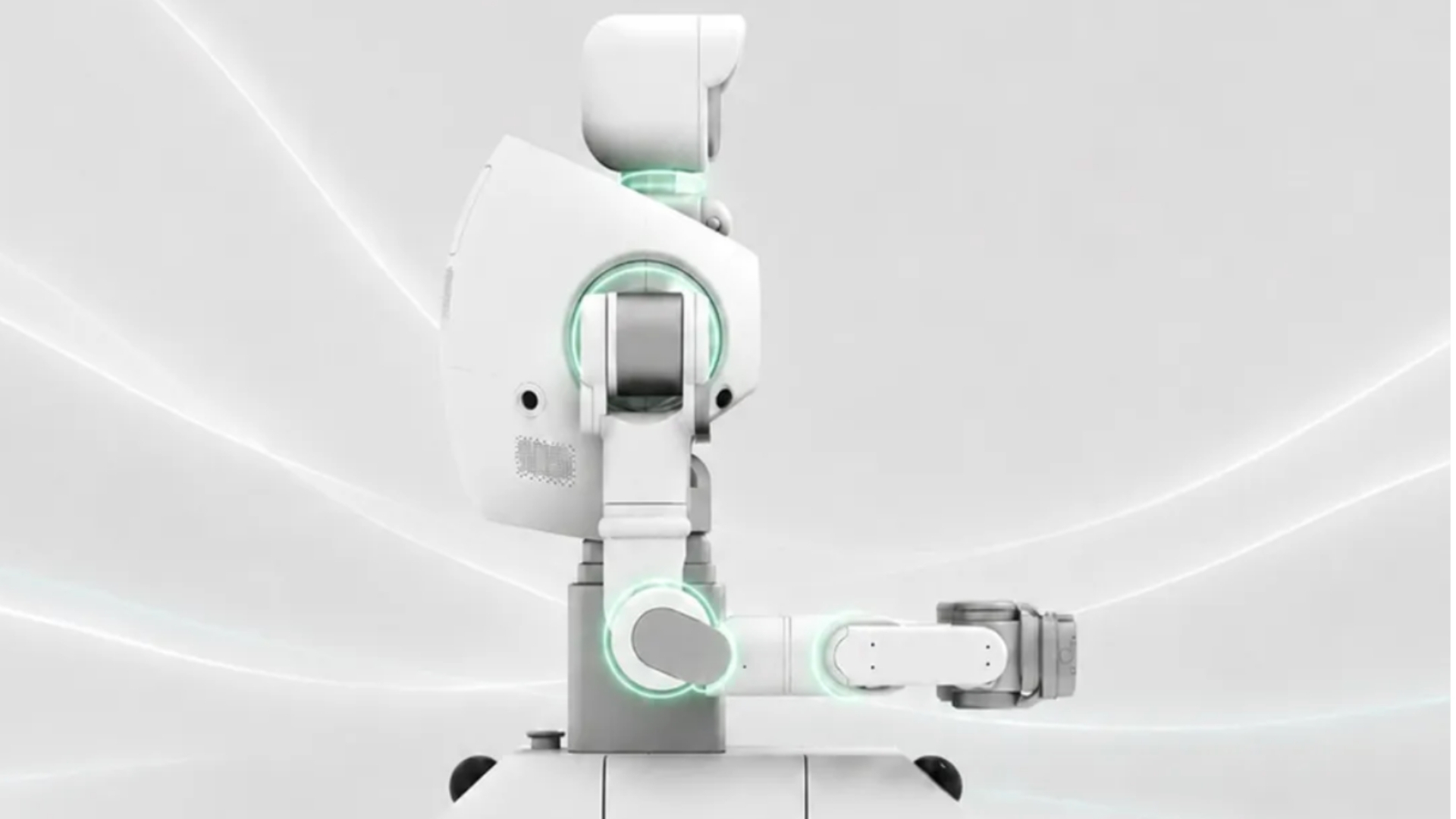
RoboScience, a Beijing-based embodied intelligence company, has unveiled the REX G1 humanoid robot on August 17. Designed for logistics, manufacturing, retail, and domestic use, the REX G1 features 22 degrees of freedom, enabling it to perform complex tasks in dynamic environments. Its capabilities include simultaneous walking, lifting, and grasping, making it versatile for various applications. The introduction of the REX G1 is significant as it addresses the limitations of traditional warehouse robots, which often require modifications to existing facilities. With a design that allows it to navigate through tight spaces and work at various heights, the REX G1 can adapt to current operational setups without the need for extensive changes. This flexibility is crucial for industries looking to enhance efficiency without incurring high costs. Looking ahead, the REX G1's advanced features, including its 360-degree stereo vision and adaptive lighting, will be key to its performance in real-world scenarios. The robot's ability to operate in low-light conditions and its precise repeatability of ±0.1 mm position it as a competitive solution in the robotics market. No further timeline was disclosed at the time of publication.
AI and Robotics
RoboScience Unveils REX G1: A Multifunctional Wheeled Humanoid Robot for Diverse Applications
On August 17, RoboScience officially launched the REX G1, a versatile wheeled humanoid robot designed for various operational scenarios. This robot, equipped with RoboScience's proprietary VLOA architecture and Visics model, aims to enhance productivity in logistics, factories, retail, and home environments by executing complete tasks in dynamic, unstructured settings. The significance of REX G1 lies in its ability to integrate mobility and operational capabilities, addressing the limitations of traditional robots that often operate in isolation. With 22 degrees of freedom, REX G1 can perform tasks with high precision, including object handling and positioning, while adapting to existing spatial layouts without requiring modifications. Looking ahead, REX G1's advanced perception and control systems allow it to function effectively in complex environments, reducing reliance on external infrastructure. No further timeline was disclosed at the time of publication.
Humanoid Robots Logistics Automation AI Robotics Warehouse Automation
RoboScience Unveils First Cloud-Based Large Model for Robotics at WAIC
At the WAIC, RoboScience showcased a groundbreaking cloud-based embodied large model named Visics, capable of controlling multiple robotic hands. This innovation allows for seamless switching between different robotic hands while maintaining operational efficiency, demonstrating the ability to recognize and grasp various objects autonomously within 30 seconds. The significance of this development lies in its potential to revolutionize robotic operations across diverse applications. By enabling a single model to adapt to various hand configurations, Visics enhances the versatility of robotic systems, allowing them to perform complex tasks without the need for extensive retraining when hardware changes occur. Looking ahead, the industry will be keen to observe how Visics performs in real-world scenarios and its ability to execute long-term tasks by integrating multiple actions. No further timeline was disclosed at the time of publication.
Robotics Cloud Computing AI Automation Object Recognition
China's Embodied AI Models Gear Up for Competition Ahead of WAIC 2026
China's leading tech companies are intensifying their efforts in embodied AI as they prepare for the WAIC 2026 event in Shanghai, scheduled for July 17. This year's competition is marked by the launch of several advanced models, including Xiaomi's X0, a multimodal generative model with 38 billion parameters designed to enhance robotic training data generation. The significance of this competition lies in the critical need for physical interaction data, which is currently lacking by over 99%. Xiaomi's generative model aims to address this gap by autonomously generating and augmenting training data without the need for new data collection, thereby improving efficiency by 83 times. The event will showcase over 200 companies, highlighting the growing importance of embodied intelligence in the tech landscape. As the industry evolves, companies like Tencent Cloud and RoboScience are also making strides with cloud-based embodied AI services. The competition at WAIC 2026 will be pivotal, as companies vie for dominance in the emerging ecosystem of embodied intelligence, with advancements in visual understanding and cognitive reasoning being key areas of focus.
Embodied AI Robotics Data Synthesis Open Source Cognitive Computing
"Connecting Cognition and Execution through Object Trajectories, RoboScience Machine Science Releases Embodied Large Model Visics"
RoboScience Machine Science has announced the release of its latest innovation, Embodied Large Model Visics, aimed at bridging the gap between cognitive processes and physical execution through the analysis of object trajectories. This development, unveiled in October 2023, seeks to enhance the understanding of how cognitive functions can inform and improve robotic movements and interactions with the environment. By integrating advanced modeling techniques with real-time data on object trajectories, the new system promises to refine robotic capabilities in various applications, from manufacturing to autonomous navigation. The initiative reflects a growing interest in the intersection of cognitive science and robotics, highlighting the potential for more intuitive and responsive robotic systems.
Robotics Automation AI
RoboScience launches Visics, a versatile embodied model for cross-ontology, cross-object, and cross-task applications.
On June 24, RoboScience, a company specializing in embodied intelligence, unveiled its self-developed Visics large model, introducing the innovative VLOA (Vision-Language-Object-Action) architecture. This announcement marks a significant advancement in the field, demonstrating the model's applications in real-world scenarios such as furniture assembly, dexterous grasping, and dynamic assembly lines. The current landscape of embodied intelligence lacks a universally accepted foundational representation unit, which hampers data collection, model learning, and the transfer of knowledge to new contexts. Traditionally, models have focused on replicating specific robotic movements tied to particular tasks, limiting their adaptability to new robots, objects, or environments. Founder and CEO Tian Ye highlighted three major challenges in robotic operations: poor generalization, difficulty in precise manipulation, and cumulative errors in long-range tasks. To address these issues, RoboScience has developed a new foundational representation unit from the ground up. The Visics model employs a dual-engine architecture, consisting of an embodied world model and a universal operation model, each operating independently. The embodied world model utilizes vast amounts of internet video data to learn the physical dynamics of objects, while the operation model translates object trajectories into actionable commands for robots. This layered design enhances the model's generalization capabilities across various robotic platforms and tasks. RoboScience's innovative approach also includes a high-precision simulation engine, RoboMirage, which, combined with automated video data annotation, significantly reduces data acquisition costs. The company aims to build a comprehensive dataset of over 1 terabyte of high-quality manipulation trajectories by 2026. Since its inception, RoboScience has garnered support from multiple investors and established research and production centers in major Chinese cities. The company plans to collaborate with various sectors, including retail and logistics, to standardize robotic products for industrial and commercial applications by the end of this year.

RoboScience Unveils Visics, a General-Purpose Embodied AI Model
On June 24, RoboScience, a Beijing-based company specializing in embodied intelligence, launched its new general-purpose embodied AI model, Visics. This innovative model is designed to enhance robotic capabilities by integrating advanced perception and decision-making processes. The unveiling took place in Beijing, showcasing Visics' potential applications across various industries, including healthcare, manufacturing, and service sectors. The development of Visics aims to address the growing demand for intelligent automation solutions that can adapt to complex environments and tasks. By leveraging cutting-edge technology, RoboScience seeks to position itself at the forefront of the AI revolution, offering tools that can significantly improve operational efficiency and effectiveness in diverse applications.
EmbodiedAI
RoboScience Advances Embodied Intelligence Towards the VLOA Era at ICRA
RoboScience is making strides in the field of embodied intelligence with its innovative Vision-Language-Object-Action (VLOA) framework, designed to improve robotic capabilities by enabling robots to predict changes in objects within dynamic environments. The company recently gained notable recognition at the International Conference on Robotics and Automation (ICRA), where it presented groundbreaking research focused on robotic manipulation and dual-arm collaboration. This research aims to tackle the complexities faced in real-world applications, positioning RoboScience at the forefront of advancements in robotics.
Embodied Intelligence Robotic Manipulation Dual-Arm Robotics AI VLOA
