

Hewlett Packard Enterprise
Enterprise IT company providing servers, AI compute and rugged edge systems for real-time, autonomous decision-making in industrial environments.
Contact Hewlett Packard Enterprise
WEBSITE
https://www.hpe.comHEADQUARTERS
United States


Company Facts
Founded
2015
Primary Role
Component Supplier
Company Size
-
Primary Region
North America
Annual Sales
-
Funding Stage
-
Funding Total
-
Certifications & Memberships
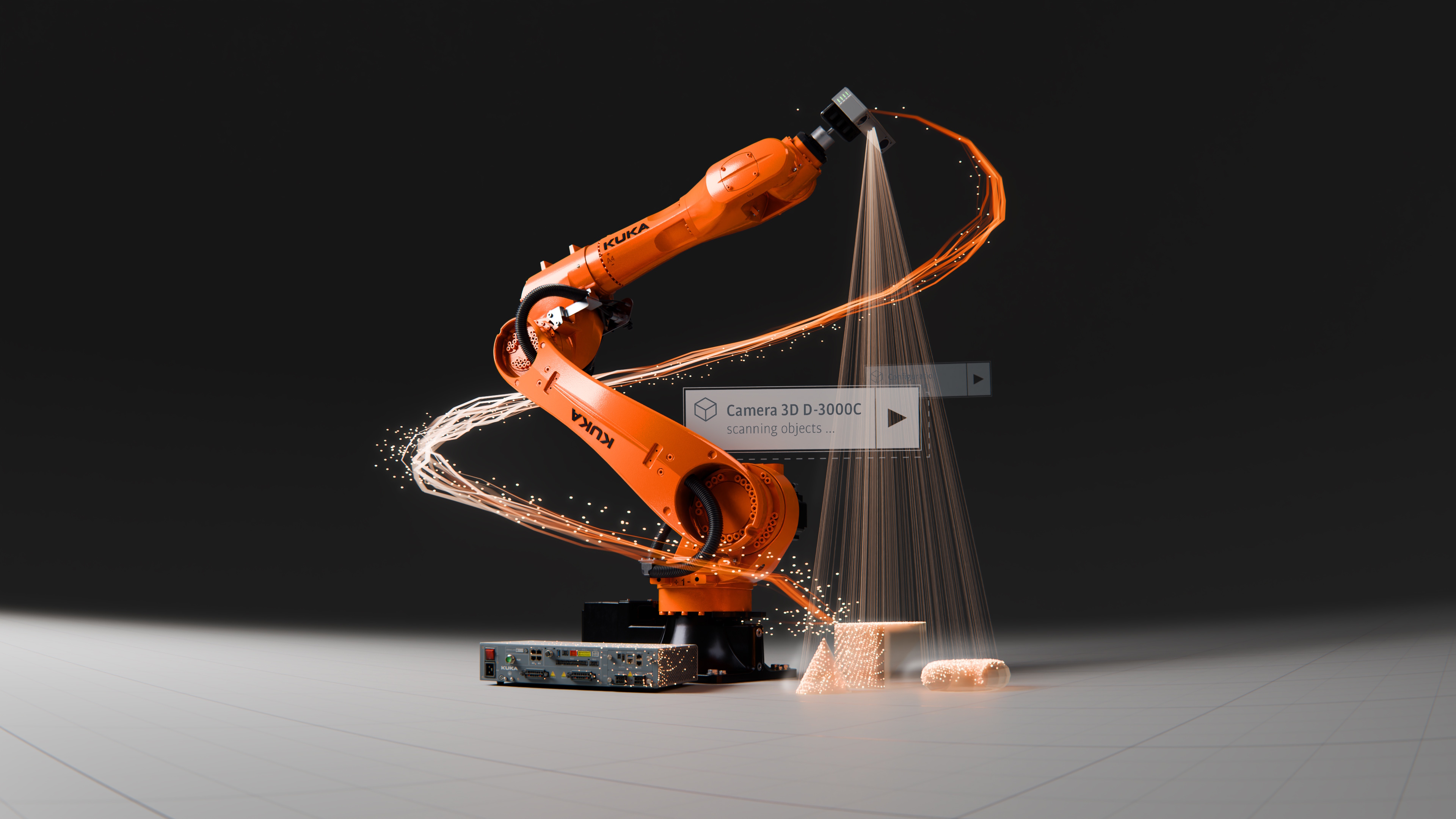
iiQKA.AI Vision Enhances Industrial Image Processing with User-Friendly Interface
iiQKA.AI Vision has introduced a standalone vision application within iiQWorks, designed to simplify industrial image processing. This application features a graphical user interface that allows users to implement vision applications efficiently, utilizing drag-and-drop functionality, pre-built templates, and guided workflows from setup to commissioning. The significance of this development lies in its ability to ensure process reliability through robust image processing capabilities, including precise 2D and 3D object recognition, automatic position determination, and gripper point calculation. The system is designed to perform reliably under varying component conditions and changing lighting, making it suitable for diverse industrial applications. Looking ahead, the seamless integration of iiQKA.AI Vision with iiQWorks and the robot controller facilitates a unified system from engineering to operation. This integration supports a consistent workflow from configuration to deployment, along with centralized management and monitoring via a web interface. No further timeline was disclosed at the time of publication.
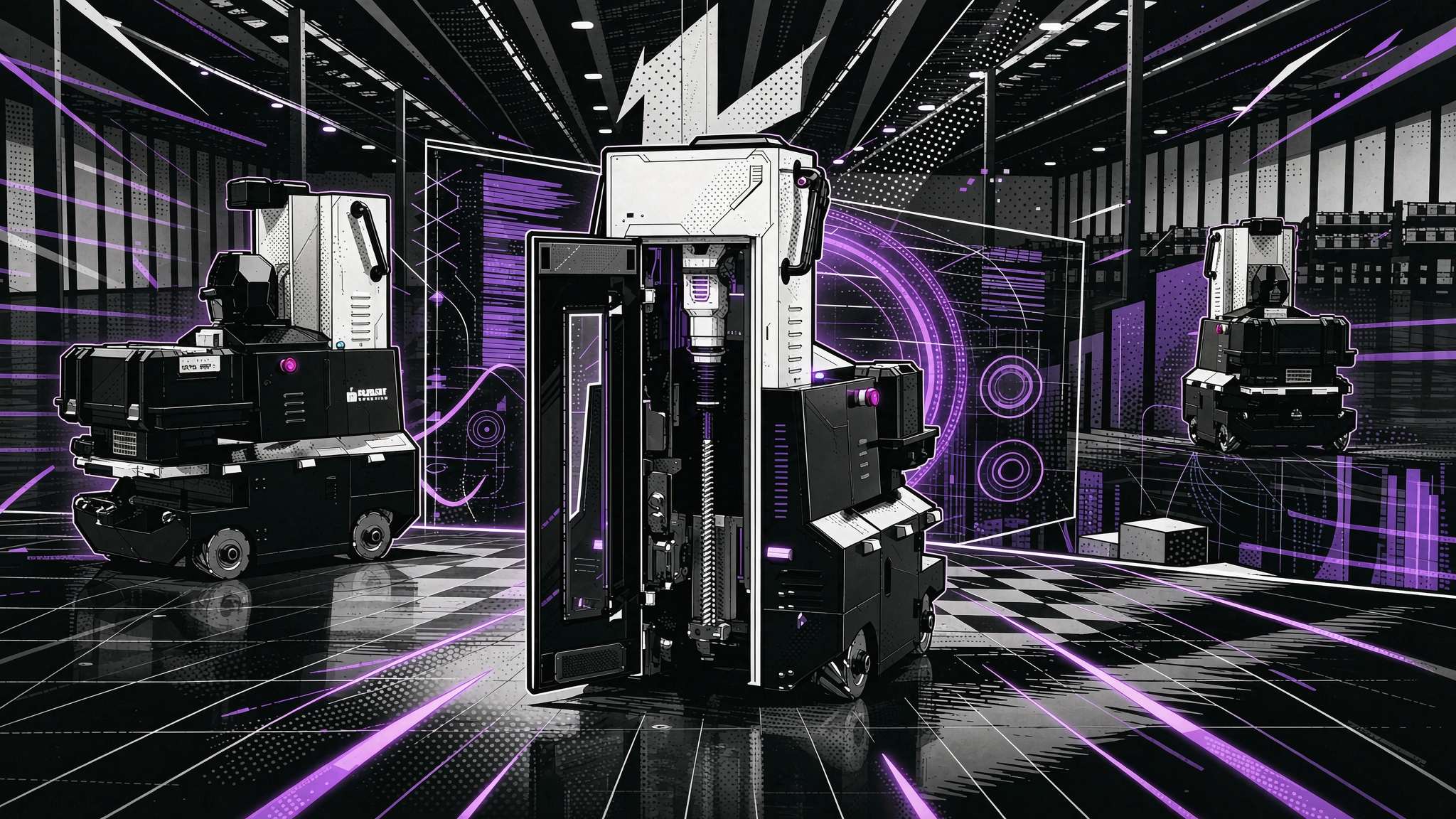
First Coordinated Drilling Robot Achieves 10x Speed and 99% Accuracy
A groundbreaking drilling robot has been developed, showcasing the ability to perform coordinated operations with a speed ten times greater than traditional methods and an accuracy rate exceeding 99%. This innovation marks a significant advancement in drilling technology, potentially transforming various industrial applications. The introduction of this robot is crucial as it addresses the limitations of conventional drilling techniques, which often suffer from slower speeds and lower precision. By enhancing operational efficiency, this technology could lead to cost savings and improved outcomes in sectors that rely on drilling processes. Looking ahead, industry stakeholders should monitor the deployment and performance of this drilling robot in real-world scenarios. No further timeline was disclosed at the time of publication.
Robotics Automation AI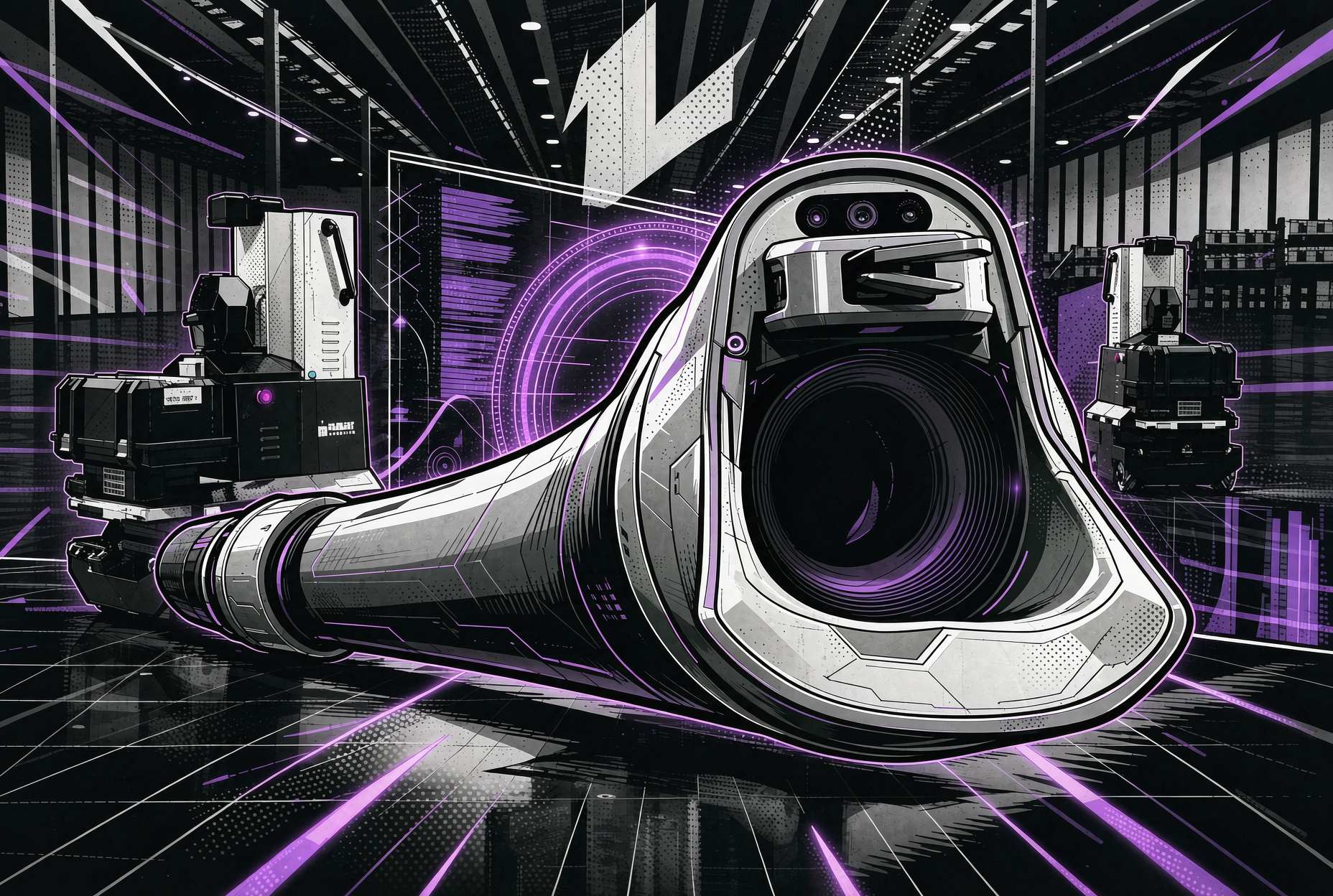
Israeli Company Develops Flexible Picking Robots Targeting 95% Fruit Coverage on Trees
An Israeli company has developed innovative flexible picking robots designed to harvest up to 95% of the fruit from trees. This advancement in agricultural robotics aims to enhance efficiency in fruit picking, addressing labor shortages and increasing productivity in the sector. The significance of this technology lies in its potential to transform the fruit harvesting process, making it more efficient and less reliant on human labor. As the agricultural industry faces challenges such as labor shortages, these robots could provide a viable solution, ensuring that fruit is harvested at optimal times and reducing waste. Looking ahead, the adoption of these flexible picking robots could reshape agricultural practices, particularly in fruit production. Stakeholders in the agriculture sector should monitor developments in this technology and its implementation in various regions. No further timeline was disclosed at the time of publication.
Robotics Automation AI
Jiangxi's First Independent Humanoid Robot Brand 'Luyou' Emerges from OEM Roots
The first independent humanoid robot brand, 'Luyou,' has been established in Jiangxi, marking a significant shift from OEM production to brand creation. This development highlights the growing trend of companies in the robotics sector moving towards creating their own identities and products. The emergence of 'Luyou' is significant as it reflects the evolving landscape of the robotics industry in China, where companies are increasingly focusing on brand development rather than solely relying on original equipment manufacturing. This shift could lead to more innovation and competition in the humanoid robot market. Looking ahead, it will be important to monitor how 'Luyou' positions itself in the market and the potential impact it may have on other companies in the robotics sector. No further timeline was disclosed at the time of publication.
Robotics Automation AI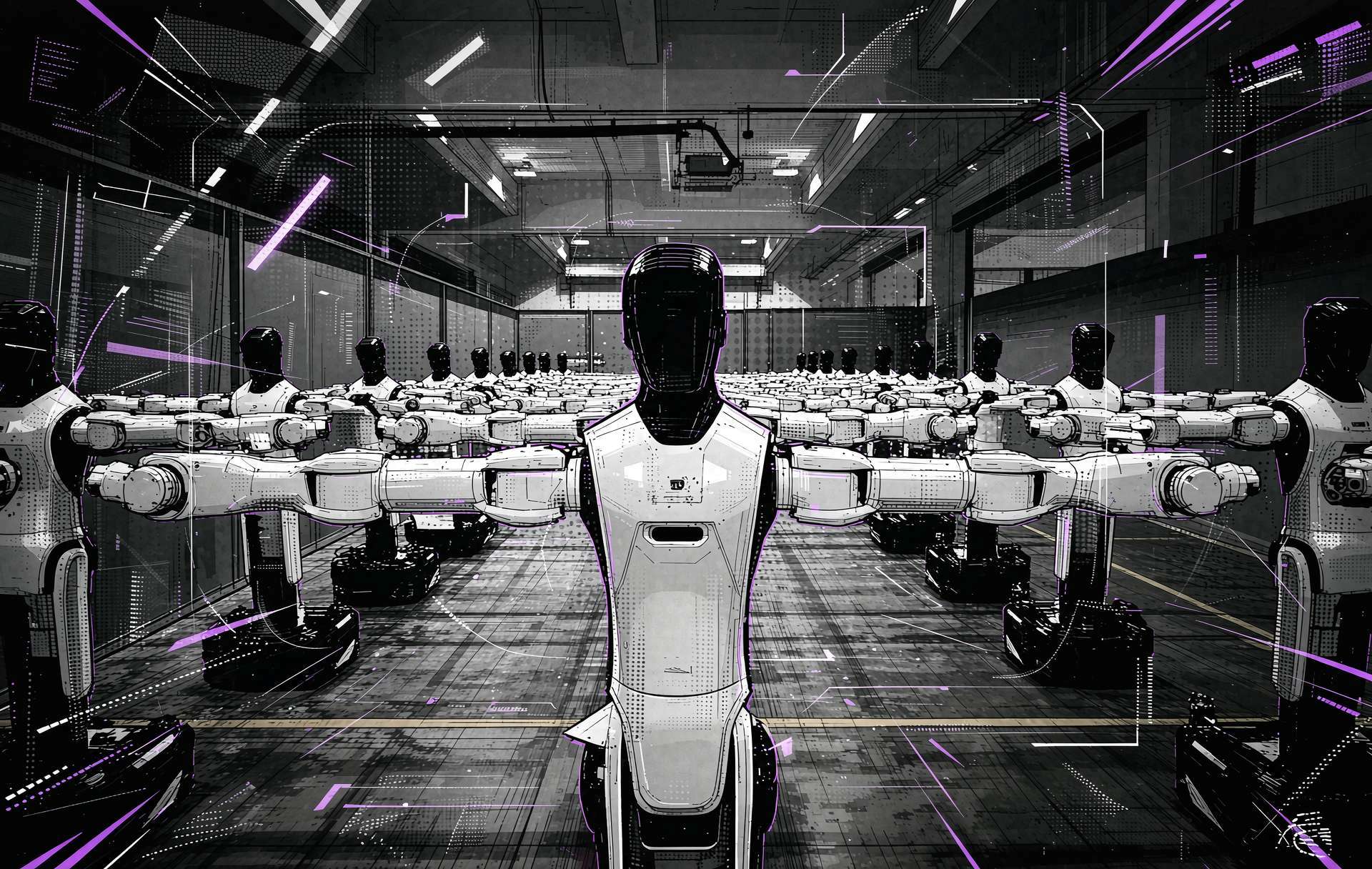
Chinese Academy of Sciences' Automation Institute Cuts Humanoid Robot Development Time to Two Weeks
The Institute of Automation of the Chinese Academy of Sciences has established a new facility designed to significantly shorten the development cycle of humanoid robots. This innovative 'big factory' has successfully reduced the time required to develop these robots from six months to just two weeks. This advancement is crucial as it enhances the efficiency of humanoid robot production, allowing for faster iterations and improvements in design and functionality. The ability to develop robots in a fraction of the time could lead to increased competitiveness in the robotics market and accelerate the adoption of humanoid robots across various sectors. Looking ahead, the impact of this facility on the robotics industry will be significant, particularly in how quickly companies can bring new humanoid robots to market. No further timeline was disclosed at the time of publication.
Robotics Automation AI
UBTECH Partners with FAW-Volkswagen to Enhance Humanoid Robots for Factory Logistics
UBTECH has announced a collaboration with FAW-Volkswagen to develop humanoid robots aimed at improving factory logistics. This partnership signifies a shift from traditional quality inspection roles to more dynamic applications within manufacturing environments. The collaboration is significant as it highlights the growing trend of integrating advanced robotics into factory operations, enhancing efficiency and productivity. By focusing on logistics, UBTECH and FAW-Volkswagen are addressing the evolving needs of the manufacturing sector, which increasingly relies on automation to streamline processes. Looking ahead, industry watchers should monitor the outcomes of this partnership, particularly how these humanoid robots will be integrated into existing workflows. No further timeline was disclosed at the time of publication.
Robotics Automation AI
Automotive Supply Chain and Robotics Share 60-70% Overlap, Yet Key Components Remain Fixed
Recent insights reveal that the automotive supply chain and robotics sectors overlap by 60-70%. This significant intersection highlights the potential for innovation and efficiency in both fields. However, it is noted that the most expensive components within these sectors cannot be easily relocated, posing challenges for integration. The overlap between automotive and robotics is crucial as it suggests opportunities for collaboration and technological advancements. Understanding this relationship can lead to improved supply chain strategies and enhanced robotic applications in automotive manufacturing. The inability to move costly components, however, raises concerns about flexibility and adaptability in these industries. Looking ahead, stakeholders should monitor developments in both sectors to identify potential synergies and innovations. No further timeline was disclosed at the time of publication, but ongoing research and advancements may provide insights into overcoming the challenges posed by immovable components in the automotive supply chain and robotics integration.
Robotics Automation AI
Nanjing to Host Robot Conference Focusing on Welding Training and Craftsman Think Tank
Nanjing is set to host a robot conference that will not focus on performances but will instead emphasize the importance of welding training and the craftsman think tank. This shift in focus aims to enhance practical skills and knowledge in the robotics sector. The decision to prioritize welding training and the craftsman think tank is significant as it reflects a growing recognition of the need for skilled labor in the robotics industry. By fostering a deeper understanding of these areas, the conference aims to contribute to the development of a more competent workforce. As the conference approaches, stakeholders will be watching for insights and strategies that emerge from discussions around welding and craftsmanship. No further timeline was disclosed at the time of publication.
Robotics Automation AI
UBTECH and FAW-Volkswagen Collaborate on Humanoid Robots for Factory Logistics
UBTECH and FAW-Volkswagen have entered into a partnership to develop and test humanoid robots specifically for logistics applications. This initiative builds upon the successful deployment of the Walker S Lite robots, which were previously utilized for quality inspection at the Qingdao plant. The collaboration is significant as it marks a shift in the application of humanoid robotics from quality control to logistics, potentially enhancing operational efficiency within the manufacturing sector. By leveraging the capabilities of humanoid robots, both companies aim to streamline processes and improve productivity in factory environments. Looking ahead, industry observers will be keen to see how this partnership evolves and the impact of humanoid robots on logistics operations. No further timeline was disclosed at the time of publication.

IROS 2026 Best Paper Finalists: South Korea Leads
Ten papers made the IROS 2026 Best Paper and Best Student Paper shortlist, four from South Korea. What each one does and what it means for industry.
Software, Compute and Interaction at WRC 2026
47 WRC 2026 exhibitors supply robot software, compute or interaction — but only 19 call themselves software companies. Five open artefacts, licence-checked.
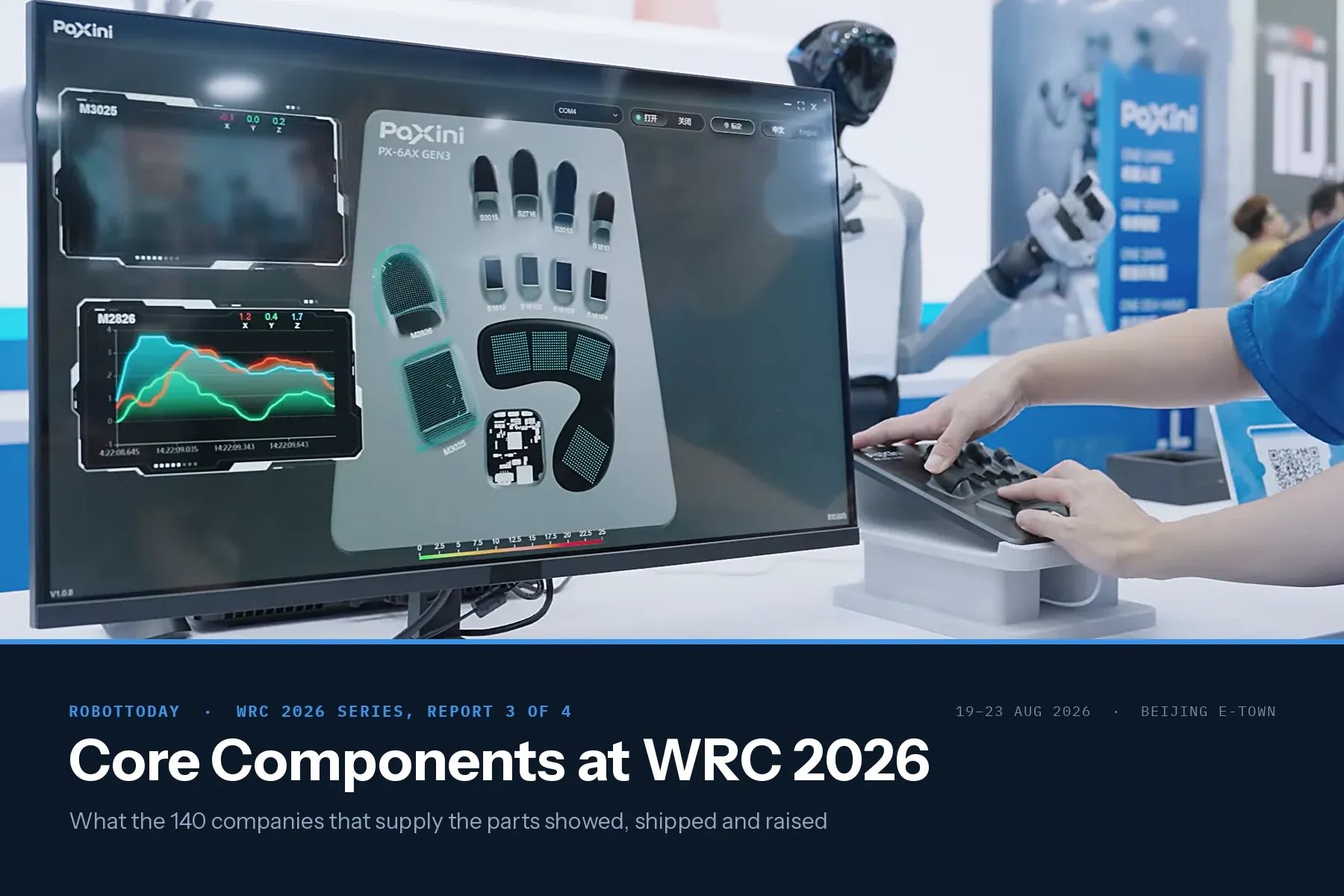
WRC 2026 Core Components: 137 Robot Parts Suppliers
The third report in the WRC 2026 series. Report 1 mapped all 248 exhibitors by category and Report 2 covered the 139 that build finished robots. This one covers the 137 that build what goes inside them.
WAIC Review 1/4: Embodied AI's Industrialization Wave: Financing Data, Unit Economics, and a Widening Split
China's embodied AI sector raised $12.5B in H1 2026, but WAIC 2026 speakers detailed ROI demands, power bottlenecks, and the mass-production-to-sales gap.
WAIC Review 4/4: From Port AGVs to Hospital Night Shifts: What WAIC 2026 Reveals About Real Robot Deployments
From 530+ AGVs at a Singapore port to robots on Apple's line, WAIC 2026 speakers shared concrete data on where embodied AI robots are actually working today.

US Restrictions on Chinese Humanoid Robots: The Full Map
Every US restriction on Chinese humanoid robots — NDAA Sec. 163, GUARD Act, the 1260H list — plus the supply-chain math and a 4-tier map of decoupling.

WAIC 2026: Embodied Intelligence Enters Industrial Deployment Era
WAIC 2026 in Shanghai (July 17–20) saw 200+ embodied intelligence companies, 300+ live robots, and first confirmed humanoid deployments in logistics and pharmacy. RobotToday engineering analysis.
When a Materials Giant Meets Robotics: Covestro at Automate 2026
At Automate 2026, Covestro brought Makrolon, Bayblend, Baysafe BEF and Vulkollan to robotics — tackling weight, heat, sensing and sustainability for humanoids and AGV/AMRs.

The EV Déjà Vu: Why China's Humanoid Robot Blitz May Be Winning the Battle — but Losing the War
China controls 80% of humanoid robot shipments and crushes hardware costs. But is winning the body enough? A deep analysis of the US-China robot war beyond the EV analogy.

ROBOTTODAY Weekly June 23 – 27, 2026
This week in robotics: Agility Robotics $2.5B SPAC deal for first humanoid IPO, BMW Figure 03 logistics deployment, Morgan Stanley doubles China humanoid forecast, ON Semiconductor acquires Synaptics for $7B, Sony halts aibo in Japan. June 23–27, 2026.
The AI Data Centers That Fit on a Truck
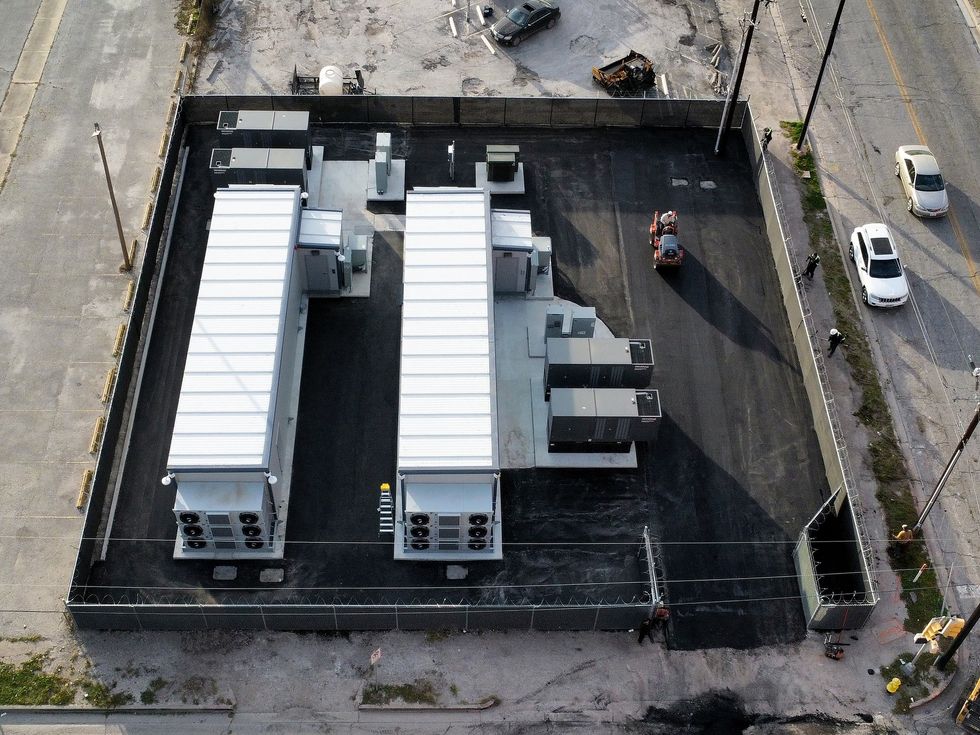
In response to the growing demand for rapid deployment of AI hardware, companies like Duos Edge AI and LG CNS are shifting towards modular data centers. Traditional data centers, which require extensive construction of steel and concrete shells, can take years to build, posing challenges for organizations eager to implement AI solutions. Duos Edge AI, led by CEO Doug Recker, has developed modular compute pods that can be deployed in about six months, significantly faster than conventional setups. Each 55-foot pod houses racks of GPUs and can operate independently or in conjunction with others, with a recent deal to deploy four pods containing a total of 2,304 GPUs, expandable to 4,608. Similarly, LG CNS is launching its AI Modular Data Center in Busan, South Korea, featuring 576 Nvidia GPUs per unit, with plans for an expanded version supporting over 4,600 GPUs. Both companies emphasize the advantages of modular systems, which require only a concrete pad for installation, allowing for quicker site readiness and reduced permitting complexities. The modular approach not only accelerates deployment but also offers cost savings, with Duos estimating a 5-megawatt modular deployment could be built for around $25 million, significantly lower than traditional facilities. As the market for modular data centers is projected to double by 2030, other tech giants like Hewlett Packard Enterprise and Schneider Electric are also exploring similar solutions. The modular design allows for incremental expansion, enabling facilities to grow in capacity as demand increases, positioning them as a viable alternative to traditional data centers.
Data-center Networking Liquid-cooling Ai

