Heitec AG GmbH

German manufacturer of hot runner systems for injection moulding, including hot runner nozzles, manifolds, and needle valve systems. Products support precision plastic part manufacturing; peripheral supplier to electronics and automotive automation.

Share
Heitec AG GmbH
Güterbahnhofstrasse 5
Erlangen 91052
RobotToday Initiative

Robotics needs a service framework.

RSF defines a common language for robot service capability, lifecycle operations, certification pathways, and service-provider networks.

Share

Related Content

Yushu Technology's STAR Market Debut Makes Founder a Billionaire with Rapid Growth

Yushu Technology's STAR Market Debut Makes Founder a Billionaire with Rapid Growth

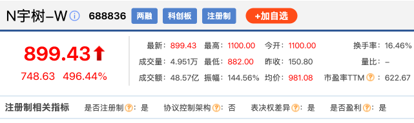
Yushu Technology's stock opened at 1,100 yuan per share, soaring 629.44% from its issue price of 150.80 yuan, reaching a market capitalization of 444.9 billion yuan. This IPO marks the most profitable new stock since the full registration system was implemented in A-shares, with a potential profit of 474,600 yuan for a single subscription of 500 shares. The rapid IPO process took just 104 days, setting a record for the STAR Market. Founder Wang Xingxing, born in 1990, held a 33.36% stake before the IPO, translating to a net worth of 20.35 billion yuan at the issue price. Following the stock surge, his wealth has exceeded 120 billion yuan. The executive team is predominantly composed of individuals born in the 1990s, highlighting a youthful leadership. Yushu Technology reported revenue of 1.152 billion yuan in the first half of 2026, a 48.54% increase year-on-year, with a net profit of 274 million yuan. However, the company faces challenges with rising R&D and sales expenses impacting profitability. The future of humanoid robots in industrial applications remains uncertain, with answers expected in upcoming financial reports.

Humanoid Robots IPO Artificial Intelligence Robotics Market Growth
Yushutech's IPO Soars 629% on 'Super Day' of Robotics Industry Amid WRC Launch

Yushutech's IPO Soars 629% on 'Super Day' of Robotics Industry Amid WRC Launch

On August 19, the robotics industry experienced a significant event dubbed 'Super Day' as Yushutech officially listed on the STAR Market, witnessing a remarkable surge of 629% in its stock price, reaching a market capitalization of 444.9 billion yuan. Concurrently, the 2026 World Robot Conference (WRC) commenced in Beijing, featuring over 300 companies and more than 2,000 exhibits, showcasing 150 new products. This dual occurrence highlights the growing momentum in the humanoid robotics sector, transitioning from conceptual narratives to tangible performance metrics. Yushutech's IPO price was set at 150.80 yuan per share, opening at 1,100 yuan, with a peak dynamic PE ratio exceeding 800 times. The company reported revenues of 1.699 billion yuan in 2025, with a net profit of 278 million yuan, and a market share of 32.4% in humanoid robot shipments, leading globally. Looking ahead, the WRC's focus has shifted from showcasing technical prowess to practical applications, with companies like Yushutech and others unveiling functional robots. The first valuation benchmark for the humanoid robot sector has been established, which is crucial for upcoming IPOs of companies like Zhiyuan and Leju. The industry is now emphasizing operational capabilities over mere demonstrations, as evidenced by the significant shipment growth of humanoid robots, which increased by 272% in the first half of the year.

Humanoid Robots Robot Industry Market Trends Technology Innovation
2026 World Robot Conference Launches in Beijing with Over 300 Companies and 3,000 Exhibits

2026 World Robot Conference Launches in Beijing with Over 300 Companies and 3,000 Exhibits

The 2026 World Robot Conference commenced on August 19 in Beijing, themed 'Human-Machine Symbiosis, Integrated Production and Demand'. The five-day event features a main forum, an expo, and over 70 concurrent activities, supported by 30 international organizations. With over 300 participating companies, the expo has seen a 69% increase from last year, showcasing more than 3,000 exhibits, including over 150 new product launches. This year's conference spans approximately 50,000 square meters, divided into four exhibition halls focusing on different segments of the robotics industry. The 'Intelligent Creation' hall, a new addition, highlights humanoid robots and features leading companies such as Yushu Technology and UBTECH. The 'Intelligent Cooperation' hall emphasizes international collaboration, while the 'Intelligent Manufacturing' hall displays industrial and service robots. A new 'Robot Consumption Street' offers an immersive experience combining technology, food, and cultural creativity. The conference marks a shift from being a 'showcase platform' to a 'transaction platform', with a dedicated 'Procurement Day' for industry matchmaking. The event also launched a 'Global Robot Application Exploration Program' to connect mass-produced products with global innovation teams. The focus is shifting from mere capabilities to long-term, stable, and cost-effective solutions in various sectors, including manufacturing and healthcare.

Robotics Industrial Automation AI Exhibitions Technology
NVIDIA and LG Set Ambitious Goal of 100,000 Hours of Robot Training Data by Year-End

NVIDIA and LG Set Ambitious Goal of 100,000 Hours of Robot Training Data by Year-End

NVIDIA and LG Electronics have set a new benchmark in robot training data, aiming for 100,000 hours by year-end. This initiative was announced during a visit by NVIDIA's Senior Director of Omniverse and Robotics Marketing, Min-San Huang, to LG's Yangjae R&D Center in Seoul, following a strategic partnership agreement signed just days earlier. This ambitious target is significant as it surpasses the training data of other companies, such as Ant Group's LingBot-VLA 2.0 model, which has 60,000 hours. The training data will be sourced from a mix of real and synthetic data, leveraging decades of LG's operational data in manufacturing and logistics, enhanced through NVIDIA's Omniverse and Isaac robotics development platform. Looking ahead, LG plans to deploy hundreds of CLOiD robots at the Yangjae data factory, which features various training environments. The company aims to launch a next-generation bipedal robot based on NVIDIA's Isaac GR00T model by Q1 2027. No further timeline was disclosed at the time of publication.

Robot Training AI Robotics Manufacturing Data Analytics
DIGIT Robotics Completes Pre-A Round Funding for Humanoid Robot Development

DIGIT Robotics Completes Pre-A Round Funding for Humanoid Robot Development

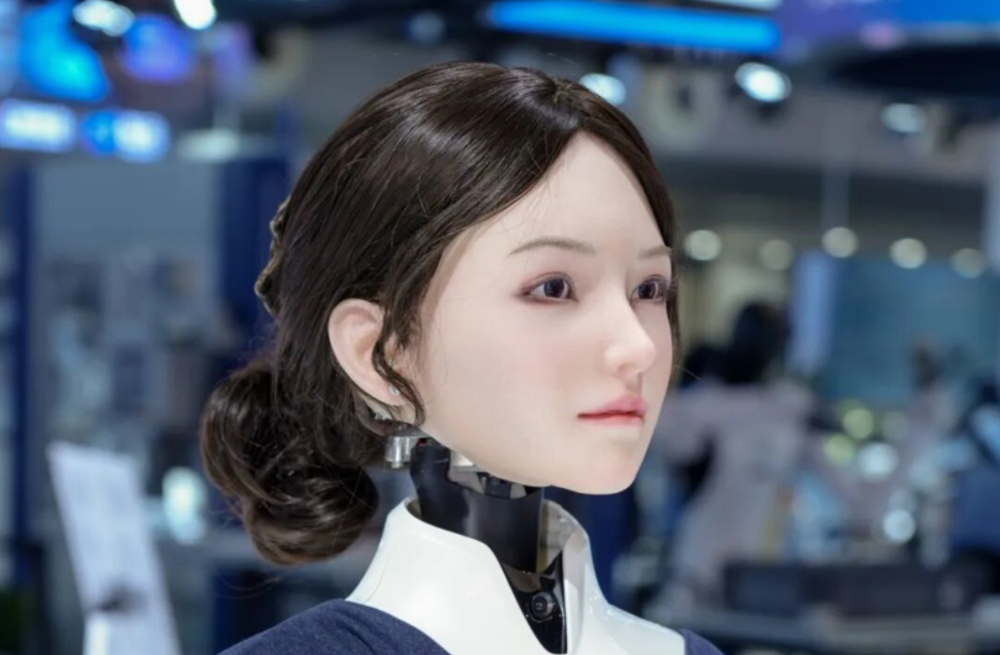
On August 17, DIGIT Robotics announced the completion of a significant Pre-A round strategic financing, with investments from multiple industrial capital sources and continued support from existing shareholder Tongchuang Weiye. The funding will focus on mass production of biomimetic intelligent products and the ecological development of the RoboEase scene brain. Founded in March 2024 by Shen Jian, who has nearly two decades of experience in the IT industry, DIGIT Robotics aims to advance humanoid robots that can understand human emotions. At the recently concluded WAIC 2026, the company unveiled its next-generation humanoid robot, Xia Lan R03, which features over 40 degrees of freedom in its face, enabling it to express more than 30 complex emotions and support multilingual communication. DIGIT Robotics also offers the general-purpose humanoid robot Xia Qi, the customizable dual-mode robot Xing Xing Xia P2, and the AI singer Xia Lan Ruta. The latter is equipped with a sophisticated biomimetic facial system that synchronizes expressions and emotions in real-time during performances. The RoboEase platform, which allows for the orchestration of intelligent agent services without coding, is currently applied in various public service scenarios, indicating a unique commercialization path for DIGIT Robotics.

Humanoid Robots AI Robotics Public Service Automation
Celanese and VIGOR Collaborate to Reduce Robot Joint Weight by Over 30%

Celanese and VIGOR Collaborate to Reduce Robot Joint Weight by Over 30%

On August 14, Celanese, a U.S. specialty materials company, and VIGOR, a Hong Kong precision plastic gear manufacturer, signed a strategic cooperation agreement in Shanghai. Their goal is to address the challenge of heavy metal joints in humanoid robots by replacing them with high-performance engineering plastics, achieving a weight reduction of over 30%. This collaboration aims to enhance the endurance, speed, and load capacity of robots as they transition from laboratories to commercial applications. The partnership is crucial as heavy metal joints have been a bottleneck in robot performance, limiting endurance and response times. The materials used in joints must balance strength, rigidity, heat resistance, precision, and lightweight characteristics, especially under demanding operational conditions. Celanese will provide customized engineering plastics and technical support, while VIGOR will leverage its 40 years of experience in precision plastic gear and drive system manufacturing. This collaboration represents a significant step toward the large-scale deployment of humanoid robots, with plans to extend lightweight plastic joint solutions to industrial, commercial, and professional service robots. As humanoid robots achieve a 30% reduction in joint weight, they will be able to run faster, lift heavier loads, and operate longer, marking a pivotal advancement in the integration of AI in physical applications.

Humanoid Robots Engineering Plastics Robotics Technology Material Science
Western China's First 'No Programming' Welding Robot Enters Production

Western China's First 'No Programming' Welding Robot Enters Production

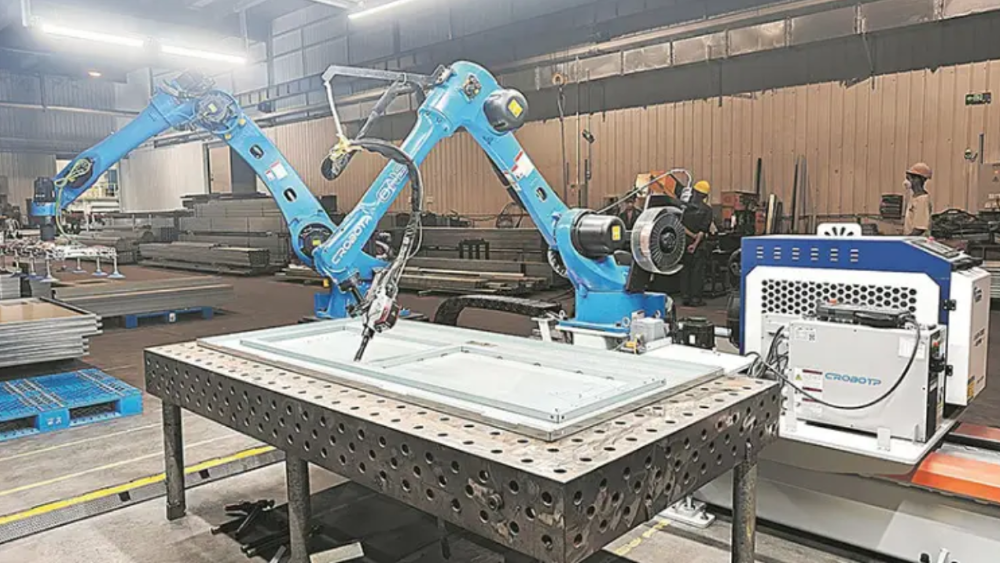
On August 18, the first fully automatic, no programming welding robot was delivered in Chengdu, Sichuan Province. Developed by the Chengdu Craftsman studio led by Feng Zhengle, this innovative robot is designed for the power industry, specifically for non-standard customized door panels. Traditional industrial robots require extensive reprogramming for each model change, which hampers efficiency. The new robot utilizes advanced technologies, including AI deep learning visual recognition and laser seam sensing, to overcome technical challenges in welding thin sheet metal. Its dual positioning system—AI visual initial positioning combined with laser precision positioning—enables high-precision laser welding. The operational efficiency has significantly improved, with complex door panel welding taking only six minutes and simple ones three minutes, reducing overall operation time by 20% and eliminating the need for post-welding polishing. This development marks a shift in manufacturing logic, moving from customized automation solutions to adaptable automation for various products. As the robot begins its journey in a workshop in Chengdu, it represents a significant advancement in the integration of AI into manufacturing processes, transforming the skills of frontline workers into executable algorithms.

Welding Robots Automation Technology AI in Manufacturing Flexible Production
Five Essential Metals Driving the Growth of AI Data Center Infrastructure

Five Essential Metals Driving the Growth of AI Data Center Infrastructure

Artificial intelligence relies heavily on physical infrastructure, particularly data centers that require substantial electrical systems and cooling equipment. A 2026 study indicates that copper is the most critical metal, accounting for 83% of the modeled mineral mass needed for AI data-center infrastructure. Other important metals include gallium, germanium, rare earth elements, and aluminum, each playing a vital role in the AI hardware ecosystem. The significance of these metals extends beyond mere supply; they are integral to the functionality and efficiency of AI systems. For instance, copper's excellent thermal conductivity aids in cooling, while gallium and germanium are essential for semiconductor applications. The concentration of production for these materials, particularly gallium and germanium, raises concerns about supply chain vulnerabilities, which could impact the growth of AI technologies. Looking ahead, the demand for these metals is expected to rise as AI infrastructure expands. The reliance on rare earth elements, particularly from China, poses additional supply risks. As AI processors evolve and generate more heat, the importance of effective thermal management through materials like aluminum will only increase. No further timeline was disclosed at the time of publication.

AI and Robotics
Preparations Continue Late for WRC 2026 as Robots and Workers Collaborate

Preparations Continue Late for WRC 2026 as Robots and Workers Collaborate

On August 18, the eve of the 11th World Robot Conference in Beijing Yizhuang, workers were actively engaged in final preparations. They were busy installing booths, rehearsing boxing matches, and debugging robots well past 10 PM. This scene highlights the dedication and effort put into ensuring a successful event. The significance of this year's conference lies in its emphasis on real-scene demonstrations and the industry's shift from mere performance showcases to validating the value of robotics technology. The focus on hands, perception, and data reflects a growing recognition of the importance of practical applications in robotics. Looking ahead, attendees and industry professionals will be keen to observe how these developments influence future robotics applications and innovations. No further timeline was disclosed at the time of publication.

Alipay Launches Abao Super Agent for Cars and Phones, Predicts Rapid Growth

Alipay Launches Abao Super Agent for Cars and Phones, Predicts Rapid Growth

At Alipay's inaugural AI ecosystem conference on August 17, Ant Group CEO Han Xinyi forecasted significant growth in super agents within the next 6-12 months. The company introduced its first comprehensive agent commerce foundation, focusing on the Abao super agent, which is integrated with five phone brands and 16 major car manufacturers. This development is crucial as it marks a significant step in agent commerce, with Alipay establishing a multi-agent cross-device interconnection protocol known as AHA (Agent Hub Access). The integration of Abao with various devices positions Alipay to capitalize on the growing demand for seamless commerce experiences across platforms. Looking ahead, the orders for Abao are expected to queue into the next year, indicating strong market interest and potential for expansion. No further timeline was disclosed at the time of publication.