Search Result for: http://www.RoboticsTomorrow.com/news/2026/04/29/canadian-ai-startup-independent-robotics-wins-228m-contract-to-bring-conversational-ai-to-multi-agent-robot-swarms-/26490
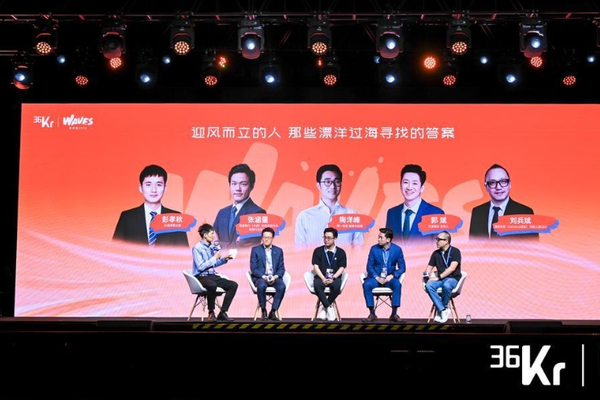
Roundtable: Those who stand against the wind, seeking answers across the sea | 36Kr WAVES 2026 New Wave
In 2026, the WAVES conference, organized by 36Kr and AnYun, took place in Panyu, Guangzhou, focusing on the theme "This Summer." The event gathered top investors, industry leaders, and emerging entrepreneurs over two days to discuss the evolution of AI and hard technology, which are shifting from niche areas to mainstream consensus. The conference featured 14 in-depth roundtable discussions and numerous independent speeches that explored the underlying logic of key sectors such as AI, hard technology, overseas expansion, and healthcare. Key speakers included Peng Xiaoqiu, editor-in-chief of 36Kr, Zhang Hanliang from DBS Bank, Tao Yangfeng from Zero One Capital, Guo Bin from Paradise Silicon Valley, and Liu Bingbin, CEO of Zendure. They shared insights on the changing landscape of entrepreneurship, particularly the transition from manufacturing advantages to brand and engineering advantages in the past decade. Discussions highlighted the importance of understanding market demands and the risks associated with overseas expansion, emphasizing that successful ventures require a deep understanding of both domestic and international markets. The conference underscored the necessity for entrepreneurs to be aware of their capabilities and the potential pitfalls of blindly pursuing global opportunities. As the landscape of international business continues to evolve, the insights shared at WAVES 2026 aim to guide entrepreneurs in navigating the complexities of global markets.

Chasing rumors: Car CEO's departure untrue; WeChat tests native AI assistant; Apple, Tesla supplier data leaked.
On June 23, the ChiNext Index experienced its largest decline of the year, falling over 4% during trading and closing down 3.84%, dipping below the critical 4200-point mark. This downturn followed a record high set just a day prior. The trading volume for the day reached approximately 901.65 billion yuan, a decrease of 118.9 billion yuan from the previous day. All ten of the index's top-weighted stocks saw declines, particularly those in the AI computing sector. In a separate development, Tata Electronics confirmed a significant data breach, with over 630GB of sensitive information leaked, including design and specification documents for key clients like Apple and Tesla. The company stated that it had initiated a response plan and that operations remained unaffected. Apple is reportedly conducting a thorough investigation into the incident. Meanwhile, SpaceX has entered a multi-billion dollar agreement with AI startup Reflection AI to provide computing resources, with payments set to begin in July and continue through 2029. In the robotics sector, Nvidia unveiled its "Halos for Robotics" safety system aimed at enhancing the security of physical AI applications, while Faraday Future introduced its industrial-grade robotic arm series at a robotics expo in Chicago. Additionally, Meta has paused an internal AI training program that tracked employee mouse movements due to data security concerns, and Oracle announced a workforce reduction of approximately 21,000 employees, marking a 13% decrease in its total workforce as part of a business restructuring.

Why Financial Markets Are Becoming One of the Most Automated Industries on Earth
In today's industrial landscape, automation has become a defining characteristic of both manufacturing and trading environments. On factory floors, robotic arms and sensor networks are prominently featured, executing tasks with precision and efficiency without direct human intervention. Similarly, while modern trading desks may lack the visible machinery of a factory, they are equally influenced by automation technologies. These trading platforms utilize advanced algorithms and predictive analytics to streamline operations and enhance decision-making processes. This shift towards automation in both sectors reflects a broader trend driven by the need for increased efficiency and reduced operational costs. As businesses strive to remain competitive in a rapidly evolving market, the integration of sophisticated technologies is seen as essential. The adoption of these automated systems not only improves productivity but also enables firms to respond more swiftly to market changes and consumer demands. As companies continue to embrace automation, the implications for the workforce and the future of work are significant, prompting discussions about the balance between technological advancement and human employment. The ongoing evolution of automation in both manufacturing and trading underscores a pivotal moment in the way industries operate, signaling a future where technology plays an increasingly central role in business operations.

Tesla rival forced to make big changes amid EV shift
Lucid Motors, an electric vehicle startup, announced significant layoffs on June 23, 2026, as it grapples with declining demand in the U.S. EV market. The company is cutting 18% of its workforce, which amounts to over 1,400 employees, in an effort to save approximately $158 million annually. This decision follows a sharp drop in EV sales, with Lucid's market share rising to only 1.8%, despite being the highest it has recorded. The layoffs will impact various roles, including full-time employees, contractors, and hourly production workers at its AMP-1 factory in Casa Grande, Arizona, where a second production shift is being eliminated. The restructuring comes as Lucid aims to align its production with lower-than-expected demand and reduce inventory amid challenging market conditions. The company has faced a series of leadership changes and operational disruptions, including the departure of its chief operating officer, Marc Winterhoff, and the suspension of its 2026 production guidance. Analysts have expressed concerns about Lucid's financial stability, prompting a reduction in the company's stock price target. As of the layoff announcement, Lucid's shares fell by 3.7%, reflecting investor apprehension about the company's future in a competitive EV landscape.

Supplier Impersonation Fraud is Now an Operational Risk for Industrial Manufacturers
As industrial manufacturing environments increasingly embrace digitization through robotics, automation systems, and connected supply chains, they are experiencing enhanced efficiency in production and logistics. However, this shift towards digital interdependence has also exposed companies to new cybersecurity threats that surpass conventional IT vulnerabilities. Among these emerging risks, supplier impersonation fraud has become a significant concern. Attackers are now exploiting established vendor relationships to deceive organizations, potentially leading to severe financial and operational repercussions. This evolving landscape underscores the urgent need for manufacturers to bolster their cybersecurity measures and remain vigilant against sophisticated fraud tactics.

New chip could help tiny robots traverse complex environments
A team of researchers has developed an innovative method for creating 3D maps to enhance navigation systems, utilizing a combination of an efficient algorithm and specialized hardware. This advancement, which was announced in October 2023, aims to significantly reduce the memory and power requirements typically associated with 3D mapping technologies. By streamlining the mapping process, the researchers hope to improve the efficiency and accessibility of navigation tools, making them more practical for a variety of applications, including autonomous vehicles and mobile devices. The integration of dedicated hardware with the algorithm allows for rapid map generation, which could lead to faster and more reliable navigation solutions in real-world scenarios.

NVIDIA and AWS Collaborate to Bring AI to Production at Scale
NVIDIA has announced a collaboration with Amazon Web Services (AWS) aimed at enhancing the development of artificial intelligence systems. This partnership focuses on addressing the challenges of building AI at scale, which necessitates low-latency inference, rapid vector search capabilities, and effective GPU price-performance. The initiative is designed to provide infrastructure solutions that can expand without increasing operational complexity. This announcement comes as the demand for advanced AI technologies continues to rise, with organizations seeking efficient and scalable systems to leverage AI's potential. By combining NVIDIA's expertise in GPU technology with AWS's cloud services, the two companies aim to streamline the AI development process, making it more accessible for businesses looking to implement AI solutions.

NVIDIA Powers Over 400 of the World’s 500 Fastest Supercomputers
NVIDIA continues to dominate the high-performance computing landscape, with its technology powering 81% of the TOP500 supercomputers and 90% of the newly added systems on the list. The latest rankings reveal that 26 systems have integrated the NVIDIA Grace CPU, marking an increase of eight from the previous edition. Additionally, all of the top eight systems on the Green500, which ranks supercomputers based on energy efficiency, utilize NVIDIA GPUs. This strong presence underscores NVIDIA's pivotal role in advancing computational capabilities and energy efficiency in supercomputing.

NVIDIA Announces BioNeMo Agent Toolkit — Tools for Agents to Accelerate Scientific Discovery
NVIDIA has unveiled the BioNeMo Agent Toolkit, a new suite of specialized tools designed to enhance capabilities in the life sciences sector. This announcement was made today as the company aims to support advancements in agentic life sciences, a field that leverages artificial intelligence to improve research and development processes. The toolkit is expected to empower researchers and organizations by providing tailored resources that facilitate the exploration and innovation of biological data and applications. By integrating cutting-edge AI technologies, NVIDIA seeks to drive efficiency and effectiveness in life sciences research, ultimately contributing to breakthroughs in healthcare and related fields.

Inside modern supplement manufacturing: How automated filling lines are raising the quality bar
Recent advancements in automation are transforming the supplement manufacturing industry, particularly through the implementation of cutting-edge filling lines that enhance both quality and efficiency. These innovative systems not only incorporate advanced technologies but also necessitate the establishment of new protocols and expectations for quality assurance. As manufacturers adopt these automated solutions, they are experiencing significant breakthroughs and adopting best practices that elevate production standards. The article delves into how these automated filling lines are setting a new benchmark in the industry, emphasizing the critical controls that are essential for maintaining high-quality output.

How to File a DBA Online: Requirements, Costs, and Registration Process
In a competitive business landscape, establishing a strong brand presence is crucial for success. Many entrepreneurs are utilizing a "Doing Business As" (DBA) name to differentiate their brand from their legal business name. This strategy allows them to create a distinct identity without the need to form a new legal entity. The process of filing for a DBA can often be completed online, making it accessible for business owners seeking to enhance their market visibility and attract customers. By adopting a DBA, businesses can better align their branding with their target audience, ultimately fostering growth and recognition in their respective industries.

How Businesses Are Building Specialized AI They Can Trust
As businesses increasingly seek to integrate artificial intelligence into their operations, many are focusing on developing specialized AI solutions tailored to their specific workflows. This shift comes in the wake of the initial phase of enterprise AI, which primarily centered on gaining access to new technologies and experimenting with various models. Companies have been conducting pilot programs to explore the potential applications of AI, aiming to enhance efficiency and productivity. The current emphasis on customization reflects a growing recognition that AI must align closely with existing processes to deliver meaningful results. As organizations navigate this evolving landscape, the quest for effective AI integration continues to shape their strategic initiatives.

Hai Robotics Showcases Upgraded HaiPick Climb for Manufacturers at Manufacturing Expo 2026
Hai Robotics introduced its enhanced HaiPick Climb system during the Manufacturing Expo 2026 in Thailand, showcasing a significant advancement in automated storage and retrieval technology. This innovative system is specifically designed to improve storage density and fulfillment efficiency for manufacturers, addressing the increasing demands of modern production environments. By offering a flexible and scalable solution, the HaiPick Climb aims to adapt to the evolving needs of the industry, helping manufacturers overcome challenges associated with storage and retrieval processes.

GMO AIR becomes official distributor for top humanoid robot Unitree Robotics, offering one-stop sales and support in Japan.
GMO AI & Robotics Trading Co., Ltd. has entered into an official agency agreement with Unitree Robotics, a leading manufacturer known for its bipedal humanoid robots, which is projected to be the world's top seller by 2025. The agreement was finalized on June 19, 2026, and marks the beginning of sales for both humanoid and quadrupedal robots in Japan. This partnership aims to enhance the availability of advanced robotic solutions in the domestic market, reflecting a growing interest in robotics technology.

FAA Modernizes Airspace Management as Demand Grows Across Aviation Sectors
The Federal Aviation Administration (FAA) has partnered with Air Space Intelligence (ASI) to enhance the management of the National Airspace System (NAS) amid increasing demand from airlines, cargo operators, and new aviation sectors. This modernization initiative, announced in June 2026, aims to address the complexities of airspace management as the aviation industry continues to evolve. By leveraging advanced technologies and data analytics, the FAA seeks to improve efficiency and safety within the NAS, ensuring it can accommodate the growing needs of various aviation stakeholders.

Exploring the societal impacts of AI
At the recent AI and Society Forum, prominent researchers from the Massachusetts Institute of Technology (MIT) engaged in an in-depth discussion regarding the impact of artificial intelligence on employment and democratic processes. The forum, held in October 2023, served as a platform for experts to address pressing concerns about how AI technologies are reshaping job markets and influencing political systems. The motivation behind this dialogue stems from the rapid advancements in AI and the need to understand their broader societal implications. Researchers presented findings and insights on the potential benefits and challenges posed by AI, emphasizing the importance of developing strategies to mitigate risks while harnessing the technology's capabilities. Through collaborative discussions, the forum aimed to foster a greater understanding of AI's role in shaping the future of work and governance.

European startup to make defense drones in Japan, export across Asia
Portuguese drone startup Tekever is set to establish a manufacturing base for defense drones in Japan, marking a significant milestone as it is expected to be the first foreign defense company to do so. The initiative, reported on June 23, 2026, aims to leverage Japan's advanced sensor technology and will involve collaboration with Marubeni, which will serve as the sales agent for Tekever's products across Asia. This move is part of Tekever's strategy to expand its market presence in the region and enhance its technological capabilities by tapping into Japan's expertise in defense systems. The establishment of the manufacturing facility is anticipated to strengthen defense ties between Portugal and Japan while contributing to the growing demand for advanced drone technology in the Asian market.

Dobot showcases humanoid and quadruped robots at "RTJ 2026" as a physical AI platform.
Dobot Japan showcased its latest products and automation solutions at the Robot Technology Japan 2026 (RTJ 2026) exhibition, held from June 11 to June 13, 2026, at the Aichi Sky Expo in Aichi Prefecture. The event focused on industrial robotics and automation, providing a platform for companies to demonstrate advancements in technology and innovation in the field. Dobot's participation aimed to highlight its commitment to enhancing automation capabilities and meeting the growing demand for efficient robotic solutions in various industries.

AGIBOT Showcases Embodied AI Robots at VivaTech 2026 in Paris
AGIBOT, a leader in embodied AI and robotics, showcased its innovative humanoid robots at the 10th-anniversary celebration of VivaTech 2026 in Paris on June 23. The event, held on the iconic Champs-Élysées, allowed visitors to engage with cutting-edge technologies, including live demonstrations of AGIBOT's robotics capabilities in areas such as interaction, locomotion, and manipulation. William Shi, AGIBOT's President for Europe and the Americas, emphasized the shift in the humanoid robotics industry from experimental concepts to practical applications, highlighting the importance of platforms like VivaTech for connecting with the technology and business communities in Europe. During the event, AGIBOT's robots, including the X2 and D1 models, participated in a coordinated performance and a robot parade, captivating an audience of 2,000. Additionally, AGIBOT engaged in a bilingual panel discussion focused on the future of AI and humanoid robotics, exploring the transition from demonstration to real-world deployment. The company aims to advance its robotics technologies to create smarter and safer robotic solutions for various applications. AGIBOT's commitment to innovation is underscored by the recent milestone of producing its 10,000th robot earlier this year.

War robots invade Eurosatory 2026 as interest grows in UGVs after use in Ukraine
Ukrainian companies recently showcased their combat-proven unmanned ground vehicles at a defense exhibition, highlighting advancements in military technology amid ongoing conflict. The event, which took place in October 2023, aimed to demonstrate the capabilities of these vehicles in real combat scenarios. However, some experts remain skeptical about the broader applicability of such technologies beyond their current military use. Despite the impressive displays, concerns linger regarding the potential for these unmanned systems to be integrated into wider operational strategies.

Vention and Teradyne Robotics Collaborate on Digital Twin Creation Platform Optimized for UR Robotic Cells
At Automate 2026, live demonstrations highlighted the innovative integration of Vention's Rapid Operator AI with NVIDIA's Isaac open robotics platform. The event showcased advanced welding applications facilitated by Universal Robots' UR12e and UR20 collaborative robot models. These demonstrations, taking place in a cutting-edge robotics environment, aimed to illustrate the potential of AI-driven automation in enhancing manufacturing processes. By combining these technologies, the event underscored the growing importance of robotics in streamlining operations and improving efficiency in various industrial applications.

Vention and FANUC America Join Forces to Bring Industrial Robots to Vention's AI-Driven Hardware and Software Platform
At Automate 2026, live demonstrations showcased the capabilities of FANUC's CRX10iA and LR Mate 200iD robots, which are enhanced by Vention's advanced MachineMotion AI and MachineLogic software. These technologies are designed to optimize machine tending and adaptive robotic motion applications. The event, taking place in 2026, highlights the growing integration of artificial intelligence in automation processes, aiming to improve efficiency and flexibility in manufacturing environments. By leveraging these innovative solutions, companies can streamline operations and adapt to varying production demands, reflecting the industry's shift towards smarter, more responsive automation systems.

The Shift from One-Size-Fits-All to Bespoke Systems
In a recent discussion among business leaders, the effectiveness of standard solutions in operational strategies was called into question. Many entrepreneurs, who have relied on widely recommended software and uniform processes for years, are now reconsidering whether these approaches truly serve their unique needs. This shift in perspective comes as businesses face increasingly complex challenges that require tailored solutions rather than one-size-fits-all methods. The conversation, which took place in late October 2023, highlighted the importance of adaptability and innovation in a rapidly changing market. Participants emphasized that relying solely on conventional wisdom may hinder growth and limit competitive advantage. As a result, there is a growing movement towards customized strategies that align more closely with individual business goals and customer demands.

SpaceX inks compute deal with Reflection AI, an open source AI lab
Reflection AI has announced a significant investment in Nvidia's technology, committing to pay $150 million monthly starting July 1, 2026, through 2029. This deal will grant the company immediate access to Nvidia's latest GB300 AI chips and supporting hardware. The partnership is set to take place at SpaceX's Colossus 2 data center, located near Memphis, Tennessee. This strategic move aims to enhance Reflection AI's capabilities in artificial intelligence, leveraging cutting-edge technology to advance its operations and offerings in the competitive tech landscape.

Robot.com Launches R-noid, a Humanoid Built For the Work That Burns People Out. No Legs, All Lift to the Bottom Line.
Robot.com has officially launched R-noid™, a humanoid robot designed to alleviate labor shortages in repetitive and hard-to-fill jobs across various industries. Announced on June 22, 2026, in San Francisco, this innovative solution aims to address chronic staffing issues in sectors such as quick-service restaurants, logistics, healthcare, and hospitality, where turnover rates are alarmingly high. R-noid operates under a Robot-as-a-Service (RaaS) model, allowing for deployment from initial site visits to full autonomous operation within eight to twelve weeks. The robot can perform 19 different tasks, including roles such as restaurant assistant, packer, and picker, and will be showcased at Automate 2026 in Chicago from June 22-25. The motivation behind R-noid's development stems from the pressing need to enhance customer experience by filling critical staffing gaps that often disrupt service. CEO Felipe Chavez Cortes emphasized that the goal is to free human workers from monotonous tasks, enabling them to focus on more meaningful aspects of their jobs. R-noid's design features advanced mobility and dexterity, equipped with dual 7-degree-of-freedom arms and a holonomic base for maneuverability in tight spaces. Collaborating with various partners, including NVIDIA Robotics and Yukai Engineering, the robot incorporates an expressive interaction system to foster trust and engagement with users. This launch marks a significant step in Robot.com's mission to integrate humanoid solutions into its existing fleet, enhancing operational efficiency across multiple sectors.

Ribri’s 14lb Heimdall uses 48-cell MEMS array to detect Shaheds at 3 miles passively
At Eurosatory 2026, a prominent defense and security exhibition, a Chinese manufacturer introduced an innovative man-portable drone detection system. This cutting-edge technology is designed to identify and track unmanned aerial vehicles, addressing growing concerns over drone-related security threats. The unveiling of this system comes at a time when the proliferation of drones poses significant challenges for military and civilian sectors alike. By enhancing situational awareness and providing real-time data, the system aims to bolster protective measures against potential drone incursions. The manufacturer emphasized the system's portability and ease of use, making it suitable for various applications, including military operations and public safety initiatives.

Opinion: The AI infrastructure risk robotics leaders can’t afford to ignore
The robotics industry is experiencing a significant transformation, marked by advancements in autonomous mobile robots that are now navigating warehouses with enhanced precision and intelligence. As of October 2023, industrial robots are evolving to become smarter and more adaptable, while AI-powered vision systems are revolutionizing sectors such as manufacturing, logistics, and defense. This surge in technological capabilities is driven by the increasing demand for efficiency and automation across various industries, highlighting the critical role of innovation in shaping the future of robotics.

NVIDIA Vera Rubin Delivers World-Class Supercomputers for Science
NVIDIA has unveiled its latest innovation, the NVIDIA Vera Rubin platform, at the ISC High Performance 2026 conference. This new platform is designed to provide cutting-edge supercomputing capabilities specifically for scientific applications. It features native double-precision (FP64) performance, which is crucial for complex calculations in various scientific fields. Additionally, the Vera Rubin platform integrates NVIDIA's CUDA-X™ libraries, enhancing its computational efficiency and versatility. This announcement underscores NVIDIA's commitment to advancing high-performance computing and supporting scientific research through superior technology. The launch event took place during the prominent ISC High Performance conference, highlighting the growing intersection of computing technology and scientific inquiry.

NVIDIA Vera CPU Opens the Way for Agentic Scientific AI at Los Alamos National Laboratory
Los Alamos National Laboratory (LANL) is set to enhance its computational capabilities with the development of new supercomputers, named Mission, Vision, and Veritas, in collaboration with HPE and NVIDIA. This initiative aims to harness NVIDIA Vera CPUs to significantly accelerate scientific discovery and advance the integration of agentic AI in scientific research. The project underscores LANL's commitment to leveraging cutting-edge technology to address complex scientific challenges. The supercomputers are expected to play a crucial role in various research domains, facilitating breakthroughs that could have far-reaching implications for science and technology.

NVIDIA Brings Trusted, 24/7 AI Agents to Telecom Operations
Telecom operators are experiencing significant benefits from the implementation of generative AI in their operations, particularly in automating network management, customer care, and back-office tasks. This technological advancement has primarily led to task-based automation, enhancing the efficiency of predefined processes while still involving human oversight. As of October 2023, these innovations are reshaping the industry, allowing companies to streamline operations and improve service delivery, ultimately driving better returns on investment. The integration of generative AI is seen as a crucial step towards modernizing telecom services and meeting the growing demands of consumers.

NVIDIA Announces Halos for Robotics, the Industry’s First Full-Stack Safety System for Physical AI
NVIDIA has unveiled NVIDIA Halos for Robotics, marking a significant advancement as the first comprehensive safety system designed specifically for robotics and physical AI. This innovative system integrates AI computing capabilities with safety measures, aiming to enhance the operational reliability of robotic systems. The announcement was made today, reflecting NVIDIA's commitment to advancing technology in the robotics sector. By providing a unified solution, NVIDIA Halos seeks to address the growing need for safe and efficient robotic applications across various industries. This development is expected to facilitate the deployment of robotics in environments that require stringent safety protocols, thereby expanding the potential for AI-driven automation.

NOVARC LAUNCHES NovAI AUTONOMY AS PART OF NovAI SUITE AND EXPANDS INTEGRATION TO YASKAWA AND ABB ROBOTS
Novarc Technologies, an industrial AI company focused on welding automation, unveiled its latest innovations at the Automate 2026 trade show in Chicago, running from June 22-25. The company introduced NovAI™ Autonomy, a cutting-edge solution that integrates machine vision and real-time adaptability into robotic welding processes, alongside NovHub™, its Enterprise Welding Intelligence platform. These technologies are designed to enhance the capabilities of ABB and Yaskawa robots, addressing critical challenges in the fabrication industry, such as a shortage of skilled welders and the need for greater automation flexibility. CEO Soroush Karimzadeh emphasized that NovAI aims to retrofit existing robotic cells, improving quality and efficiency by adapting to variations in parts and reducing manual rework. Demonstrations at the event showcased how NovAI Autonomy can automatically adjust welding parameters in response to misalignments and gaps, promising increased return on investment for manufacturers. The partnership with Yaskawa, formalized through a Memorandum of Understanding, aims to accelerate the deployment of vision-enabled welding cells, further enhancing productivity in heavy fabrication sectors. As demands for precision and efficiency grow, Novarc's advancements position it as a leader in AI-powered welding solutions, enabling manufacturers to optimize their operations and remain competitive.

NAIRR Science Program Reshapes Scientific Research, Powered by NVIDIA AI Infrastructure
The U.S. National Science Foundation’s National Artificial Intelligence Research Resource (NAIRR) pilot program has been instrumental in advancing innovative research over the past two years, supporting more than 700 projects across the country. These initiatives cover a wide range of topics, including protein prediction and infectious disease modeling. By providing essential resources and funding, the NAIRR program aims to enhance the capabilities of researchers and institutions in the field of artificial intelligence. This initiative not only fosters collaboration among scientists but also addresses pressing challenges in health and technology, showcasing the potential of AI to drive significant advancements in various sectors.

Mantis Robotics Extends Potential of Physical AI with New Dual-Arm Fenceless Robot for Industrial and Retail Automation
Mantis Robotics has introduced its latest innovation, the MR-X dual-arm robot, at Automate 2026 in Chicago, showcasing advancements in physical AI for industrial and retail automation. This high-performance robot, capable of lifting up to 70 lbs and operating at speeds of 10.6 m/s, is designed to function without safety fences, allowing for flexible deployment in complex environments. The MR-X is inspired by human biomechanics, enabling it to perform demanding tasks that require both strength and dexterity. Its patented SafetyCore platform provides continuous awareness of its surroundings, allowing the robot to autonomously react to nearby humans without interrupting its operations. This feature eliminates the need for traditional safety infrastructure, enhancing efficiency while maintaining safety standards. Mantis Robotics aims to revolutionize automation with the MR-X, which builds on the success of its predecessor, the MR-1, known for its certified fenceless operation. CEO Gerry Vannuffelen emphasized that the MR-X is not just another humanoid robot, but a first-in-class dual-arm system that surpasses both collaborative robots and humanoids in speed and safety. Visitors to Booth 1261 in the South Hall at Automate 2026 can witness the MR-X's capabilities firsthand, interact with the MR-1, and explore the technology that enables rapid deployment without disruption. Mantis Robotics invites attendees to schedule personalized walkthroughs and learn about priority access for early customers.

Key Trends from the 2026 Zhangjiang Embodied Intelligence Supply Chain Conference
The 2026 Zhangjiang Embodied Intelligence Supply Chain Conference recently brought together more than 80 companies to discuss the evolving landscape of humanoid robotics. Held in Zhangjiang, the event marked a significant transition from technical validation to commercial viability within the industry. Key trends highlighted during the conference included the increasing commercialization of humanoid robots, advancements in emotional interaction capabilities, and the rise of innovative firms dedicated to open-source and modular designs. This gathering underscored the growing interest and investment in humanoid robotics as companies seek to capitalize on emerging technologies and meet market demands.
JD.com founder says delivery workers will no longer be needed in future
During the 2026 APEC China CEO Forum on Sunday, JD.com founder Liu Qiangdong announced the introduction of the company's internal Nirvana Plan. This initiative is designed to support the adaptation of its 700,000 delivery workers and other frontline employees to the challenges posed by artificial intelligence and automation. Liu emphasized the inevitability of robots taking over package deliveries in the future, highlighting the need for proactive measures to ensure that workers can transition effectively in an evolving job landscape.

Interview with Sharpa’s Alicia Veneziani: ‘Dexterous manipulation is the key to useful humanoid robots’
Recent advancements in humanoid robotics have captivated audiences with remarkable demonstrations of walking, running, jumping, and balancing. However, experts in the field caution that while locomotion is a significant aspect, it is not the only challenge facing the development of practical humanoid robots. Many robotics specialists emphasize that the greater hurdle lies in replicating human-like cognitive abilities and social interactions, which are essential for these machines to be genuinely useful in everyday environments. As researchers continue to push the boundaries of technology, the focus is shifting towards enhancing the cognitive and emotional intelligence of robots, which could ultimately determine their effectiveness in real-world applications.

Interview with Paul Dawalibi: Can Ras Al Khaimah become the Silicon Valley of the Middle East?
In recent years, the focus of technology companies aiming to establish a foothold in the Middle East has shifted from the traditional hubs of Dubai and Abu Dhabi to emerging innovation centers. As competition for investment in artificial intelligence, robotics, and deep technology escalates globally, smaller cities are increasingly positioning themselves as viable alternatives. These agile hubs are actively working to attract tech firms by offering unique advantages and fostering an environment conducive to innovation. This shift reflects a broader trend in the region, where diverse locations are striving to enhance their appeal in the rapidly evolving tech landscape.

Interview with Olo Robotics COO Eleanor Tang-Smith: Making robot programming accessible to everyone
Recent advancements in robotics hardware have led to the emergence of highly capable autonomous mobile robots, quadrupeds, robotic arms, and humanoid robots, which are now more commercially available than ever. However, many organizations face significant challenges in adopting these technologies due to the complexities associated with software development. Creating robotic applications often necessitates specialized knowledge in platforms like ROS 2 (Robot Operating System 2). This gap in expertise hinders the widespread implementation of robotic solutions in various sectors, despite the promising capabilities of the hardware. As the industry continues to evolve, addressing the software barriers will be crucial for facilitating broader adoption and maximizing the potential of robotic innovations.

Interview with MTC’s Mike Wilson: ‘Automation is not optional if the UK wants to rebuild manufacturing’
During the 1980s, the UK underwent a significant economic transformation, often associated with the policies of then-Prime Minister Margaret Thatcher. This period marked a decisive shift from a manufacturing-based economy to one increasingly dominated by services, finance, retail, and consumer spending. As the country embraced these changes, the manufacturing sector diminished in importance, reflecting broader trends seen in other Western economies, particularly the United States. This evolution was driven by a combination of government policies aimed at deregulation and privatization, which sought to stimulate economic growth and enhance competitiveness in a rapidly changing global market. The lasting impact of this transition continues to shape the UK’s economic landscape today.

Interview with Digid’s Nils Könne and Christian Kreil: Nanoscale sensors could help solve robotics’ tactile sensing challenge
The swift advancement of artificial intelligence and robotics is drawing significant attention to software and powerful processors, particularly large language models. However, experts emphasize that for robots to function effectively in real-world settings, they require a fundamental capability: advanced environmental sensing and understanding. This necessity is driving increased interest and investment in cutting-edge sensing technologies, as researchers and developers seek to enhance robots' interaction with their surroundings. The push for these innovations is becoming more pronounced as industries recognize the potential of robots to perform complex tasks in various environments, highlighting the importance of integrating sophisticated sensory systems into robotic designs.

Interview with Clearpath Robotics co-founder Ryan Gariepy: ‘Most industries in Canada are under-automated’
Canada is acknowledged for its significant contributions to robotics research, boasting prestigious universities, groundbreaking startups, and advanced technologies utilized in various sectors such as manufacturing, logistics, agriculture, mining, and defense. However, despite this robust technical foundation, experts suggest that the country has struggled to effectively translate its research capabilities into widespread industrial applications. This gap raises concerns about the potential for Canada to fully leverage its innovations in the competitive global robotics landscape.

InOrbit.AI Demonstrates the Future of Multi-Vendor Robot Orchestration and Physical AI at Automate 2026
InOrbit.AI is set to showcase a pioneering multi-vendor robotics demonstration at Automate 2026, highlighting the future of the sentient enterprise. This event will take place in 2026, where industry leaders and innovators will gather to explore advancements in automation technology. The demonstration aims to illustrate how seamless interoperability and Physical AI are revolutionizing disparate automation systems, creating a cohesive and resilient operational ecosystem. By integrating various robotic technologies, InOrbit.AI seeks to address the challenges of isolated automation, ultimately enhancing efficiency and productivity across industries. This initiative reflects a growing trend towards unified solutions in the robotics sector, emphasizing the importance of collaboration among vendors to drive innovation and improve operational capabilities.

Humanoid Robot Market Thrives as UBTECH Sells 5,000 Units
As the year 2026 approaches, the humanoid robot market is undergoing a notable transformation, shifting its focus from industrial applications to consumer products. UBTECH has introduced its U1 humanoid robot, which is specifically designed to provide emotional companionship. The response has been overwhelmingly positive, with over 4,600 pre-orders already placed, reflecting a burgeoning interest in consumer-grade robots. This trend underscores a significant pivot within the industry, as companies increasingly acknowledge the potential of the consumer market for humanoid technology.

From audio tapes to AI: Interview with TDK investment director Ankur Saxena
Artificial intelligence has emerged as a leading focus in technology investment, yet some investors caution that the robotics sector may misinterpret the implications of recent advancements in large language models and generative AI. Ankur Saxena, the investment director at TDK Ventures, the corporate venture capital division of TDK, has voiced concerns regarding this trend. He emphasizes the need for a more nuanced understanding of how these AI breakthroughs can be effectively integrated into robotics, suggesting that a simplistic application of AI principles could lead to misguided strategies in the industry. Saxena's insights reflect a broader debate among investors about the future direction of robotics in light of AI developments, highlighting the importance of critical evaluation in investment decisions.

From Materials Simulation to Experimental Astronomy, New NVIDIA AI Software Unlocks Scientific Discoveries
During the ISC conference taking place this week in Hamburg, NVIDIA unveiled innovative software aimed at accelerating artificial intelligence applications in scientific research. The newly introduced DAQIRI library and ALCHEMI NIM software are designed to enhance processes in various fields, including chemistry, materials discovery, and even the exploration of dark matter. By leveraging advanced AI capabilities, NVIDIA seeks to empower researchers and scientists to achieve breakthroughs more efficiently, addressing the growing demand for faster and more effective scientific solutions.

Forecasts: France defence market (2026–2035)
The French Armed Forces are set to see a significant increase in acquisition budgets, reflecting a strategic enhancement across all military domains. This budget growth comes in response to evolving defense needs and is particularly notable in sectors such as munitions, which are expected to experience substantial investment. The decision to bolster funding aligns with France's commitment to strengthening its military capabilities amid shifting geopolitical landscapes. The increased financial resources will enable the armed forces to modernize equipment and improve operational readiness, ensuring that they remain effective in addressing contemporary security challenges. This development is part of a broader trend observed in defense spending across Europe, as nations prioritize military preparedness in light of recent global tensions.
Forecasts: France defence market (2026–2035)
The French Armed Forces are set to see a significant increase in acquisition budgets, reflecting a strategic shift to bolster military capabilities across various domains. This expansion comes in response to evolving security challenges and aims to enhance the nation's defense readiness. As of October 2023, projections indicate a notable rise in funding for sectors such as munitions, highlighting the government's commitment to modernizing its military assets. This budgetary growth underscores France's proactive approach to maintaining a robust defense posture amid a changing geopolitical landscape.

FAA Clarifies World Cup Drone Restrictions, Creates Path for Authorized Flights
The Federal Aviation Administration (FAA) has announced updates regarding drone operations during the FIFA World Cup 2026, clarifying that both Part 107 and Part 135 operators can now seek approval for flights within restricted airspace. This decision comes as part of the FAA's efforts to streamline Temporary Flight Restriction NOTAMs for the event. The authorization process will involve coordination with the Department of Homeland Security, allowing for certain drone activities to take place despite the typical restrictions associated with major events. This initiative aims to enhance safety and operational flexibility for drone operators while ensuring compliance with security protocols during the high-profile tournament.

Europe Unveils a Record 35 New NVIDIA AI Supercomputers
NVIDIA has unveiled plans for a groundbreaking initiative involving the development of 35 AI high-performance computing (HPC) supercomputers across Europe. This ambitious project aims to provide advanced infrastructure to over 3 million researchers, enhancing the continent's capabilities in artificial intelligence and accelerated computing. The announcement was made during the ISC High Performance 2026 event, highlighting NVIDIA's commitment to advancing AI technology and supporting research initiatives. By investing in this state-of-the-art infrastructure, NVIDIA seeks to empower researchers with the tools necessary to drive innovation and scientific discovery in various fields.