


Construction robotics has no single John Deere or DJI. The market is fragmented by task, geography, and project type. No company controls 30% of any segment. That is the defining structural difference from agricultural automation — and the reason the competitive landscape is harder to read.
Two parallel systems shape global competition. The Western commercial market — $1.37 billion in 2024, growing toward $6.8 billion by 2028 — runs on VC capital and 3–5-year ROI mandates. China's state-directed system deployed 295,000 industrial robots in 2024 alone, with construction automation embedded in SOE programs at a scale private markets cannot match. Both systems are real and growing. This analysis covers both, using the same Tier 1 / Tier 2 / regional framework applied in the Agricultural Robotics Series.
Data note: Company-level figures are based on publicly available disclosures as of February 2026. Funding amounts are announced figures and may not reflect closed rounds. Market sizing figures are commercial research projections, not independently verified by governmental bodies.
TIER 1: ESTABLISHED INDUSTRY PLAYERS
Tier 1 covers companies with commercial deployment at scale, substantial revenue or capital, and ecosystem reach that startups cannot replicate. Three categories qualify: demolition and heavy equipment OEMs that integrated robotics into existing platforms; industrial robotics majors expanding into construction adjacencies; and large-scale autonomous earthmoving companies.
1. Brokk — The Demolition Incumbent
Brokk (Sweden, owned by Lifco AB) is the most commercially mature purpose-built construction robot company globally. Deployed across 100+ countries since 1976, it dominates the demolition segment — which accounts for 55.7% of global construction robotics revenue in 2024, per Mordor Intelligence. Its moat is distribution, service network, and 50 years of contractor trust. Recent developments focus on electrification and remote monitoring via Brokk Connect.
Lifco AB parent · 100+ countries · Demolition: 55.7% of global constr. robot revenue (Mordor Intelligence, 2024)
2. Husqvarna Construction — Surface Preparation
Husqvarna's construction division — floor grinding, surface preparation, concrete cutting — generated approximately SEK 12 billion (USD 1.1B) in 2023. It is investing in autonomous overnight floor prep robots for large commercial projects. Its dealer network across Europe and North America is the structural advantage no startup replicates in under a decade.
Husqvarna Group 2023 Revenue: SEK 53.5B · Construction division: ~SEK 12B · Autonomous floor prep: active development
3. ABB Robotics — Prefab Manufacturing at Scale
ABB is the world's second-largest industrial robotics manufacturer ($32.2B 2023 revenue, $7.8B robotics division). Its construction play is off-site prefab — not job-site robots. In March 2024, it partnered with UK startup AUAR for robotic timber home micro-factories. In August 2025, it partnered with Cosmic Buildings (LA) for 3D concrete printing. ABB's bet is that factory-controlled construction scales faster than field robotics.*
ABB 2023 Revenue: $32.2B · Robotics division: $7.8B · Construction: prefab + 3D printing partnerships
* August 2025 announcement based on press reporting. Product capabilities are company-stated and not independently verified.
4. Komatsu — Autonomous Earthmoving Reference Platform
Komatsu (~$26B FY2024 revenue) runs the most commercially deployed autonomous earthmoving program globally. Its Smart Construction platform covers 40,000+ connected sites across Japan, the US, and Europe. On Japanese public works — where i-Construction mandates ICT equipment — Komatsu is the reference deployment. Its challenge: extending GPS-guided earthmoving to unstructured vertical construction.
FY2024 Revenue: ~$26B · Smart Construction: 40,000+ sites* · Commercial deployment in Japan, US, EU
* Smart Construction site count is Komatsu company-reported data.
5. Caterpillar — Mining Autonomy Extending Into Construction
Caterpillar ($67.1B 2023 revenue, world's largest construction equipment manufacturer) leads autonomous systems in mining — 600+ autonomous haul trucks, 4 billion tonnes moved. In July 2025, it unveiled AI-equipped robotic excavators for construction sites. Its Cat Command remote operation platform is proven. Construction-specific adaptation is underway, not completed.*
2023 Revenue: $67.1B · 600+ autonomous haul trucks · Construction AI excavators: July 2025 announcement*
* Caterpillar July 2025 announcement is press-reported. Capabilities are company-stated and not independently verified.
TIER 2: SPECIALIST INNOVATORS
Tier 2 companies target the specific labor-intensive gaps Tier 1 has not closed: bricklaying, drywall finishing, rebar assembly, site layout, inspection, and 3D printing. Seventeen construction robot companies raised VC globally between 2022 and 2024. The twelve most commercially significant are below.
Table 1 — Tier 2 Specialist Innovators
| Company & Country | Funding | Technology | Key Product | Competitive Edge |
|---|---|---|---|---|
| Built Robotics · USA | $112M | Autonomous Earthmoving | Exo autonomy kit | Retrofits Cat/Komatsu machines. No new hardware required. Leverages OEM dealer networks. |
| Canvas · USA | N/A | Drywall Finishing | Autonomous drywall robot | Commercialised with Swinerton and Turner. Highest labor-intensity finishing task. |
| Dusty Robotics · USA | N/A | Autonomous Layout | FieldPrint 2 (Jul 2024) | BIM-to-floor automated marking. Direct Autodesk BIM 360 integration. Eliminates layout error. |
| FBR Limited · Australia | ASX-listed | Mobile Bricklaying | Hadrian X | 1,000 blocks/hr. Commercial deployment Perth 2023, US expansion 2024. Only listed constr. robot company.* |
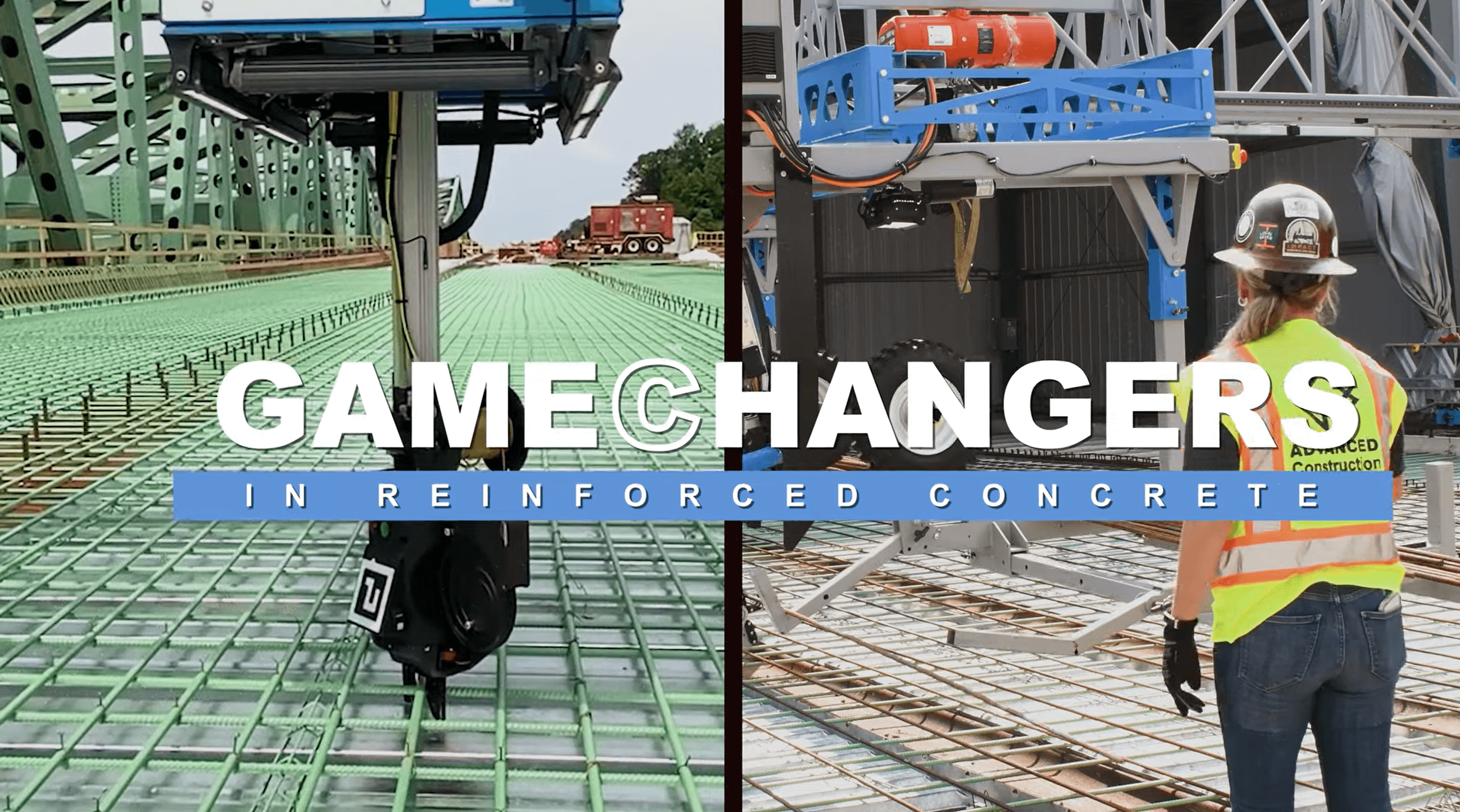
| Adv. Construction Robotics · USA | N/A | Rebar Automation | TyBOT + IronBOT | TyBOT ties rebar; IronBOT lifts/places. Together cut rebar installation time ~50%. |
| Monumental · Netherlands | $25M (2024) | Bricklaying Robots | Deployed Rotterdam | Growth-stage. Live commercial deployment. Raised Feb 2024 — late-seed conviction signal. |
| Boston Dynamics · USA | Hyundai | Mobile Inspection | Spot robot | Deployed at Bechtel, Turner, Gilbane. Site inspection and progress monitoring. |
| COBOD · Denmark | N/A | 3D Concrete Printing | BOD2 printer | World's largest 3D building printer. 10+ country deployments. PERI Group partnership. |
| Buildots · Israel | $54M | AI Site Analytics | Computer vision tracking | Progress tracking vs. BIM model. No hardware on-site. EU/NA/ME deployments.* |
| Doxel · USA | N/A | AI Inspection | Autonomous site scan | LiDAR + AI detects defects vs. BIM model. Reduces rework. Insurance/QA positioning. |
| Gropyus · Germany | N/A | Robotic Prefabrication | 250k sqm/yr factory | Full robotic timber prefab factory. Growth-stage capital. EU market focus. |
| Kewazo · Germany | N/A | Scaffolding Logistics | Liftbot | Automates material transport on scaffolding. 50%+ labour reduction on scaffold erection. |
Source: Company announcements, Crunchbase, Sifted (Jan 2025), BuiltWorlds VC Top 50. N/A = not publicly disclosed. * FBR data is company-reported, not independently verified. * Buildots funding from public disclosures.
TIER 3: JAPAN'S CONTRACTOR-BUILT ROBOTICS
Japan's five major general contractors operate internal robotics programs with no equivalent anywhere in the world. They are not startups. They are the contractors themselves — building robots for their own projects as a direct response to an existential workforce crisis. This tier has no agricultural equivalent.
Table 2 — Japanese GC Internal Robotics Programs
| Company | Key System | Capability | Status |
|---|---|---|---|
| Kajima | A4CSEL | 3 operators steering 14 machines. Autonomous compaction, grading, hauling. | Commercial — dam/infra projects.* |
| Shimizu | Smart Site | Autonomous rebar, concrete placement, and interior fit-out robots in parallel. | Commercial — multiple high-rise projects.* |
| Obayashi | 3D bridge system | 3D-printable prestressed concrete girders. Construction-Tech Lab Singapore (Jul 2024). | Pilot to commercial.* |
| Takenaka | Automated concrete | Autonomous concrete pump and floor finishing. Reduces 4-person crew to 1 supervisor. | Commercial on select projects.* |
| Taisei | T-iROBO series | Rebar tying, concrete finishing, inspection, and material logistics robots. | Commercial — full site integration.* |
Source: Company disclosures, MLIT i-Construction documentation, press releases 2023–2024. * All deployment status figures are company-reported and not independently audited.
TOP 5 COUNTRIES: REGIONAL ANALYSIS
The profiles below apply the same four dimensions used in the Agricultural Robotics Series: labour cost pressure, policy readiness, ecosystem maturity, and near-term adoption trajectory.
1. United States — Strongest Ecosystem, Weakest Mandate
Construction wages averaged $32.38 per hour in mid-2024 (BLS). The sector needed 454,000 additional workers in 2025 (ABC, proprietary model). The IIJA, CHIPS Act, and IRA triggered a construction boom the workforce cannot service. Commercial deployments include Built Robotics, Canvas, Dusty Robotics, Advanced Construction Robotics, and Boston Dynamics Spot at major GC sites. No national robotics mandate exists. RaaS is the structural unlock for the mid-market.
$32.38/hr avg. wages (BLS 2024) · 454,000 worker shortfall* · RaaS unlocking mid-market · No national mandate
2. China — State-Directed Scale, Bimodal Adoption
China installed 295,000 industrial robots in 2024 — 54% of global installations (IFR). Guangdong Bozhilin Robot has deployed 50+ robot types across mass housing projects. Domestic manufacturers hold 57% market share, up from 28% a decade ago. Adoption is bimodal: SOE programs are advanced; private developers lag significantly. A $138 billion state robotics fund accelerates deployment at a scale private capital cannot match.*
295,000 installations 2024 (IFR) · 57% domestic market share · $138B state fund* · Bimodal: SOE advanced, private nascent
* China state capital is government-announced and does not reflect independently audited disbursement. Bozhilin data is company-disclosed.
3. Japan — The Only Government Mandate
Japan's i-Construction programme mandates ICT machinery on all public earthworks — the only hard government construction automation requirement in the world. Over 35% of construction workers are over 55. The workforce shrinks by 30,000 per year. Japan installed 44,500 robots in 2024 (IFR, 2nd globally). Government R&D allocation to robotics is approximately $930 million annually. The five major GCs operate the world's most advanced in-house programs.
Only government construction robotics mandate globally · 44,500 installations 2024 (IFR) · $930M annual R&D* · 35%+ workforce over 55
* R&D figure from IFR 2024. GC deployment data is company-reported.
4. Germany / EU — Industrial Depth, Mid-Market Gap
Germany installed 26,982 robots in 2024 — 32% of the EU total (IFR). BIM is mandatory on federal contracts since 2020. Kewazo's Liftbot automates scaffolding logistics. Gropyus operates a roboticised timber prefab factory. Monumental raised $25 million in February 2024 for bricklaying robots deployed in Rotterdam. The EU-wide labour deficit exceeds 800,000 (FIEC, member-disclosure). German wages hit €42–47/hr. Market fragmentation — most firms under 50 employees — slows mid-market rollout.
800,000+ EU worker deficit (FIEC)* · €42–47/hr German wages · BIM mandate since 2020 · 26,982 robots installed (IFR 2024)
5. South Korea — World Density Leader, Construction Early Stage
South Korea holds 1,012 manufacturing robots per 10,000 workers — the world's highest (IFR). Hyundai's $880 million acquisition of Boston Dynamics in 2021 was the clearest strategic signal in the sector. Samsung C&T and Hyundai E&C both have active internal robotics programs. Smart Korea 2030 designates robotics as a national priority. Construction-specific deployment remains early stage. The 2024–2030 window is critical for the pilot-to-production transition.
1,012 mfg robots/10,000 workers (IFR, world #1) · Hyundai acquired Boston Dynamics 2021 · Smart Korea 2030 national fund
Table 3 — Rapidly Emerging Markets
| Country | Key Company | Primary Driver | Policy | 2030 Outlook |
|---|---|---|---|---|
| Australia | FBR (Hadrian X, ASX) | AUD 55–90/hr wages; 90k worker gap by 2027* | Low — no mandates | Commercially proven; Tier 1 pilots; FBR US expansion |
| Israel | Buildots ($54M)* | Defence-origin AI, computer vision, sensors | Moderate — innovation-friendly | Software export hub; deployed EU/NA/ME |
| Singapore | BCA Smart Construction program | Dense urban; SE Asia's highest labour costs | High — BCA productivity mandates | Fastest Asia-Pacific sub-market; high-rise prefab focus |
| UAE/Saudi | COBOD 3D printing deployments | NEOM mega-scale; heat/safety drivers | Moderate-High — NEOM lab | 3D printing + autonomous earthmoving; NEOM as live test bed |
| UK | AUAR (ABB partnership) | Post-Brexit labour shortage; housing deficit | Medium — MMC policy push | ABB-AUAR micro-factory model; housing crisis = urgent demand |
Source: FBR ASX disclosures, Buildots press releases, BCA Singapore, NCVER Australia. * NCVER 90k figure is a projection estimate. * Buildots funding is publicly disclosed.
Explore the future of the industry by browsing over 200+ global innovators in our Construction Robot directory
BUSINESS MODELS: HOW CONTRACTORS ACCESS ROBOTICS
Four access models coexist — directly mirroring the agricultural market. RaaS is the most structurally important shift. Converting $300K+ capex into $60–80K annual subscriptions reaches 3x more contractors. Built Robotics and Canvas both lean toward usage-based pricing. The mid-market is the primary expansion frontier for 2025–2028.
Table 4 — Business Model Comparison
| Model | Upfront | Annual | Access | Leading Companies | Best For |
|---|---|---|---|---|---|
| Capital Sale | $200K–500K+ | Maint. 15–25% of cost | Large GCs only | Brokk, Komatsu, ABB | Multi-year project pipelines. Max ROI if fully utilised. |
| RaaS | $0 | $60–80K/yr | 3x more contractors | Built Robotics, Canvas, Dusty | Mid-market. Capex to opex. No ownership/maintenance risk. |
| Project Contract | $0 | Per-project fee | Seasonal/specialist | FBR Hadrian X, demolition cos. | Short-cycle projects without year-round robot utilisation. |
| AI/Data Subscription | $5–15K HW | $3–8K/yr SW | Any contractor | Buildots, Doxel, Dusty Robotics | Digital intelligence layer. Lowest barrier. Works with all hardware. |
Source: Company announcements, BuiltWorlds, Sifted. Pricing ranges are analyst estimates and vary by project type, geography, and contract structure.
INVESTMENT LANDSCAPE & COMPETITIVE DYNAMICS
Global robotics VC reached $6.1 billion in 2024. Deal count fell from 671 to 473 rounds — larger cheques, fewer companies. Capital is concentrating around demonstrable commercial deployment, not early prototypes. Only 17 construction robot companies raised VC globally between 2022 and 2024. Three — Built Robotics ($112M), Buildots ($54M), Monumental ($25M) — have crossed into growth-stage capital, signalling active commercial deployment rather than prototype status.
Specialist investors dominate. Foundamental (Europe), Brick & Mortar Ventures (US), and KOMPAS VC (€135M Fund I, Amsterdam/Berlin/Copenhagen/Tel Aviv) provide contractor relationships and deal access that generalist VCs cannot offer — and tolerance for the 5–8-year commercialisation cycles construction requires. China operates on a separate axis: a $138 billion state fund compresses capital cost at a scale private markets cannot replicate. Neither system displaces the other. Both accelerate simultaneously, shaping distinct competitive dynamics in their respective geographies.
Consolidation follows the agricultural pattern. Incumbents buy capability rather than build it. ABB's AUAR partnership mirrors Deere's Blue River acquisition — a platform OEM filling a specific software gap. Built Robotics' retrofit model leverages Cat and Komatsu dealer networks rather than competing against them. Mobile platforms (Built Robotics, FBR, Boston Dynamics Spot) and software-first analytics (Buildots, Doxel, Dusty) win over fixed systems because construction is project-based. A robot must move between job sites to earn its keep.
$6.1B global robotics VC 2024 · 17 construction companies funded 2022–24 · Built Robotics $112M · Buildots $54M · Monumental $25M*
* VC figures are announced amounts from Crunchbase and public reporting. They may not reflect closed rounds. China state capital is government-announced.
CONCLUSION
Five Tier 1 incumbents, twelve specialist innovators, and five Japanese GC programs define construction robotics in 2026. No single platform dominates. The project-based, site-specific nature of construction prevents any one company from capturing the market the way DJI captured agricultural drones. That is a feature of the industry, not a failure of the technology.
The near-term winners solve the deployment problem, not the technology problem. Demolition, earthmoving, bricklaying, layout, and inspection — the technology works. The barrier is the commercial model, the dealer network, and contractor trust. RaaS unlocks the mid-market. Prefab factories scale off-site manufacturing volume. Japan's mandate removes optionality for public contractors. All three forces are accelerating simultaneously.
Construction sits a decade behind manufacturing in robot density. Global manufacturing averages 177 robots per 10,000 workers. Construction sits below 0.5. The gap defines the entire opportunity. The companies profiled in this report are closing it — each from a different angle, at a different speed, with a different structural model. That diversity is not a weakness. It reflects a market large enough to support multiple winning strategies.
Continue to Part 3: Technology Categories & Competitive Edges — covering robotics, AI scheduling, modular construction, and digital twin infrastructure assessed by commercial readiness and investment concentration.
SOURCES & REFERENCES
RobotToday Supplier Discovery (200+ global construction robot suppliers)
Market Research
Grand View Research (2024) · Mordor Intelligence (2024) · Market Research Future (2024) · The Business Research Company (2024) · FactMR (2025) · Sifted (Jan 2025) · A3 (2024). All market sizing figures are commercial projections. None independently verified by governmental statistical bodies.
Robot Density & Installation Data
International Federation of Robotics (IFR), World Robotics 2024 (Nov 2024) and World Robotics 2025 (Sep 2025). IFR is the authoritative source for manufacturing robot density. Construction density figures are analyst estimates not compiled by the IFR.
Company Sources
Built Robotics (builtrobotics.com) · FBR Limited ASX disclosures (fbr.com.au) — company-reported, not independently verified · Buildots (buildots.com) — company-reported · ABB Robotics (March 2024, August 2025 announcements) · Komatsu Smart Construction (komatsu.com) — company-reported · Caterpillar (July 2025 press release) — not independently verified · Kajima A4CSEL disclosures (kajima.co.jp) — company-reported · COBOD (cobod.com) · Dusty Robotics FieldPrint 2 (July 2024) · Monumental Series A (February 2024).
Government & Institutional Sources
Japan MLIT — i-Construction programme (mlit.go.jp) · US Bureau of Labor Statistics — official wage data (bls.gov) · Associated Builders and Contractors — workforce model (abc.org), proprietary, not independently verified · FIEC — EU labour deficit (fiec.eu), member-disclosure, not independently verified · NCVER — Australia workforce projections (ncver.edu.au), projection estimate · KOMPAS VC Fund I — publicly available documentation.
Investment Data
Crunchbase (2024) · PitchBook (2024). VC figures are announced amounts and may not reflect closed rounds or post-round adjustments.









Leave a comment