

SAB North America
North American distributor and service center for SAB Brockskes flexible industrial automation cables, sensors, and cable harnesses.
Contact SAB North America
WEBSITE
https://sabcable.comPHONE
+1 (973) 276-0500HEADQUARTERS
United States

Company Facts
Founded
1999
Primary Role
Distributor
Company Size
employees 10-50
Primary Region
North America
Annual Sales
-
Funding Stage
Subsidiary / Acquired
Funding Total
-
Export Markets
Keywords
- SAB North America
- industrial-cable
- flexible-cable
- continuous-flex
- torsional-cable
- automation-cable
- robotics-cable
- cable-harness
- motor-cable
- Ethernet-cable
- Industrial Manufacturing
- Robot Manufacturer
- Education & Research
- Distributor
- Exporter
- Motion & Actuation
- Perception & Vision
- Manufacturing
- Logistics & Supply Chain
- Automotive

Safety Considerations Will Shape the Future of Humanoid Robots
In a recent discussion, Rick Balzano, Vice President of Go-to-Market for AI Services, Safety and Robotics at TaskUs, highlighted the critical work required to make humanoid robots reliable. He emphasized that unlike large language models, which operate on digital data, humanoid robots must navigate and interact with the physical world, necessitating extensive real-world data collection and validation. Balzano pointed out that while humanoid robots are often marketed as versatile workers, they currently remain highly specialized machines disguised in human-like forms. He noted that significant advancements have been made in areas such as locomotion and perception, but the gap between demonstration and real-world application is substantial, often involving controlled environments and remote assistance. Looking ahead, the industry must focus on bridging this gap to enhance the reliability of humanoid robots. Balzano's insights underscore the importance of safety and data integrity in developing robots that can operate effectively in diverse environments. No further timeline was disclosed at the time of publication.
AI and Robotics Innovation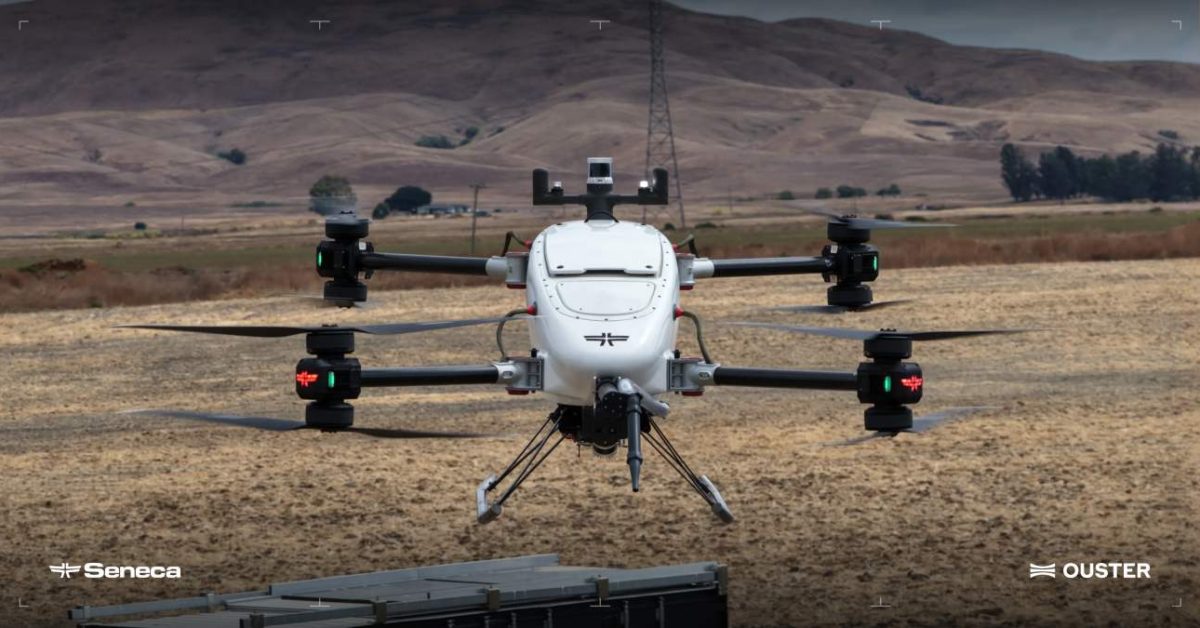
Ouster and Seneca Enhance Wildfire Drones with Advanced 3D LiDAR Technology
Ouster and Seneca have partnered to integrate Ouster’s Rev8 OS1 Max digital LiDAR into Seneca’s autonomous wildfire-response drones. This collaboration aims to enhance the drones' ability to perceive and navigate challenging environments, particularly during wildfires where visibility is often compromised. The integration of LiDAR technology allows Seneca's drones to create detailed 3D representations of their surroundings, improving their operational capabilities in various missions such as cargo delivery, terrain mapping, and infrastructure inspection. The Rev8 OS1 Max sensor, known for its high resolution and range, provides critical information for obstacle detection and flight path adjustments, essential for safe autonomous operations. As the demand for autonomous aircraft in emergency response grows, the partnership underscores the importance of advanced perception systems in ensuring safety and efficiency. No further timeline was disclosed at the time of publication.
News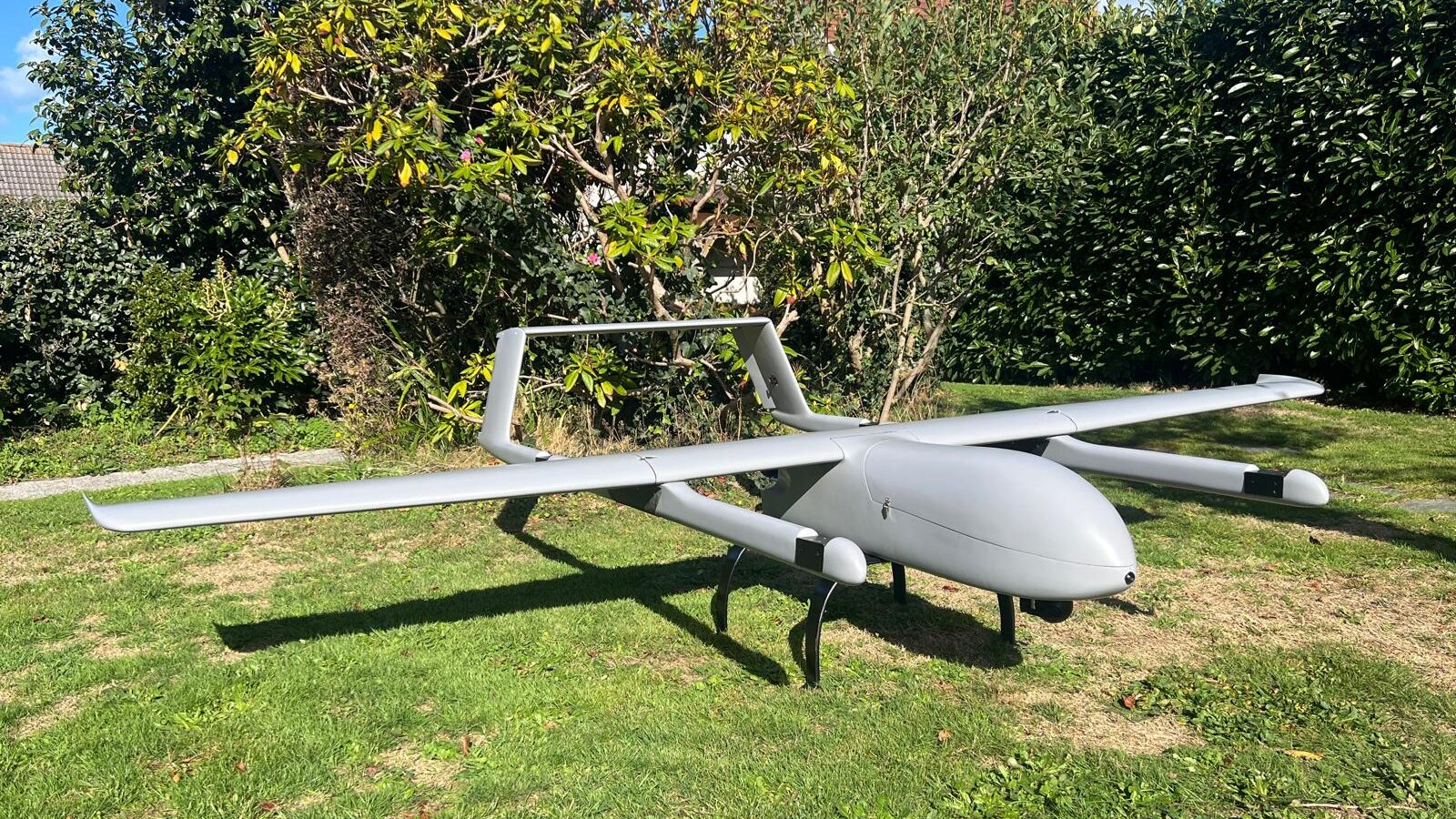
Ballistic Defense System Develops GPS-Free UAV Prototype Matador for Precision Operations
Moroccan startup Ballistic Defense System has unveiled its prototype unmanned aerial vehicle (UAV), named Matador, which operates without GPS. Instead, it utilizes cameras and advanced algorithms for navigation, enhancing its effectiveness in regions where GPS signals may be compromised. Co-founder Fahd Laamoumi emphasized the importance of the software layer, which includes visual inertial odometry and map matching agents, all coordinated by a Kalman filter for decision-making. The development of Matador, which began in December 2023, was completed in 18 months with an investment of $1.15 million from its founders. This UAV is designed as a one-way attack drone, offering advantages in sovereignty and precision, particularly in conflict zones where GPS jamming is prevalent. The prototype features a four-meter wingspan and a range of 250 km, with plans for a larger airframe to extend its range to 2,000 km. Ballistic Defense System is currently testing the Matador and is in discussions with the Moroccan army for potential procurement. The company has also received interest from two Gulf nations for demonstrations, which may include technology transfer and production collaboration. No further timeline was disclosed at the time of publication.
Air Warfare Global Land Warfare Agentic AI Air Force algorithms
Exploring the Impact of Manipulated Inputs on Robot Safety Functions
VicOne LAB R7 investigates how manipulated inputs can affect robot behavior and safety. Mobile robots, collaborative arms, and humanoids rely on accurate environmental data to function safely. When inputs are incorrect, whether due to faults or deliberate manipulation, robots may respond inappropriately, raising concerns about safety protocols. Understanding the implications of these findings is crucial for safety and security teams. Research indicates that adversarial inputs can lead to unintended robot actions, as demonstrated in various tests involving vision-language-action models and audio manipulation. These studies highlight the need for robust safety assessments that account for both accidental faults and deliberate cyber threats. Looking ahead, organizations must evaluate their safety measures to ensure they can detect manipulated inputs effectively. The potential for attackers to exploit vulnerabilities in robot systems necessitates a reevaluation of risk assessments and safety protocols. No further timeline was disclosed at the time of publication.
Sponsored Content VicOne
Research from Toyohashi University Reveals Perception of Speed Varies by Approach Direction
A research team from Toyohashi University of Technology, led by associate professor Hideki Tamura, has found that objects approaching from behind are perceived to move faster than those coming from the front, despite having the same physical speed. This finding is significant as it sheds light on human perception and cognition, particularly in how we interpret the speed of moving objects based on their direction of approach. Understanding these perceptual biases can have implications in various fields, including robotics and human-computer interaction. Future research may explore the underlying mechanisms of this perception and its applications in technology design. No further timeline was disclosed at the time of publication.
Robotics
Ouster and Seneca Collaborate to Enhance Autonomous Drone Technology for Wildfire Response
Ouster, Inc. has partnered with Seneca to integrate its REV8 OS1 Max native color digital lidar into Seneca's autonomous drone platform. This collaboration aims to improve 3D perception capabilities in drones, enabling safer and faster operations in complex wildfire environments. The integration of Ouster's advanced lidar technology is significant as it enhances the operational efficiency of drones used in wildfire response. This partnership highlights the growing importance of advanced sensing technologies in improving emergency response efforts and mitigating the impacts of wildfires. Looking ahead, the collaboration between Ouster and Seneca may lead to further advancements in drone technology for various applications beyond wildfire response. No further timeline was disclosed at the time of publication.

ALBATROSS: A Bio-Inspired Robot Transitions from Airborne to Autonomous Sailboat
Researchers at Singapore University of Technology and Design and MIT have developed ALBATROSS, a hybrid robot that combines aerial and aquatic capabilities. This innovative design mimics the natural descent of a maple seed and the swimming motion of a fish, allowing the robot to transition seamlessly from flying to sailing. In field trials, ALBATROSS demonstrated autonomous sailing after being deployed from a height of 150 meters. The significance of ALBATROSS lies in its ability to operate efficiently in both air and water without the need for heavy motors or complex systems. By utilizing a passive autorotation mechanism during descent, the robot reduces impact energy and ensures a soft landing. Once on the water, it transforms its wings into sails and employs a fish-inspired tail rudder for propulsion, achieving a remarkable 91 percent effective mass usage. Looking ahead, ALBATROSS's design showcases the potential of bio-inspired engineering to create lightweight, multifunctional robots. Future developments may include the integration of Reinforcement Learning algorithms for advanced navigation capabilities, enabling the robot to autonomously complete complex missions. No further timeline was disclosed at the time of publication.
AI and Robotics
New AI Framework Enhances Service Robots' Understanding of 3D Spaces
A new AI framework has been developed to improve service robots' ability to understand 3D spaces. This advancement allows robots to recognize not just general categories like 'furniture,' but also specific types such as chairs, tables, and bookcases. Additionally, it helps robots differentiate between openings, identifying them as doors or windows. This level of detail is crucial for effective navigation and interaction within environments. By understanding these distinctions, robots can better plan their routes, avoid obstacles, and make informed decisions about safe interactions with their surroundings. This capability is particularly important in complex environments like offices. As the demand for sophisticated service robots grows, advancements like this AI framework will be essential. The ability to interpret 3D spaces with greater accuracy will enhance the functionality and efficiency of robots in various applications. No further timeline was disclosed at the time of publication.
Robotics
Launch of a Fully Polymer Micro Aerial Robot in Science Robotics
A new all-polymer micro aerial robot has been introduced in the latest issue of Science Robotics. This innovative flying robot showcases advancements in lightweight materials and design, making it suitable for various applications in aerial robotics. The significance of this development lies in its potential to enhance the capabilities of micro aerial vehicles, particularly in terms of efficiency and maneuverability. The use of polymer materials allows for a reduction in weight while maintaining structural integrity, which is crucial for aerial operations. Looking ahead, the industry will be monitoring the performance and applications of this all-polymer micro aerial robot. Further research and development may lead to new use cases in fields such as surveillance, environmental monitoring, and search and rescue operations. No further timeline was disclosed at the time of publication.
Research Article
Matic Reveals Future Plans for Humanoid Robots Beyond Floor Cleaning
Matic is exploring advancements beyond floor cleaning, showcasing a humanoid robot in a recent video. Co-founder Mehul Nariyawala emphasized that manipulation will be the next phase for the company, which has already established a strong foundation in perception and navigation with over 16,000 homes serviced and 500 million square feet covered. This development is significant as it indicates Matic's ambition to expand its product offerings in household robotics. Nariyawala noted that reliable perception and navigation are crucial precursors to successful manipulation, suggesting that each phase of development will yield valuable products. The company claims a remarkable 99.999% performance for its visual SLAM technology, which is essential for mapping environments and positioning the robot. Looking ahead, Matic's teaser of the humanoid robot raises questions about the timeline for product development and market readiness. While the humanoid design is visually striking, it remains a concept rather than a confirmed product. The company has previously indicated a long-term plan to incorporate manipulation capabilities, but specific details on how these robots will transition from concept to market-ready products are still pending.
US Matic
China’s Dexterous Hand Industry, 2026 Part 3 — The Players
Five vendor archetypes, MIR’s composite top ten, eight company profiles and six field deployments — every firm linked to the RobotToday supplier directory.

China’s Dexterous Hand Industry, 2026 Part 1 — The Demand Picture
MIR Databank puts China dexterous hand shipments above 30,000 units in 2026, yet only 3.5% of 2025 demand came from factory production. Part 1 of 3.
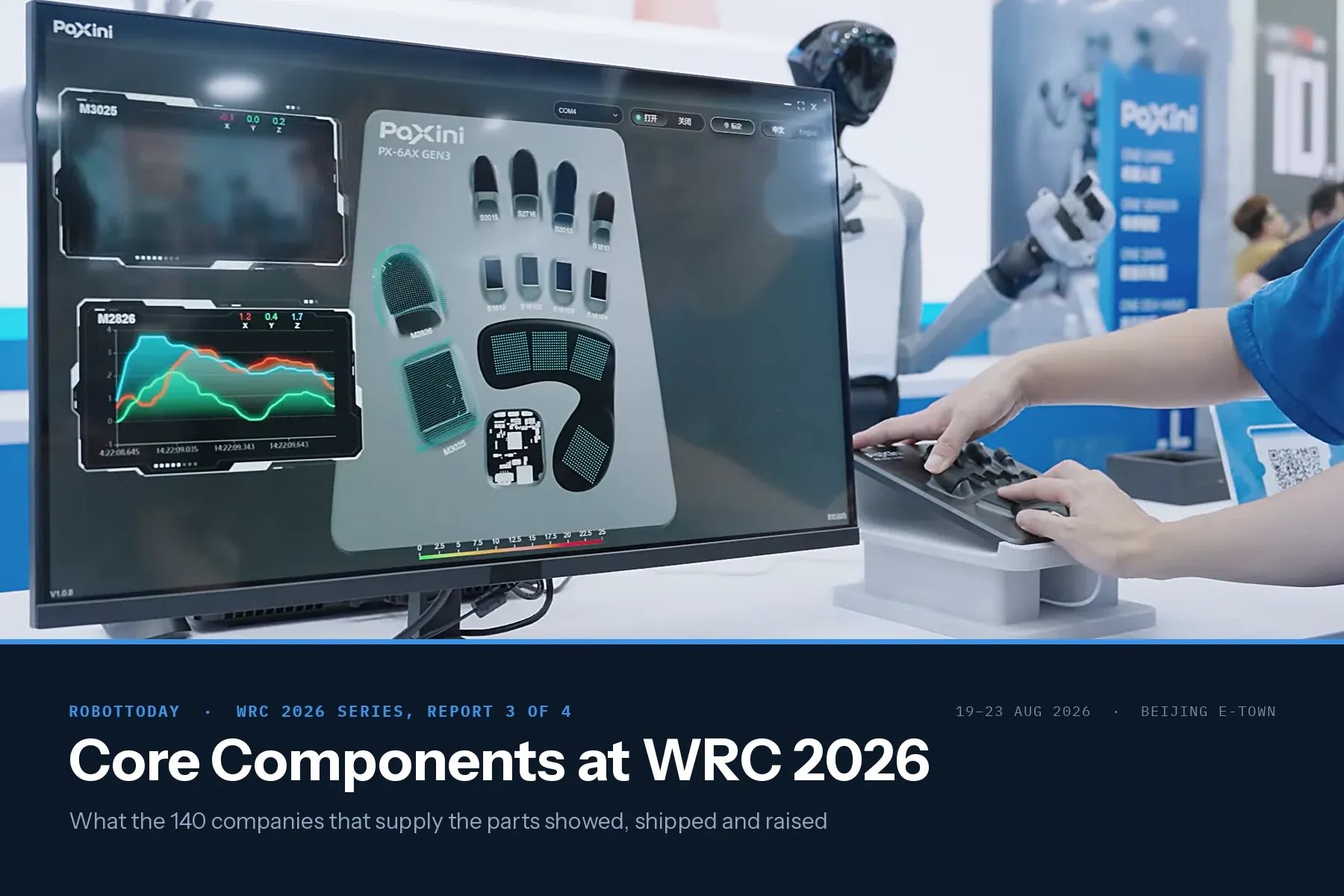
WRC 2026 Core Components: 137 Robot Parts Suppliers
The third report in the WRC 2026 series. Report 1 mapped all 248 exhibitors by category and Report 2 covered the 139 that build finished robots. This one covers the 137 that build what goes inside them.

WRC 2026 Exhibitor Map: 248 Robotics Companies Mapped
We classified 248 WRC 2026 exhibitors with the RobotToday taxonomy. Motion & Actuation leads at 75 companies, Humanoid at 72, and compute stays thin at 12. (Modified 2026-08-27)

Introduction to Robotics J. J. Craig — RSF Top 10 Robot Education Textbooks · No. 6
Six of ten benchmark universities teach kinematics from Craig. Frames, transforms and D-H parameters: the language vendor manuals already speak.

Mechatronics W. Bolton — RSF Top 10 Robot Education Textbooks · No. 1
Bolton's Mechatronics ranks No.1 for robot service engineers: encoders, drives, sensors and the Layer 2 faults most textbooks skip. Difficulty 2/5.

Pittsburgh Regional Alliance Convenes Nine CMU-Rooted Robotics Firms at Automate 2026
At Automate 2026, the Pittsburgh Regional Alliance convened nine robotics firms — most spun out of Carnegie Mellon — spanning materials, perception and AMRs.

CONSTRUCTION ROBOTICS | BUSINESS MODELS & INVESTMENT LANDSCAPE
Construction robotics attracted $4.4 billion in built environment tech funding through Q3 2025. SoftBank acquired ABB Robotics for $5.375 billion. RaaS is displacing capex models. AI-native platforms command 39x revenue multiples. This is where money meets machines.
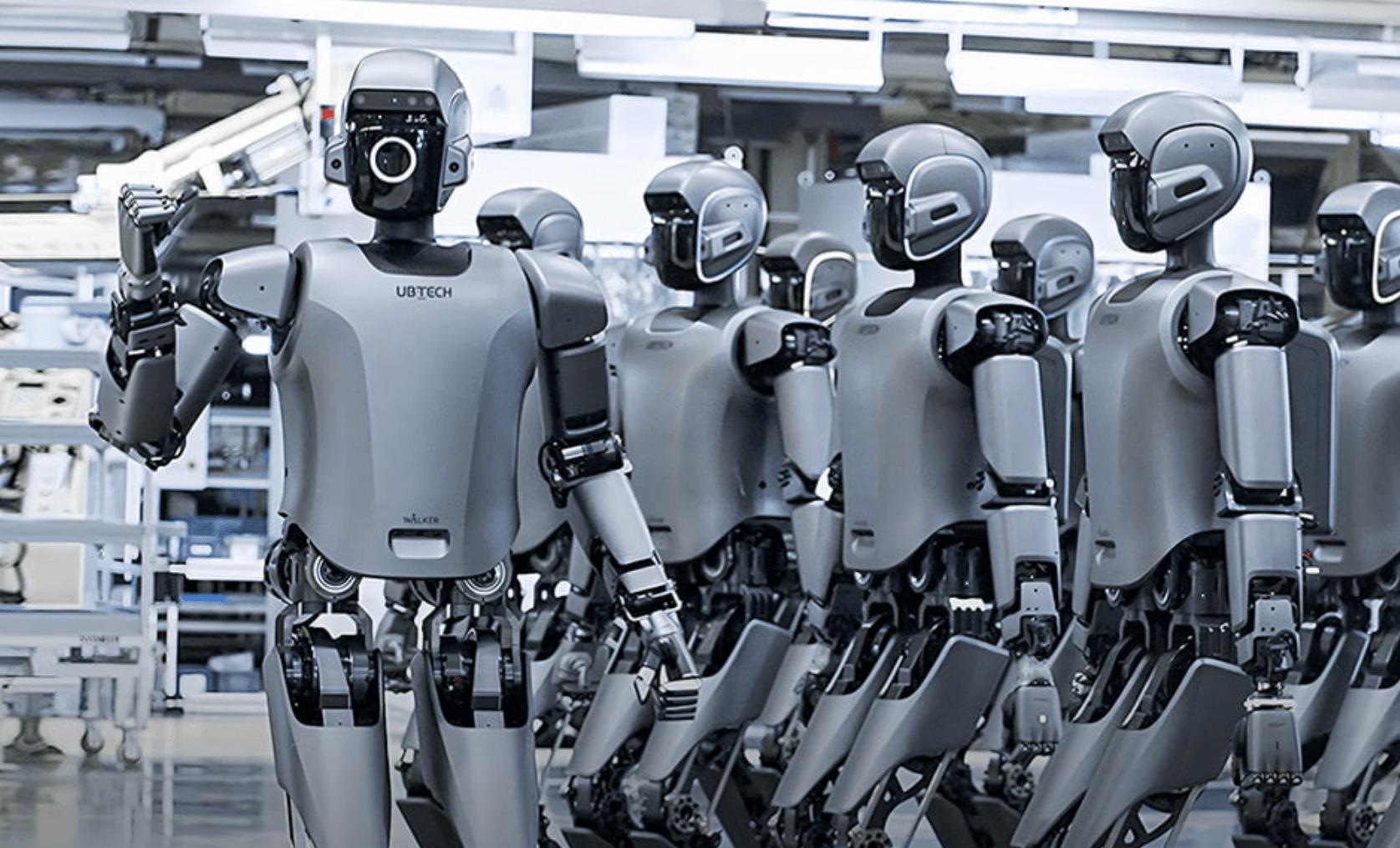
U.S. Moves to Ban Chinese Robots: Supply Chain Shock or Strategic Decoupling?
A bipartisan U.S. bill targets Chinese humanoid and autonomous robots in federal procurement. We analyse the supply chain, investor, and geopolitical implications for both China and U.S. robotics markets.

RobotToday Weekly Industry Briefing: March 23 – March 27, 2026
RobotToday's weekly industry briefing for March 21–28, 2026 covers Physical Intelligence's $1B raise, Amazon's Fauna Robotics acquisition, Agile Robots' DeepMind partnership, the launch of Europe's first robotaxi service, DJI's Avata 360 drone, Skydio's $52M Army order, and the latest in humanoid, AMR, and drone technology.


