

Quantum Systems
"The Future Is Unmanned"
German AI-powered eVTOL drone manufacturer delivering autonomous aerial intelligence for defense, security, and geospatial operations worldwide.
Contact Quantum Systems
WEBSITE
https://quantum-systems.com/PHONE
+49 8105 7709100HEADQUARTERS
Germany

Company Facts
Founded
2015
Primary Role
Manufacturer
Company Size
-
Primary Region
Europe
Annual Sales
-
Funding Stage
-
Funding Total
-

Germany Announces $1.1 Billion Military Aid Package to Ukraine Including Drone Interceptors
German Chancellor Friedrich Merz has unveiled a military aid package for Ukraine worth approximately €1 billion ($1.1 billion), featuring turbojet-powered drone interceptors, standoff weapons, and space-based technology. This announcement was made during a surprise visit to Kyiv, where Merz emphasized the importance of strengthening Ukraine's air defenses in light of Russia's ongoing aggression. The aid package includes significant contributions from German companies, with reports indicating that executives signed 14 agreements totaling around €6.6 billion. Key components of the package involve Diehl's IRIS-T air defense missiles, Hensoldt's radar systems, and Quantum Systems' jet-powered drone interceptors, which are set to be produced in Ukraine to counter Russia's drone attacks. Looking ahead, the production of several tens of thousands of Quantum Systems interceptor drones is expected to bolster Ukraine's defense capabilities. No further timeline was disclosed at the time of publication.
Air Warfare Global Air Force Drones Europe Germany
IonQ Partners with SDT to Establish Quantum Manufacturing Hub in South Korea
IonQ, a US quantum computing company, has entered a multi-year partnership with SDT to deploy its Superion 256 quantum computer and silicon-vacancy quantum memory technology in South Korea. This agreement enhances IonQ's presence in the Asia-Pacific region and includes hardware production, system assembly, and the establishment of a hybrid quantum-classical data center for medical research. The significance of this partnership lies in the growing global demand for IonQ's Superion 256 system, as highlighted by CEO Niccolo de Masi. The collaboration not only expands IonQ's commercial footprint in South Korea but also aims to advance quantum cancer and biomedical research. The new facility in Gumi will focus on the production and integration of quantum systems, marking a shift from cloud-based software to physical hardware. Looking ahead, SDT plans to open a dedicated quantum manufacturing facility in Gumi, which will play a crucial role in IonQ's global supply chain and regional deployment. The partnership also includes the development of hybrid quantum-classical infrastructure for medical research, indicating a strategic move towards integrating quantum technology into healthcare applications. No further timeline was disclosed at the time of publication.
AI and Robotics
Chalmers University Develops Method to Speed Up Quantum Computer Operations by Over 1,000 Times
Researchers at Chalmers University of Technology in Sweden have developed a method that significantly accelerates quantum operations, achieving speeds over 1,000 times faster. This breakthrough addresses a critical challenge in quantum computing, where errors can accumulate during lengthy operations, hindering the reliability of quantum systems. The advancement is crucial as it moves quantum computing closer to fault tolerance, a necessary step for the technology to be viable in practical applications such as drug discovery, energy technology, and cryptography. The sensitivity of qubits to environmental disturbances has made error correction in quantum systems particularly difficult, unlike traditional computers that have established methods for managing errors. Looking ahead, the research team is focused on refining the use of bosonic quantum codes, which offer a new way to protect quantum information. This method encodes information in microwave fields within superconducting circuits, providing enhanced error protection. No further timeline was disclosed at the time of publication.

Quantum-Systems Inc. Launches Engineering Office in Huntsville, Alabama
Quantum-Systems Inc. has inaugurated a 3,200-square-foot engineering and R&D office in Huntsville, Alabama, on August 24, 2026. This strategic location in Upland Park, adjacent to Cummings Research Park, aims to enhance collaboration with U.S. defense customers and partners, positioning the company closer to key stakeholders in the defense sector. The establishment of this office is significant as it aligns with Quantum-Systems' mission to develop unmanned systems for tactical intelligence, surveillance, reconnaissance, and target acquisition. Huntsville, known as 'Rocket City' for its aerospace heritage, is home to various Army program offices and defense technology firms, making it an ideal hub for innovation in defense and aerospace. Looking ahead, the Huntsville office will support engineering growth and customer collaboration while advancing the development of next-generation unmanned intelligence capabilities. No further timeline was disclosed at the time of publication.
Business and Finance Drone News Drone News Feeds News Aerospace Innovation Alabama drone company
Hexapod Design for Precision Optical Alignment in Cryogenic Quantum Technologies
The development of a hexapod concept aims to enhance optical alignment for quantum and photonics technologies operating under low-temperature conditions. This innovation addresses the growing demand for precision in optical setups, which is crucial for the advancement of quantum applications. The significance of this hexapod design lies in its potential to improve the performance and reliability of quantum systems. As quantum technologies evolve, maintaining accurate optical alignment in cryogenic environments becomes essential for achieving desired outcomes in experiments and applications. Looking ahead, the focus will be on the implementation and testing of this hexapod concept in real-world quantum settings. No further timeline was disclosed at the time of publication.

International Researchers Develop Quantum Heat Engine Utilizing Anomalous Thermal Effects
A team of researchers from Qufu Normal University, the University of Hong Kong, and the University of Palermo has discovered an anomalous thermal effect that enables quantum systems to absorb heat from colder thermal reservoirs. This finding led to the development of a quantum heat engine capable of producing mechanical work and refrigeration simultaneously, challenging classical thermodynamic principles. The significance of this research lies in its potential applications across various technologies, including quantum processors and sensors. The quantum heat engine operates on the principle of Indefinite Causal Order (ICO), allowing for unusual heat flow that defies classical expectations. This breakthrough could pave the way for innovative quantum technologies that manipulate heat and energy in unprecedented ways. Looking ahead, researchers aim to explore more realistic implementations of their quantum heat engine beyond idealized thermodynamic cycles. Future studies will focus on the impact of finite-time operations on efficiency and power output, as understanding these trade-offs is crucial for practical applications. No further timeline was disclosed at the time of publication.
Science
MIT Researchers Selected for Funding in US Department of Energy’s Genesis Mission Phase I
MIT researchers have been chosen to participate in the U.S. Department of Energy’s Genesis Mission, with 15 collaborative projects receiving funding under Genesis Phase I. This national initiative aims to create a powerful integrated science discovery platform that leverages AI, supercomputing, and quantum systems to drive advancements in energy and scientific discovery. The Genesis Mission is significant as it fosters collaboration between universities, industry, and national laboratories, aligning research efforts with national priorities. Ian A. Waitz, MIT’s vice president for research, emphasized the importance of this initiative in catalyzing innovation for the benefit of both the nation and the world. Looking ahead, projects that demonstrate promising pathways for transformative capabilities may receive further funding from the DOE. Six projects will be led by MIT principal investigators, while MIT researchers will also contribute to nine additional projects led by other institutions, showcasing a robust collaborative effort in advancing scientific capabilities.
Funding Artificial intelligence Quantum computing Laboratory for Nuclear Science Plasma Science and Fusion Center Research Laboratory of Electronics
The Most Important AI at WAIC Wasn't a Robot
At WAIC 2026, AI-native platforms quietly replaced interpreter hardware — what invisible AI infrastructure means for robotics and embodied AI.

AI for Science 2026: The Global Race for Scientific Discovery
2026 AI for Science landscape report: WAIC 2026 exhibitor breakdown, MIT Boltz-2 and CMU Coscientist case studies, US/China/EU policy comparison, Anthropic Claude Science, and US academic cautionary views.

Quantum Systems Group's Apex Recordhunter Drone Achieves 434 mph Speed Milestone
Quantum Systems Group, a German aerospace firm, has announced that its Apex Recordhunter experimental drone reached a remarkable speed of 434 miles per hour. This achievement, pending formal certification, could set a new world record for battery-powered unmanned aerial vehicles. The project emphasizes advancements in electric propulsion and aerodynamics, aiming to enhance military applications for future interceptor drones. The significance of this milestone lies in its potential to reshape aerial defense systems. As military conflicts increasingly utilize high-speed drones, the demand for agile interceptor systems has surged. Traditional surface-to-air missiles are often too expensive for engaging low-cost drones, prompting the development of dedicated UAVs that can effectively counter these threats. The technologies validated through the Apex Recordhunter program are expected to play a crucial role in the next generation of interceptor drones. Looking ahead, Quantum Systems Group plans to conduct further speed trials focused on operational military roles, including FPV platforms and specialized anti-aircraft interceptors. The rapid evolution of drone warfare necessitates breakthroughs in speed and maneuverability, making the Apex Recordhunter a pivotal testbed for future technologies. No further timeline was disclosed at the time of publication.
Military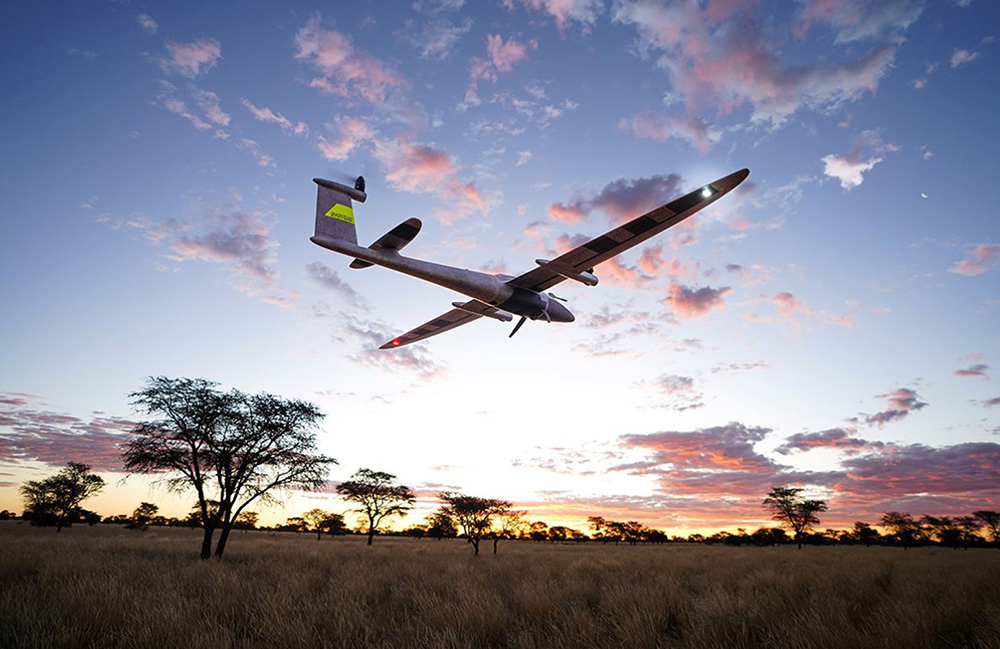
Quantum Systems raises $1.2B to expand drone production and deployments
Quantum plans to use the proceeds to expand production capacity, strengthen supply chain resilience, and more. The post Quantum Systems raises $1.2B to expand drone production and deployments appeared first on The Robot Report.
Defense / Security Drones Financial Investments Markets / Industries News
ROBOTTODAY Weekly June 30 – July 4, 2026
Unitree wins CSRC approval for China’s first humanoid IPO, Korea unveils ₩312T AI investment, RoboCup 2026 opens in Incheon, and Paris launches Europe’s inaugural Physical AI summit.

Quantum Systems Doubles Valuation to $8B in New Round
German drone startup Quantum Systems has successfully raised $1.2 billion in a recent funding round, significantly increasing its valuation to approximately $8 billion. This financial boost comes amid a broader trend of rising military expenditures across Europe, which has positively impacted several startups in the unmanned aerial vehicle sector. Co-CEO Sven Kruck discussed the company's growth prospects, potential industry consolidation, and Europe’s defense spending goals during an interview with Bloomberg The Opening Trade on July 2. The funding reflects the increasing demand for advanced drone technology in the context of heightened military needs in the region.

Automate 2026 | Ubicept Explores Photon-Level Machine Vision
Ubicept demonstrated single-photon SPAD imaging at Automate 2026, achieving 140 dB HDR and >10 dB SNR gains for industrial robotics edge AI.

ROBOTTODAY Weekly, June 15 – 19, 2026
This week in robotics: Japan commits $65B to physical AI, UBTECH’s U1 humanoid companion robot nears 5,000 pre-orders, XDOF raises $70M for robot foundation model infrastructure, and Waymo recalls ~3,900 robotaxis after construction-zone failures. June 15–19, 2026.

ROBOTTODAY Weekly, June 8 – 12, 2026
This week in robotics: Bezos’ Prometheus raises $12B for physical AI, NEURA Robotics closes $1.4B Series C, NVIDIA deepens partnerships with Hyundai and LG in Seoul, and Hyundai’s Boston Dynamics robot dogs debut at FIFA World Cup 2026. June 8–12, 2026.

EU Bets €1.5B on Drones and AI: Inside EDIP's 2026–2027 Defence Industry Programme
The EU's €1.47 billion European Defence Industry Programme (EDIP) 2026–2027 targets drones, counter-UxS systems, AI-enabled autonomy, and loitering munitions across six major funding calls — allocating over €232 million directly to unmanned systems and related electronics supply chains.

China's 15th Five-Year Plan (2026–2030): Embodied Intelligence as National Industrial Strategy
China's 15th Five-Year Plan (2026–2030) elevates embodied intelligence to a national industrial priority for the first time. This RobotToday briefing analyses the plan's robotics directives, new standards framework, and competitive implications for European and North American industry.

EU Industrial Accelerator Act Signals Supply Chain Shift for Robotics Industry
The EU's Industrial Accelerator Act introduces "Made in EU" procurement rules and stricter foreign investment conditions, creating indirect pressure on robotics supply chains that rely heavily on Chinese components.

RobotToday Weekly Industry Briefing: Feb 9 – 13, 2026
Feb 9-13, 2026: Apptronik raises $520M for humanoid production, GE Aerospace deploys AI robots for jet maintenance, Weave ships first laundry-folding robot, and IFR releases AI in robotics position paper. Physical AI reaches commercial scale across industry and home.


