-
Website: https://provektor.se
-
Email: [email protected]
-
Phone: +46 511 241 00
Provektor is a Swedish electrical installation and automation partner serving manufacturing, logistics, and agricultural clients across Skaraborg and southern Sweden, providing control system design, programming, and panel building services.
RSF defines a common language for robot service capability, lifecycle operations, certification pathways, and service-provider networks.
In the realm of industrial transformation, discussions often center around technology such as automation, digitalization, and AI. However, insights from industry veterans suggest that the true differentiator in successful transformation programs is not the technology itself, but rather how effectively people utilize these tools. Engineering firms face a significant skills shortage, exacerbated by the rapid retirement of experienced personnel, which has led to a growing gap in expertise. Companies that proactively invest in early-career talent are better positioned to navigate this challenge. ABB has implemented graduate and outreach programs in the UK and Ireland, emphasizing the importance of community engagement and mentorship. The focus is not solely on technical qualifications but also on attributes like curiosity and resilience, which are critical for success in the evolving industrial landscape. Looking ahead, while autonomous operations are on the rise, the need for skilled personnel will persist. The ongoing electrification of the Sangachal industrial terminal in Azerbaijan exemplifies the complexity of modern engineering projects, which require skilled workers to ensure successful integration and commissioning. No further timeline was disclosed at the time of publication.
AutomationWorld.com 3 hours ago Factory / AnalyticsTravis Kalanick's robotics venture, Atoms, has successfully raised $1.7 billion in a funding round led by Andreessen Horowitz, with Ben Horowitz joining the board. Notably, Uber participated in this round, marking a reconnection between Kalanick and the company he founded, which ousted him as CEO in 2017 due to various controversies. This funding is significant as it represents Kalanick's ambition to expand Atoms beyond its origins in ghost kitchens, with plans to delve into heavy industry automation and potentially mining. The investment is seen as a continuation of Kalanick's vision to digitize the physical world, leveraging software to enhance productivity in various sectors. Looking ahead, Kalanick has hinted at building a “wheelbase for robots” with Atoms, although specific plans remain undisclosed. The involvement of prominent investors like Andreessen Horowitz suggests a strong belief in Kalanick's capabilities to innovate within traditional industries, making this a development to watch closely in the robotics and automation landscape.
TechCrunch 3 hours ago AI Fundraising Venture a16z Andreessen Horowitz roboticsThe rise of electric vehicles (EVs) is transforming the automotive landscape, necessitating new lubricant requirements. Juri Sudheimer, founder of MANNOL, highlights that operating fluids are now essential to the system architecture of EVs, managing friction, heat dissipation, and component protection simultaneously. This shift demands specialized solutions tailored to specific configurations and electrical loads, moving away from the concept of a universal oil. As EVs and hybrids integrate power electronics with traditional mechanical systems, the need for advanced lubricants becomes critical. Sudheimer notes that the evolution of e-transmission fluids presents unique challenges, including fluid degradation that affects electrical properties and increases noise and vibration (NVH). This complexity requires a new testing philosophy focused on electrical stability and material compatibility, alongside traditional anti-wear performance. Looking ahead, the automotive industry must adapt to these evolving lubricant needs as electrification continues to reshape market dynamics. No further timeline was disclosed at the time of publication.
RoboticsAndAutomationNews.com 3 hours ago Engineering Industry automotive aftermarket automotive engineering automotive lubricants battery coolingLockheed Martin has partnered with Venus Aerospace to adapt Rotating Detonation Rocket Engine (RDRE) technology for military applications, specifically targeting long-range precision strikes. This collaboration aims to transition RDRE from experimental phases to standardized missile platforms, enhancing speed and range while meeting the Army's production needs. The significance of this partnership lies in its potential to revolutionize missile design and capabilities. By utilizing RDRE technology, the companies aim to develop systems that achieve greater operational flexibility and efficiency, addressing the increasing demand for advanced defense solutions that can respond to emerging threats. Looking ahead, the focus will be on assessing how RDRE can support next-generation precision fires capabilities. No further timeline was disclosed at the time of publication.
InterestingEngineering.com 3 hours ago MilitaryQarbon Aerospace, based in Texas, has been awarded a contract to produce composite structures for the sustainment of the F-22 fleet, which currently consists of approximately 183 airframes. This contract builds on Qarbon's previous contributions to the F-22 program, including the production of horizontal stabilizers during its development in the early 2000s. The significance of this contract lies in the F-22's reliance on carbon-fiber-reinforced polymer structures, which constitute 25 percent of the aircraft's airframe by weight. Maintaining production capabilities for these composite parts is crucial for the U.S. Air Force, especially given the complexities involved in sustaining composite structures on a mature military platform like the F-22, which has over 350 composite parts. Looking ahead, the contract enhances Qarbon's defense aerostructures portfolio and underscores the importance of reliable suppliers for the F-22 program. No further timeline was disclosed at the time of publication, but the ongoing need for composite parts will be critical for the aircraft's operational readiness and performance in the future.
InterestingEngineering.com 3 hours ago MilitaryTurkish Aerospace has confirmed that it has received the export license for the KAAN fighter engines from the United States. CEO Mehmet Demiroglu stated that the company will collaborate with General Electric to ensure timely delivery of the engines, which are crucial for the serial production of the KAAN fighter jet. This development is significant as it marks a key step in the production timeline for the Turkish Air Force's KAAN fighter program, which is projected to begin serial production in at least two and a half years. The successful acquisition of the export license indicates strong international cooperation and support for Turkey's defense capabilities. Looking ahead, industry observers will be monitoring the collaboration between Turkish Aerospace and General Electric, particularly regarding the delivery schedule of the engines. No further timeline was disclosed at the time of publication.
BreakingDefense 6 hours ago Global CAATSA Congress F110 engines Farnborough 2026 General ElectricOrganizations often face challenges not due to a lack of process optimization tools, but from selecting them without first identifying improvement needs. For instance, a team may invest in workflow software when the core issue is an unclear process, or apply Lean techniques to problems stemming from uncontrolled variation. Understanding the categories of process optimization tools—improvement methodologies, analytical techniques, and software—is crucial. Effective optimization starts with defining the problem and establishing a measurable baseline before integrating the right methods and technologies. Tools like Lean and Six Sigma are frameworks rather than standalone applications, and their effectiveness relies on proper implementation. Looking ahead, organizations should focus on aligning their optimization tools with specific performance issues and data availability. The combination of methods and technologies should aim to enhance outcomes without creating unacceptable trade-offs. No universal list of optimal tools exists, as the right choices depend on the unique context of each organization.
RoboticsAndAutomationNews.com 6 hours ago Computing Engineering Industry Software artificial intelligence bpmSila has successfully raised $300 million in private funding aimed at expanding its silicon-carbon battery anode technology production in the United States. This investment will bolster manufacturing capacity at its Moses Lake, Washington facility, facilitating a Phase 2 expansion and accelerating the production of its Titan Silicon® anode technology. The significance of this funding lies in its potential to strengthen domestic supply chains for advanced battery materials, particularly in light of the current dominance of China in anode material processing and battery cell manufacturing. With battery materials becoming increasingly crucial for technology security, Sila's efforts could mitigate supply chain risks for industries reliant on advanced batteries, including drones, defense systems, and electric vehicles. Looking ahead, Sila's expansion plans include increasing its Moses Lake facility's capacity from an initial 2 GWh to as much as 250 GWh over the next five years, potentially establishing it as the world's largest anode production site. No further timeline was disclosed at the time of publication.
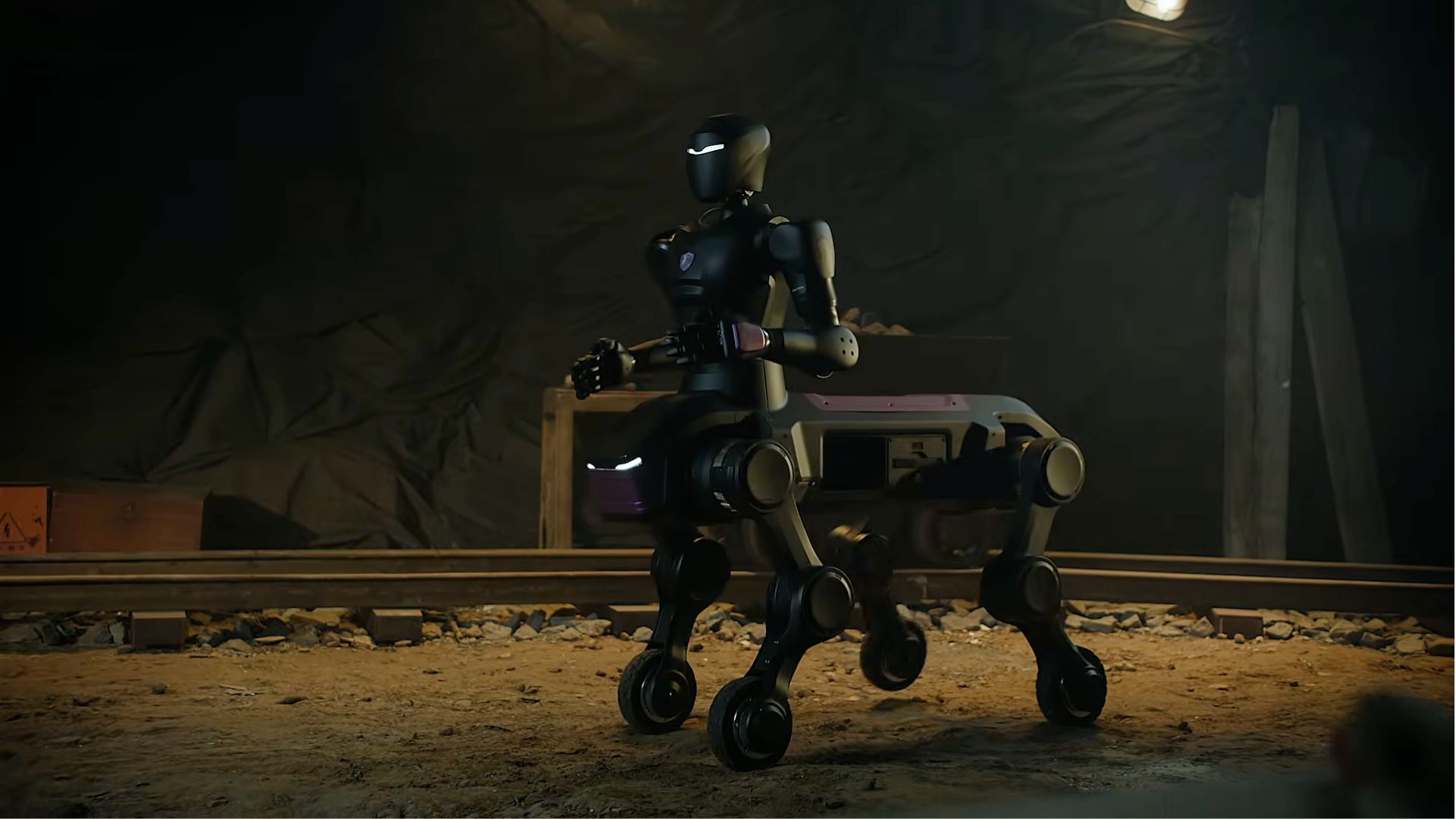
Dronelife.com 6 hours ago Applications Drone Manufacturing Drone News Drone News Feeds News AI infrastructurePudu Robotics showcased its entire product lineup at the 2026 World Artificial Intelligence Conference (WAIC 2026) held in Shanghai from July 17 to 20, including the world premiere of the next-generation semi-humanoid robot 'PUDU D7'. Attendees had the opportunity to take commemorative photos with 'PUDU D7' and receive unique snapshots from the robot's perspective. The event also featured a multi-robot cooperative demonstration with the quadruped robot 'PUDU D5', which autonomously navigated while avoiding pedestrians. The robots demonstrated their autonomous navigation capabilities on an obstacle course simulating gravel, steps, and slopes, achieving a maximum speed of 5 m/s during drift driving. Use cases for autonomous inspection in complex environments such as power substations and industrial parks were also presented. In addition to 'PUDU D7', Pudu Robotics exhibited various robots including the serving robot 'BellaBot', industrial transport robot 'PUDU T300', and commercial cleaning robots 'PUDU MT1 Max' and 'PUDU CC1 Pro', highlighting their applications across diverse industries such as food service, retail, manufacturing, and logistics. No further timeline was disclosed at the time of publication.
RobotStart.info 6 hours agoAn Israeli firm has unveiled a new kit designed to convert any merchant ship into a carrier for the Hermes 650 drone. This innovation aims to enhance naval capabilities by allowing commercial vessels to support military operations, thereby expanding the operational reach of naval forces. The introduction of this kit is significant as it leverages existing maritime assets, enabling rapid deployment of drone technology without the need for dedicated military vessels. This could lead to cost-effective solutions for naval logistics and operations, particularly in areas where traditional naval assets are limited. Looking ahead, the potential for this technology to reshape naval warfare strategies is noteworthy. As military operations increasingly rely on unmanned systems, the ability to utilize commercial ships as drone carriers may provide a strategic advantage. No further timeline was disclosed at the time of publication.
InterestingEngineering.com 6 hours ago Military
Leave a comment