


Laevo Exoskelet (NL)
Dutch pioneer in passive back-support exoskeletons since 2013, using spring-based energy storage without batteries. Products reduce spinal load during bending for workers in manufacturing, construction, and healthcare to prevent back injuries.
Contact Laevo Exoskelet (NL)
WEBSITE
https://www.laevo-exoskeletons.comPHONE
+31 15 302 00 25HEADQUARTERS
Netherlands

Company Facts
Founded
-
Primary Role
-
Company Size
-
Primary Region
-
Annual Sales
-
Funding Stage
-
Funding Total
-

The 9th China Robot Summit Set to Begin in Hangzhou This September, Welcoming Exhibitors
The 9th China Robot Summit is scheduled to take place in Hangzhou this September, inviting exhibitors to showcase their innovations. This event aims to highlight advancements in robotics and intelligent manufacturing, providing a platform for industry leaders to connect and share insights. The significance of the summit lies in its potential to drive collaboration and investment in the robotics sector. As the industry continues to evolve, the summit serves as a critical venue for discussing trends and challenges, particularly in the context of recent funding developments and market dynamics. Looking ahead, attendees can expect to see a diverse range of exhibitors and presentations that will explore the future of robotics and intelligent systems. No further timeline was disclosed at the time of publication.
Robotics Automation AI
Hyundai's Atlas Robot Deployment Sparks Labor Concerns in Korea, Not in the US
Hyundai Motor Group plans to deploy Atlas humanoid robots at its Georgia plant in 2028, highlighting a significant labor debate between Korea and the US. In Korea, union workers are advocating for job protections amid rising automation concerns, while no organized resistance has emerged in Hyundai's nonunion US factories. The Korean union has raised issues regarding the impact of physical artificial intelligence and robotics during labor negotiations, seeking transparency and safeguards against job losses. Although the union has not outright rejected the technology, a tentative agreement acknowledges the necessity of AI and robotics for Hyundai's competitiveness, emphasizing shared information and joint management of the transition. In contrast, the US lacks a comparable collective response, attributed to the weak presence of organized labor in the South and Hyundai's expanding workforce. Experts question whether the current calm will persist as humanoid robots transition from demonstrations to actual factory operations. No further timeline was disclosed at the time of publication.
All News
Bill Gates Advocates for Robot Tax and Human Reserved Jobs to Address AI Impact
Bill Gates recently shared his thoughts on the social implications of AI in a detailed essay on Gates Notes. He supports the idea of a 'robot tax' to discourage employers from replacing human workers with machines, suggesting that this could help fund retraining programs and enhance the safety net for displaced workers. Additionally, Gates proposed the concept of 'Human Reserved' jobs, where certain roles would be protected from AI encroachment, ensuring that humans remain in positions that require empathy and nuanced understanding. These proposals are significant as they aim to mitigate the labor market disruptions caused by AI advancements. Gates' suggestions reflect a growing concern among industry leaders about the balance between technological progress and its effects on employment. The idea of a robot tax could slow the transition to automation, while Human Reserved jobs would safeguard certain professions from being automated, thus preserving job opportunities for workers in vulnerable sectors. Looking ahead, the implementation of these ideas could reshape the regulatory landscape surrounding AI and automation. However, many questions remain regarding the specifics of how such policies would be enforced and who would be responsible for establishing these guidelines. No further timeline was disclosed at the time of publication.
AI Bill Gates
Bedrock Robotics Launches Operator-Free Excavators in Texas and Nevada Projects
Bedrock Robotics Inc. has successfully deployed fully autonomous excavators on active infrastructure projects in Texas and Nevada. This initiative aims to tackle the construction industry's pressing labor shortages and safety concerns, particularly as over 40% of the workforce is expected to retire in the next five years. The company's innovative technology, backed by $350 million in venture capital, transforms traditional earth-moving operations into efficient, software-driven processes. The significance of Bedrock's deployments lies in their potential to revolutionize construction practices by enabling fleets of machines to self-orchestrate and execute tasks at unprecedented scales. Current projects include collaborations with Sundt Construction, Champion Site Prep, and Zachry Construction Corp., focusing on essential earthwork operations. Bedrock's advancements represent a critical shift towards integrating AI into the physical economy, enhancing productivity and safety on job sites. Looking ahead, Bedrock Robotics plans to retrofit existing excavators with its technology, expanding its impact on the construction sector. The company emphasizes safety as a top priority, ensuring that its autonomous systems can operate effectively around human workers. No further timeline was disclosed at the time of publication.
Artificial Intelligence Autonomous Mobile Robots (AMRs) Construction News Bedrock Robotics construction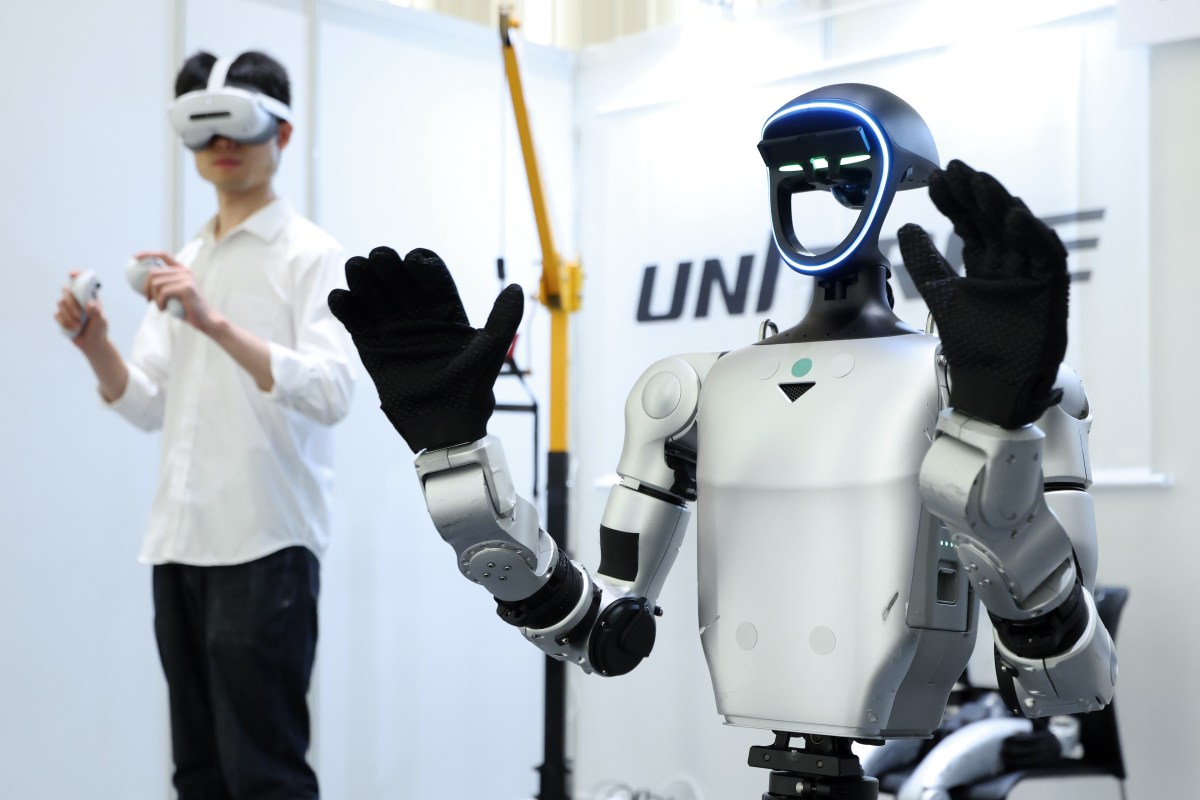
Unitree's IPO Highlights Challenges in Physical AI Amidst Market Volatility
Physical AI has emerged as a prominent sector in venture capital, with significant investments aimed at integrating advanced AI tools into robotics. Unitree, a leading Chinese robot manufacturer, recently went public with a valuation of $66 billion, but has since seen its value plummet by nearly 50%. Analysts attribute this decline to the robots' inability to perform value-creating tasks despite advancements in physical capabilities. The Actuate conference showcased the growing interest in AI-driven robotics, with attendance tripling since its inception in 2023. However, the industry faces a critical challenge: a shortage of high-quality training data for AI models. Developers are encouraged to adopt strategies similar to those used in frontier AI labs, focusing on diverse data sets and improved training methodologies to enhance performance. Looking ahead, the autonomous vehicle sector is leading the way in data collection and model development, with companies like Tesla and Wayve investing in humanoid robotics. The debate continues on the best approach to hardware and AI integration, with some experts advocating for co-design strategies to optimize performance in specific applications. No further timeline was disclosed at the time of publication.
AI Robotics Exclusive physical ai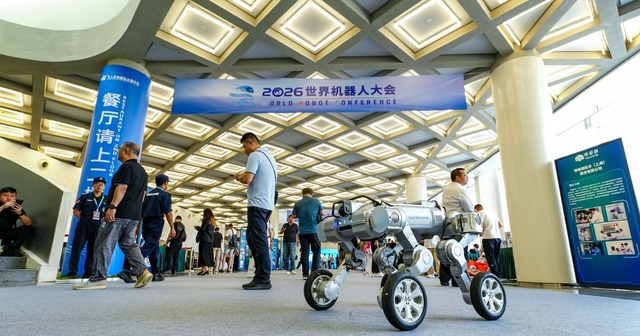
Galileo Unveils Next-Gen Ground Mobility Platform Galileo X at WRC 2026
Chinese embodied AI robotics company Galileo has introduced its next-generation ground mobility platform, Galileo X, at WRC 2026. This platform features the company's proprietary Embodied Ground Mobility System, positioning it as a new paradigm for future ground robots. Galileo X is designed as a versatile ground mobility platform to meet diverse operational needs. It bridges the hardware structures, kinematic models, and control algorithms of wheeled, vehicle-type, and legged platforms through an integrated hardware architecture and unified control framework, creating advanced technological advantages. The introduction of Galileo X aims to establish a unique technological foundation for all-terrain mobile robots, enhancing the company's leadership in multimodal ground mobility solutions. Galileo plans to open its core hardware-software interface to collaborate with algorithm developers, application service providers, and industry partners to build an open ecosystem centered around Galileo X.

Purdue University's New Underwater Robot Enhances Ocean Mission Reliability
Purdue University's College of Engineering has developed a new underwater robot that is currently patent-pending. This innovative robot is designed to enhance ocean research, underwater infrastructure inspection, and search-and-rescue operations by adapting to mission requirements in real time. It can function as a drifter, a glider, or a thruster-driven vehicle as needed. The significance of this development lies in its potential to improve the reliability and efficiency of various underwater missions. By being able to switch between different operational modes, the robot can better meet the specific demands of each task, thereby increasing the effectiveness of ocean exploration and safety operations. Looking ahead, the adaptability of this underwater robot could pave the way for more advanced applications in marine technology. No further timeline was disclosed at the time of publication.
Robotics
Burns & McDonnell and Gritt Collaborate to Implement AI Robotics in Solar Construction
Burns & McDonnell has partnered with Gritt to assess and deploy AI-driven robotics technology for utility-scale solar projects. This collaboration aims to enhance safety, improve project predictability, and support construction teams amid rising demand for new energy infrastructure. The integration of Gritt's AI and robotics technology into construction processes is significant as it addresses labor challenges and boosts efficiency in solar construction. Gritt's systems can autonomously perform tasks such as assembling solar arrays and pouring concrete, which are typically labor-intensive and repetitive. Looking ahead, the partnership is set to continue evaluating robotic technologies in real-world environments. No further timeline was disclosed at the time of publication.
Construction Energy Infrastructure News ai robotics autonomous construction equipment
XPeng Secures $900 Million for Robotics Business, Valued at $6.3 Billion
XPeng has successfully raised over $900 million for its robotics division, achieving a post-money valuation exceeding $6.3 billion. This funding marks the largest single-round private capital raise in China's embodied AI sector, with contributions from IDG Capital, Gaorong Ventures, Tencent, and Alibaba. The capital will support the development of robotics hardware and software, training AI models, and expanding production facilities. This financing is crucial as XPeng prepares for the mass production of its IRON humanoid robot, expected to begin by the end of 2026. The IRON robot, designed for various applications, boasts 76 degrees of freedom and is powered by three Turing AI chips, enabling autonomous operation. The initial deployments will occur at XPeng stores and campuses, with a broader commercial launch planned for 2027 in both China and international markets. Looking ahead, XPeng's IRON humanoid robot is positioned as a key player in the global humanoid robotics market. The company's strategy leverages its automotive manufacturing expertise to enhance robotics production, aiming to create a self-reinforcing cycle of data generation and model deployment. No further timeline was disclosed at the time of publication.
Automotive Humanoids News Robotics alibaba china robotics
ScaFi: A Robot That Expands from 2 Feet to Nearly 10 Feet for Aquatic Exploration
ScaFi, a novel underwater robot, is designed to grow in size from 2 feet to nearly 10 feet, overcoming limitations of traditional propeller-powered vehicles. Unlike conventional underwater vehicles that can disturb aquatic environments, ScaFi's unique design allows for more effective exploration and monitoring of delicate ecosystems. This innovation is significant as it addresses the challenges faced by scientists when studying aquatic environments, particularly in shallow waters and dense vegetation. Traditional underwater vehicles often disrupt the habitats they aim to observe, making ScaFi a valuable tool for researchers seeking to minimize their impact while gathering data. Looking ahead, the development of ScaFi could lead to advancements in underwater robotics, particularly in applications requiring stealth and adaptability. No further timeline was disclosed at the time of publication.
Robotics

