


ExRobotics
Developer and manufacturer of ATEX/IECEx Zone 1-certified autonomous inspection robots for hazardous oil, gas, and chemical facilities.
Contact ExRobotics
WEBSITE
https://www.exrobotics.comHEADQUARTERS
Netherlands

Company Facts
Founded
2017
Primary Role
Manufacturer
Company Size
employees 10-50
Primary Region
Europe
Annual Sales
-
Funding Stage
-
Funding Total
-
Certifications & Memberships

Elroy Air Raises $175 Million to Advance Chaparral Drone Production
Elroy Air has secured $175 million in expanded private investment commitments to scale production of its Chaparral autonomous cargo drone. This funding, which includes contributions from Lockheed Martin Ventures and Inflection Point, will support the transition from testing to large-scale manufacturing for military and commercial applications. The significance of this funding lies in Elroy Air's goal to enhance the Chaparral's capabilities, allowing it to carry over 500 pounds of cargo up to 450 miles without traditional infrastructure. The investment will accelerate production and enable the delivery of Chaparral drones to commercial and defense partners, particularly following a recent $46 million contract with the US Army. Looking ahead, Elroy Air aims to produce its first aircraft by late 2026, with manufacturing handled by Kratos Defense & Security Solutions in Sacramento, California. The company is focused on transforming successful demonstrations into large-scale production, leveraging its new financial resources to meet growing demand in logistics and defense sectors.
News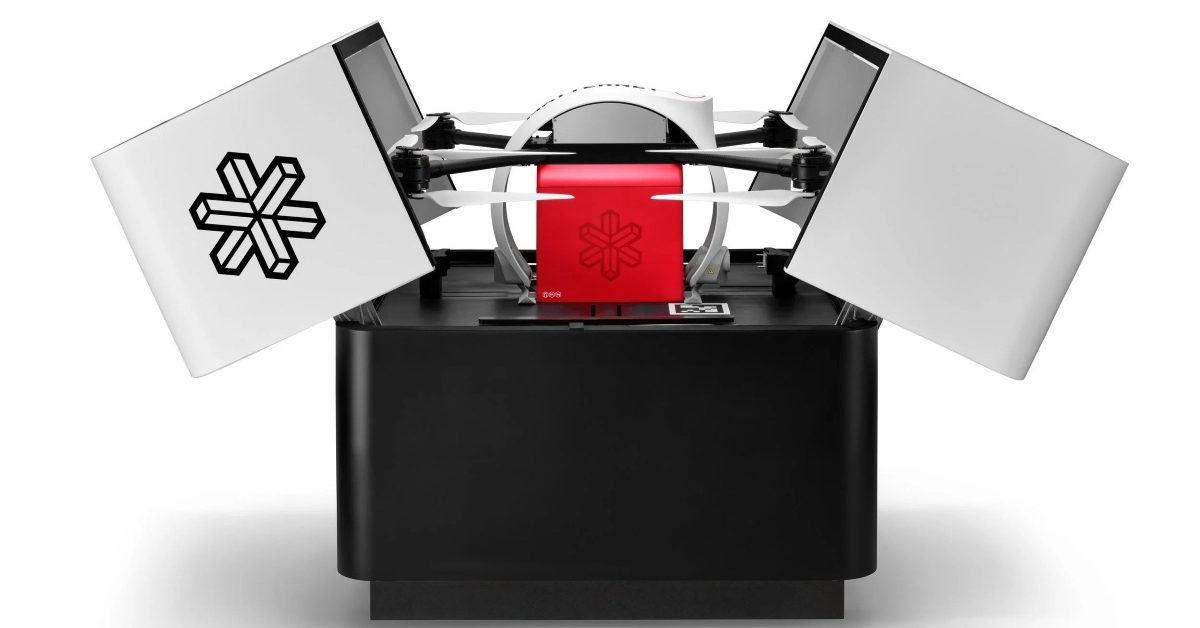
Matternet Launches M3 Drone with 11-Pound Payload Capacity and 10-Mile Range
Matternet has introduced the M3, its next-generation autonomous drone delivery platform, aimed at facilitating thousands of daily deliveries without human operators. The M3 can transport packages weighing up to 11 pounds over a service radius of 10 miles, utilizing a dedicated micro-hub system that allows businesses like restaurants and hospitals to send packages seamlessly. This innovation is significant as it addresses the logistical challenges of scaling drone delivery networks, which require efficient launch and recovery points, charging solutions, and manageable noise levels. Matternet's M3 system includes the M3 Dock for charging and storage, and the M3 Portal for package drop-off, making drone delivery more accessible and reliable. Looking ahead, Matternet is targeting commercial service for the second half of 2027, with initial deployments through partners like Dave’s Hot Chicken in the US and Apian in the UK. The company is also planning to expand its partnerships and establish US manufacturing for the M3 aircraft, leveraging its collaboration with SoftBank Robotics America to enhance deployment efforts.
News
Amprius Technologies Secures $75M Grant to Transform EV Battery Line for Drone Production
The U.S. Department of War has granted Amprius Technologies up to $75 million to convert an electric vehicle battery production line into a facility for drone batteries. This retrofit, located in Fremont, California, aims to produce high-energy-density cells for unmanned aerial systems, with a projected capacity of 12 million cells annually by early 2028. This initiative is significant as it aligns with domestic sourcing requirements under the National Defense Authorization Act, ensuring that the U.S. can meet its defense needs with locally produced batteries. The total conversion project is estimated to cost around $100 million, which includes the federal grant and investments from Amprius and its South Korean manufacturing partner. Looking ahead, the converted facility will enhance Amprius’ manufacturing network and provide defense customers with access to NDAA-compliant batteries at higher volumes. No further timeline was disclosed at the time of publication.
Military
Key Insights for Successful Integrated Factory Acceptance Tests in Manufacturing
A recent experience highlighted a common issue in integrated factory acceptance tests (IFAT), where communication failures arose due to unconnected hardware. Despite over fifteen years of conducting IFATs, the primary challenges remain human errors rather than technological shortcomings. It is crucial for teams to verify equipment readiness through tangible evidence before scheduling tests to avoid costly delays. The significance of this issue lies in the frequent disconnect between stated confirmations and actual conditions on-site. Many plants confirm that equipment is ready, yet integration teams often find discrepancies upon arrival. By requesting proof of operational communication links, teams can mitigate risks and ensure smoother testing processes, ultimately reducing rework and enhancing project timelines. Looking ahead, organizations should prioritize treating IFATs as firm milestones rather than informal steps. This approach can help address intermittent faults and configuration changes that may arise during the testing phase. Running IFATs at vendor sites can provide better support and accountability, although testing on actual plant networks is also valuable. Balancing these approaches will be essential for successful project outcomes.
Factory / Plant Maintenance
Exploring Retrofit Versus Replace Decisions in Automation Initiatives
In a recent Automation World podcast recorded at the IMTS show in Chicago in late summer 2026, Sergei Altynbaev, founder and CEO of Aiolys, discussed the ongoing debate between retrofitting and replacing automation systems. This conversation highlighted how the decision-making process is evolving as automation technology matures and becomes more mainstream. The significance of this discussion lies in understanding the differing approaches to automation updates, particularly between European and American perspectives. As industries increasingly adopt automation, the choice to retrofit existing systems or invest in new technologies can impact operational efficiency and cost-effectiveness. Listeners should pay attention to how these trends in automation decision-making may influence future investments and strategies in the sector. No further timeline was disclosed at the time of publication.
Factory / Plant Maintenance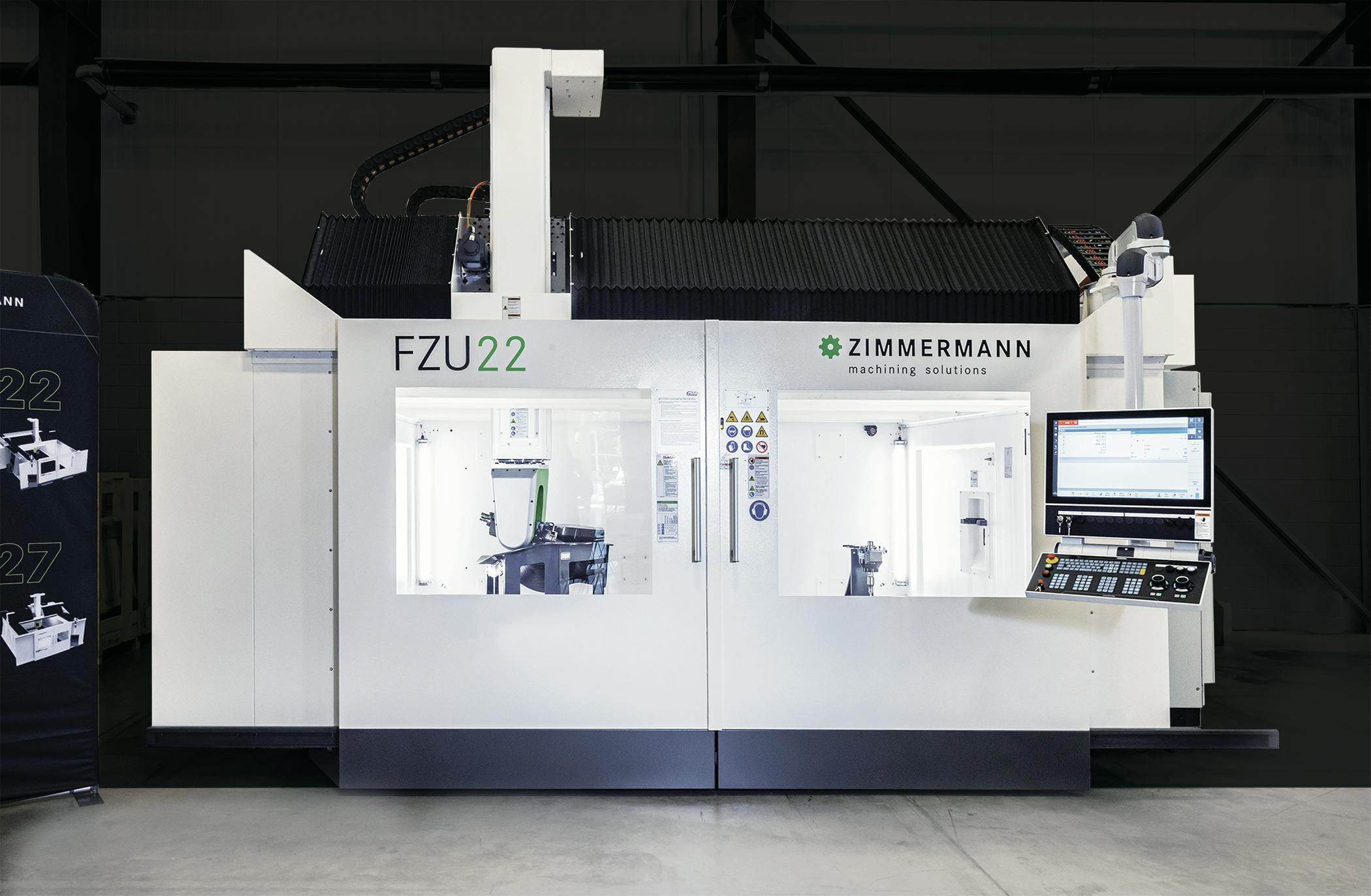
Zimmermann Unveils Advanced 5-Axis Portal Milling Machines at IMTS 2026
Zimmermann showcased its new 5-axis portal milling machine, the FZU22, at IMTS 2026 in Chicago from September 14-19. This machine targets lighter weight machining applications for large structures and is part of the FZP/FZU line, known for its precision and versatility. The FZU22 features a thermo(load)-symmetrical design that enhances dynamic performance and energy efficiency. It can process various materials, including aluminum, plastics, and carbon fiber composites, making it suitable for diverse machining applications. The machine's advanced features, such as a 24-tool changer and Siemens or Heidenhain CNC control, ensure accurate machining of complex contours. Looking ahead, Zimmermann's FZU22 offers optional equipment like a touch probe and chip conveyor, enhancing its versatility. Other models displayed, including the FZP/FZU42 and FZP/FZU37, cater to industries such as aerospace and automotive, emphasizing Zimmermann's commitment to precision in machining applications. No further timeline was disclosed at the time of publication.
Process / Digital Transformation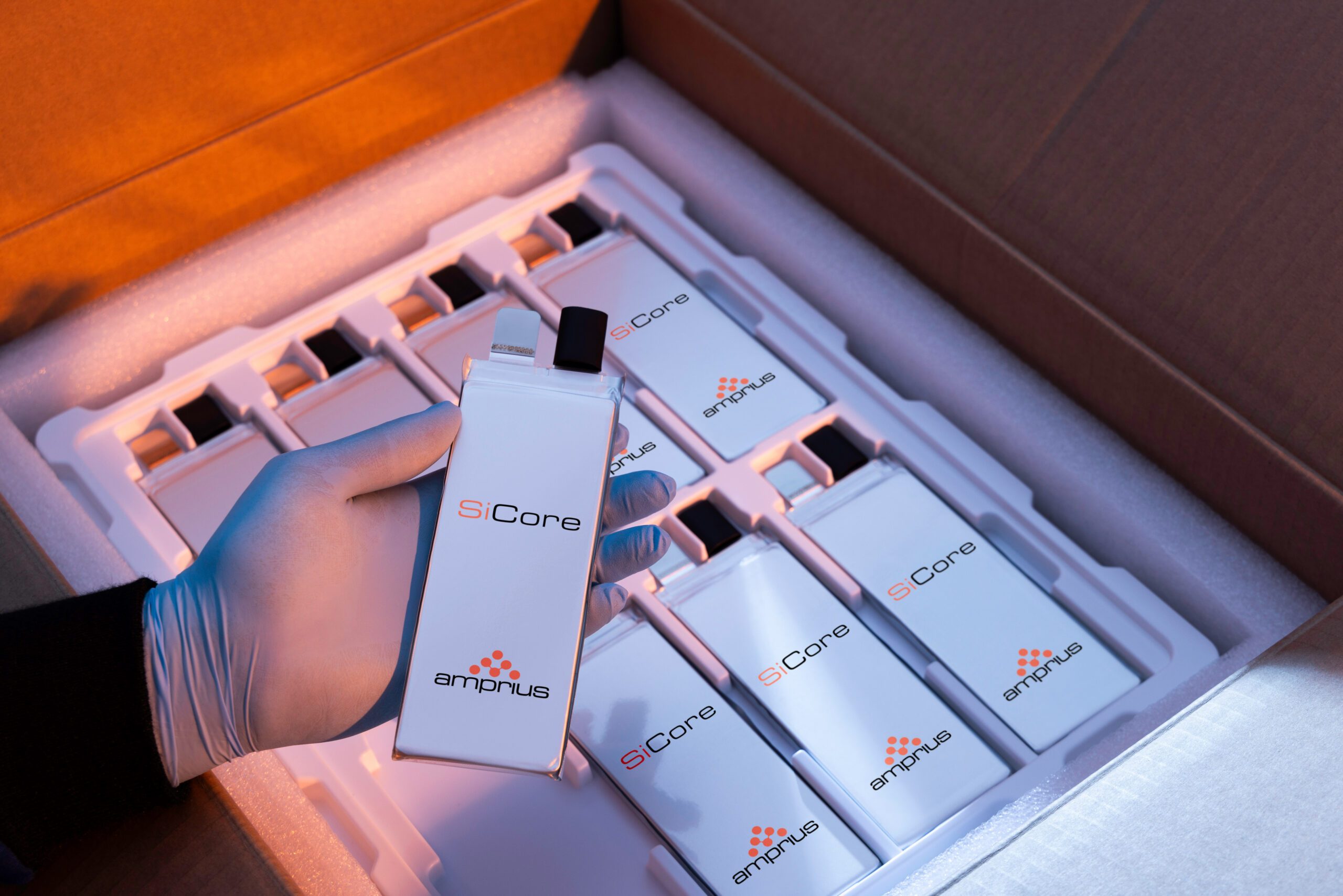
Amprius Secures Up to $75 Million Grant to Boost U.S. Drone Battery Production
Amprius Technologies has been awarded a federal grant of up to $75 million to enhance the production of batteries for unmanned aerial systems in the U.S. This funding will facilitate the conversion of an existing electric vehicle battery production line to manufacture high-energy-density cells for various drone categories. The grant, provided by the U.S. Department of War, aims to bolster domestic manufacturing capabilities crucial for national defense. This initiative is significant as it seeks to establish a high-volume manufacturing capability for advanced drone batteries within the United States. The project, which is expected to cost around $100 million, will involve reconfiguring a production line operated by a major South Korean battery manufacturer. Amprius anticipates that the new facility will produce 12 million cells annually, aligning with domestic sourcing requirements under the National Defense Authorization Act. Looking ahead, Amprius plans to complete this project by early 2028, which will enhance its existing manufacturing network across the U.S., South Korea, and China. The new capacity will be vital for supplying high-energy-density pouch cells to meet the growing demands of small and medium-sized unmanned aircraft, thereby supporting U.S. defense drone manufacturers in meeting domestic sourcing mandates.
battery technology Drone Manufacturing Drone News Drone News Feeds NDAA Compliant News
ABB Robotics Introduces E-Device for Multi-Device Robot Control
ABB Robotics has expanded its offerings for programming and operating robots with the introduction of the E-Device. This new tool allows users to control robots through various devices, enhancing flexibility and usability in robotic applications. The introduction of the E-Device is significant as it addresses the growing need for adaptable and user-friendly solutions in robotics. By enabling control from multiple devices, ABB Robotics aims to streamline operations and improve the efficiency of robotic systems in various industrial settings. Looking ahead, industry professionals should monitor how the E-Device impacts robot programming and operation. No further timeline was disclosed at the time of publication.
Allgemein Robotersteuerung & Digital Twin Robotik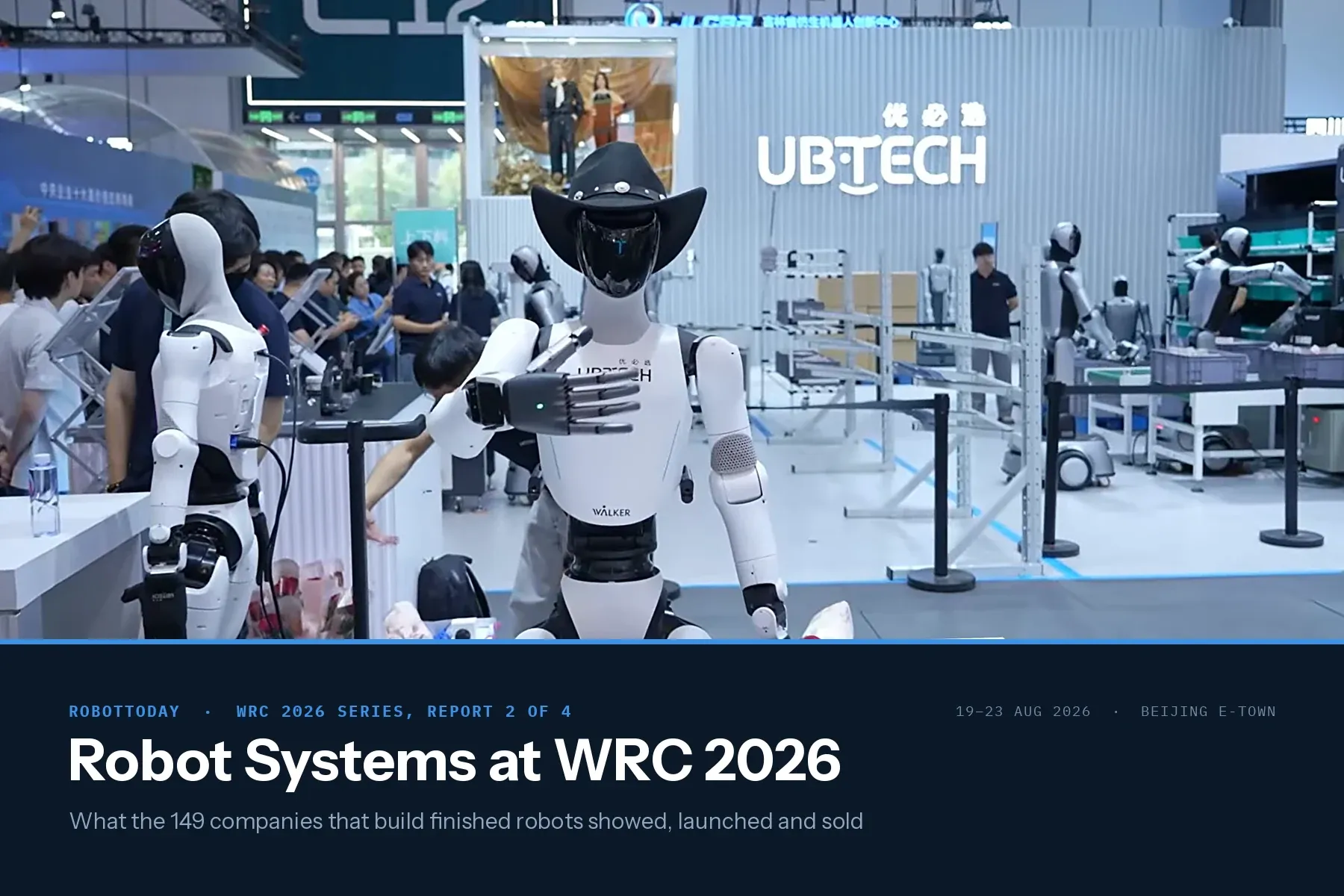
WRC 2026 Robot Systems: 149 Companies That Build Robots
149 of the 248 classified WRC 2026 exhibitors build finished robots. 93 build humanoid or legged machines. The audited humanoid sales number is one unit.

Springer Handbook of Robotics B. Siciliano & O. Khatib (eds.) — RSF Top 10 Robot Education Textbooks · No. 10
Eighty-plus chapters, 2,300 pages, nobody reads it cover to cover. It ranks for one reason: when a fault crosses domains, this is the reference of record.

Autonomous Mobile Robots Siegwart, Nourbakhsh & Scaramuzza — RSF Top 10 Robot Education Textbooks · No. 3
AMR and AGV fleets are the biggest robot service market. Siegwart decodes the vendor manual: odometry, localization, cost maps.

Robotics, Vision and Control Peter Corke — RSF Top 10 Robot Education Textbooks · No. 5
Most books you read; Corke's you run. Every concept ships as executable Python via the open Robotics Toolbox. The code softens the maths.
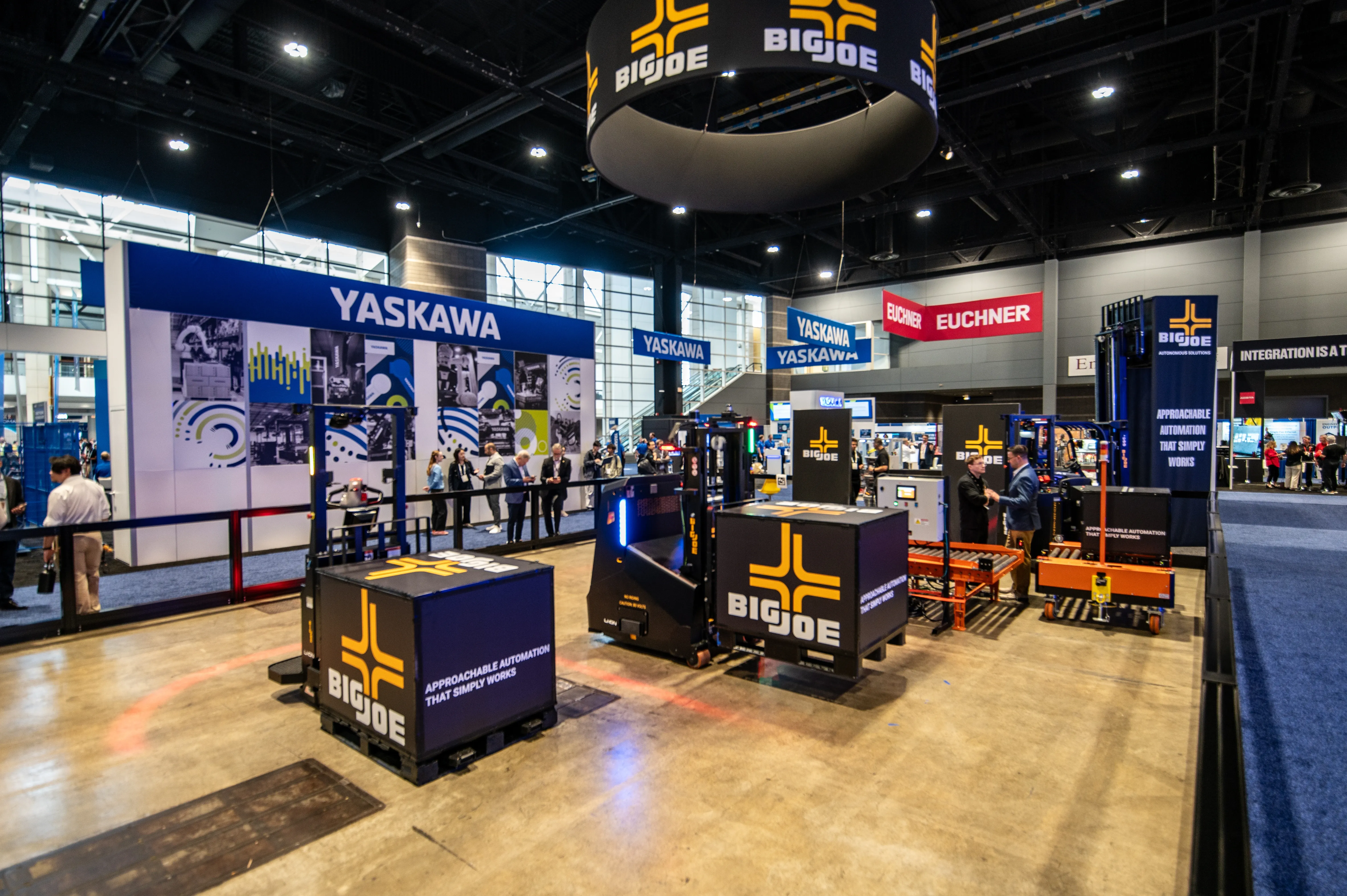
Big Joe's Four-Product AMR Push at Automate 2026: What It Reveals About the North American Warehouse Automation Market
RobotToday analyzes Big Joe's four new autonomous vehicles launched at Automate 2026 — AP44, ASC40, ATC100, ACV40 — in the context of North America's warehouse labor shortage and AMR market growth.
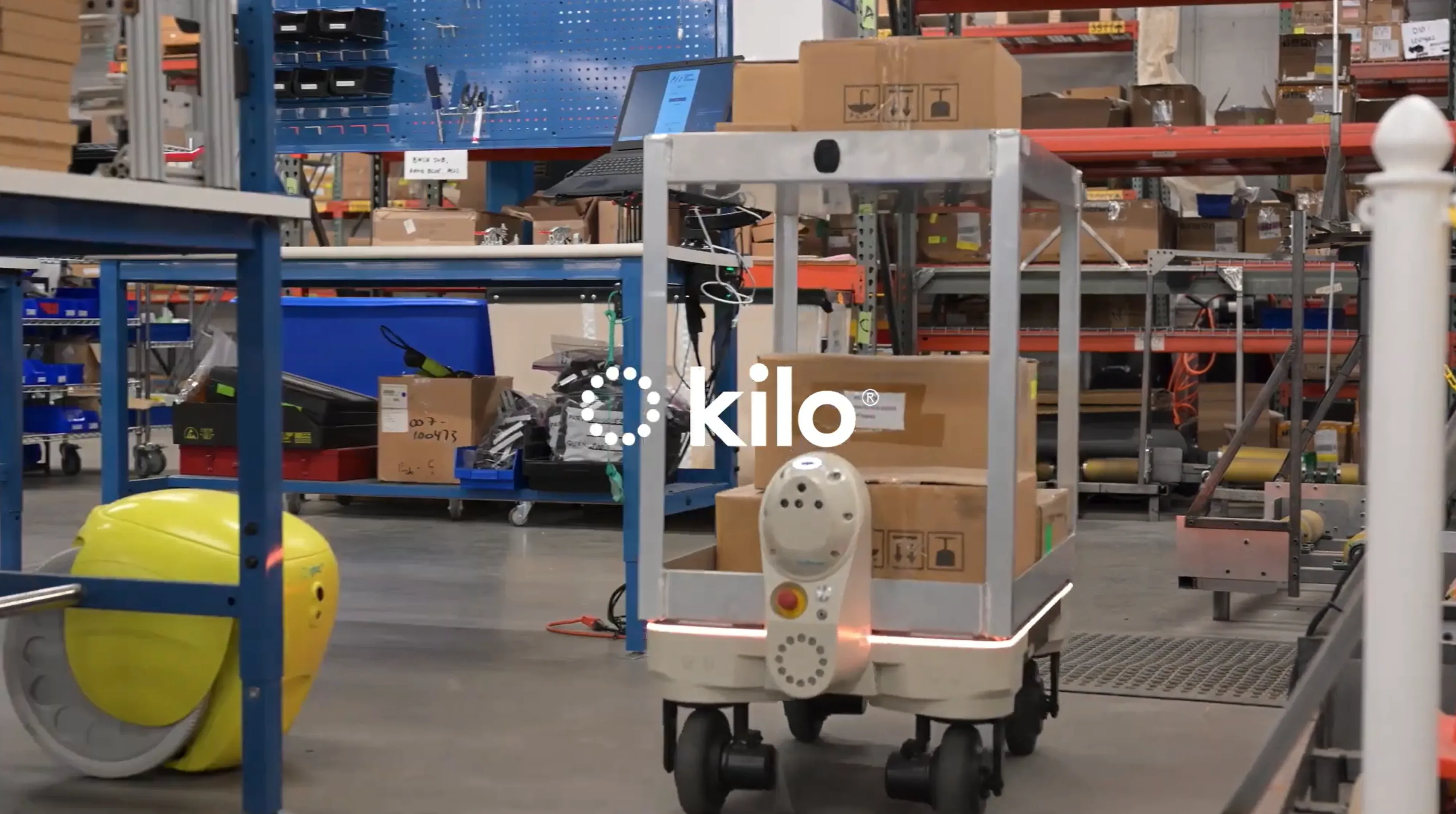
Piaggio Fast Forward Brings kilo® Autonomous Mobile Robot to Automate 2026
Piaggio Fast Forward showcases kilo®, an infrastructure-free collaborative AMR (300 lb payload, 360° LiDAR), at Automate 2026 booth #17054.
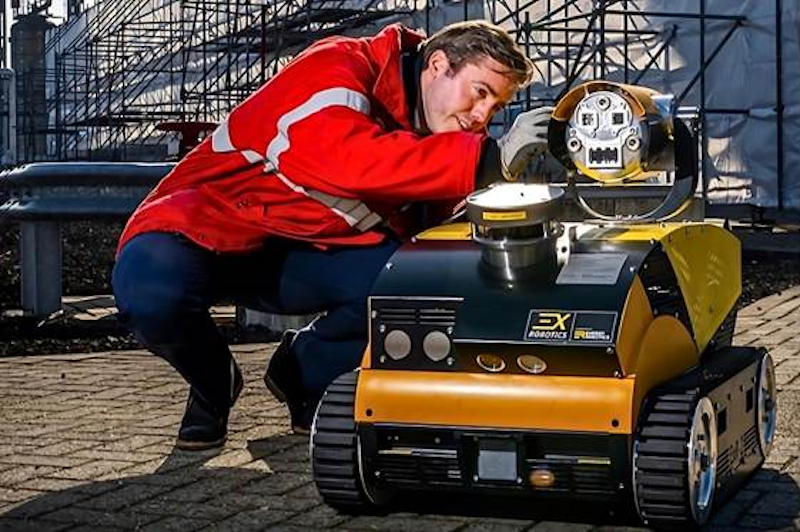
ExRobotics launches UL-certified inspection robot for hazardous industrial sites in North America
ExRobotics has announced the North American launch of its UL Certified ExR-2.5 autonomous inspection robot at the recent Energy Drone & Robotics Summit in Houston. This certification marks another industry first for ExRobotics. The ExR-2.5 is the only UL Certified inspection robot for potentially explosive industrial environments. This provides operators with a recognised pathway to […]
Energy News asset integrity autonomous inspection Autonomous robots bp
European Robotics Forum (ERF) 2027 | Europe's Leading Robotics & AI Conference
Join the European Robotics Forum (ERF) 2027 in Birmingham, bringing together Europe's robotics, AI, automation, research, industry, startups, investors, and policymakers to shape the future of robotics.

When a Materials Giant Meets Robotics: Covestro at Automate 2026
At Automate 2026, Covestro brought Makrolon, Bayblend, Baysafe BEF and Vulkollan to robotics — tackling weight, heat, sensing and sustainability for humanoids and AGV/AMRs.

ROBOTTODAY Weekly June 23 – 27, 2026
This week in robotics: Agility Robotics $2.5B SPAC deal for first humanoid IPO, BMW Figure 03 logistics deployment, Morgan Stanley doubles China humanoid forecast, ON Semiconductor acquires Synaptics for $7B, Sony halts aibo in Japan. June 23–27, 2026.
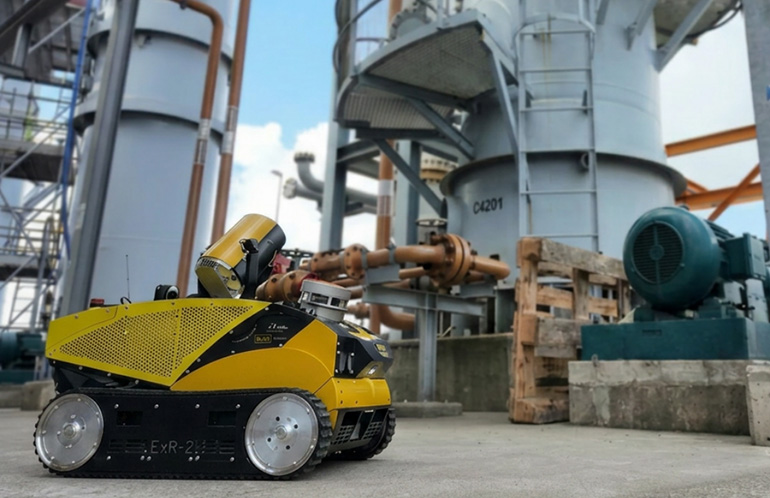
ExRobotics launches UL-certified inspection robot for hazardous environments
ExRobotics has announced that its ExR-2.5 inspection robot has received certification for safe operations in explosive environments across North America. This certification allows the robot to be deployed in hazardous settings, enhancing safety and efficiency in inspections where traditional methods may pose risks. The launch of the UL-certified ExR-2.5 marks a significant advancement in robotics technology, aimed at addressing the challenges faced in environments that are potentially dangerous for human operators.
Autonomous Mobile Robots (AMRs) Cameras / Imaging / Vision Mobility / Navigation News Oil and Gas Safety & Security
Vietnam Robotics Industry Report 2026
Comprehensive analysis of Vietnam's robotics industry: market size, industrial policy, key companies (Vingroup, Apicoo, Phenikaa-X), geopolitical dynamics, and 2030 growth opportunities.


