-
Website: http://www.evt-web.com
-
Email: [email protected]
-
Phone: +49 721 668004230
EVT Eye Vision Technology GmbH develops machine vision hardware and software, including industrial cameras (area/line scan, 3D), frame grabbers, embedded vision systems, EyeVision software with drag-and-drop interface, AI/deep learning tools, and FPGA-based processing for inspection and automation.
RSF defines a common language for robot service capability, lifecycle operations, certification pathways, and service-provider networks.
Diligent Robotics has commenced the rollout of Moxi 2.0 to health system customers across the United States. This next-generation platform has been shaped by five years of operation in over 25 hospitals, enhancing its capabilities for dynamic hospital environments. Moxi 2.0 features a proprietary learning flywheel that continuously improves the robot's performance based on deployment experiences. The significance of Moxi 2.0 lies in its advanced physical AI platform, designed to navigate the complexities of hospital hallways with greater confidence and safety. According to Andrea Thomaz, founder and CEO of Diligent Robotics, the new robot is equipped with enhanced compute, sensors, and models that allow it to operate more effectively in tight spaces filled with fast-moving people and equipment. The rollout includes partnerships with health systems such as Endeavor Health Edward Hospital and Providence Saint John’s Health Center. Looking ahead, Diligent Robotics is actively taking orders from health systems eager to implement Moxi 2.0, which can be integrated without altering existing infrastructure. The company, recently acquired by Serve Robotics for $29 million, is leveraging shared investments in physical AI research to accelerate innovation in its hospital deployments. No further timeline was disclosed at the time of publication.
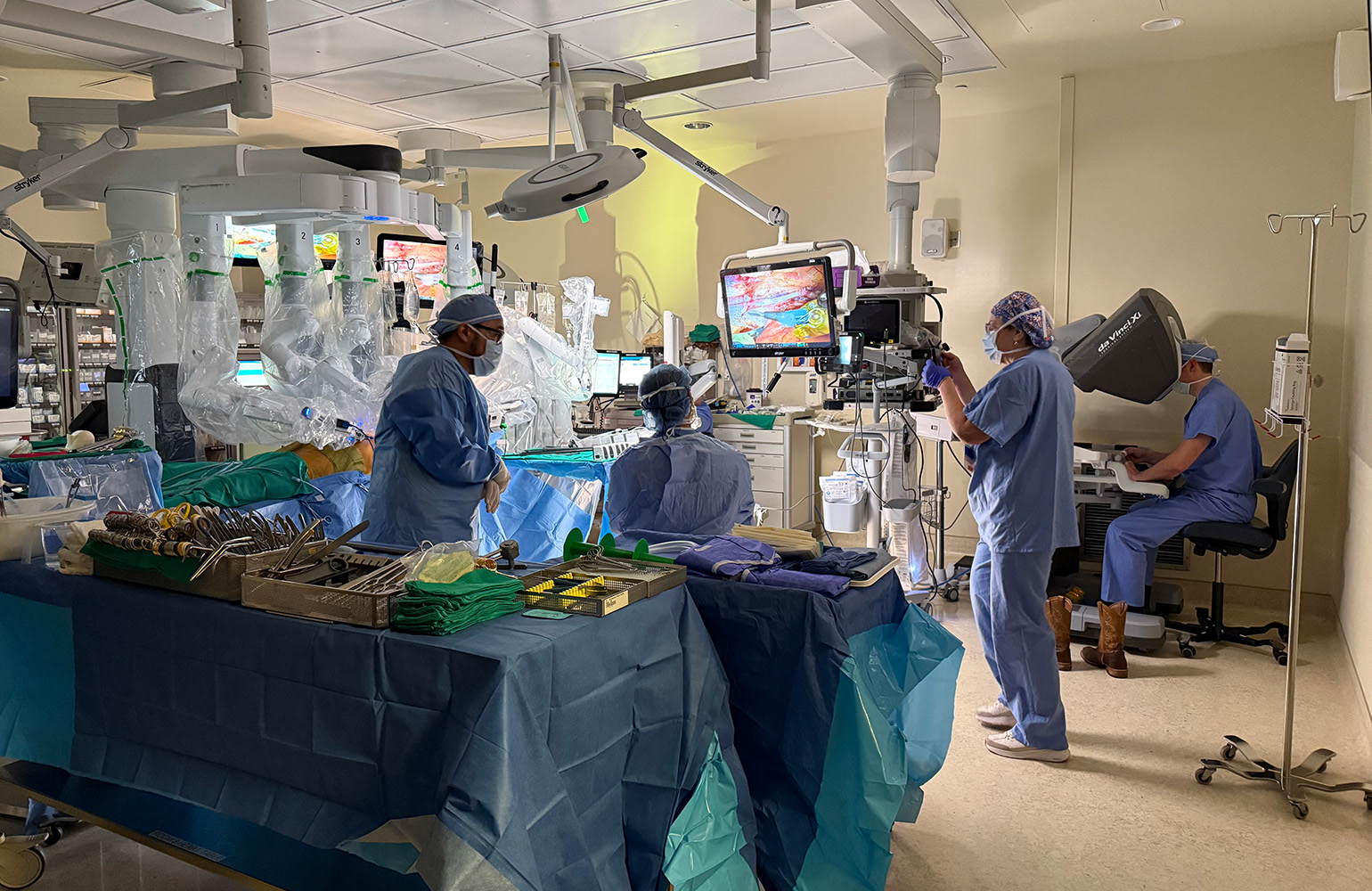
RoboticsBusinessReview.com 3 hours ago Artificial Intelligence Artificial Intelligence / Cognition Autonomous Mobile Robots (AMRs) Design / Development Healthcare Robotics Markets / IndustriesSurgeons at El Camino Health Heart and Vascular Institute have begun performing coronary artery bypass grafting (CABG) using Intuitive Surgical's da Vinci robotic system. This innovative approach, led by Dr. Nels Carroll, marks a significant advancement in cardiac surgery, which traditionally involves invasive techniques. The use of robotic assistance in CABG is noteworthy as only 1% of these surgeries globally are performed robotically. Dr. Carroll emphasizes that robotic surgery minimizes the need for large incisions, allowing for smaller openings between the ribs, which leads to quicker recovery times and less pain for patients compared to conventional methods. Looking ahead, the adoption of robotic-assisted CABG could reshape cardiac surgery practices, enhancing patient outcomes and recovery experiences. No further timeline was disclosed at the time of publication.
RoboticsBusinessReview.com 6 hours ago Artificial Intelligence Artificial Intelligence / Cognition Design / Development Healthcare Robotics Markets / Industries NewsLattice Semiconductor, founded in 1983 and based in Oregon, is advancing technology for the robotics stack, focusing on low-power field programmable gate arrays (FPGAs). These FPGAs are crucial for applications in industrial robots and autonomous mobile robots, enabling real-time control and power efficiency while supporting complex workloads like sensor fusion and motor control. The significance of Lattice's work lies in its contribution to the evolving landscape of robotics, where edge processing is becoming essential. As robots increasingly rely on onboard processing rather than cloud solutions, the flexibility of FPGAs allows for adaptability post-deployment, ensuring machines remain relevant as requirements change. Looking ahead, the discussion highlights the growing semiconductor opportunities in sectors such as humanoid robotics, industrial automation, and healthcare. As intelligent machines become more prevalent, the need for robust security measures, starting at the hardware level, is emphasized, with FPGAs potentially serving as a hardware root of trust.
RoboticsAndAutomationNews.com 6 hours ago Computing Features Manufacturing Technology autonomous mobile robots cybersecurityMolex, a global leader in electronics, is investing in CAEPlus to develop BoundaryCool, an active liquid cooling platform aimed at managing heat from advanced AI and high-performance computing systems. This investment is crucial as data centers face challenges from rising processor temperatures, necessitating innovative cooling solutions. The BoundaryCool system actively removes heat from GPUs, CPUs, and TPUs, offering a significant improvement over traditional passive cooling methods. By integrating with existing data center infrastructure, it allows for upgrades without the need for complete facility overhauls. This aligns with Molex's strategy to enhance thermal management in response to the growing demand for efficient cooling in high-density computing environments. Looking ahead, the collaboration between Molex and CAEPlus is set to advance the commercialization of BoundaryCool, with Molex providing engineering expertise to support the development. As the need for effective thermal management intensifies, this partnership is poised to play a vital role in meeting the cooling demands of next-generation computing technologies. No further timeline was disclosed at the time of publication.
InterestingEngineering.com 6 hours ago AI and RoboticsBedrock Robotics is implementing autonomous driving technology in construction by retrofitting excavators and heavy machinery with advanced sensors and software. The company’s CEO, Boris Sofman, highlighted the significance of these innovations during a discussion on Bloomberg Tech, emphasizing the potential to mitigate the skilled labor shortage in the industry. This development is crucial as the construction sector faces increasing demand for data centers and infrastructure projects, which creates a pressing need for efficient and effective solutions. By integrating AI-driven autonomous equipment, Bedrock Robotics aims to enhance productivity and speed up construction processes across the United States. Looking ahead, the company has initiated its first paid commercial deployments, marking a significant milestone in its journey. No further timeline was disclosed at the time of publication.
BloombergTechnology 6 hours agoThe Trump administration has announced new tariffs on imported drones and components, with rates reaching up to 100% for specific products. This initiative aims to enhance domestic manufacturing and reduce reliance on foreign suppliers, particularly from China, which dominates the global drone market. The tariffs are structured in tiers, with the highest penalties applied to drones over 25 kilograms and those with sensitive capabilities, such as thermal imaging. Smaller drones will face a 25% tariff, with implementation timelines varying by product. The administration is also offering lower tariffs for drones from allied countries, including the EU and Japan, to encourage domestic production. This policy reflects a broader strategy to address national security vulnerabilities linked to foreign-made unmanned aircraft systems. Analysts suggest that the tariffs could significantly impact companies like DJI, which holds a substantial share of the US commercial drone market. No further timeline was disclosed at the time of publication.
Dronedj.com 6 hours ago NewsChina's People's Liberation Army (PLA) is studying the Iran conflict to evaluate its modernization concepts, which have not been tested in major combat for nearly five decades. The PLA believes that the conflict reinforces its focus on 'intelligentized' and systems-oriented warfare, emphasizing the importance of interconnected systems over individual platforms. The insights gained from the Iran war highlight the shift towards 'systems competition' and the need for resilience and cost efficiency in military operations. PLA scholars argue that future military advantages will depend on disrupting enemy networks rather than direct confrontations, with artificial intelligence playing a crucial role in enhancing operational effectiveness. Looking ahead, the PLA aims to integrate lessons from the Iran conflict into its military strategies, particularly in air and missile defense economics. The focus will be on balancing advanced systems with low-cost weapons and ensuring robust intelligence preparation to support AI-driven operations. No further timeline was disclosed at the time of publication.
BreakingDefense 6 hours ago Air Warfare Global Opinion A2/AD Air Force AMS War Research InstituteServe Robotics CEO Ali Kashani recently spoke on Bloomberg Open Interest about the company's strategic shift towards partnerships with DoorDash and Grubhub. He highlighted how delivery robots can significantly reduce last-mile delivery costs, making them a valuable asset in the logistics sector. This shift is crucial as it demonstrates the growing importance of automation in the delivery industry. Kashani emphasized that the AI-powered technology behind these robots has the potential to extend beyond food delivery, with applications in hospitals and everyday logistics. Looking ahead, the conversation around delivery robots is expected to evolve, with potential expansions into various sectors. No further timeline was disclosed at the time of publication.
BloombergTechnology 6 hours agoSoftBank Group Corp. has made a significant investment of $200 million in Gravis Robotics, a Swiss startup specializing in autonomous software for construction machinery. This investment highlights the growing interest in automation technologies within the construction sector, as companies seek to enhance efficiency and reduce labor costs through innovative solutions. Looking ahead, industry stakeholders will be keen to observe how Gravis Robotics leverages this funding to advance its technology and expand its market presence. No further timeline was disclosed at the time of publication.
BloombergTechnology 6 hours agoMIT researchers have created a mathematical framework that simplifies the design of bioinspired materials, such as moisture-responsive shingles. This framework captures the mechanisms across various length scales in natural systems, like those found in pine cones, and translates them into engineered systems that can be 3D printed. The significance of this work lies in its potential to streamline the development of adaptive materials, reducing costs and time associated with failed prototypes. By moving beyond mere bio-inspiration to what is termed 'bio-derivation,' engineers can systematically translate natural behaviors into synthetic structures, paving the way for innovations like soft robotic grippers and morphing airplane wings. Looking ahead, the framework's application could extend to more complex systems, enhancing the ability of engineers to create materials that respond dynamically to environmental changes. No further timeline was disclosed at the time of publication.
MITNews 12 hours ago Research Bioinspiration Materials science and engineering Algorithms Design Biology
Leave a comment