


ANYbotics
"Creating a Workforce of Autonomous Robots"
ETH Zurich spin-off (2016) making ANYmal legged robots for autonomous inspection in hazardous environments; ATEX-certified; Series B 50M (2023).
Contact ANYbotics
WEBSITE
https://www.anybotics.com/HEADQUARTERS
Switzerland

Company Facts
Founded
2016
Primary Role
Manufacturer
Company Size
-
Primary Region
Europe
Annual Sales
-
Funding Stage
-
Funding Total
-
Certifications & Memberships
Keywords
- ANYbotics
- autonomous inspection
- ETH Zurich spin-off
- chemicals
- power & utilities
- Series B
- Mobile Robot (AGV/AMR)
- Industrial
- Manipulation & Grasping
- Manufacturer
- Legged Robot
- Perception & Vision
- Motion & Actuation
- Navigation & Positioning
- Quadruped
- Manufacturing
- Special / Extreme Environments
- Oil
- Gas & Energy
- Mining
International Team Develops Robots Learning to Navigate Terrain from Stick Insects
An international team from Tohoku University and VISTEC is studying stick insects to enhance robot navigation in challenging terrains. The research focuses on the insect's six legs, which allow for agile movement across various surfaces, surpassing current multi-legged robots in coordination. By employing adversarial inverse reinforcement learning, the team enabled a six-legged robot to autonomously learn to navigate diverse terrains within an hour by observing stick insect locomotion. This research is significant as it proposes a shift from traditional biomimetic approaches that require specific programming for each robot and terrain. Instead, the team aims to extract fundamental movement control principles, allowing robots to adapt to changing environments without extensive reprogramming. This adaptability is crucial for disaster scenarios where uneven surfaces and obstacles are prevalent, particularly in earthquake-prone Japan, where the demand for effective rescue robots is high. Looking ahead, the team plans to validate the learning system's robustness in realistic rubble environments and explore the potential for robots to compensate for lost limbs through continuous learning. The implications of this research could redefine how robots navigate complex terrains, making them more effective in emergency situations.
Robotics Disaster Response Machine Learning Bio-inspired Robotics
DEEP Robotics' Lynx Robot Operates in Extreme 55°C Desert Conditions
DEEP Robotics has released a video showcasing its Lynx wheeled-legged robot navigating extreme desert terrains, including soft sand and steep slopes. The robot's design combines wheeled movement for efficiency on flat surfaces with adjustable jointed legs for overcoming obstacles, making it suitable for narrow spaces like vineyards. The Lynx series operates in temperatures ranging from -30°C to 55°C and features an IP66 rating for dust and water resistance. For instance, the Lynx M20 weighs 33 kg, has a payload capacity of 15 kg, and can operate for 2.5 hours under load. It is equipped with dual 96-line LiDAR and dual-frequency cameras for real-time obstacle detection, significantly reducing manual labor in high-temperature environments. The robot has already been deployed in commercial vineyards in Xinjiang, reducing manual transport workload by over 70%. Additionally, it has been utilized for industrial inspections and public safety tasks, demonstrating its versatility in various applications. No further timeline was disclosed at the time of publication.
Robotics Industrial Automation Extreme Environment Technology Agricultural Robotics
Batten & Kamp Unveils 'Beauty Seeker': An AI Robot as a Mobile Flower Vase
At the 2026 IFA in Berlin, Batten & Kamp introduced 'Beauty Seeker,' a unique creation combining an AI six-legged robot with an orchid, transforming it into a mobile vase. This design intentionally diverges from mainstream technology narratives by stripping the robot of its built-in camera and multiple functionalities, focusing instead on a fundamental question: what does it mean for a high-tech robot to coexist with us as a simple container in a home environment? The robot retains a single core function: using LiDAR to track nearby people and slowly adjust its position to draw attention to the orchid it carries. This design creates a sense of absurdity, as the advanced robot serves not to perform tasks but to act as a moving base for a flower. Interestingly, this limitation reduces the typical threat perception associated with such robots, as it merely holds a flower, creating a peculiar tension between its potential power and its chosen role as a vase. This is not Batten & Kamp's first exploration of such contradictions; their 2023 project 'Comfort Seeker' featured an iconic Eames chair on a four-legged robot, examining the intersection of furniture and autonomous systems. 'Beauty Seeker' continues their inquiry into the relationship between technology and nature, as the orchid, evolved to attract pollinators, now competes for human attention through an AI-driven robot. The designers aim to shift the focus from what robots can do to what they should do, suggesting that the rarest behavior may be simply to hold a flower and quietly revolve around us.
AI Robots Design Innovation Human-Robot Interaction Domestic Technology
RobotToday Weekly Briefing August 31 – September 4, 2026
This week in robotics: NVIDIA agrees to buy Hugging Face for $12.93 billion, Figure signs a $3.5 billion compute deal with Nscale for up to 100,000 GPUs, Tesla launches steering-wheel-free Cybercabs in Austin under NHTSA scrutiny, and Uber and Wayve bring the UK its first autonomous rides. August 31 – September 4, 2026.
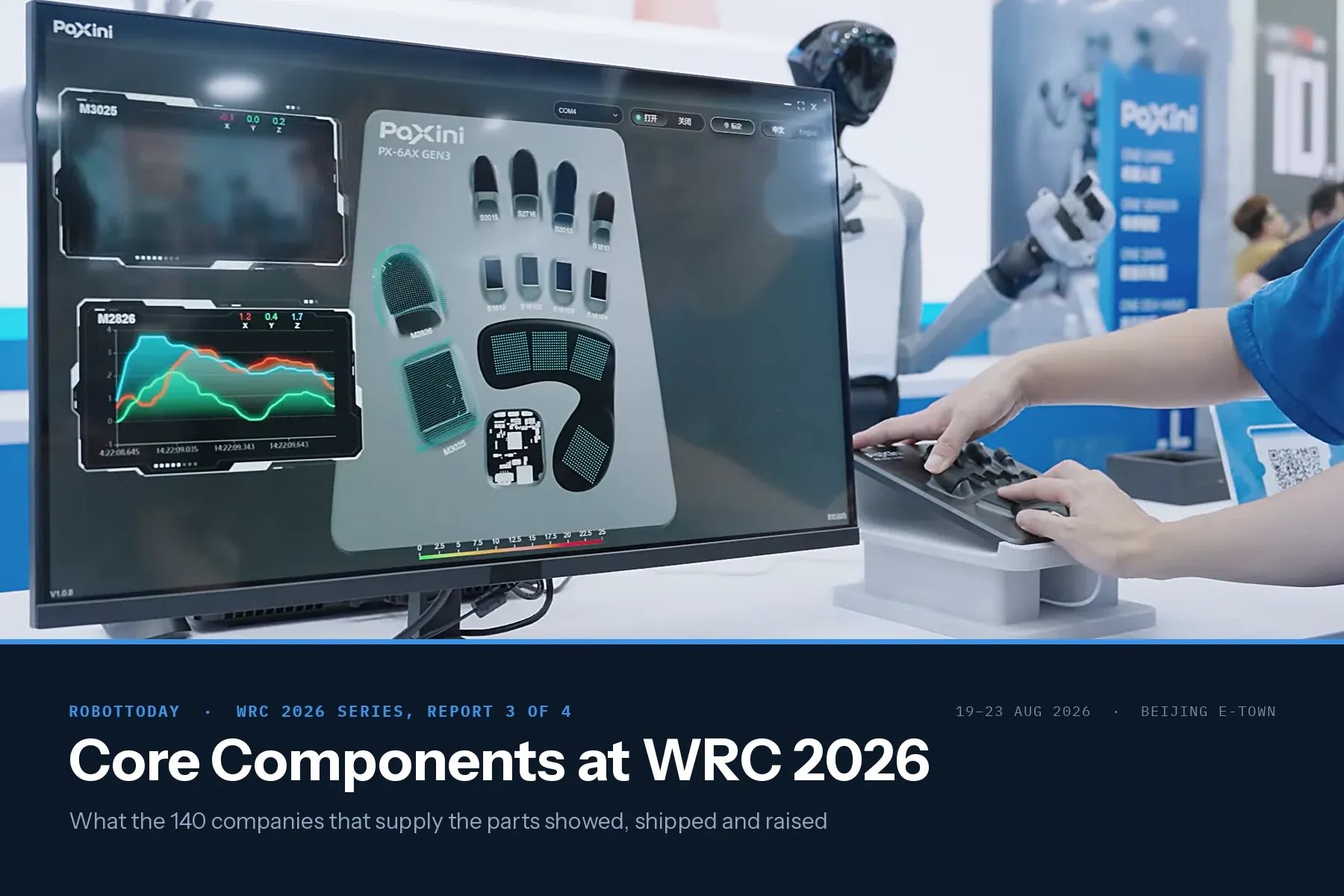
WRC 2026 Core Components: 137 Robot Parts Suppliers
The third report in the WRC 2026 series. Report 1 mapped all 248 exhibitors by category and Report 2 covered the 139 that build finished robots. This one covers the 137 that build what goes inside them.
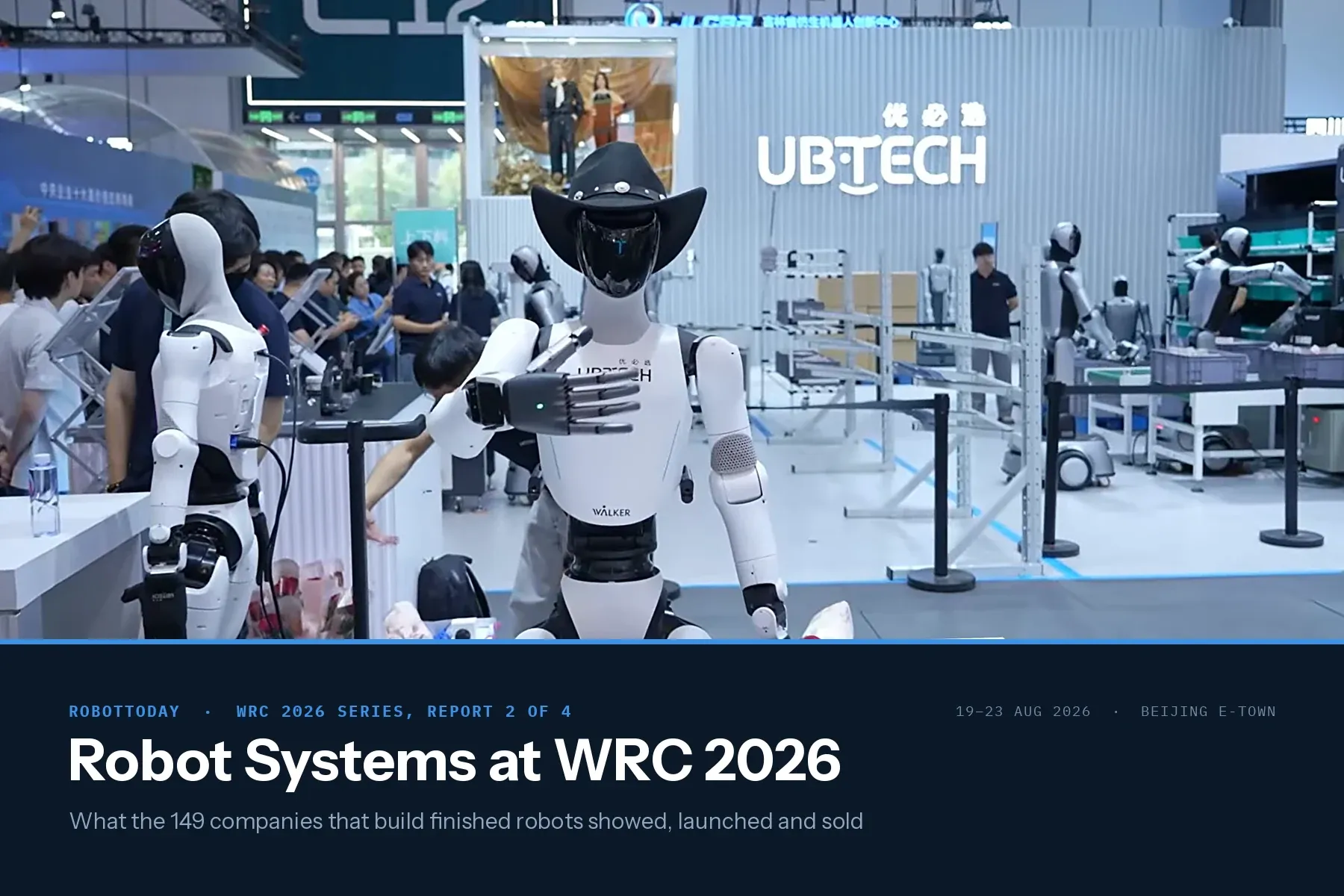
WRC 2026 Robot Systems: 149 Companies That Build Robots
149 of the 248 classified WRC 2026 exhibitors build finished robots. 93 build humanoid or legged machines. The audited humanoid sales number is one unit.

WRC 2026 Exhibitor Map: 248 Robotics Companies Mapped
We classified 248 WRC 2026 exhibitors with the RobotToday taxonomy. Motion & Actuation leads at 75 companies, Humanoid at 72, and compute stays thin at 12. (Modified 2026-08-27)

ROBOTTODAY WEEKLY August 17 – 21, 2026
This week in robotics: Unitree surges 629% in its Shanghai STAR Market debut at a $66 billion valuation, Nevada approves 7,000 robotaxis, Amazon Prime Air expands to nearly 500 US cities, and Beijing's World Robot Conference marks the industry's pivot from spectacle to scale. August 17–21, 2026.
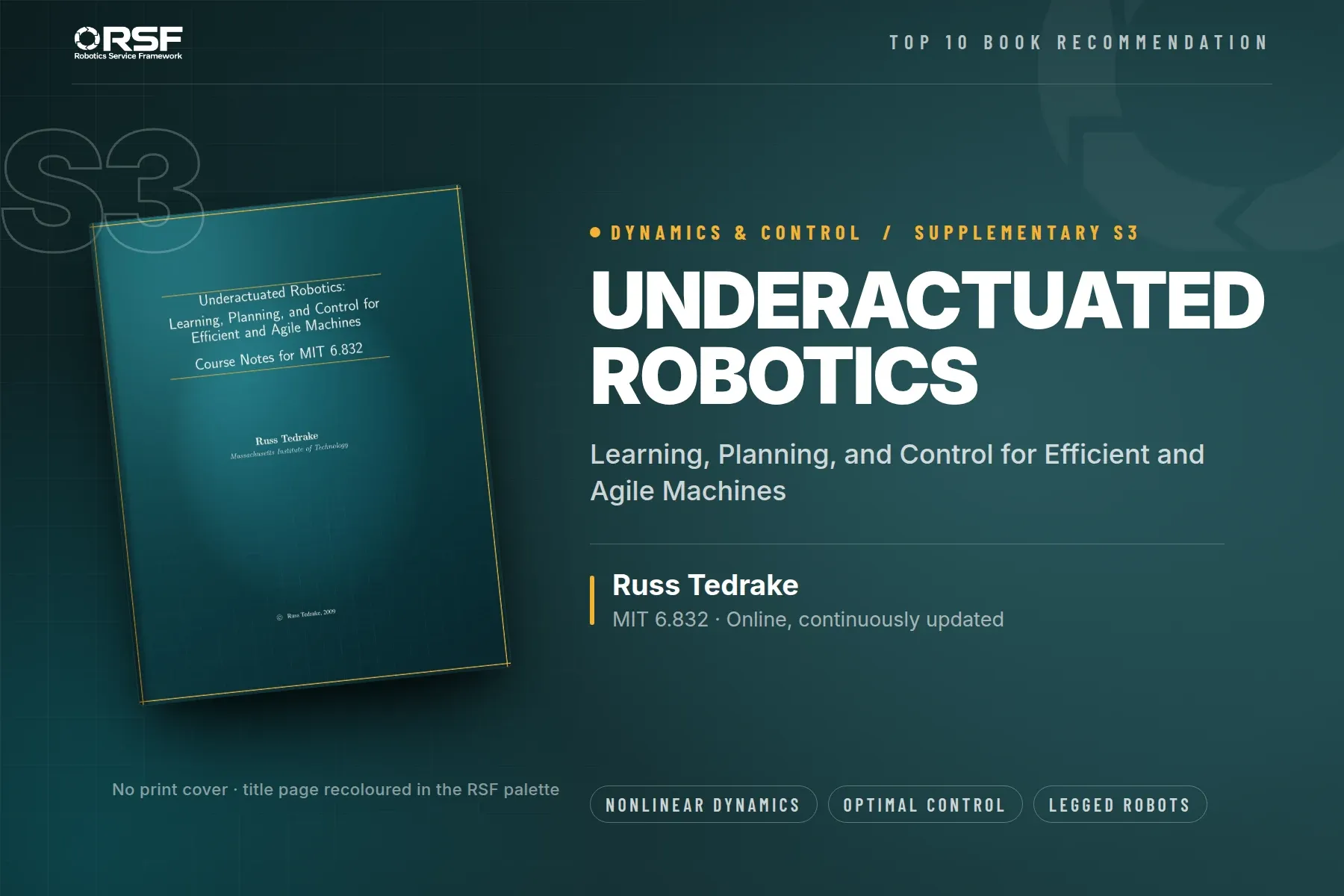
Underactuated Robotics Russ Tedrake — RSF Specialist Shelf · Book S3 of 6
Legged robots fall over for control reasons, not mechanical ones. Tedrake's free MIT 6.832 notes explain why, and what a controller must do about it.

Jack Technology Orders 2,000 Humanoid Robots for Enhanced Textile Production Efficiency
Jack Technology, a China-based industrial sewing machine manufacturer, is collaborating with Siemens to integrate humanoid robots into textile production. The initiative aims to enhance manufacturing efficiency by at least 30% while addressing challenges such as shorter lead times and rising costs. This deployment of 2,000 humanoid robots represents a significant step towards automation in the textile industry. The introduction of humanoid robots is crucial as they can operate in environments designed for human workers, utilizing existing tools and workstations without major modifications. Their ability to replicate human-like movements allows them to adapt to changing surroundings, making them valuable in addressing labor shortages while working alongside human employees. A recent trial of the Alpha humanoid robot showcased its effectiveness in handling material tasks autonomously. Looking ahead, the textile industry may see further integration of humanoid robots and other mobile robotic systems, such as ANYbotics' ANYmal, which is designed for inspection and maintenance in hazardous environments. No further timeline was disclosed at the time of publication.
AI and Robotics
Paris aims to become the European capital of Physical AI by 2026.
A new era of artificial intelligence is emerging, transitioning from the digital realm of generative AI to the physical world with the development of robots that can perceive, reason, and act in real environments. On July 7, Paris will host the inaugural edition of MACHINA 2026, an event aimed at establishing the city as the European capital of Physical AI. This initiative reflects a growing interest in integrating advanced AI technologies into everyday life, highlighting the potential for robots to enhance various sectors by interacting with their surroundings in meaningful ways. The event is expected to showcase innovations and foster discussions on the future of robotics and AI in society.
À la une IA Industrie Robotique 1X Robotics Agility Robotics
Watch: Robot dog completes 33,000 inspections at 150-year-old cement plant safely
Swiss cement producer Vigier Ciment has partnered with ANYbotics to enhance its operational efficiency by deploying the ANYmal quadruped robot for automated inspections. This innovative initiative, which began recently, aims to streamline the inspection process within the company’s facilities. By utilizing the advanced capabilities of the ANYmal robot, Vigier Ciment seeks to improve safety and reduce the time required for routine checks, which are essential for maintaining high standards in production. The integration of robotics in this sector reflects a growing trend towards automation in industrial operations, driven by the need for increased productivity and cost-effectiveness. The deployment of the ANYmal robot is expected to not only optimize inspection routines but also pave the way for further technological advancements within the cement industry.
AI and Robotics
ROBOTTODAY Weekly, June 15 – 19, 2026
This week in robotics: Japan commits $65B to physical AI, UBTECH’s U1 humanoid companion robot nears 5,000 pre-orders, XDOF raises $70M for robot foundation model infrastructure, and Waymo recalls ~3,900 robotaxis after construction-zone failures. June 15–19, 2026.
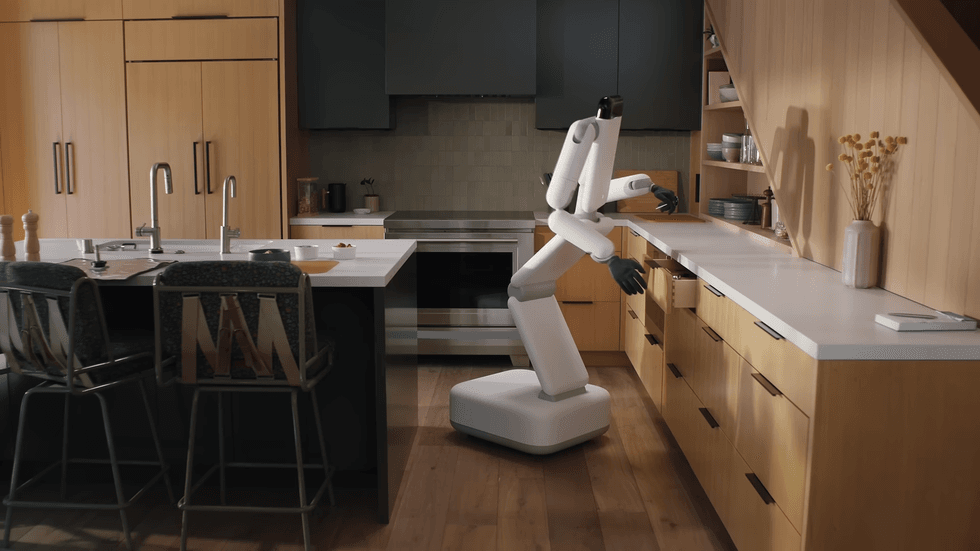
Video Friday: Do Robots Even Need Legs?
In the latest edition of Video Friday, IEEE Spectrum robotics showcases a variety of innovative robotics videos and announces upcoming events in the field. Notable events include RSS 2026 scheduled for July 13-17 in Sydney, the Summer School on Multi-Robot Systems from July 29 to August 4 in Prague, Actuate 2026 on August 18-19 in San Francisco, and IROS 2026 from September 27 to October 1 in Pittsburgh. Among the featured projects, Eno, an advanced AI and general-purpose robot developed by Genesis, exemplifies a new generation of robots designed to enhance human capabilities. Meanwhile, NASA's Jet Propulsion Laboratory is testing the ERNEST rover in California's Colorado Desert, which is being developed for future lunar missions and can operate autonomously over challenging terrain. Sony AI's Ace project demonstrates a robotic system capable of adapting to unpredictable scenarios in table tennis, while ANYbotics highlights the economic benefits of their quadruped robots in industrial inspections, preventing significant production losses. GITAI is preparing for a robotic satellite servicing demo, and Bi-AQUA is exploring underwater photography challenges for robots. Sanctuary AI has achieved impressive results in wire plugging tasks for a major automotive supplier, showcasing a success rate exceeding 99.5%. Additionally, various other robotics projects are highlighted, including a bipedal robot named GrowBot, which operates on a low-cost Raspberry Pi and aims to make physical AI accessible to a broader audience.
Video-friday Robot-videos Lunar-rover Inspection-robots Robot-hands Robot-ai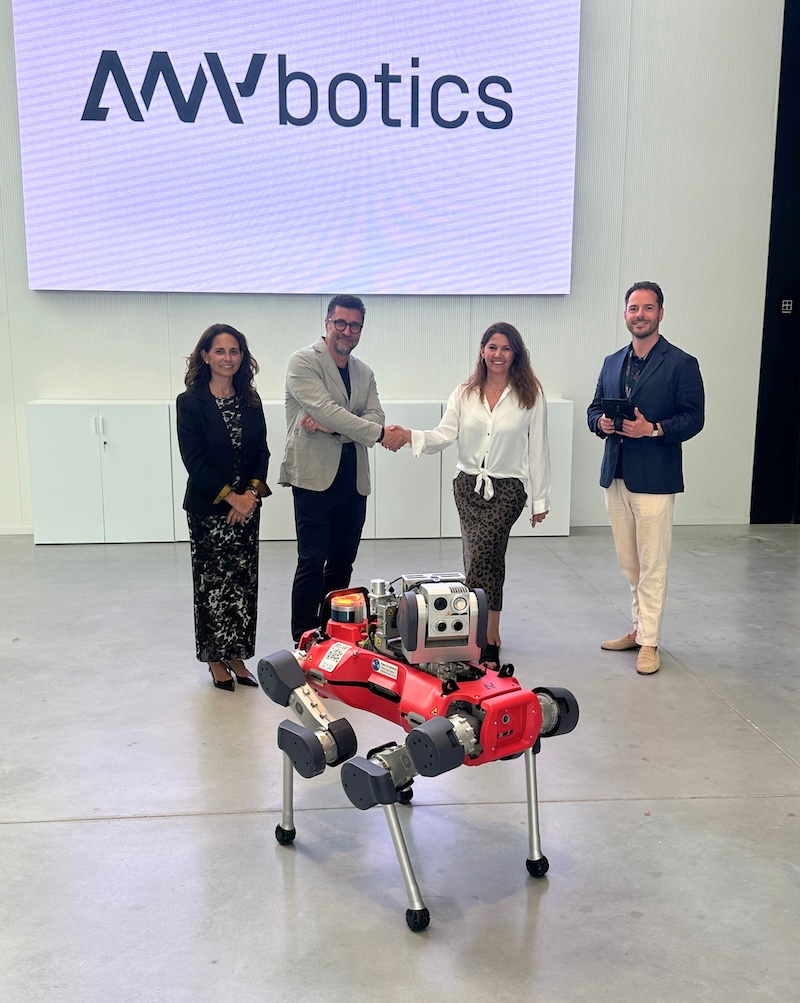
ANYbotics expands global presence with new engineering and AI hub in Barcelona
ANYbotics, a leader in AI-driven robotic inspection solutions, has inaugurated a new office in Barcelona, Spain, situated at the DFactory Barcelona campus. This marks the company’s third global location, joining its existing offices in Zurich and San Francisco. The expansion comes in response to the growing demand for ANYbotics' autonomous inspection technologies, particularly in asset-intensive and process-driven sectors. The new engineering and AI hub is expected to enhance the company’s capabilities and support its strategic growth in the region.
Infrastructure News ai robotics anybotics automation news autonomous inspection robots
Nicolas Sauvage is betting on the boring parts of AI
Since 2019, a notable portfolio has been developed, showcasing a range of technologies that have increasingly captured the interest of venture capitalists over the past year. This shift in focus among investors highlights a growing trend towards innovative solutions that address current market demands. The portfolio's evolution reflects broader industry changes and the potential for significant returns in emerging sectors. As venture capitalists seek to capitalize on these advancements, the strategic selection of technologies within the portfolio underscores a proactive approach to investment in a rapidly evolving landscape.
TC Venture agility robotics ANYbotics groq TDK Ventures
The World's Top 10 Universities in Robotics — And Why CMU Leads the Field
A strategic briefing on the world’s top 10 robotics universities, led by Carnegie Mellon University, examining institutional history, DARPA-era field deployment, commercialization models, and next-generation embodied AI infrastructure across MIT, Stanford, Berkeley, ETH Zurich, and others.

2025 Top Article - ANYbotics ANYmal robot is addressing key challenges in Industrial Robotics
The ANYmal robot is revolutionizing industrial operations by providing autonomous inspection capabilities in challenging and hazardous environments. Designed with a four-legged structure, ANYmal can adeptly navigate uneven terrains, stairs, and confined spaces, making it an essential tool for industries that require thorough inspections in difficult-to-reach areas. This innovative technology addresses significant challenges faced by operators, enhancing safety and efficiency in various industrial settings. With its advanced mobility and autonomous features, ANYmal is set to transform how inspections are conducted, ensuring that critical assessments can be performed with minimal human intervention.
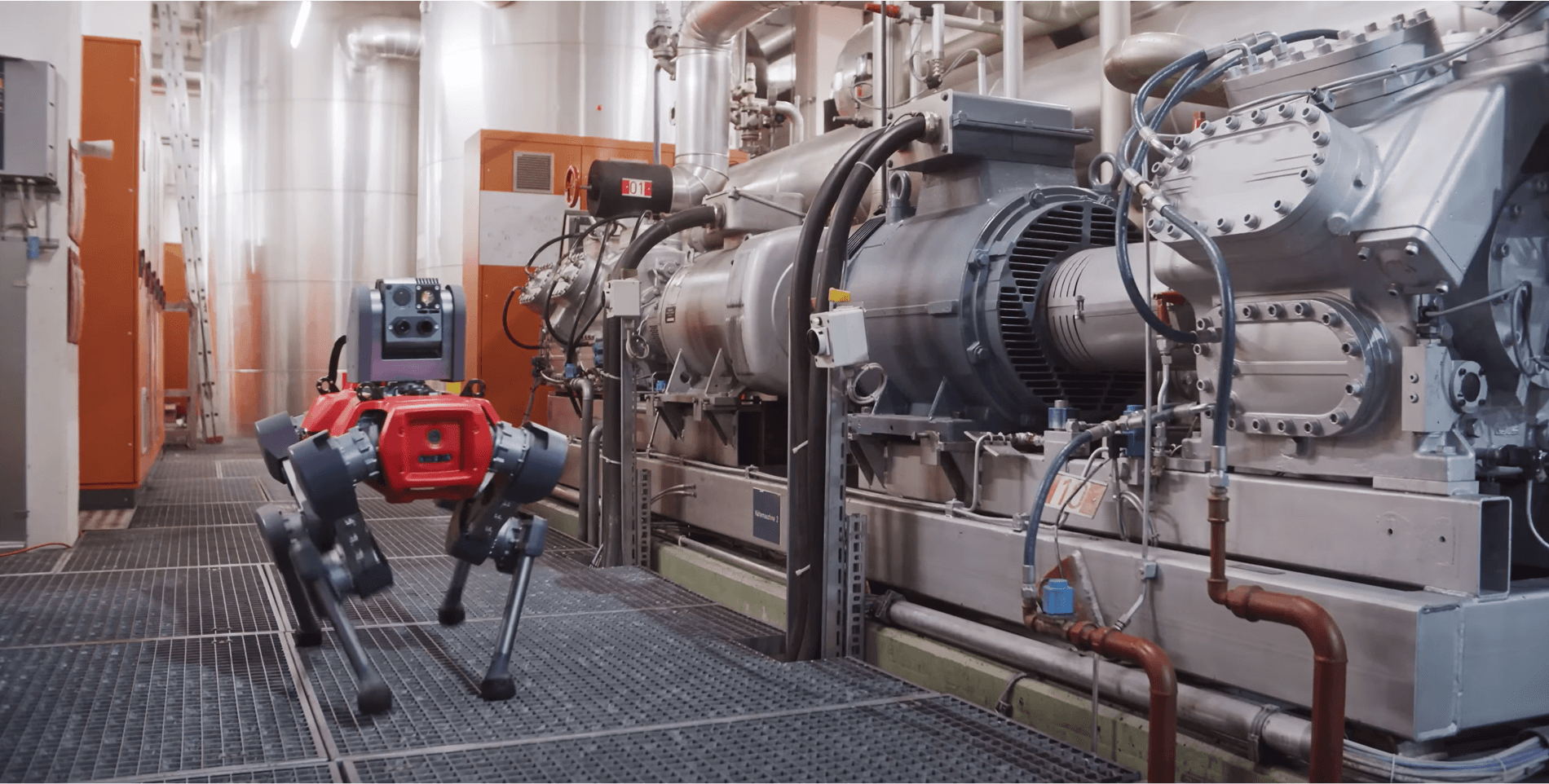
ANYbotics Secures Strategic Investment from Climate Investment to Scale Autonomous Inspection Robots
ANYbotics secures strategic investment from Climate Investment to scale autonomous inspection robots for energy, industrial safety, and decarbonization.

Flexion: The ETH Zurich Robotics Startup Building the Next-Generation AI “Robot Brain” for Embodied Intelligence
Learn how ETH Zurich-backed Flexion is building next-generation AI “robot brains” that enable embodied intelligence and adaptive autonomy for humanoid robots.


