


A-techSYN Ltd.
Irish UAS maker and vertically integrated provider developing fixed-wing and VTOL drones, autopilots, and flight services for defense and civil markets.
Contact A-techSYN Ltd.
WEBSITE
https://a-techsyn.comPHONE
2026-02-27HEADQUARTERS
Ireland

Company Facts
Founded
2016
Primary Role
Manufacturer
Company Size
-
Primary Region
Europe
Annual Sales
-
Funding Stage
-
Funding Total
-

Tuning the Brain Like a Radio: Synapse Symphony’s Plan to Treat Chronic Pain at Home
CEO Vishal Jain on Synapse Symphony's DARPA-rooted wearable brain-stimulation headset for chronic pain, its FDA plans, and a second use: motor-health checks.

Physical AI Requires a Fourth Verb: Verification for Production Accuracy
Physical AI is commonly defined as machines that perceive, reason, and act in the physical world. However, this definition lacks a crucial fourth verb: verify. In production environments, acting does not equate to producing conforming parts, as demonstrated by a humanoid robot at BMW's Spartanburg plant, which successfully placed over 90,000 components with a 99% success rate per shift. The importance of verification lies in ensuring that produced parts meet specified tolerances. While the robot's execution rate is impressive, it does not guarantee that the assemblies are within acceptable limits due to various factors such as fixture wear and thermal drift. The introduction of in-line dimensional inspection has made it feasible to measure critical characteristics and compare conformance rates against reported success rates, highlighting the need for this fourth verb in the definition of Physical AI. Going forward, the industry must focus on integrating verification into the acceptance criteria for Physical AI systems. This shift will enhance the reliability of production processes, ensuring that machines not only report their actions but also the quality of their outputs. No further timeline was disclosed at the time of publication.
Factory / Digital Transformation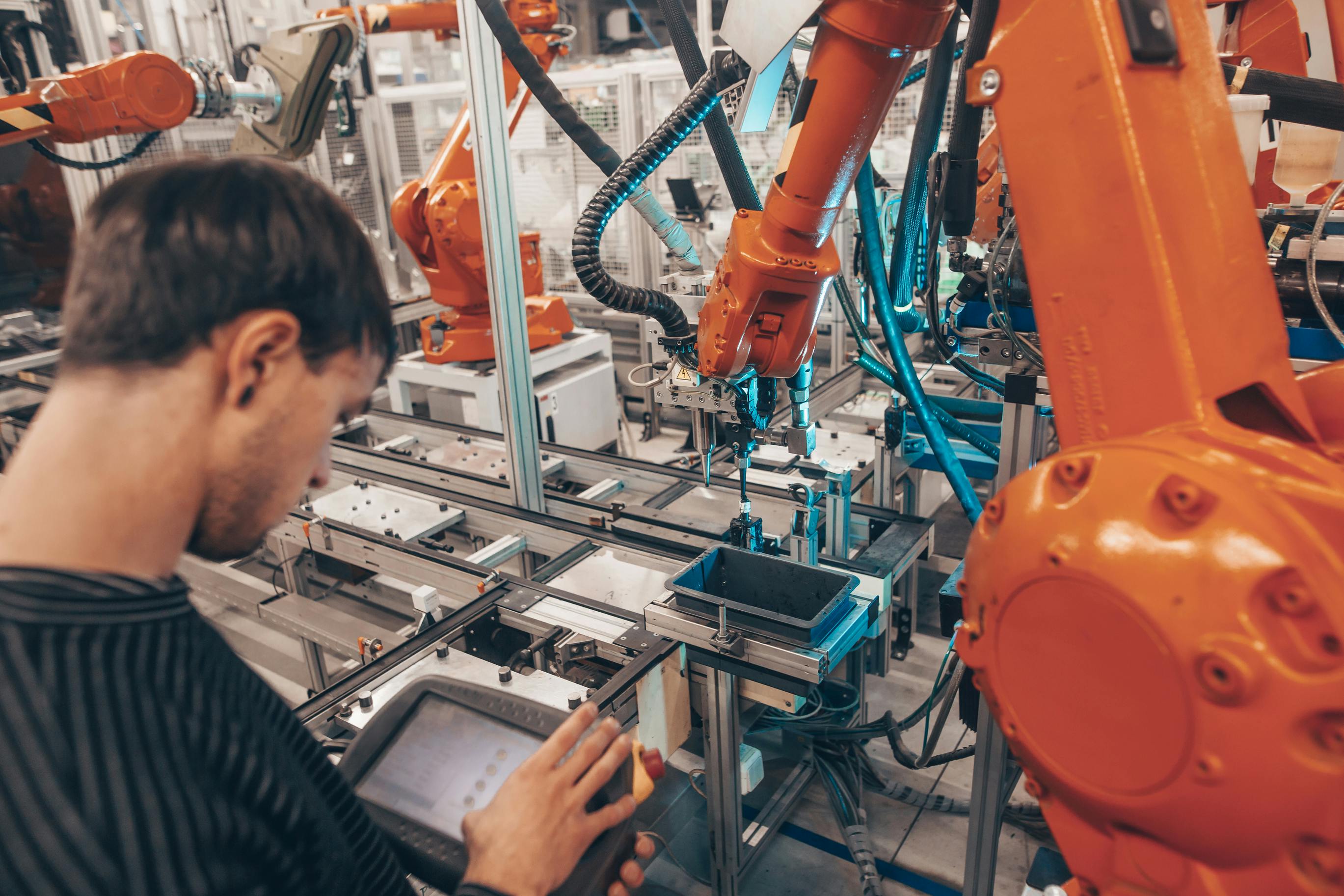
The Challenge of Implementing Spatial and Agentic AI in Smart Factories
Smart factories are equipped with advanced technologies like artificial intelligence, spatial computing, and autonomous robotics, yet many manufacturers are not fully leveraging these capabilities. A 2025 State of AI in Manufacturing Survey reveals that while over 77% of manufacturers have adopted AI, 56% are uncertain about their systems' readiness for complete integration. This indicates that the gap between technology adoption and operational value stems from implementation challenges rather than technological limitations. Spatial AI enables machines to understand and act within three-dimensional environments, while agentic AI allows systems to autonomously pursue goals across workflows. This combination could transform factory operations into dynamic, self-correcting systems. However, the effectiveness of these technologies is hindered by fragmented data ecosystems, where inconsistent and poorly contextualized data leads to misleading AI outputs. The need for a unified data layer is critical for effective smart factory operations. Looking ahead, manufacturers must prioritize the integration of legacy systems and establish shared data standards to fully realize the potential of smart factories. A Deloitte survey indicates that 41% of manufacturing executives plan to invest in automation hardware in the next two years, but these investments will only yield benefits if the underlying data infrastructure is robust enough to support them. No further timeline was disclosed at the time of publication.
Factory / Analytics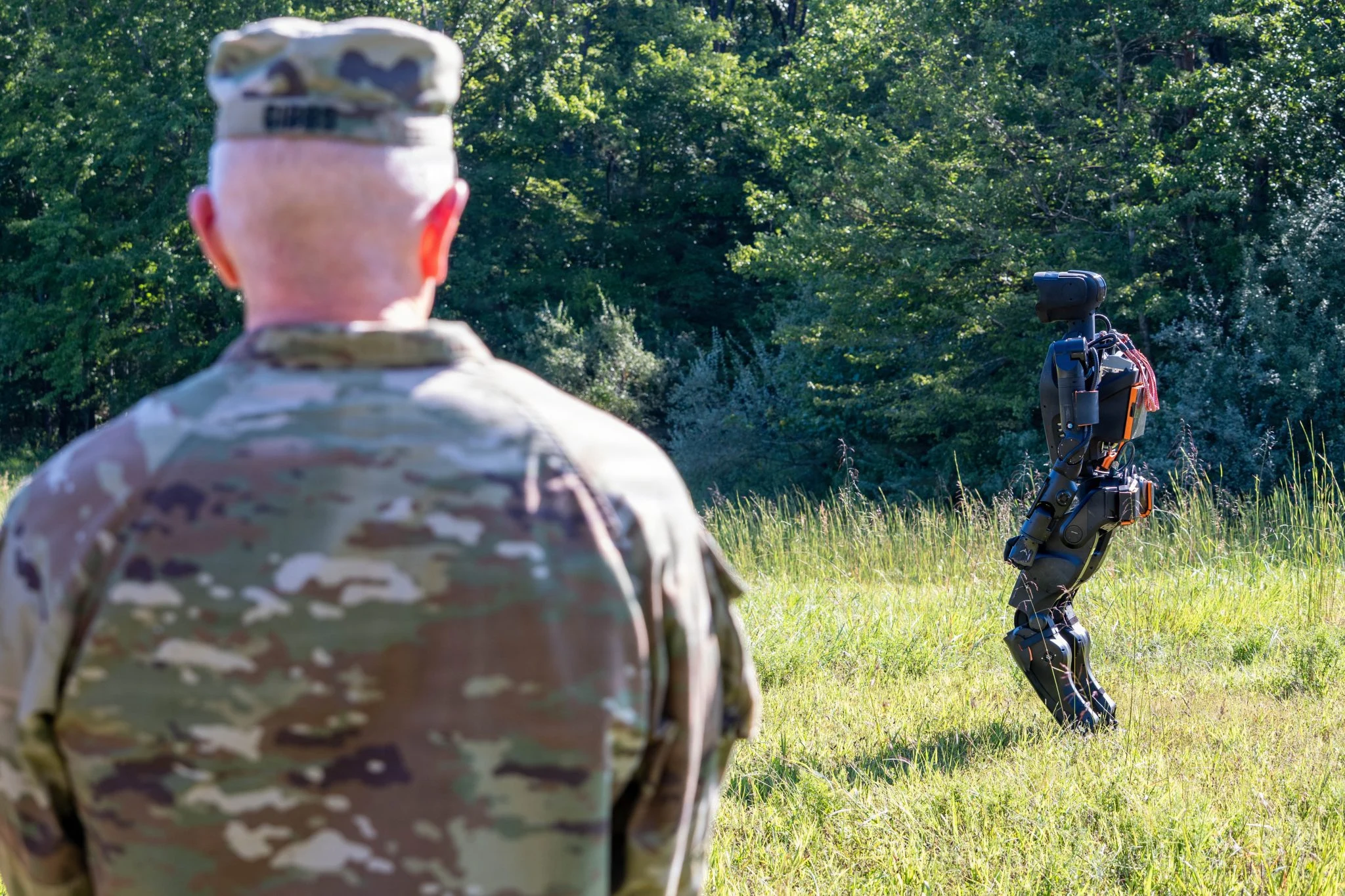
U.S. Army Trials Military Humanoids Amid Diverse Development Stages and Ambitions
The U.S. Army has concluded a competition showcasing military humanoid robotics, with various developers from the U.S. and Poland presenting their innovations. IHMC's Alex emerged as a winner, demonstrating advanced capabilities in resilience and autonomy. However, the competition revealed a wide gap in development stages among entrants, highlighting the challenges in transitioning from ambitious concepts to practical deployment. This competition, known as xTechHumanoid, received 103 submissions, with ten finalists demonstrating their technologies at Marine Corps Base Quantico. While IHMC's Alex was recognized for its hybrid autonomy and robust design, other entrants like Vision One and Si Robotics are still refining their products. The varying stages of development underscore the complexities of integrating humanoid robots into military operations, where energy, sensing, and control technologies are crucial. Looking ahead, the focus will be on how these technologies evolve and whether they can meet military needs effectively. IHMC's ongoing development contract with the Office of Naval Research and the ambitions of other companies like Vision One and Si Robotics will be critical in shaping the future of military humanoids. No further timeline was disclosed at the time of publication.
Skylark Labs Foundation IHMC
Igus Introduces New DeviceNet Cable for Dynamic Robotics with Enhanced Durability
Igus has launched a new DeviceNet cable as part of its CFROBOT8.PLUS robot cable family, designed to endure up to ±360°/m of torsion and 10 million torsional cycles. This innovation is particularly beneficial for dynamic robotic applications where space is limited, thanks to its reduced diameter. The introduction of this DeviceNet cable is significant as it addresses the growing demand for robust and flexible solutions in robotics. With the ability to withstand extensive torsion, it enhances the reliability and performance of robotic systems, making it a vital component for engineers and manufacturers in the field. Looking ahead, the focus will be on how this new cable performs in real-world applications and its adoption across various industries. No further timeline was disclosed at the time of publication.
SemiDrive and Radxa Introduce RoboX D9M Robot Motion Controller Featuring D9-Max Chip
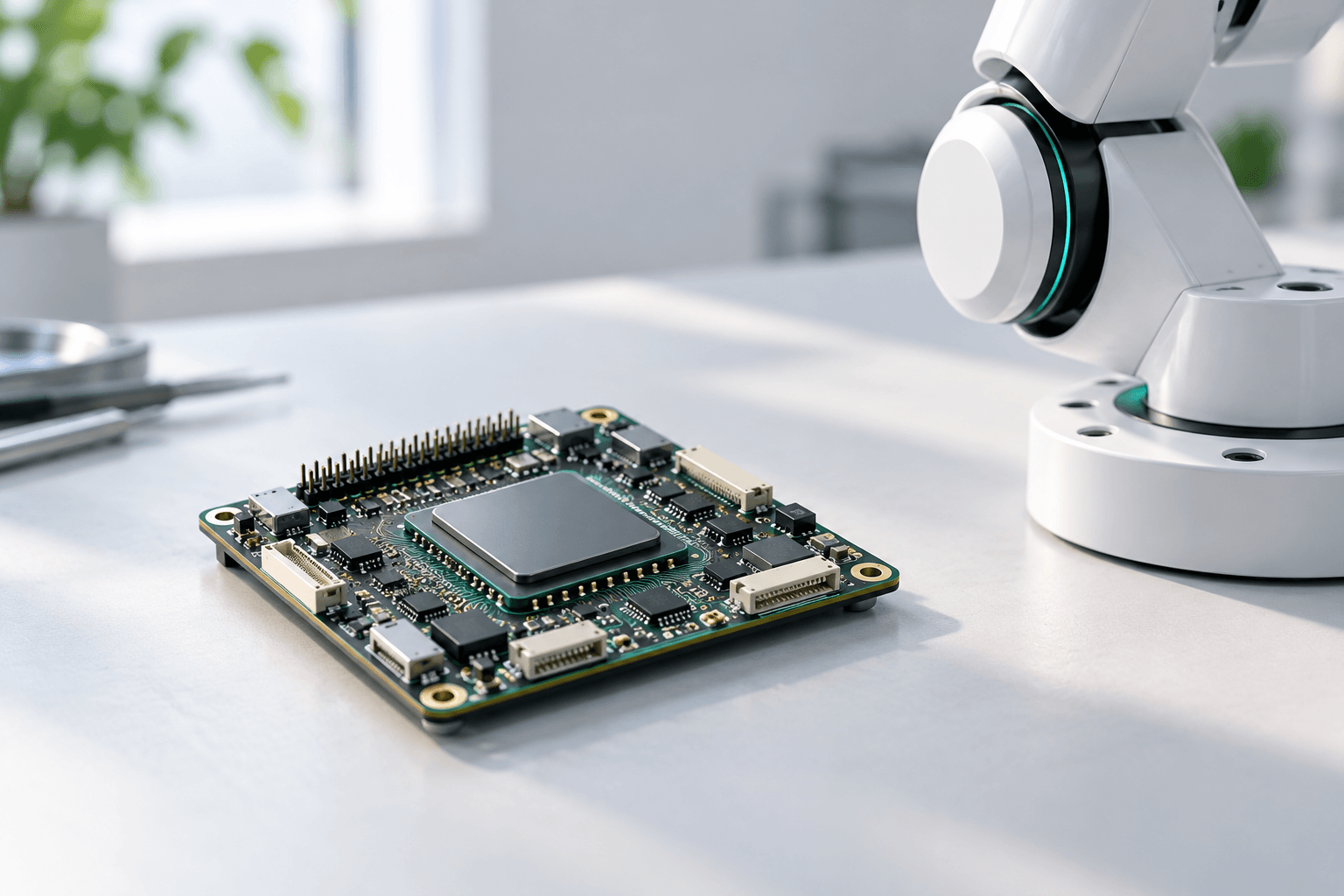
SemiDrive and Radxa have unveiled the RoboX D9M, a compact robot motion controller measuring 100 x 100 mm. This innovative controller is powered by the ASIL-B D9-Max chip, which boasts 12 CPU cores and an 8 TOPS NPU, along with support for EtherCAT and CAN-FD protocols. Additionally, the RoboX D9M comes with ROS 2 preinstalled, enhancing its usability in robotic applications. The launch of the RoboX D9M is significant as it combines advanced processing capabilities with a small form factor, making it suitable for various robotic applications. The integration of EtherCAT and CAN-FD allows for efficient communication in complex robotic systems, while the preinstalled ROS 2 framework facilitates easier development and deployment of robotic solutions. This product is expected to appeal to engineers and developers looking for high-performance motion control solutions. Looking ahead, the RoboX D9M's capabilities may lead to increased adoption in sectors requiring sophisticated robotic control. As industries continue to embrace automation, the demand for versatile and powerful motion controllers like the RoboX D9M is likely to grow. No further timeline was disclosed at the time of publication.
Advancements in Robotics Transforming Manufacturing Landscape
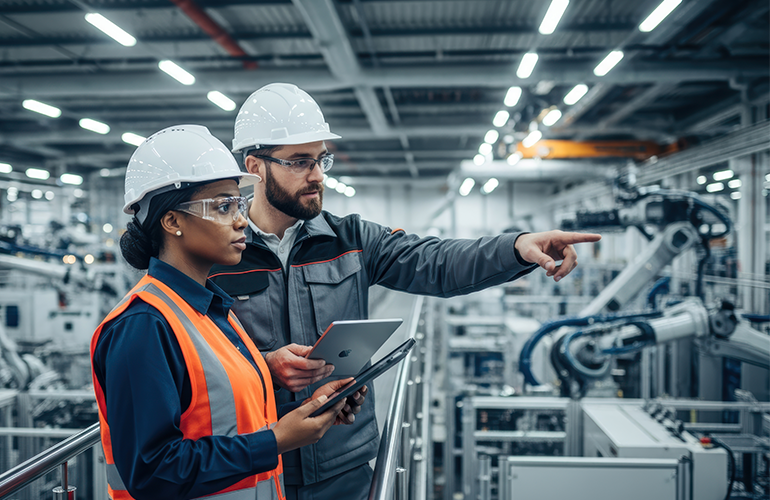
Recent reports highlight significant advancements in robotics for manufacturing, moving beyond traditional robot arms to more versatile models. The evolution of industrial automation is driven by improved perception, autonomy, and actuation, alongside a growing demand for robots due to skilled labor shortages across various sectors, including electronics and pharmaceuticals. The International Federation of Robotics indicates that industrial robot installations have doubled in the decade ending in 2024, with countries like South Korea, Singapore, Germany, and Japan leading in robot density. The emergence of collaborative robots and autonomous mobile robots is enabling factories to automate a wider range of tasks, enhancing operational flexibility and efficiency. Looking ahead, the Association for Advancing Automation reported a 6.6% increase in robot order value year over year in the first half of 2026, driven by rising orders in non-automotive sectors. As the industry continues to explore new applications and integration strategies, the challenge remains to ensure a solid return on investment while adapting to the evolving landscape of robotics in manufacturing.
eBooks Industrial Robots Manufacturing News
First Domestic Humanoid Robot Showcases Fully Localized Electronic Architecture
On September 28, the first humanoid robot featuring a fully localized electronic architecture was unveiled in Yichang, Hubei. This innovative architecture, developed by Dongtu Technology, serves as the robot's intelligent nervous system, integrating an operating system, network, software tools, and AI computing chips. The localized architecture is designed to enhance performance and security, offering advantages over traditional foreign solutions. The significance of this development lies in its potential to ensure data transmission and control security within robotics. The fully localized architecture aims to provide a robust safety framework for autonomous robot behavior, preventing disruptions in production and ensuring personnel safety. This initiative reflects a broader industry trend towards self-sufficiency and sovereignty in technology. Looking ahead, the key focus will be on the architecture's adaptability across various robotic platforms and its ability to meet commercial performance, power consumption, and development toolchain requirements. No further timeline was disclosed at the time of publication.
Humanoid Robots AI Robotics Safety Industrial Automation
Zhuji Power and Dongtu Technology Unveil China's First Humanoid Robot with Domestic Electronics
On September 28, 2026, Zhuji Power and Dongtu Technology launched China's first humanoid robot equipped with domestic electronic architecture in Yichang, Hubei. This robot marks a significant advancement in integrating domestic industrial-grade real-time communication capabilities within complex humanoid robotic systems. The importance of this development lies in its potential to enhance the robot's ability to operate autonomously in complex real-world scenarios. Effective communication within the robot's system is crucial for processing the vast amounts of information generated by perception, decision-making, and motion control, directly impacting control precision and task safety. Looking ahead, the focus will be on whether this domestic electronic architecture can be effectively implemented across more robotic platforms, and whether its performance, power consumption, and development toolchain can meet commercial requirements. No further timeline was disclosed at the time of publication.
Humanoid Robots Domestic Electronic Architecture Industrial Automation AI Technology
Sanctuary AI and Skild Collaborate to Enhance Industrial Robots with Physical AI
In September, the robotics industry witnessed contrasting developments. On September 10, Skild, a U.S. robotics modeling company, announced its collaboration with NVIDIA and Foxconn to deploy models on dual-arm robotic arms for precise assembly in the Blackwell system. Four days later, Danish collaborative robot manufacturer Universal Robots unveiled a new generation platform designed to facilitate the integration of cameras, sensors, and AI applications into robotic arms. This evolution is significant as it highlights the shift towards enhancing existing robotic systems with advanced AI capabilities rather than waiting for humanoid robots to achieve commercial viability. Sanctuary AI, a Canadian company developing the Phoenix humanoid robot, revealed its strategy to implement Physical AI on current and next-generation industrial robot platforms, achieving a task success rate exceeding 99.5% in a proof of concept with an automotive supplier. Looking ahead, companies like Sumitomo Electric and Yaskawa are exploring the integration of AI into traditional robotic systems to handle complex tasks that still require human judgment. The focus is on adapting control systems and interfaces to improve the robots' ability to interact with variable components, such as soft wire harnesses, which present unique challenges in manufacturing processes. No further timeline was disclosed at the time of publication.
Physical AI Industrial Robotics Automation Technology Robotic Arms
LimX Dynamics and Kyland Technology Launch First Humanoid with Domestic Electronic Architecture
On September 28, 2026, LimX Dynamics and Kyland Technology introduced a humanoid robot in Yichang, featuring a fully domestic electronic architecture. This architecture integrates Kyland Intewell, AUTBUS, and MaVIEW, boasting microsecond motion control capabilities. The launch of this humanoid is significant as it represents a step forward in domestic robotics technology, showcasing the potential for advanced motion control in humanoid applications. The integration of these technologies aims to enhance the performance and responsiveness of robotic systems in various sectors. Looking ahead, industry observers will be keen to see how this humanoid performs in real-world applications and whether it can meet the ambitious claims of microsecond motion control. No further timeline was disclosed at the time of publication.

Glacian: Physics Model Vets AI Data Center Cooling
Glacian Technologies pairs AI with a physics-based digital twin that rejects unsafe commands. CEO Jie Zhao on cutting data center cooling energy 15-30%.

Siemens on Robots, Agentic AI and the "Last 3%" Problem
Siemens tells RobotToday at IMTS 2026 why AI robot demos are only the tip of the iceberg, and why agentic AI depends on PLM data and business context.

RobotToday Weekly September 14 – 18, 2026
Toyota weighs 400,000 factory robots, SoftBank buys Hyundai's Robotics and AI Institute, Agility unveils Digit 5, Figure's Helix 2.5 generalises to 30 homes, and August robotics funding hits $4.87 billion.

Innovation Works Venture Expo 2026: 58 Pittsburgh Startups Pitch to Investors
58 health, deep tech and robotics startups pitched at Innovation Works Venture Expo 2026 in Pittsburgh. Full company list, program and 2025 funding data.

The Missing Price: What Non-Disclosure Reveals About the Humanoid Market
Of 131 announced robot models, 33 publish no price. US makers withhold at twice the rate of Chinese ones — and the reason is stage, not strategy.
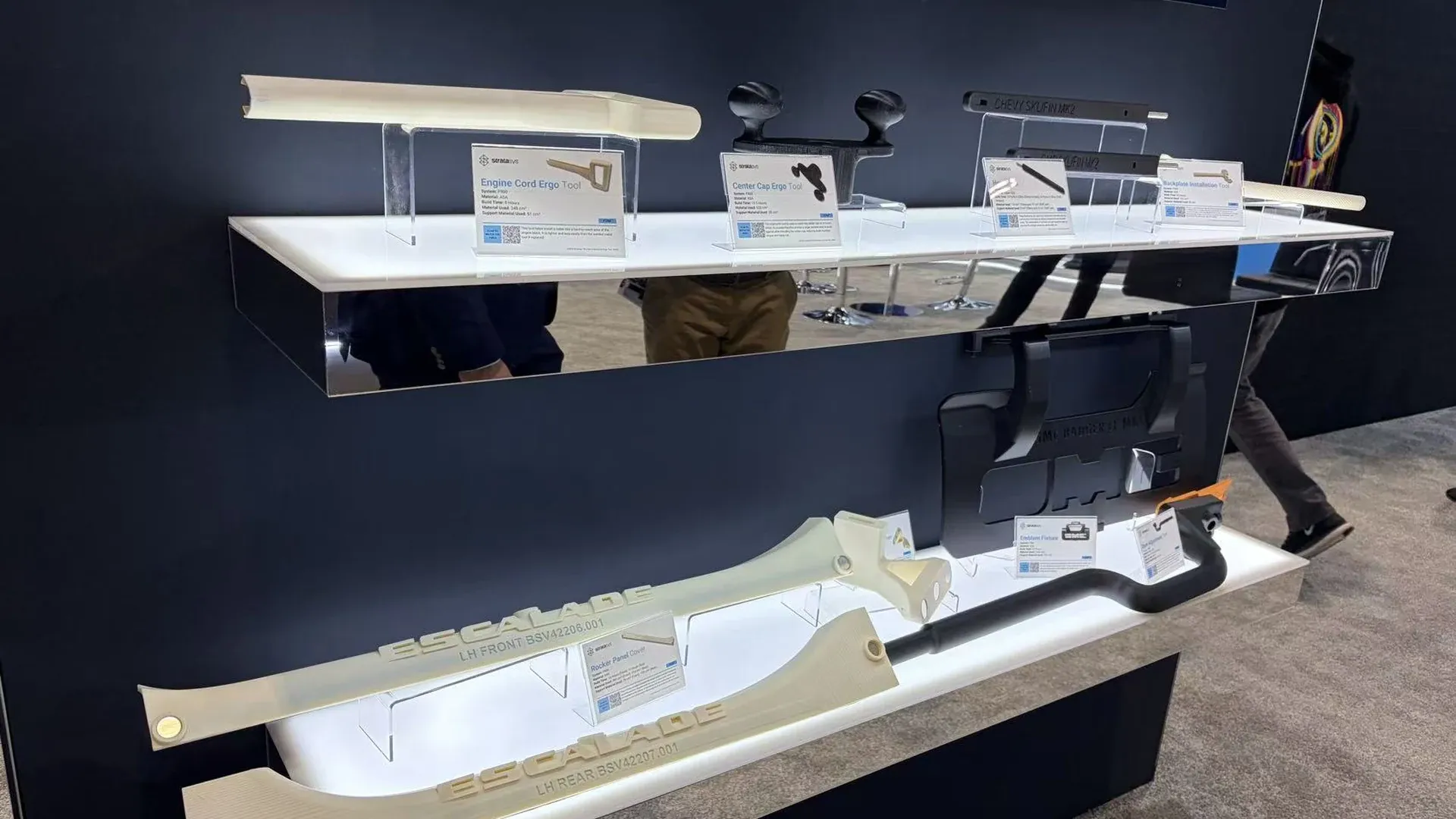
Stratasys at IMTS 2026: GM Scales Additive to 20+ Plants
Stratasys is rolling additive out across 20+ GM plants while Toyota prints robot grippers. Booth build data, the F870, and where the cost case breaks.
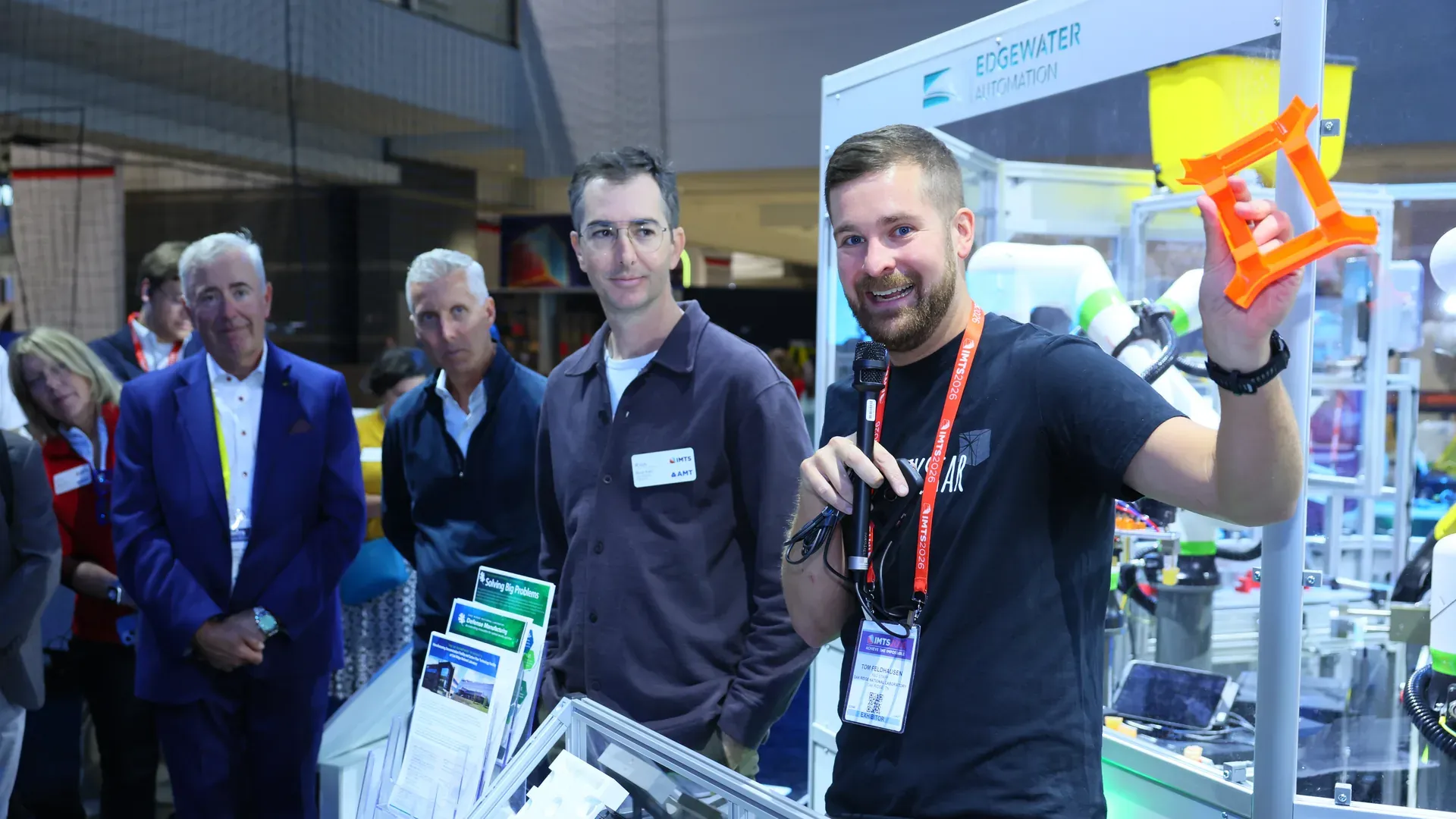
IMTS 2026 Preview: Record Orders and the Automation Story
IMTS 2026 opens in Chicago with 1,788 exhibitors and record H1 machine tool orders. What the USMTO data says about automation, and the booths to see.

ROBOTTODAY WEEKLY September 7 – 11, 2026
This week in robotics: JD.com plans to deploy three million robots across its logistics network, XPeng commissions its IRON humanoid production line, FANUC and Google launch an AI arc-welding agent, and Unitree shares fall 53% from their post-IPO high. September 7–11, 2026.

China’s Dexterous Hand Industry, 2026 Part 3 — The Players
Five vendor archetypes, MIR’s composite top ten, eight company profiles and six field deployments — every firm linked to the RobotToday supplier directory.
