


Woods Hole Oceanographic Institution
US nonprofit oceanographic research institution founded 1930; operates REMUS, Sentry, and Mesobot AUVs plus ROV Jason for deep-sea science.
Contact Woods Hole Oceanographic Institution
WEBSITE
https://www.whoi.eduPHONE
+1 508-289-2252HEADQUARTERS
United States

Company Facts
Founded
1930
Primary Role
Research Institute
Company Size
employees 500-1000
Primary Region
North America
Annual Sales
-
Funding Stage
-
Funding Total
-
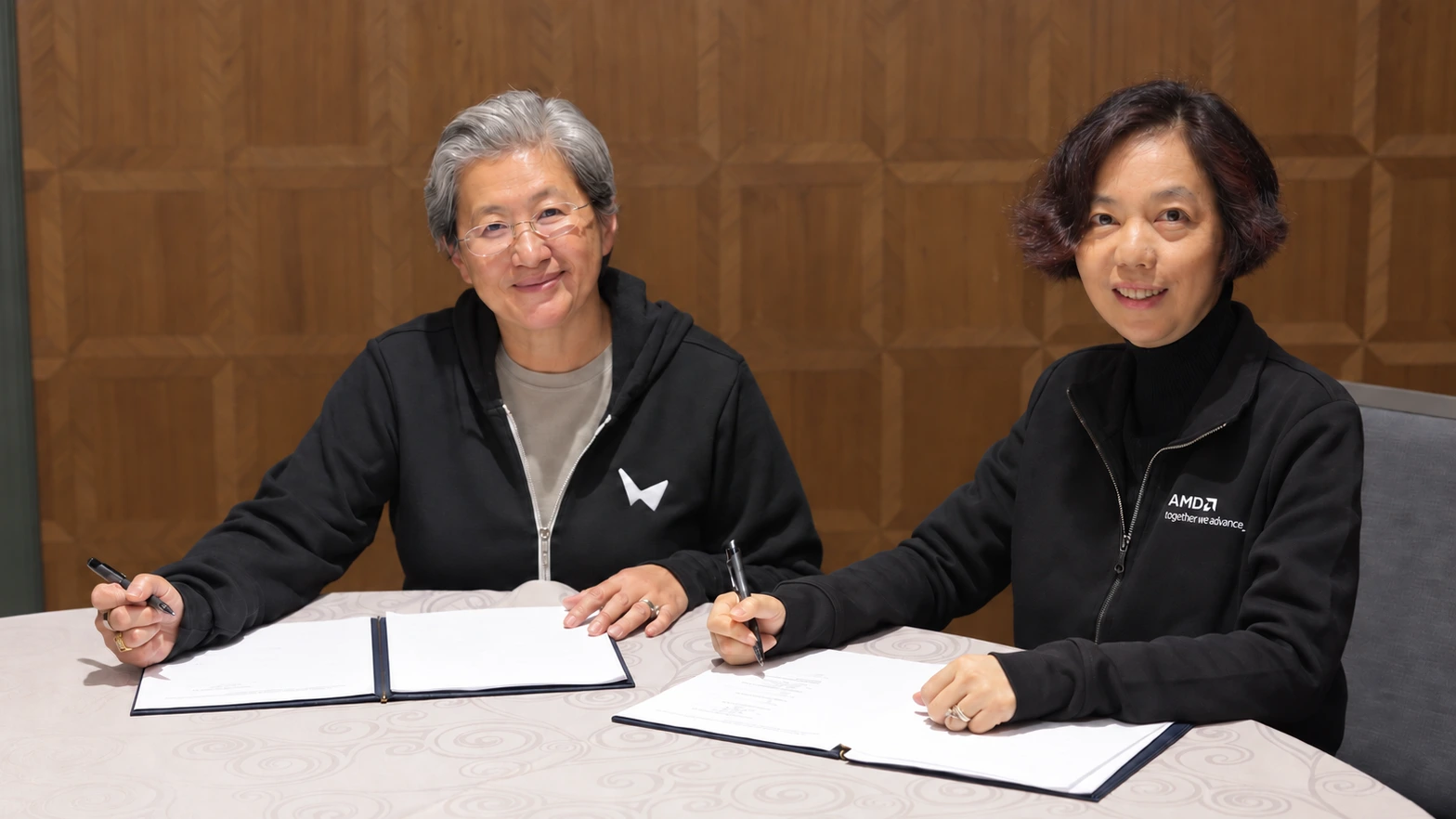
AMD to Acquire World Labs for $8.2 Billion, Enhancing Spatial AI Capabilities
AMD has announced its agreement to acquire World Labs, a spatial-intelligence company led by Fei-Fei Li, in an all-stock deal valued at approximately $8.2 billion. This acquisition, revealed on September 28, is expected to close by the end of 2026, pending regulatory approvals and customary conditions. Following the closure, Li will assume the role of AMD’s executive vice president and chief scientist, reporting directly to CEO Lisa Su. The significance of this acquisition lies in AMD's aim to enhance its capabilities in the physical-AI industry by integrating World Labs' expertise in spatial intelligence. World Labs, founded in 2024, specializes in creating AI that can represent and generate three-dimensional environments, which is crucial for applications in robotics, simulation, and beyond. The research from World Labs is anticipated to inform AMD's hardware, software, and systems as AI workloads continue to expand. Looking ahead, the introduction of World Labs' Atlas model, which combines various forms of data to reconstruct environments, is particularly noteworthy. This model will support future versions of its Marble product and other offerings. The robotics implications are significant, as the ability to simulate environments and interactions can enhance training and testing for robots, although the effectiveness of such training in real-world scenarios remains to be validated.
World Labs AMD
Sharpa Launches Three Innovative Products at IROS to Enhance Robotic Precision
On September 28, Sharpa unveiled three innovative products at the International Conference on Intelligent Robots and Systems in Pittsburgh, USA. These include the D01 integrated tactile perception robot, the W02 ultra-compact and lightweight dexterous hand, and the AE01 high-fidelity exoskeleton tactile data glove. Each product targets specific operational needs, providing a complete hardware closed-loop for complex contact operations in real environments. The significance of these products lies in their ability to address the challenges of speed, power, and precision in robotic tasks. The D01 robot is designed for high-speed and high-precision operations, achieving a maximum end-effector speed of over 10.5 meters per second and a repeat positioning accuracy of 0.2 millimeters. The W02 hand integrates 21 active degrees of freedom in a compact structure, while the AE01 glove captures natural hand movements for precise teleoperation, enhancing the overall operational capability of robots. Looking ahead, the combination of D01, W02, and AE01 represents a complete operational capability closed-loop in embodied intelligence. This approach aligns with trends in the industry, where companies are focusing on integrating execution hardware, perception hardware, and data sources to improve robotic dexterity and responsiveness in various applications, including industrial collaboration and home services. No further timeline was disclosed at the time of publication.
Robotic Manipulation Tactile Sensing Haptic Technology Robotic Hands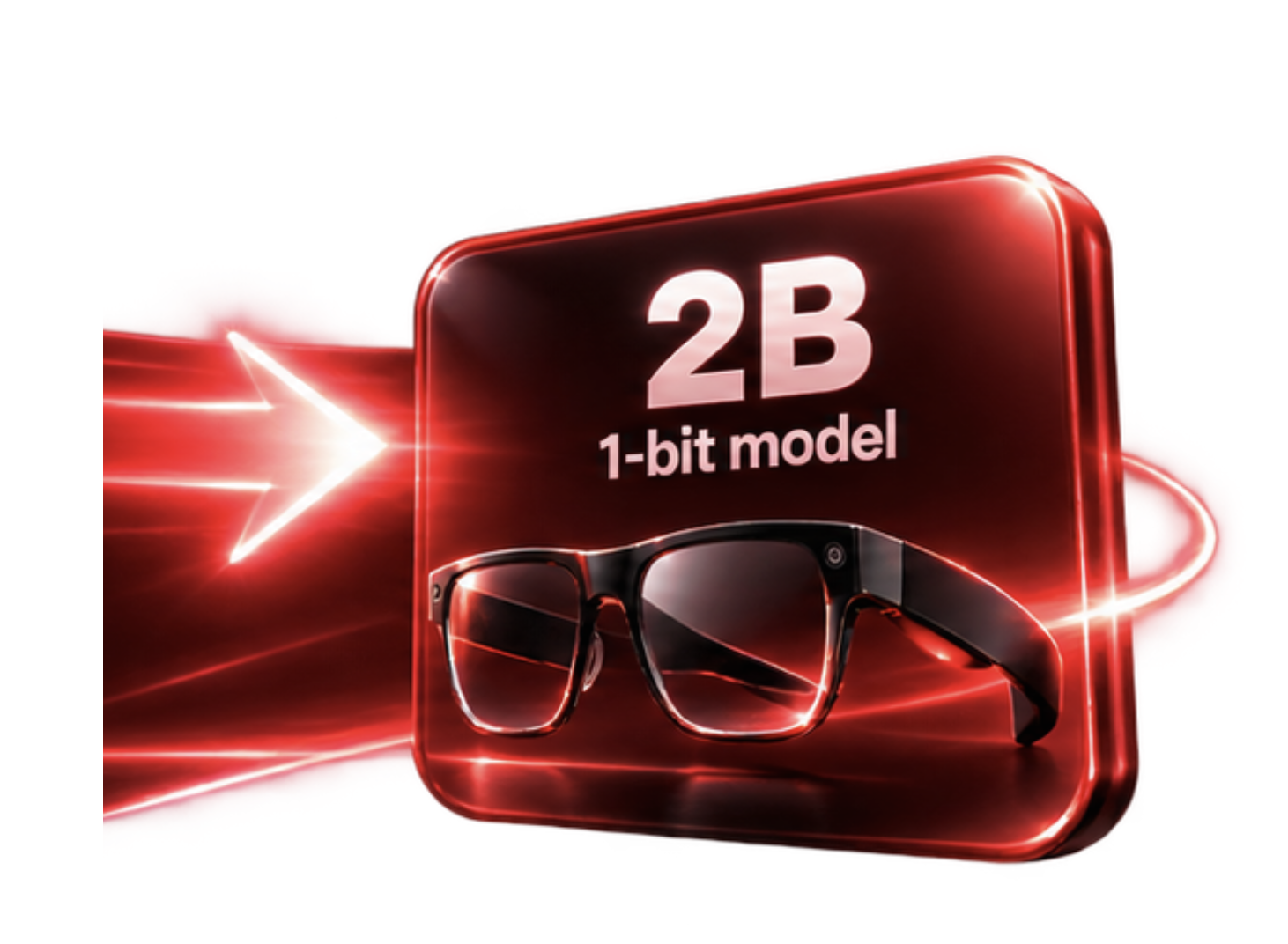
PrismML Unveils 1-Bit Bonsai LLM for Qualcomm-Powered AI Smart Glasses
PrismML, an AI lab founded by Caltech researchers, has introduced its 1-bit Bonsai language model tailored for smart glasses utilizing Qualcomm's Snapdragon chips. This model, showcased at Qualcomm's Snapdragon Summit, is designed to operate locally on AI glasses built on the Snapdragon AR1 Gen 1 platform, featuring a 2-billion-parameter model optimized for vision and language interaction. The significance of this development lies in PrismML's ability to reduce the size of larger models by four times while maintaining performance on standard benchmarks. This approach aims to promote open-weight AI that leverages existing device computing power, positioning itself as a viable alternative to proprietary AI solutions that depend on external computing resources. Looking ahead, while the Qualcomm announcement marks progress towards this vision, no specific smart glasses equipped with PrismML's model have been disclosed yet. The industry will be watching for future product launches that could integrate this innovative technology into consumer devices.
Models & LLMs Physical AI Technology & Infrastructure Wearables 1-Bit Bonsai LLM AI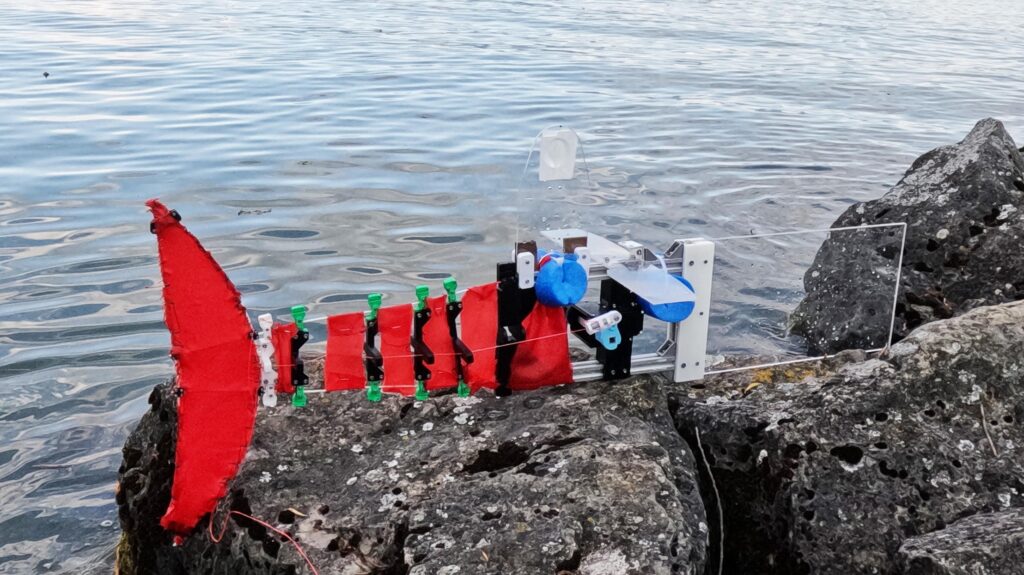
EPFL and NYU Develop Scalable Robotic Fish for Diverse Aquatic Environments
A team from EPFL and NYU has introduced ScaFi, a scalable robotic fish designed to adapt to various aquatic environments. Unlike traditional propeller-driven vehicles, ScaFi mimics the swimming motion of fish, allowing it to navigate shallow waters and dense vegetation without disturbing wildlife. The significance of ScaFi lies in its ability to maintain swimming efficiency across different sizes, which could reduce the engineering effort required for aquatic robots. The research highlights the importance of adaptable tools for environmental monitoring, as ecosystems vary greatly in size and complexity. Future developments will focus on understanding the energy efficiency of ScaFi as it scales, as initial tests revealed challenges with larger models. The team aims to explore whether the energy performance can be improved alongside the swimming capabilities of the robotic fish.

Chen Pu of Yuan Ke Vision Discusses Transitioning Robot Training Data from 2D to 4D with High Precision
On September 23, Chen Pu, Vice President of Product Development at Yuan Ke Vision, highlighted the importance of high-quality real data for robot training during a seminar in Beijing. He emphasized the need to elevate data from 2D to 4D and improve precision from centimeter to sub-millimeter levels to build a robust 4D data foundation for robotics. This transition is crucial as the industry faces challenges such as weak model generalization and inadequate scene adaptability. Chen noted that current training methods often rely on limited 2D video data, which fails to capture the complexities of three-dimensional space and temporal changes, hindering robots' ability to understand and interact with their environments effectively. Looking ahead, Yuan Ke Vision aims to address these challenges by developing new data collection and training paradigms that enhance dimensionality, enrich modalities, and improve precision. Chen pointed out that while video data serves as a foundation, it is often too simplistic, and the lack of tactile data remains a significant gap in the industry. No further timeline was disclosed at the time of publication.
Robot Training Data 4D Data Collection Industrial Robotics Embodied Intelligence Precision Robotics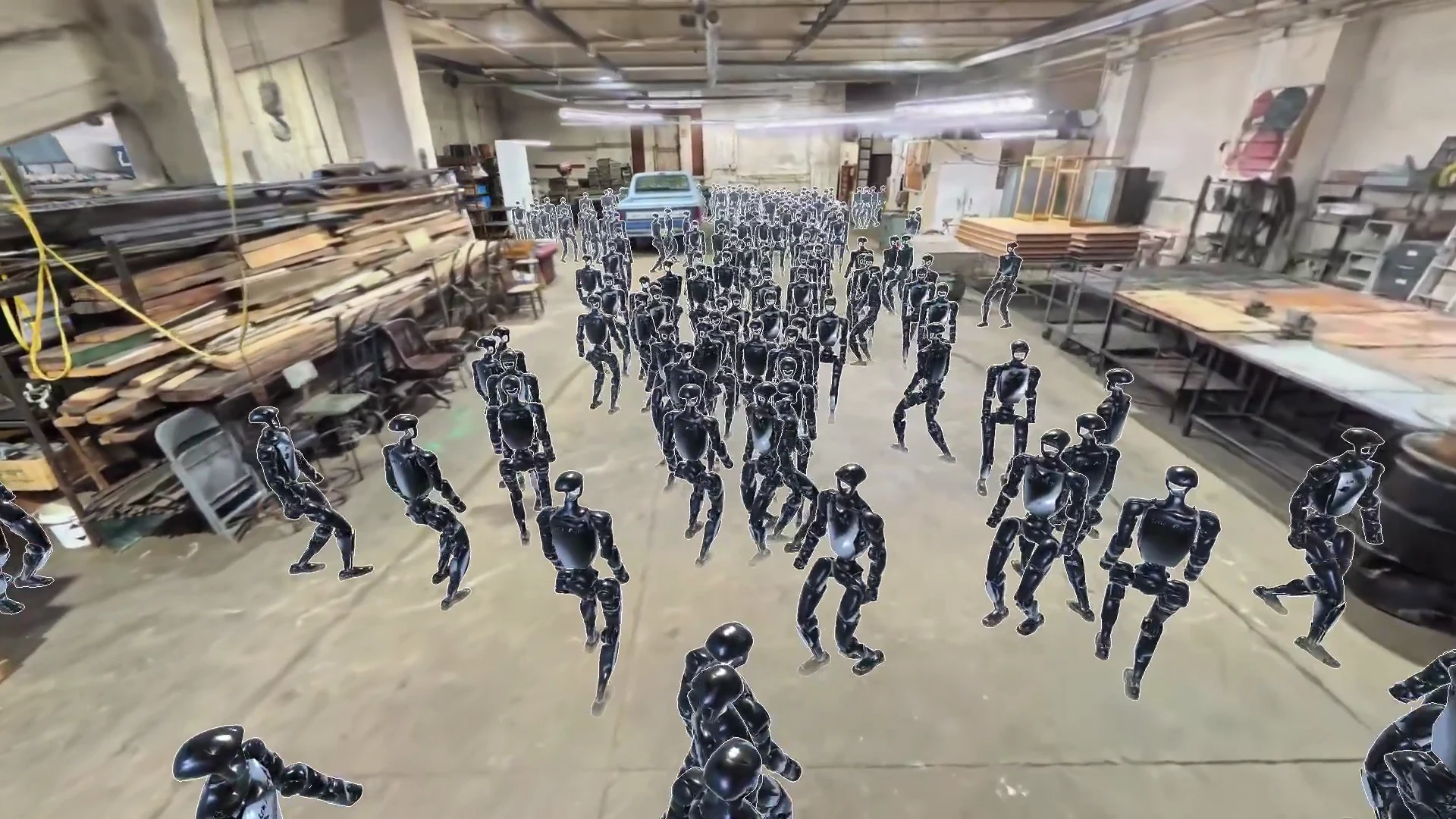
Niantic Spatial Introduces Places Library Featuring 100 Real Environments for Robot Training
Niantic Spatial has launched its Places Library, providing robotics developers with a catalog of 100 real environments for training and evaluation. The assets, available as USDZ files, include two representations for each environment: a Gaussian splat for visual appearance and a mesh for collision detection. This initiative aims to enhance embodied AI training by offering realistic settings that align with gravity and support various simulators, including NVIDIA Isaac Sim. The significance of this launch lies in its potential to improve robot training efficiency. By utilizing real-world environments captured with a standard 360-degree camera, Niantic ensures that robots receive accurate visual and collision data, which is crucial for effective navigation and interaction. The library includes diverse settings, such as medical warehouses and urban streets, allowing developers to test their robots in varied scenarios without the need for extensive in-house data collection. Looking ahead, the Places Library could facilitate more advanced evaluations of robotic behavior in different environments. While the library's impact on performance across the 100 environments remains to be seen, it offers a valuable resource for robotics teams aiming to refine navigation tasks and adapt to changing surroundings. No further timeline was disclosed at the time of publication.
Niantic Spatial Flexion
IMTS 2026 Preview: Record Orders and the Automation Story
IMTS 2026 opens in Chicago with 1,788 exhibitors and record H1 machine tool orders. What the USMTO data says about automation, and the booths to see.
Why Pittsburgh Compressed 12 Events Into One Week | StartUP PGH 2026
Pittsburgh companies raised $2.29 billion last year, but the region's own investors have just $23.2 million left to deploy, less than one average deal. StartUP PGH 2026, opening September 14 with 250-plus robotics exhibitors and 65-plus pitching startups, is built to bring outside investors to town.
Fix One Machine, Improve the Fleet: Phase 4 and the Closed Loop
Repairs that teach nothing repeat forever. Inside RSF Phase 4: the eight-step corrective process, five RCA triggers, and the Known Fault Library loop.

WAIC Review 3/4: What Scientists and Skeptics Really Think About Embodied AI: The Sober Voices at WAIC 2026
UCL and HKUST researchers, plus robotics CEOs, challenged embodied AI hype at WAIC 2026, citing generalization limits and no third-party evaluation standard.
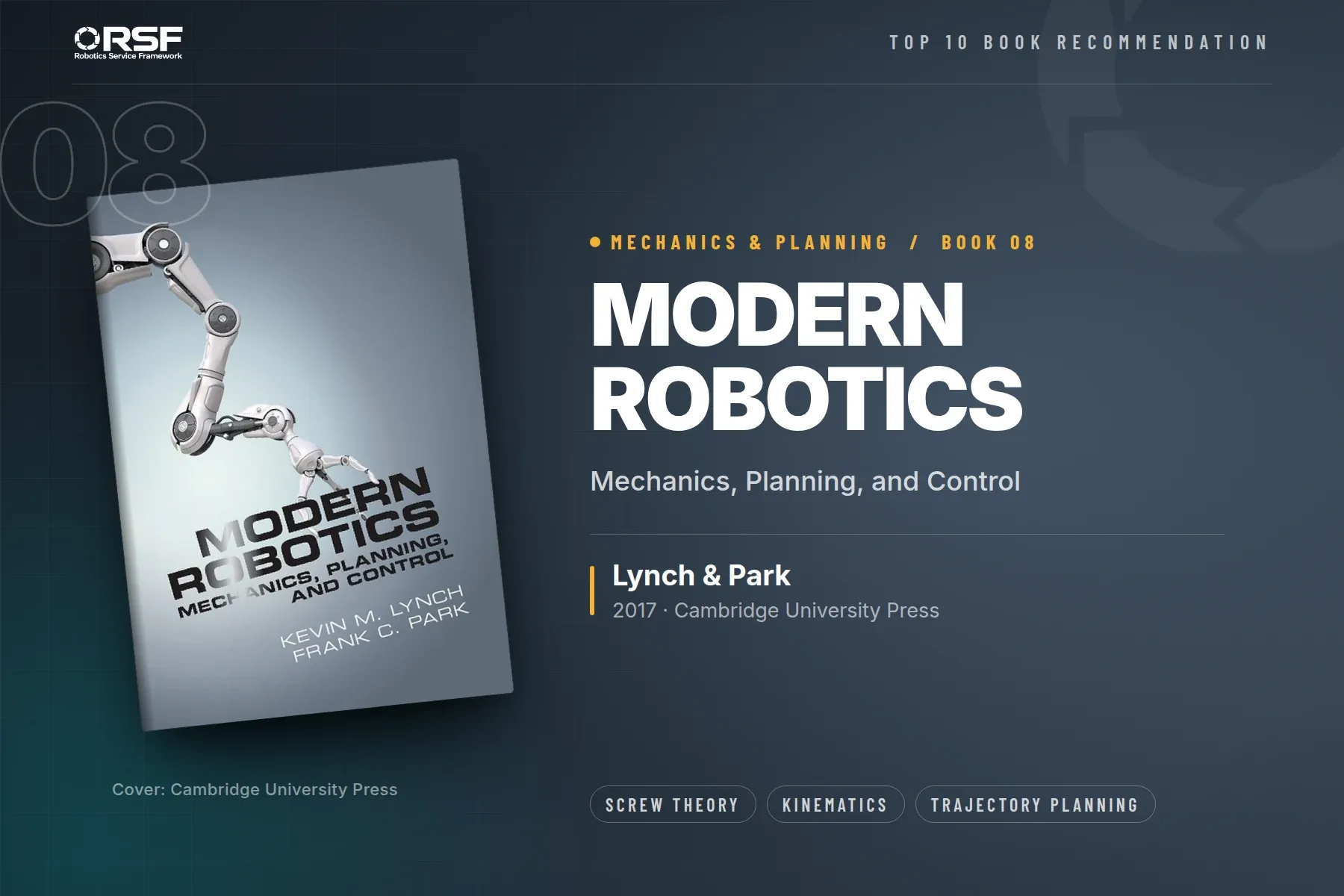
Modern Robotics K. M. Lynch & F. C. Park — RSF Top 10 Robot Education Textbooks · No. 8
The book the field agreed to make free: full preprint PDF, video lectures and open code from the authors. Screw theory and kinematics, taught rigorously.
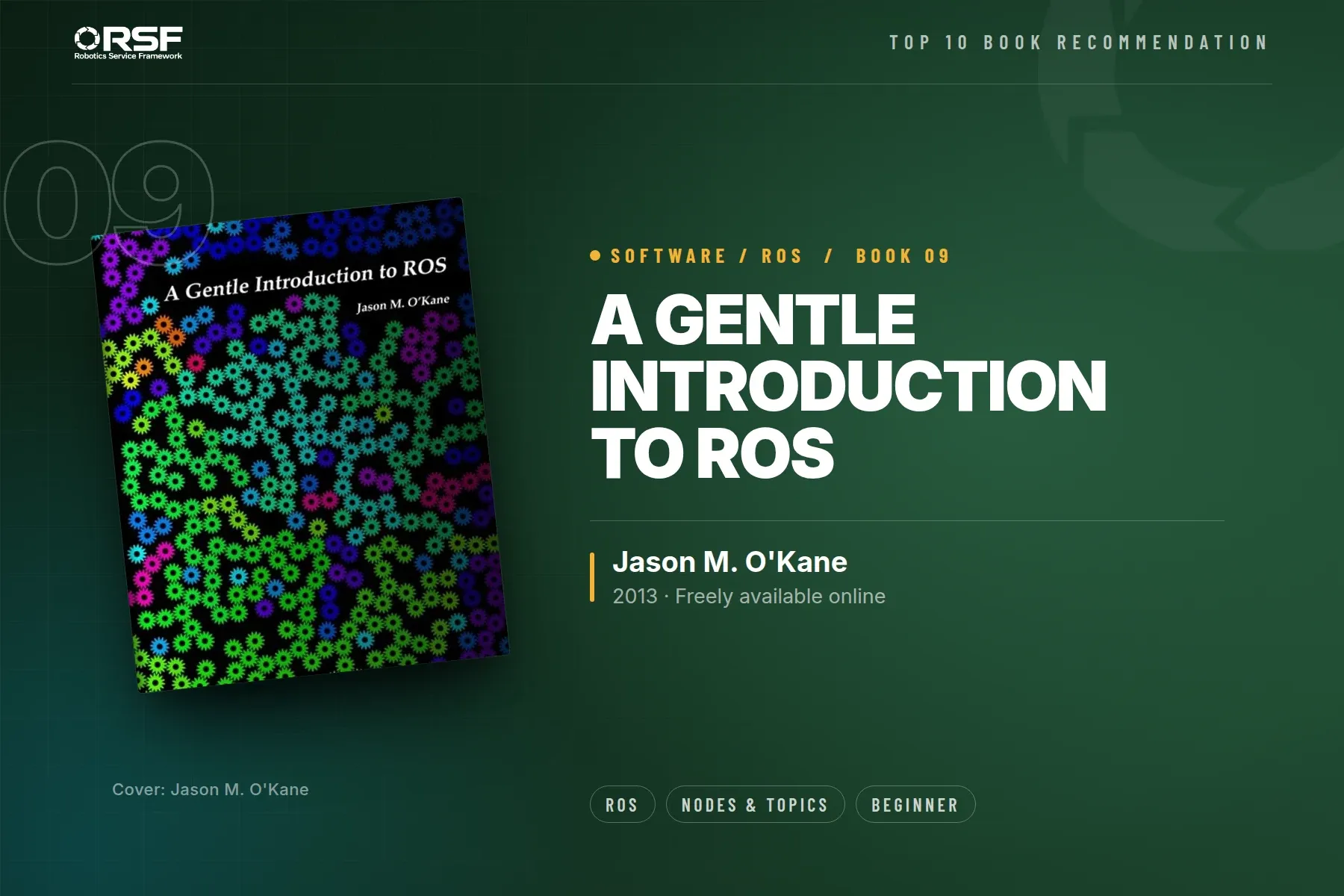
A Gentle Introduction to ROS Jason M. O’Kane — RSF Top 10 Robot Education Textbooks · No. 9
Most ROS material is for people who build systems. O'Kane wrote for people who must understand one: nodes, topics, where to look. Free, 10-12 hours.
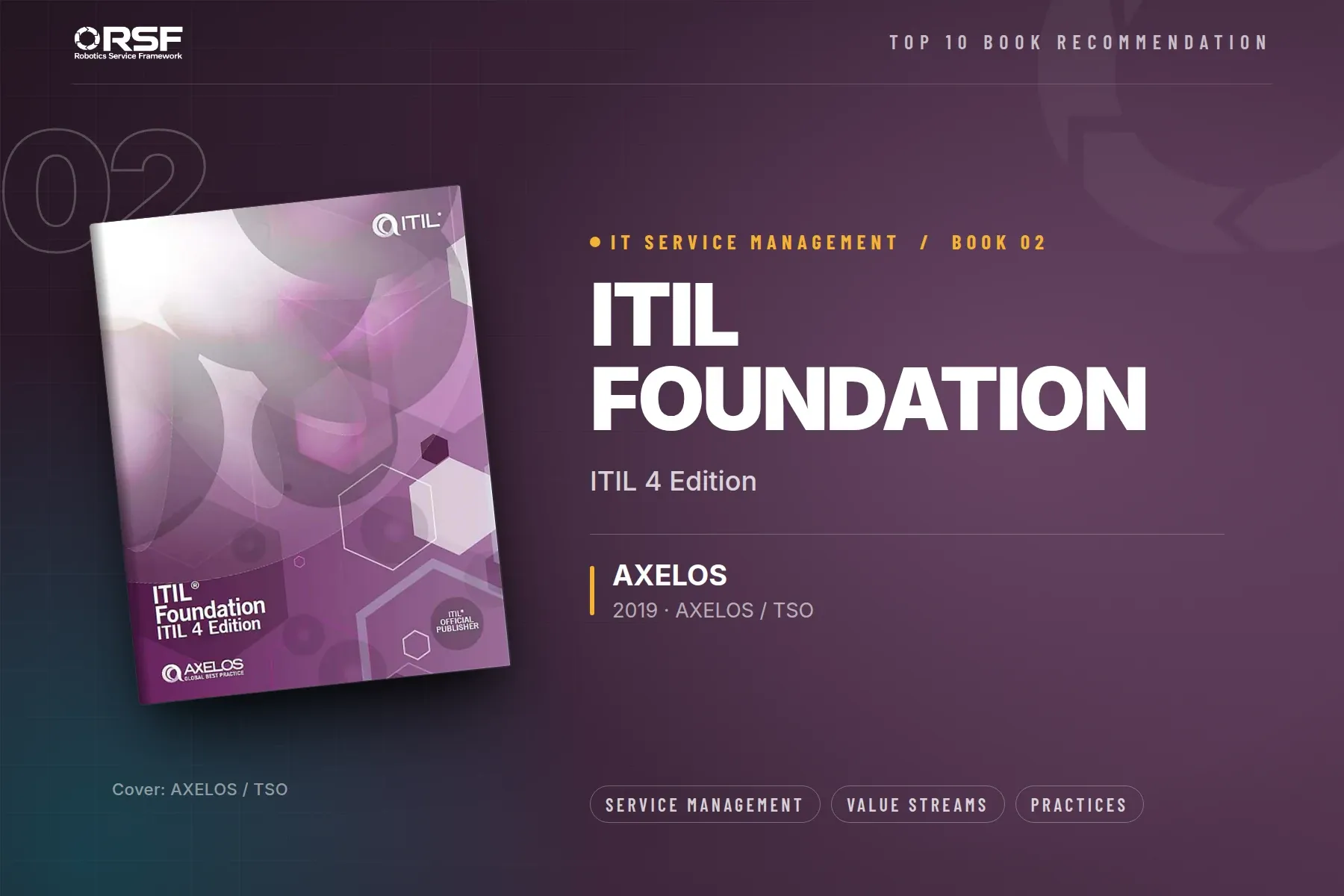
ITIL Foundation: ITIL 4 Edition PeopleCert — RSF Top 10 Robot Education Textbooks · No. 2
ITIL Foundation: ITIL 4 Edition (AXELOS / TSO) — RSF Top 10 Robot Education Textbooks, Book 2: IT Service Management
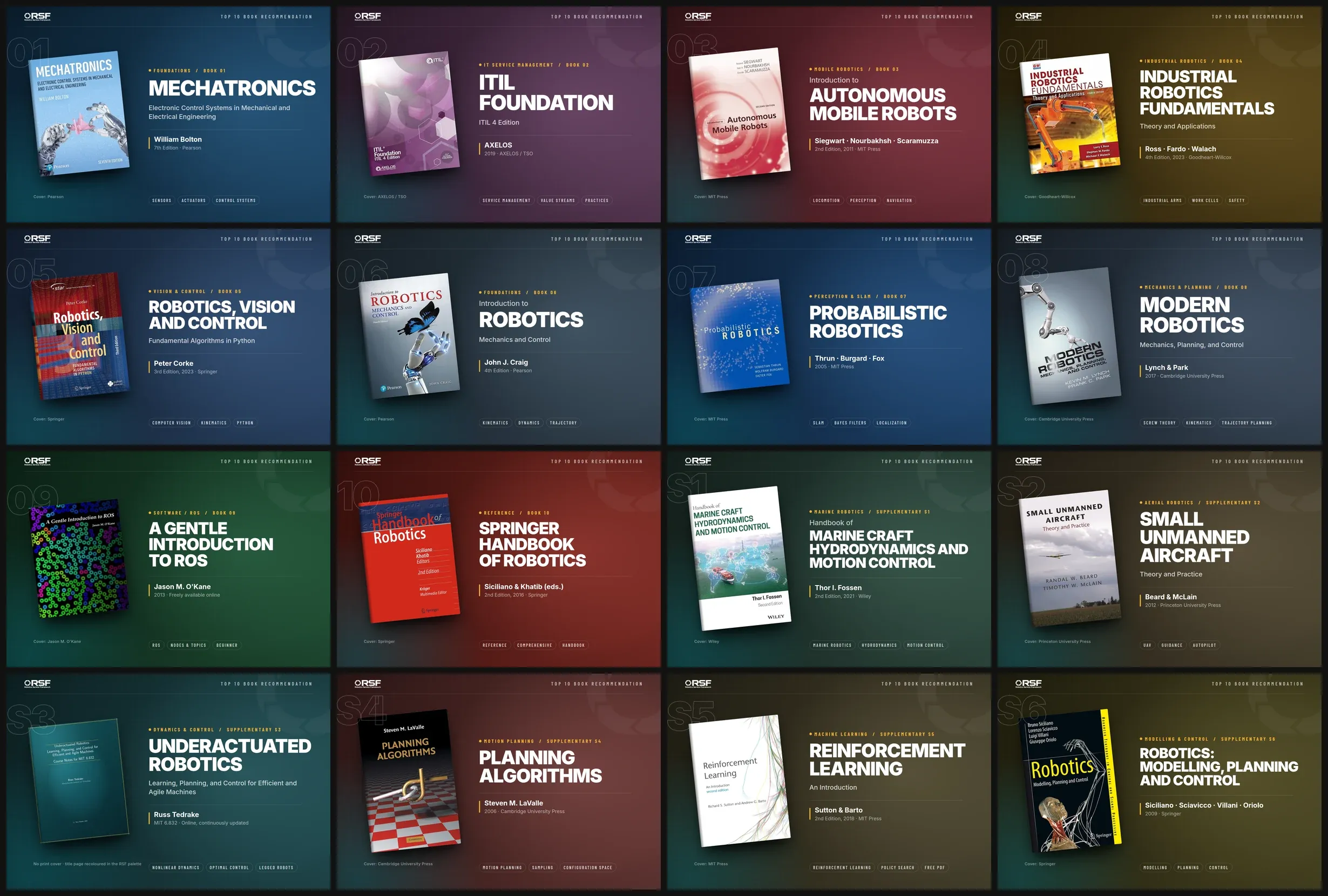
RSF Top 10 Robot Education Textbooks
Robotics has a canon; robot service does not. Ten books scored on adoption, RSF layer coverage, field value and difficulty, plus six specialist picks.
Robot Initial Parameter Record: Why Day One Data Matters
The Initial Parameter Record captures your robot's baseline on installation day — data that can never be recreated. Inside RSF Phase 1: RACI, IPR, load inertia.

E/V Nautilus Embarks on Two Expeditions to Explore Mariana Deep-Sea Regions
The Ocean Exploration Trust's Exploration Vessel (E/V) Nautilus has set sail for two expeditions to explore the deep sea around the Mariana Islands. These expeditions, taking place from June to August 2026, will utilize the vessel's remotely operated vehicle (ROV) and telepresence systems, alongside Woods Hole Oceanographic Institution's autonomous underwater vehicle (AUV) Sentry, to investigate previously unsurveyed areas. These missions are significant as they aim to enhance understanding of abyssal plain habitats and ancient seamounts east of the Mariana Trench, a region known for its tectonic activity and unique geological features. The expeditions are supported by NOAA Ocean Exploration and the Bureau of Ocean Energy Management, highlighting the collaborative effort to advance oceanographic research and fill knowledge gaps in this critical area. Looking ahead, the E/V Nautilus will focus on characterizing deep ocean habitats and biodiversity, as well as geological formations, including marine critical minerals. The outcomes of these expeditions are expected to contribute to both US and international scientific priorities, addressing the need for comprehensive data on the largely unexplored deep-sea environments around the Mariana Islands.
e/v nautilus marianas deep-sea exploration ocean exploration trust
UK CAA Publishes Framework for evtol Operations by 2028
The UK Civil Aviation Authority has published its electric vertical take-off and landing Delivery Model, establishing a regulatory framework that will enable commercial electric aircraft operations in UK airspace by 2028.
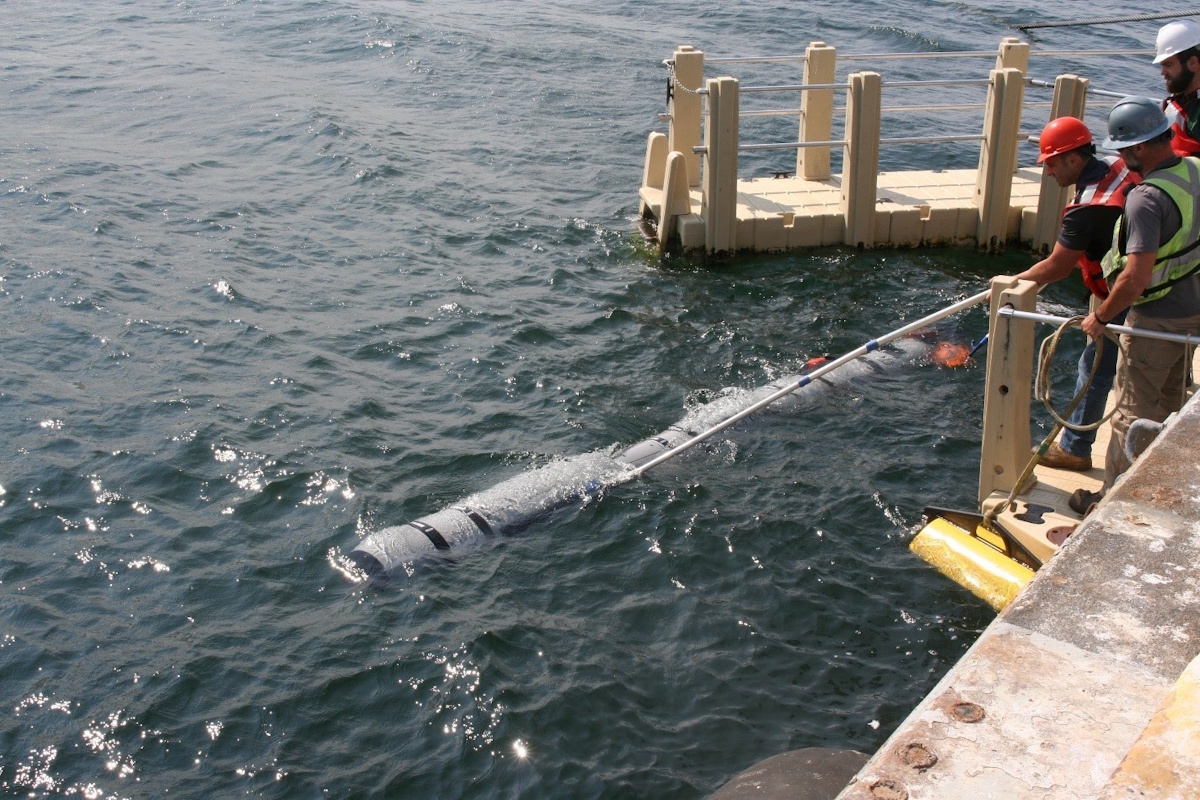
REMUS 620 Conducts First Torpedo Tube Recovery and Swimout
A collaborative effort involving HII, the Woods Hole Oceanographic Institution, and the U.S. Navy’s Naval Undersea Warfare Center Division Newport has achieved a significant milestone in underwater technology. The team successfully recovered a second-generation REMUS 620 unmanned underwater vehicle into a Virginia-class submarine torpedo tube and shutterway test fixture. This operation took place at Seneca Lake, New York, marking a crucial advancement in the integration of advanced underwater systems into military submarines. The successful recovery demonstrates the capabilities of the REMUS 620 and its potential applications for naval operations, enhancing the U.S. Navy's underwater surveillance and reconnaissance capabilities.
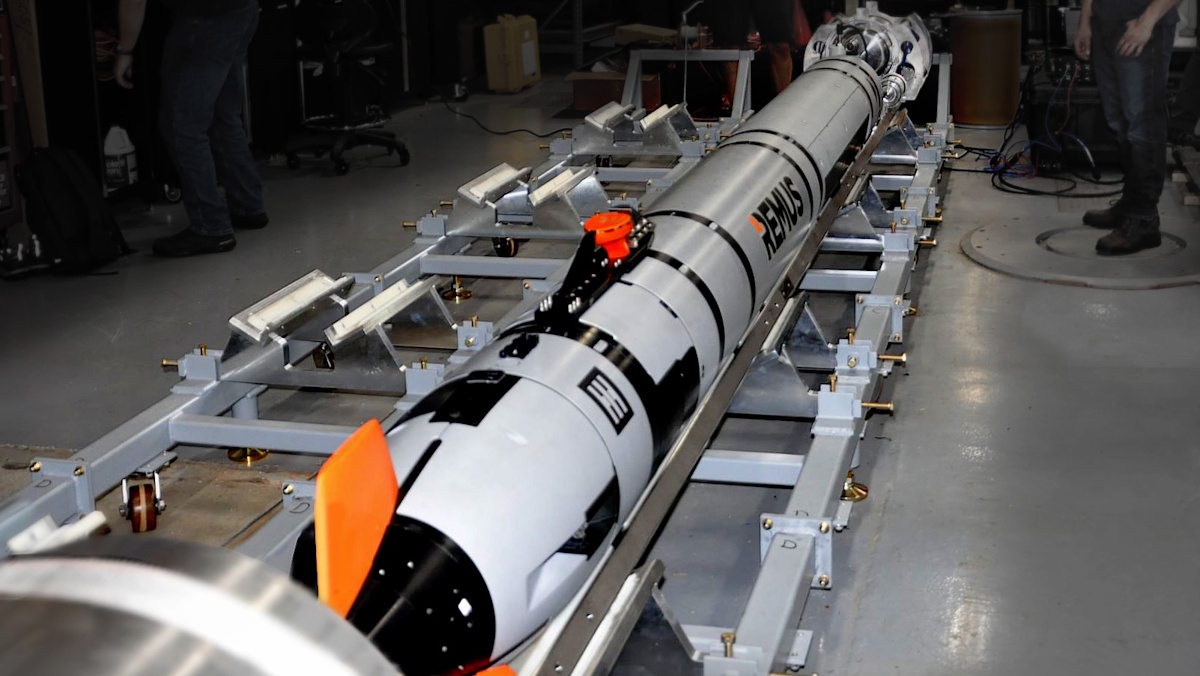
REMUS 620 Validated for Torpedo Tube Deployment
A collaborative effort involving HII, the Woods Hole Oceanographic Institution, and the U.S. Navy's Naval Undersea Warfare Center Division Newport has successfully achieved a significant milestone in enhancing the U.S. Navy Submarine Force's capabilities. This initiative focuses on the launch and recovery of autonomous undersea vehicles from submarine torpedo tubes. The achievement marks a crucial step forward in the integration of advanced technology into naval operations, underscoring the commitment to modernizing the submarine fleet. The project reflects ongoing efforts to improve operational efficiency and expand the tactical options available to the Navy.
hii remus 620 auv torpedo tube deployment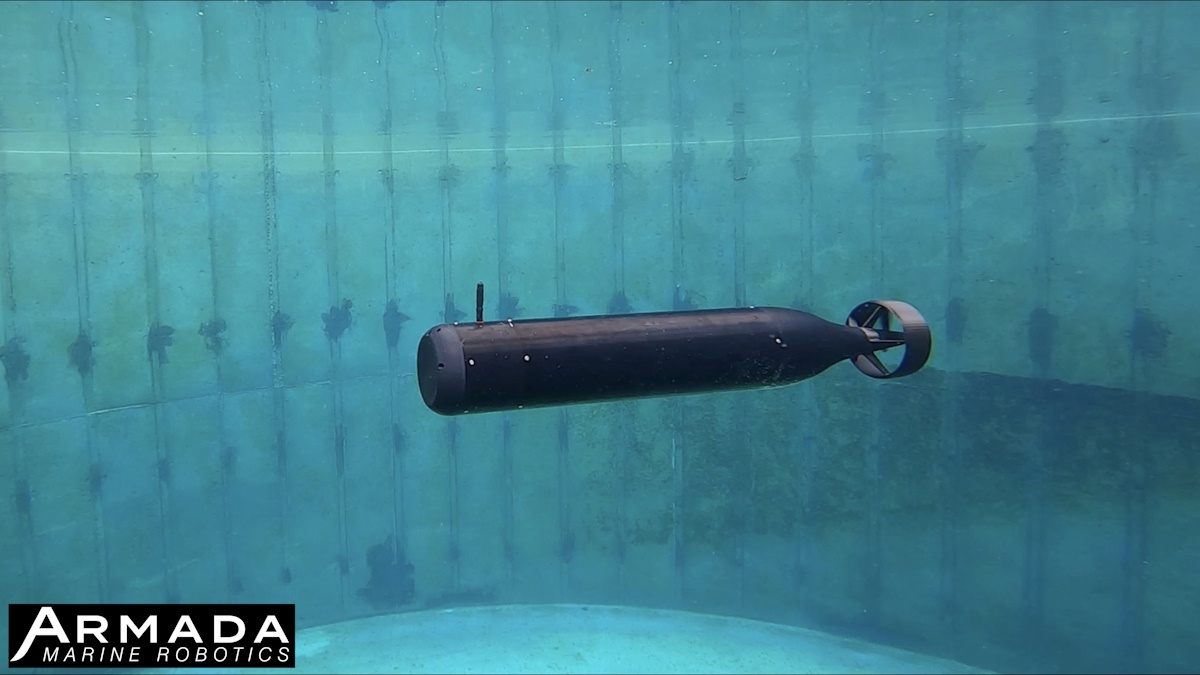
Woods Hole Oceanographic Institution Licenses Ocean Technology to ARMADA Marine Robotics
The Woods Hole Oceanographic Institution (WHOI) has signed two exclusive license agreements with ARMADA Marine Robotics, a spin-off company co-founded by WHOI engineers Robin Littlefield and Jeff Kaeli. This development, announced recently, represents a significant step in WHOI's commitment to promoting innovation and entrepreneurship in the field of ocean technology. The agreements aim to facilitate the commercialization of groundbreaking technologies that could enhance marine exploration and research. By collaborating with ARMADA Marine Robotics, WHOI seeks to leverage its expertise and resources to drive advancements in oceanographic tools and solutions.
woods hole oceanographic institution (whoi) armada marine robotics

