


SnapSpace
South Korean company providing modular high-precision indoor 3D mapping systems attachable to robots, helmets, and portable devices.
Contact SnapSpace
WEBSITE
http://www.snapspace.co.krPHONE
+82 63-270-2467HEADQUARTERS
Korea, Republic of (South)

Company Facts
Founded
-
Primary Role
Component Supplier
Company Size
-
Primary Region
Asia-Pacific
Annual Sales
-
Funding Stage
-
Funding Total
-

Advancements in Robotics Transforming Manufacturing Landscape
Recent reports highlight significant advancements in robotics for manufacturing, moving beyond traditional robot arms to more versatile models. The evolution of industrial automation is driven by improved perception, autonomy, and actuation, alongside a growing demand for robots due to skilled labor shortages across various sectors, including electronics and pharmaceuticals. The International Federation of Robotics indicates that industrial robot installations have doubled in the decade ending in 2024, with countries like South Korea, Singapore, Germany, and Japan leading in robot density. The emergence of collaborative robots and autonomous mobile robots is enabling factories to automate a wider range of tasks, enhancing operational flexibility and efficiency. Looking ahead, the Association for Advancing Automation reported a 6.6% increase in robot order value year over year in the first half of 2026, driven by rising orders in non-automotive sectors. As the industry continues to explore new applications and integration strategies, the challenge remains to ensure a solid return on investment while adapting to the evolving landscape of robotics in manufacturing.
eBooks Industrial Robots Manufacturing News
AMD to Acquire World Labs for $8.2 Billion, Enhancing Spatial AI Capabilities
AMD has announced its agreement to acquire World Labs, a spatial-intelligence company led by Fei-Fei Li, in an all-stock deal valued at approximately $8.2 billion. This acquisition, revealed on September 28, is expected to close by the end of 2026, pending regulatory approvals and customary conditions. Following the closure, Li will assume the role of AMD’s executive vice president and chief scientist, reporting directly to CEO Lisa Su. The significance of this acquisition lies in AMD's aim to enhance its capabilities in the physical-AI industry by integrating World Labs' expertise in spatial intelligence. World Labs, founded in 2024, specializes in creating AI that can represent and generate three-dimensional environments, which is crucial for applications in robotics, simulation, and beyond. The research from World Labs is anticipated to inform AMD's hardware, software, and systems as AI workloads continue to expand. Looking ahead, the introduction of World Labs' Atlas model, which combines various forms of data to reconstruct environments, is particularly noteworthy. This model will support future versions of its Marble product and other offerings. The robotics implications are significant, as the ability to simulate environments and interactions can enhance training and testing for robots, although the effectiveness of such training in real-world scenarios remains to be validated.
World Labs AMD
Leopard Imaging to Showcase Advanced Camera Technologies at VISION 2026 in Stuttgart
Leopard Imaging will present its latest camera technologies and AI perception platforms at VISION 2026, scheduled for October 6-8, 2026, in Stuttgart, Germany. The company will be located at Hall 10, Booth 10G79, where visitors can experience a wide range of live demonstrations related to robotics, industrial automation, and edge AI applications. This event is significant as it highlights Leopard Imaging's commitment to advancing machine vision and autonomous systems. By showcasing their innovative technologies, the company aims to strengthen its position in the competitive landscape of industrial automation and robotics. As VISION 2026 approaches, industry professionals should keep an eye on Leopard Imaging's demonstrations, which may provide insights into the future of AI perception and machine vision technologies. No further timeline was disclosed at the time of publication.

Sharpa Launches Three Innovative Products at IROS to Enhance Robotic Precision
On September 28, Sharpa unveiled three innovative products at the International Conference on Intelligent Robots and Systems in Pittsburgh, USA. These include the D01 integrated tactile perception robot, the W02 ultra-compact and lightweight dexterous hand, and the AE01 high-fidelity exoskeleton tactile data glove. Each product targets specific operational needs, providing a complete hardware closed-loop for complex contact operations in real environments. The significance of these products lies in their ability to address the challenges of speed, power, and precision in robotic tasks. The D01 robot is designed for high-speed and high-precision operations, achieving a maximum end-effector speed of over 10.5 meters per second and a repeat positioning accuracy of 0.2 millimeters. The W02 hand integrates 21 active degrees of freedom in a compact structure, while the AE01 glove captures natural hand movements for precise teleoperation, enhancing the overall operational capability of robots. Looking ahead, the combination of D01, W02, and AE01 represents a complete operational capability closed-loop in embodied intelligence. This approach aligns with trends in the industry, where companies are focusing on integrating execution hardware, perception hardware, and data sources to improve robotic dexterity and responsiveness in various applications, including industrial collaboration and home services. No further timeline was disclosed at the time of publication.
Robotic Manipulation Tactile Sensing Haptic Technology Robotic Hands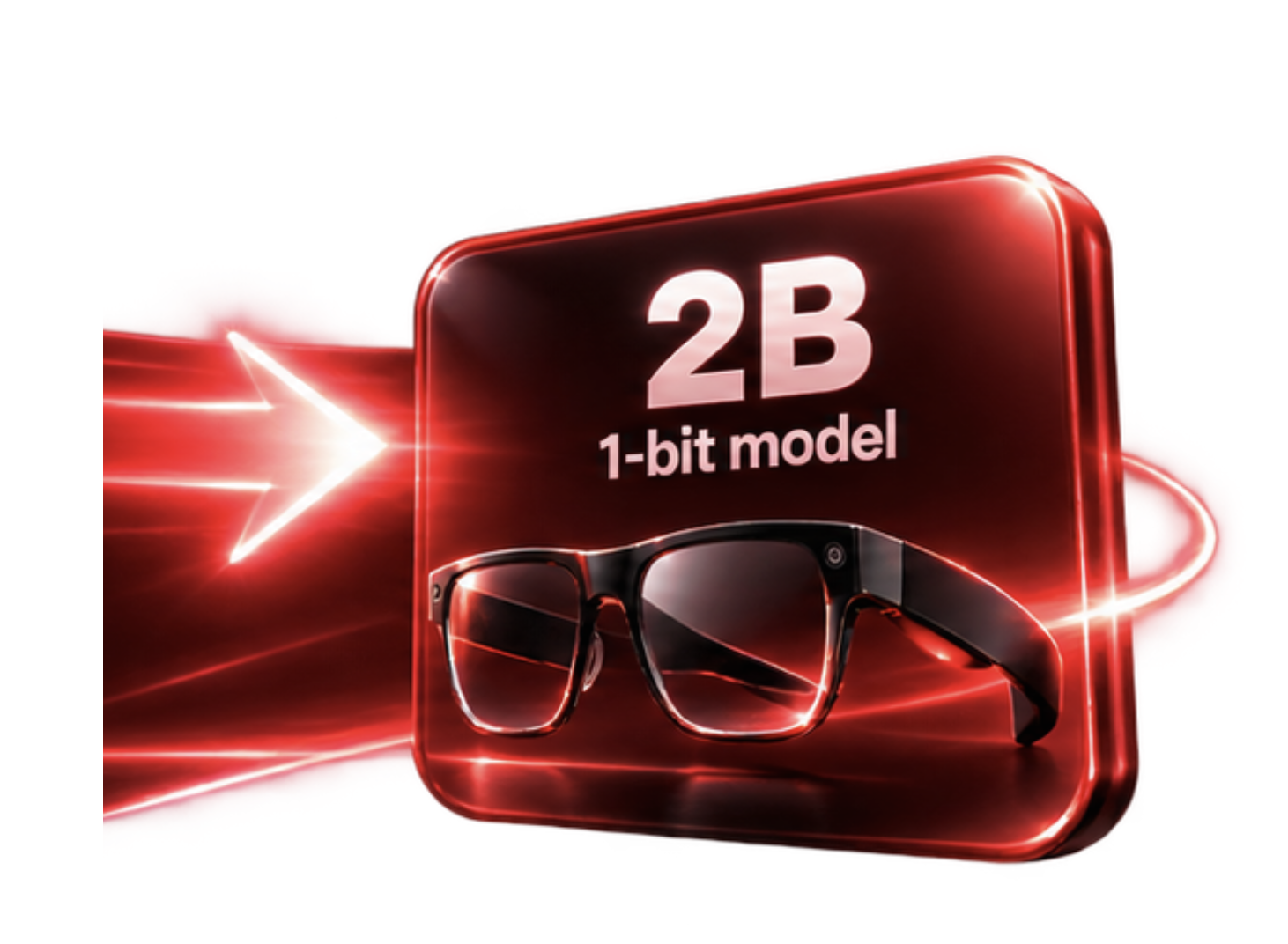
PrismML Unveils 1-Bit Bonsai LLM for Qualcomm-Powered AI Smart Glasses
PrismML, an AI lab founded by Caltech researchers, has introduced its 1-bit Bonsai language model tailored for smart glasses utilizing Qualcomm's Snapdragon chips. This model, showcased at Qualcomm's Snapdragon Summit, is designed to operate locally on AI glasses built on the Snapdragon AR1 Gen 1 platform, featuring a 2-billion-parameter model optimized for vision and language interaction. The significance of this development lies in PrismML's ability to reduce the size of larger models by four times while maintaining performance on standard benchmarks. This approach aims to promote open-weight AI that leverages existing device computing power, positioning itself as a viable alternative to proprietary AI solutions that depend on external computing resources. Looking ahead, while the Qualcomm announcement marks progress towards this vision, no specific smart glasses equipped with PrismML's model have been disclosed yet. The industry will be watching for future product launches that could integrate this innovative technology into consumer devices.
Models & LLMs Physical AI Technology & Infrastructure Wearables 1-Bit Bonsai LLM AI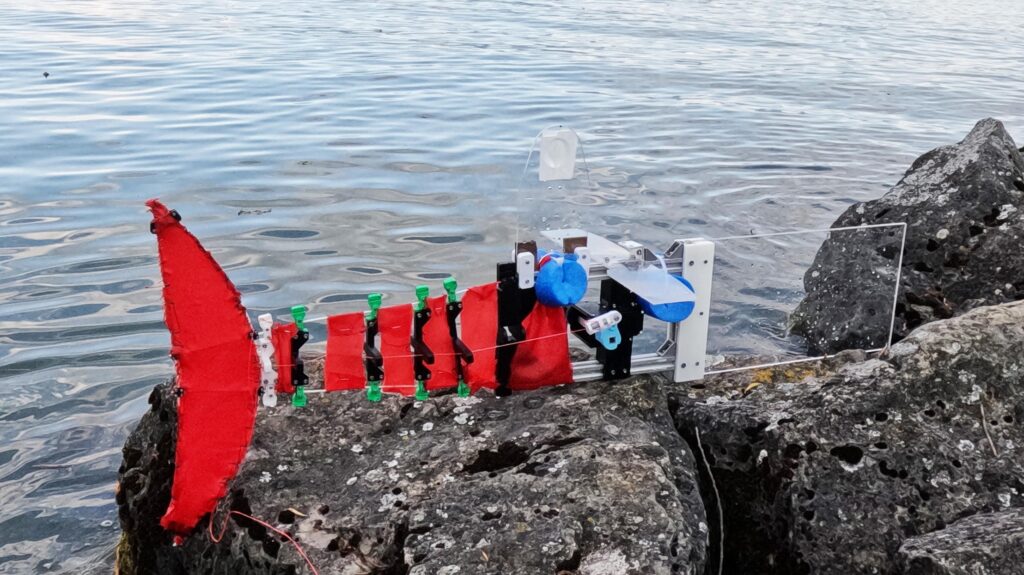
EPFL and NYU Develop Scalable Robotic Fish for Diverse Aquatic Environments
A team from EPFL and NYU has introduced ScaFi, a scalable robotic fish designed to adapt to various aquatic environments. Unlike traditional propeller-driven vehicles, ScaFi mimics the swimming motion of fish, allowing it to navigate shallow waters and dense vegetation without disturbing wildlife. The significance of ScaFi lies in its ability to maintain swimming efficiency across different sizes, which could reduce the engineering effort required for aquatic robots. The research highlights the importance of adaptable tools for environmental monitoring, as ecosystems vary greatly in size and complexity. Future developments will focus on understanding the energy efficiency of ScaFi as it scales, as initial tests revealed challenges with larger models. The team aims to explore whether the energy performance can be improved alongside the swimming capabilities of the robotic fish.

Chen Pu of Yuan Ke Vision Discusses Transitioning Robot Training Data from 2D to 4D with High Precision
On September 23, Chen Pu, Vice President of Product Development at Yuan Ke Vision, highlighted the importance of high-quality real data for robot training during a seminar in Beijing. He emphasized the need to elevate data from 2D to 4D and improve precision from centimeter to sub-millimeter levels to build a robust 4D data foundation for robotics. This transition is crucial as the industry faces challenges such as weak model generalization and inadequate scene adaptability. Chen noted that current training methods often rely on limited 2D video data, which fails to capture the complexities of three-dimensional space and temporal changes, hindering robots' ability to understand and interact with their environments effectively. Looking ahead, Yuan Ke Vision aims to address these challenges by developing new data collection and training paradigms that enhance dimensionality, enrich modalities, and improve precision. Chen pointed out that while video data serves as a foundation, it is often too simplistic, and the lack of tactile data remains a significant gap in the industry. No further timeline was disclosed at the time of publication.
Robot Training Data 4D Data Collection Industrial Robotics Embodied Intelligence Precision Robotics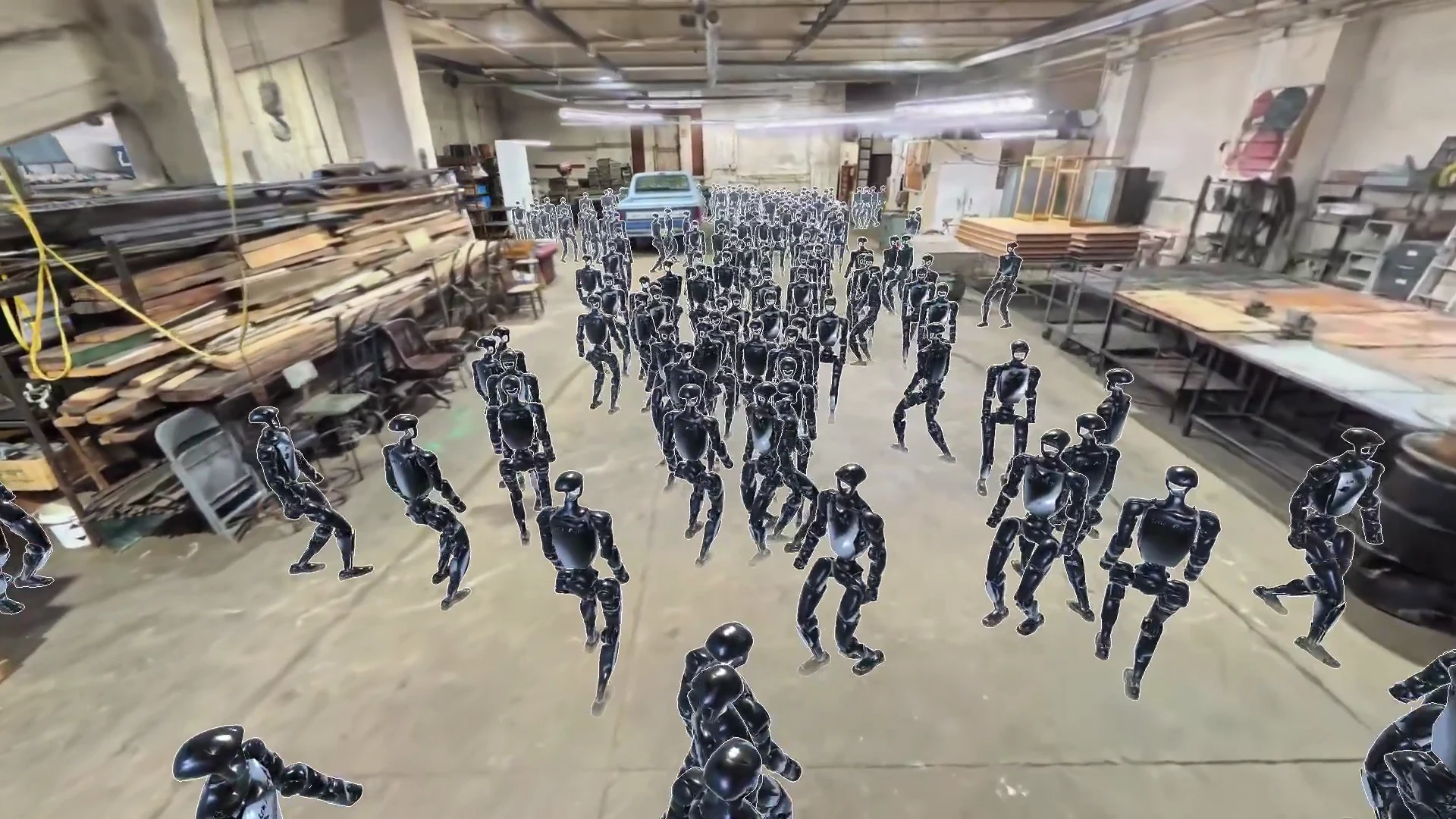
Niantic Spatial Introduces Places Library Featuring 100 Real Environments for Robot Training
Niantic Spatial has launched its Places Library, providing robotics developers with a catalog of 100 real environments for training and evaluation. The assets, available as USDZ files, include two representations for each environment: a Gaussian splat for visual appearance and a mesh for collision detection. This initiative aims to enhance embodied AI training by offering realistic settings that align with gravity and support various simulators, including NVIDIA Isaac Sim. The significance of this launch lies in its potential to improve robot training efficiency. By utilizing real-world environments captured with a standard 360-degree camera, Niantic ensures that robots receive accurate visual and collision data, which is crucial for effective navigation and interaction. The library includes diverse settings, such as medical warehouses and urban streets, allowing developers to test their robots in varied scenarios without the need for extensive in-house data collection. Looking ahead, the Places Library could facilitate more advanced evaluations of robotic behavior in different environments. While the library's impact on performance across the 100 environments remains to be seen, it offers a valuable resource for robotics teams aiming to refine navigation tasks and adapt to changing surroundings. No further timeline was disclosed at the time of publication.
Niantic Spatial Flexion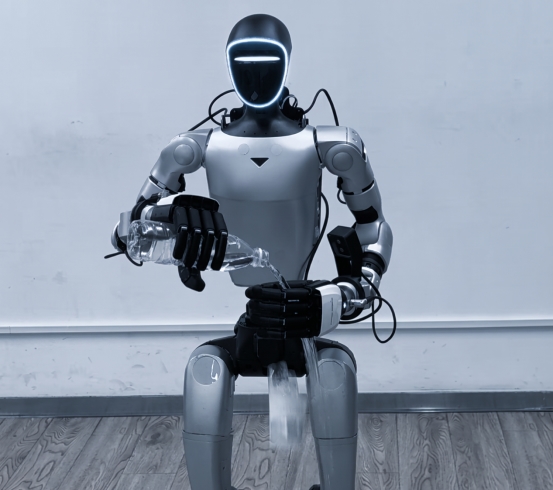
Memo Unveils Physical-WAM to Enhance Embodied Intelligence at Global Digital Trade Expo
At the Global Digital Trade Expo on September 24, Memo introduced the Physical-WAM, the world's first physical-world action model equipped with physical perception capabilities. This innovation aims to address the challenges faced by robots in understanding and interacting with the physical world, which has hindered the widespread adoption of embodied intelligence. The significance of this development lies in its potential to bridge the data gap that currently limits robots' physical interactions. Memo's CEO, Li Minghao, highlighted that the lack of foundational physical understanding in robots stems from insufficient real-world interaction data and inadequate evaluation metrics. The Physical-WAM model is designed to enhance robots' predictive capabilities and real-time adjustments in physical tasks. Looking ahead, the demand for embodied intelligence is surging, with significant investments in the sector. However, challenges remain in aligning order fulfillment with funding growth. As the industry evolves, the effectiveness of solutions like Physical-WAM will be crucial in overcoming existing barriers to practical implementation.
Embodied Intelligence Physical AI Robotics Machine Learning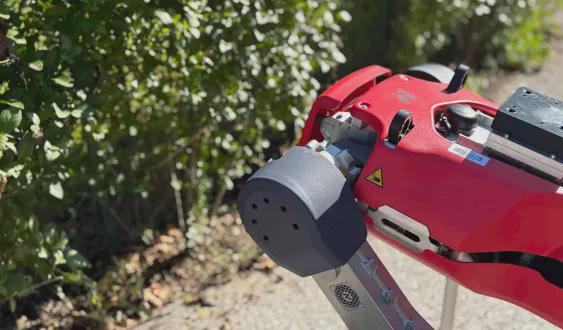
Robot Dogs Use Insect-Inspired Movements to See Through Obstructions in 17 Milliseconds
A collaborative team from Johannes Kepler University Linz, Free University of Bozen-Bolzano, University of Trento, and University of Sussex has developed a method for robot dogs to mimic insect movements to enhance their visual perception. By performing rhythmic lateral movements, akin to the 'peering' behavior observed in insects like locusts, these robots can effectively see through obstructions such as foliage and debris. This innovation is significant as it addresses a common challenge faced by exploration robots in environments cluttered with obstacles that hinder visual sensors. The research establishes a connection between the peering motion and synthetic aperture sensing, allowing the robots to create a virtual aperture that enhances background signals while blurring out obstructions. Future developments to watch include the potential applications of this technology in various environments, including forests and disaster sites. The research indicates that the synthetic aperture technique is most effective at around 50% obstruction density, suggesting a promising avenue for improving robotic vision in complex terrains. No further timeline was disclosed at the time of publication.
Robotics Computer Vision AI Obstacle Detection
RobotToday Weekly September 21 – 25, 2026
Cognex buys RealSense, Qualcomm acquires PickNik, the IFR counts 5 million factory robots, AGIBOT deploys 300 robots at Chimelong, and Tekever raises $580 million.

China’s Dexterous Hand Industry, 2026 Part 1 — The Demand Picture
MIR Databank puts China dexterous hand shipments above 30,000 units in 2026, yet only 3.5% of 2025 demand came from factory production. Part 1 of 3.

China’s Dexterous Hand Industry, 2026 Part 2 — The Technology
Linkage, tendon, direct drive or hybrid — and why hardware is converging while the DL1–DL5 manipulation scale decides who wins. Part 2 of 3.
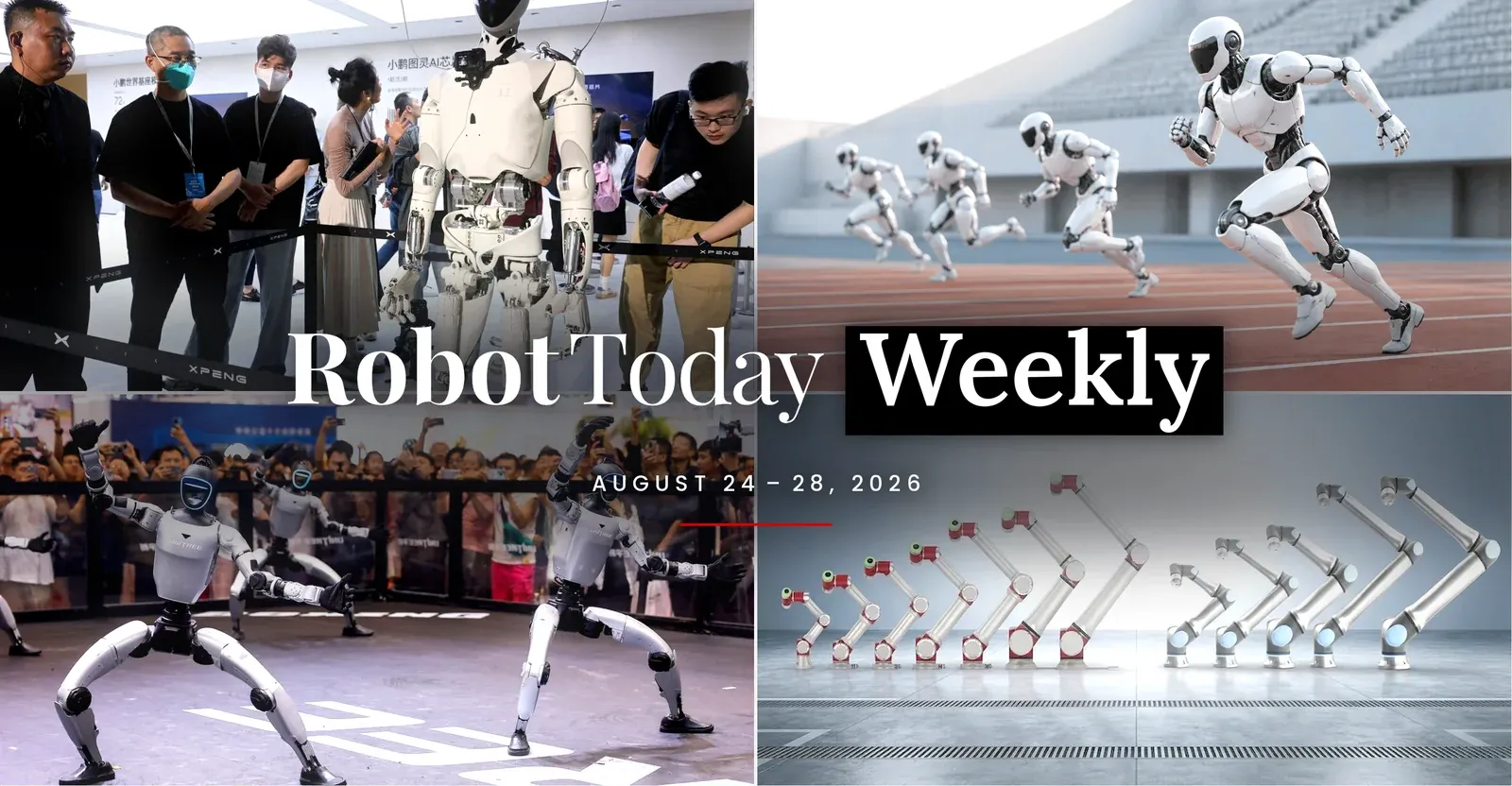
ROBOTTODAY WEEKLY BRIEFING August 24 – 28, 2026
This week in robotics: XPeng's Dogotix raises over $900 million at a $6.3 billion valuation, Unitree's post-IPO slump revives bubble talk, Beijing's World Humanoid Robot Games close with a shift to real-world tasks, and Teradyne sues JAKA at Europe's Unified Patent Court. August 24–28, 2026.
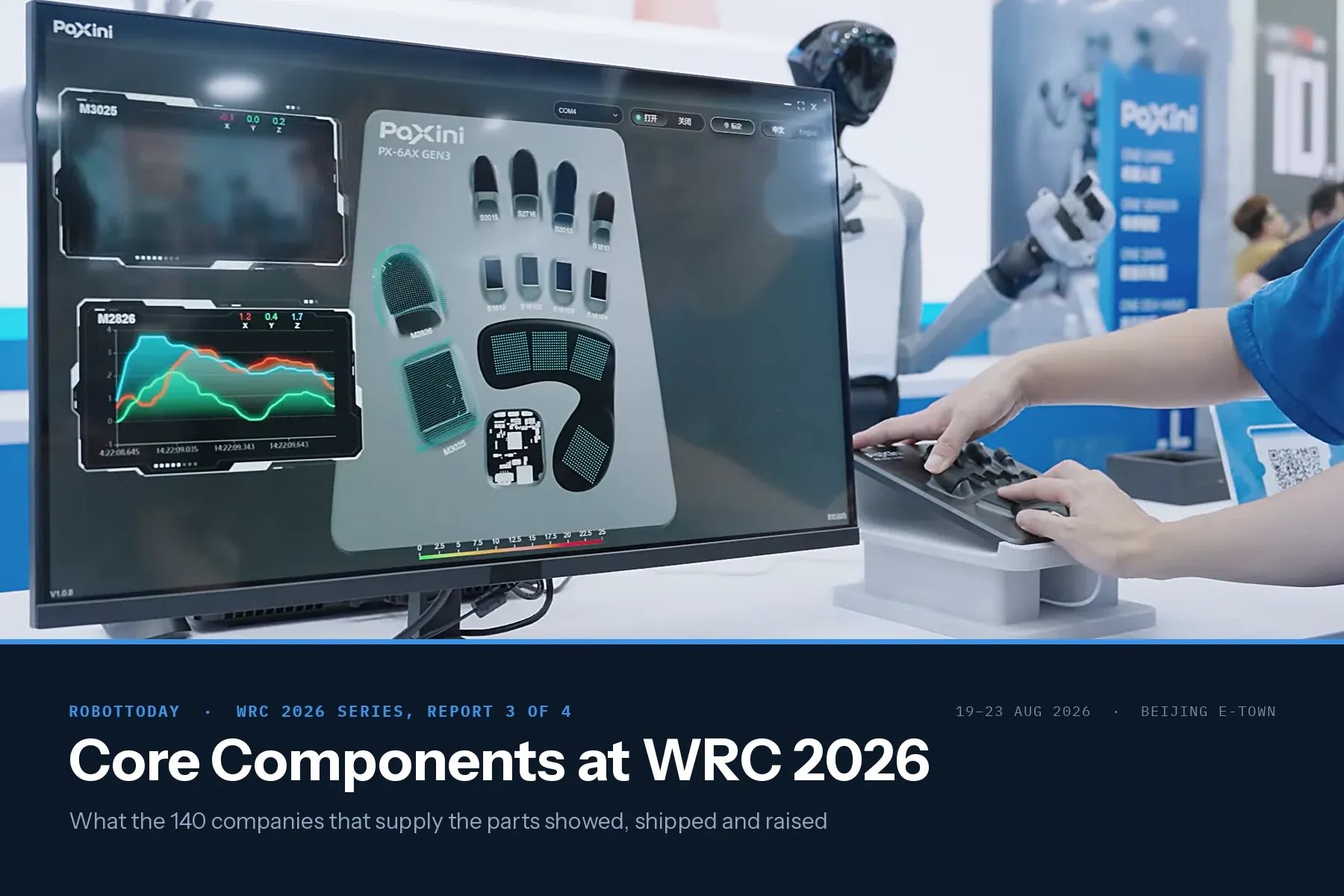
WRC 2026 Core Components: 137 Robot Parts Suppliers
The third report in the WRC 2026 series. Report 1 mapped all 248 exhibitors by category and Report 2 covered the 139 that build finished robots. This one covers the 137 that build what goes inside them.
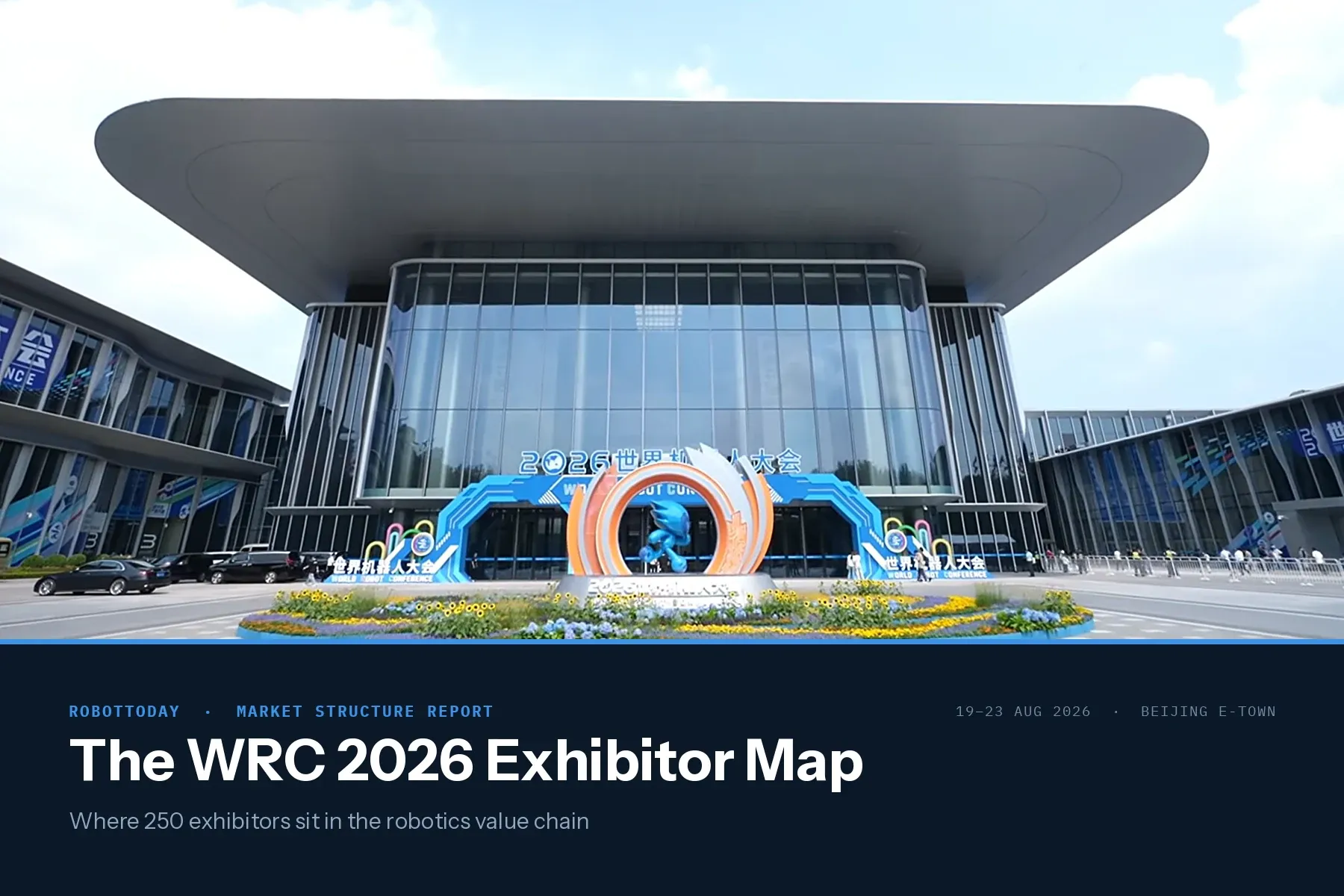
WRC 2026 Exhibitor Map: 248 Robotics Companies Mapped
We classified 248 WRC 2026 exhibitors with the RobotToday taxonomy. Motion & Actuation leads at 75 companies, Humanoid at 72, and compute stays thin at 12. (Modified 2026-08-27)

Handbook of Marine Craft Hydrodynamics and Motion Control Thor I. Fossen — RSF Specialist Shelf · Book S1 of 6
Added mass, wave loading, DVL navigation: the marine GNC reference for USV, ROV and AUV service engineers. The hardest book on the RSF list, 5/5.

Small Unmanned Aircraft: Theory and Practice Beard & McLain — RSF Specialist Shelf · Book S2 of 6
Beard & McLain derive the fixed-wing autopilot the RSF Top 10 never does: successive loop closure on roll, pitch, altitude and airspeed. 4/5.

Reinforcement Learning: An Introduction Richard S. Sutton & Andrew G. Barto — RSF Specialist Shelf · Book S5 of 6
“It's the AI” will not satisfy an OEM support call. Sutton & Barto turn that into something a service engineer can investigate. Free PDF, Part I 4/5.

Planning Algorithms Steven M. LaValle — RSF Specialist Shelf · Book S4 of 6
The reference that treats planning as a subject in its own right: configuration space, sampling-based methods, RRT. Free online, dual difficulty 4/5-2/5.


