Opto GmbH
OPTICS - IMAGING - AUTOMATION Opto manufacturers unique Compact embedded Imaging Modules with on board Camera/Lens/Light/Intelligence as one unit with one wire, ´plug and play` to machine builders and OEMs for industrial and biomedical applications. Opto reduces all solutions to their needs in Size, Weight, Price to add maximized Value for the Photonic and Machine Vision Markets.
Contact Opto GmbH
WEBSITE
http://www.opto.dePHONE
+4 (989) 898-0550HEADQUARTERS
Germany

Company Facts
Founded
-
Primary Role
-
Company Size
-
Primary Region
-
Annual Sales
-
Funding Stage
-
Funding Total
-
Keywords
New Convergent Binocular Stereo Algorithm Enhances Humanoid Robots' Depth Perception
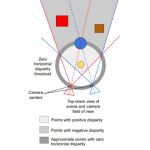
Researchers from York University in Toronto have developed a new vision algorithm that enables humanoid robots to perceive depth similarly to humans using two forward-facing eyes. This innovative approach, known as convergent binocular stereo (CBS), processes visual differences between images from the left and right cameras to create a more accurate 3D understanding of scenes, improving distance judgment and navigation in complex environments. The significance of this advancement lies in its potential to enhance robotic vision, making it more biologically inspired and capable. By mimicking human depth perception, CBS allows robots to calculate depth through a camera arrangement that converges on targets, rather than relying solely on parallel cameras. This method captures both horizontal and vertical disparities, enabling a more nuanced understanding of object orientation and surface slant. Looking ahead, researchers have created the Convergent Binocular Stereo–BenchMark dataset to test the algorithm, which has shown competitive performance against established stereo methods. However, limitations remain, including reduced accuracy at greater distances and the need for precise calibration. No further timeline was disclosed at the time of publication.
AI and Robotics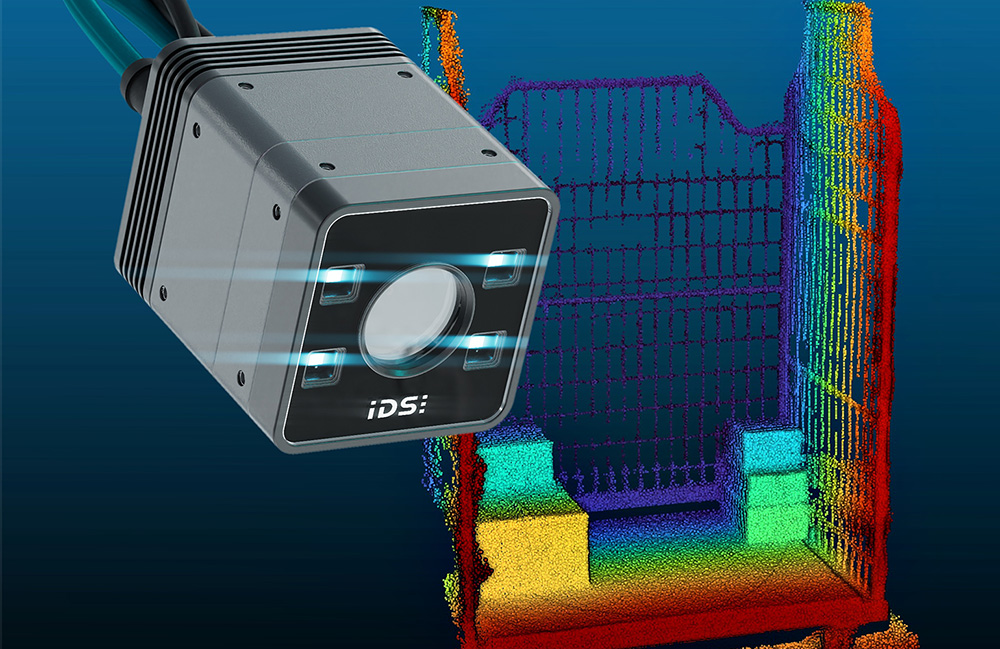
IDS Imaging Expands 3D Camera Line with Nion Time-of-Flight Sensor
IDS Imaging Development Systems GmbH has introduced the Nion, a new industrial time-of-flight (ToF) camera featuring 1.2-megapixel resolution and integrated depth processing. The Nion camera is now in series production and delivers high-resolution, stable depth information at 30 frames per second, even during rapid movements and varying lighting conditions. The introduction of the Nion is significant for industries requiring precise 3D data at real-world speeds, including logistics, automation, and robotics. Patrick Schick, product manager at IDS, emphasized that the Nion provides reliable depth data under variable lighting, which is crucial for automation processes that depend on fast and accurate 3D information. Looking ahead, the Nion's compact design and rugged IP67-rated housing make it suitable for demanding environments, while its Power over Ethernet (PoE) capability simplifies installation. No further timeline was disclosed at the time of publication.
Cameras / Imaging / Vision News Technologies IDS Imaging onsemi
Perceptron Launches Isaac 0.5 to Enhance Visual AI for Industrial Automation
Perceptron, a startup founded by former Meta scientists, has launched Isaac 0.5, a new model designed to enhance machine interaction in industrial environments. This software enables vision-guided robots to navigate complex settings like warehouses and factory floors, extracting visual intelligence from recorded videos. The significance of Isaac 0.5 lies in its general-purpose design, allowing flexibility in various tasks rather than being limited to repetitive functions. Co-founders Armen Aghajanyan and Akshat Shrivastava emphasize that their model addresses the limitations of existing AI solutions, which often require dedicated resources or are too narrow in scope. Looking ahead, Perceptron aims to revolutionize industrial automation with its innovative approach to visual AI. The model has been trained on a million hours of diverse video data, including ego and UMI video, to enhance its operational capabilities. No further timeline was disclosed at the time of publication.
AI Robotics Meta perceptron Startups
Comprehensive Survey on Vision-Language-Action Models for Embodied AI
A comprehensive survey on vision-language-action models for embodied artificial intelligence has been published in the Journal of Field Robotics. This survey explores the integration of visual perception, language understanding, and action execution in AI systems, highlighting the advancements and challenges in this interdisciplinary field. The significance of this survey lies in its potential to enhance the development of more capable and intelligent robotic systems. By examining the interplay between vision, language, and action, researchers can better understand how to create AI that can interact with the world in a more human-like manner, which is crucial for applications in various sectors. Looking ahead, the survey may pave the way for future research initiatives aimed at improving embodied AI systems. No further timeline was disclosed at the time of publication.
SURVEY ARTICLE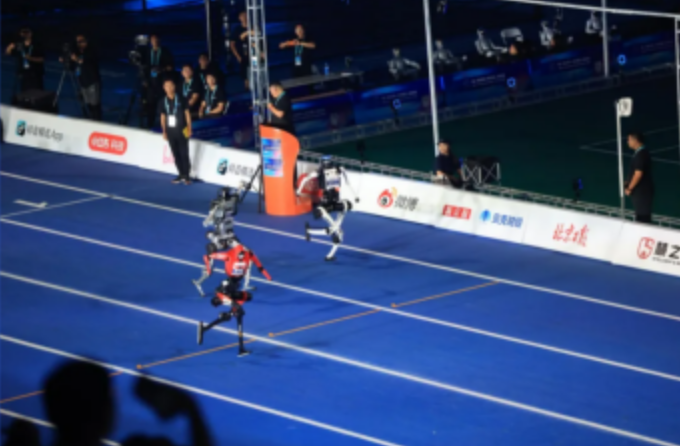
Humanoid Robots Achieve Breakthroughs in Speed and Jumping at World Championships
On August 22, the National Speed Skating Hall hosted the grand opening of the second World Humanoid Robot Games, featuring 666 teams and 2056 robots from 16 countries. The Tian Gong Ultra humanoid robot set a new speed record of 9.32 seconds for the 100-meter dash and achieved a high jump of 2.8843 meters, surpassing human athletic limits. This event signals a significant shift in the robotics industry, showcasing advancements in autonomous capabilities. Key racing events like the 400-meter and 1500-meter races eliminated manual remote control, requiring robots to rely on their sensors for environmental perception, obstacle recognition, and autonomous route planning. While humanoid robots are not yet ready for large-scale human replacement, the integration of competition and production is accelerating the commercialization of technology. As these robots transition from the competition arena to industrial applications, the transformation of the robotics sector is just beginning.
Humanoid Robots Robot Autonomy Sports Robotics Industrial Automation
Convergent Binocular Stereo Enhances Depth Perception in Humanoid Robot Vision
A recent study published in Science Robotics highlights advancements in convergent binocular stereo technology, which significantly improves depth perception for humanoid robots. This development is crucial as it allows robots to better navigate and interact with their environments, enhancing their functionality in various applications. The importance of this technology lies in its potential to revolutionize humanoid robot capabilities, making them more effective in tasks that require spatial awareness and interaction with complex surroundings. Enhanced depth perception can lead to improved safety and efficiency in industrial and service sectors where humanoid robots are deployed. Looking ahead, researchers will focus on further refining this technology and exploring its applications in real-world scenarios. No further timeline was disclosed at the time of publication.
Research Article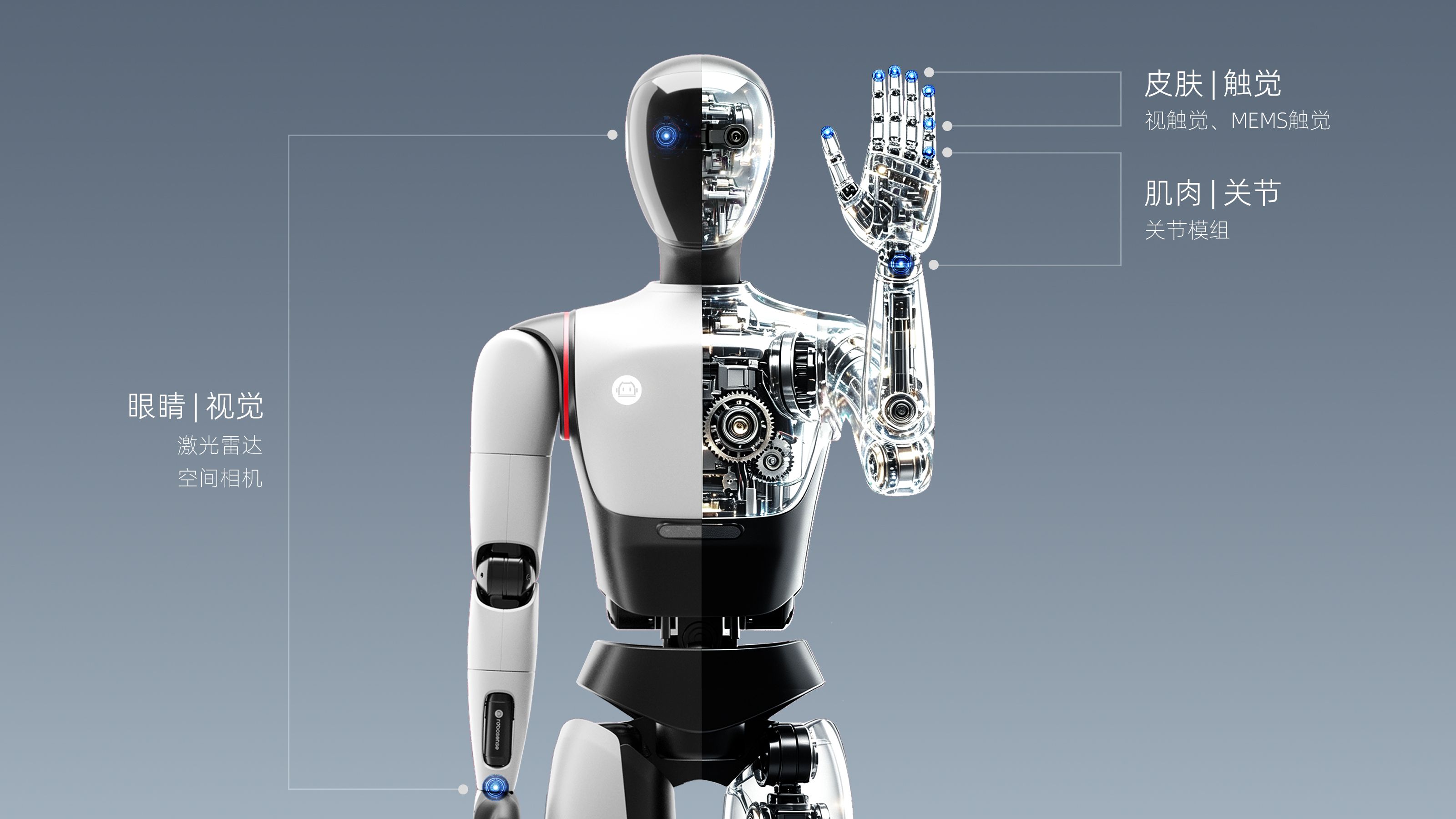
RoboSense Reports Strong Mid-Year Growth in Robotics Technology and Product Deliveries
On August 26, 2026, RoboSense announced its mid-year performance, reporting total revenue of 1.02 billion yuan, a 30.2% increase year-on-year. The company sold 719,200 LiDAR units, marking a 169.6% growth, with 282,600 units sold in the robotics sector, a staggering 510.4% increase. This growth positions RoboSense as a key player in the physical AI era. The significance of this performance lies in RoboSense's strategic shift towards becoming a leading robotics technology platform. The company is leveraging its accumulated LiDAR technology to enhance robotics and data collection capabilities, with new product categories such as 'eyes', 'skin', and 'muscles' for embodied robots. These innovations are expected to improve perception, touch, and execution capabilities in robotics. Looking ahead, RoboSense has entered various stages of commercialization for its new product categories, with significant orders for the spatial camera and plans for mass production by 2027. The company continues to expand its partnerships with leading global robotics firms, enhancing its market position and addressing the growing demand for real-world data in the physical AI industry. No further timeline was disclosed at the time of publication.
LiDAR Technology Robotics Sensor Technology AI Automation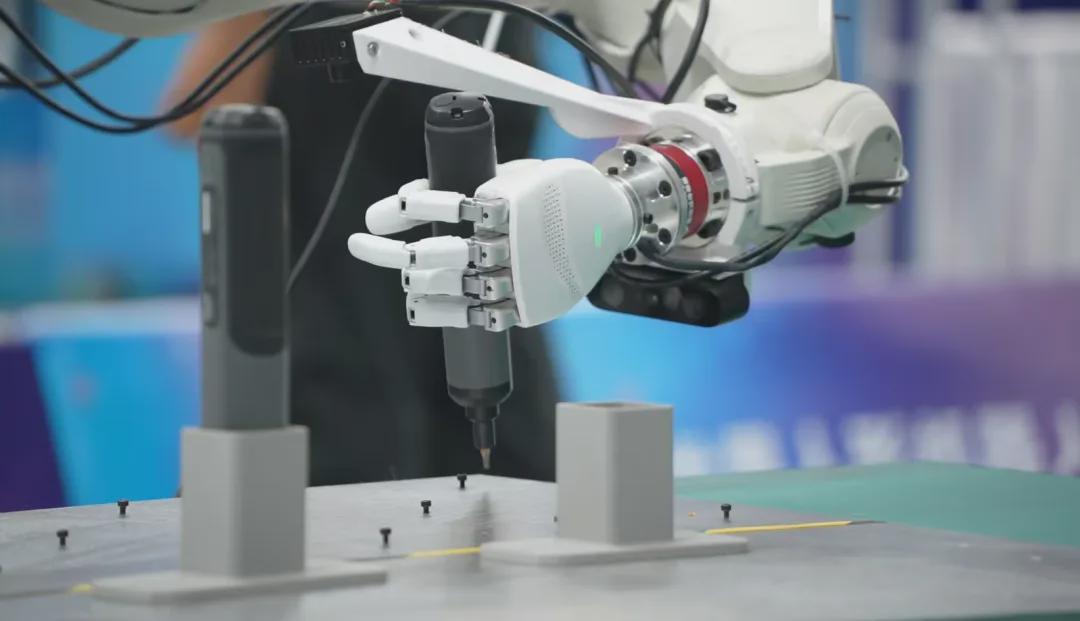
Autonomous Robot Team Achieves Gold in Precision Assembly Challenge
On August 23, the second World Humanoid Robotics Competition featured a critical contest in precision assembly. The Lingxin Qiaoshou team completed the assembly of 18 screws in five minutes, achieving a score of 17 out of 18, winning the gold medal with an 8-point lead over the second place. This team was the only one to participate in all eight events using a fully autonomous mode, while most competitors opted for remote control to navigate environmental uncertainties. The significance of this achievement lies in the team's commitment to fully autonomous operations, which allows robots to independently perceive, decide, and execute tasks in complex environments. This approach not only showcases the robot's capabilities but also addresses the challenges of transitioning from laboratory conditions to real-world industrial applications. The competition environment simulated real industrial conditions, emphasizing the importance of stability and adaptability in robotic operations. The core hardware supporting this success is the Linker Hand O6, a high-performance dexterous hand developed by Lingxin Qiaoshou. Weighing only 370 grams, it can handle loads up to 50 kilograms, demonstrating a significant advantage in both lightweight design and heavy-duty performance. The team's advancements in precision positioning, robust visual capabilities, and closed-loop force control systems are crucial for the future of intelligent manufacturing and automation in various industries.
Robotic Hands Autonomous Robotics Industrial Automation Precision Assembly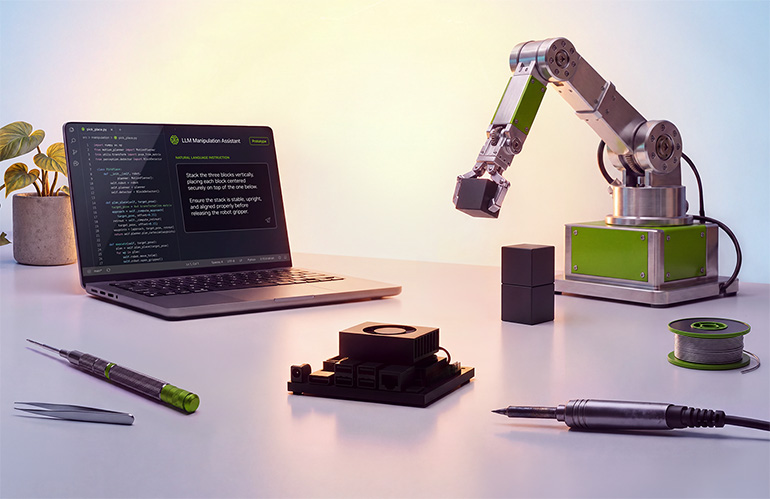
NVIDIA Launches Jetson Orin Nano 2, Enhancing Edge AI for Robotics with Improved Performance
NVIDIA Corp has unveiled the Jetson Orin Nano 2, an entry-level computer designed for edge AI applications. This new system offers doubled inference performance compared to its predecessor while consuming 40% less power in 15-watt mode. With 78 trillion operations per second of AI compute and 8GB of memory, it is tailored for real-time reasoning in smart drones, robots, and vision AI systems. The introduction of the Jetson Orin Nano 2 is significant as it allows developers to leverage advanced AI models that were previously limited to larger systems. According to Deepu Talla, NVIDIA's vice president of robotics and edge AI, the new model brings frontier-level accuracy to entry-level products, enhancing the capabilities of physical AI applications. This development is expected to accelerate the integration of AI into various autonomous devices. Looking ahead, NVIDIA's Jetson Orin Nano 2 is positioned as a key component in the company's comprehensive robotics strategy, which includes simulation and training solutions. The existing software stack is compatible with the new model, enabling developers to utilize large language models and vision language models optimized for edge inference. No further timeline was disclosed at the time of publication.
Artificial Intelligence Artificial Intelligence / Cognition Development Tools / SDKs / Libraries Microprocessors / SoC Microprocessors / SoCs News
Aetina Enhances Edge AI with Support for NVIDIA Jetson Orin Nano 2 Platform
Aetina Corporation has announced its support for the NVIDIA Jetson Orin Nano 2, enhancing its edge AI capabilities. This new platform allows for higher-performance generative AI and multimodal inference, which are crucial for compact Physical AI systems. The introduction of the Jetson Orin Nano 2 marks a significant advancement in entry-level edge AI robotics computers. It enables developers to create sophisticated applications such as delivery and inspection drones, robots, and vision AI systems that can perceive their environment and respond in real time. Looking ahead, the integration of the Jetson Orin Nano 2 into Aetina's offerings is expected to drive innovation in the edge AI sector. No further timeline was disclosed at the time of publication.